La Raclette
Our verdict
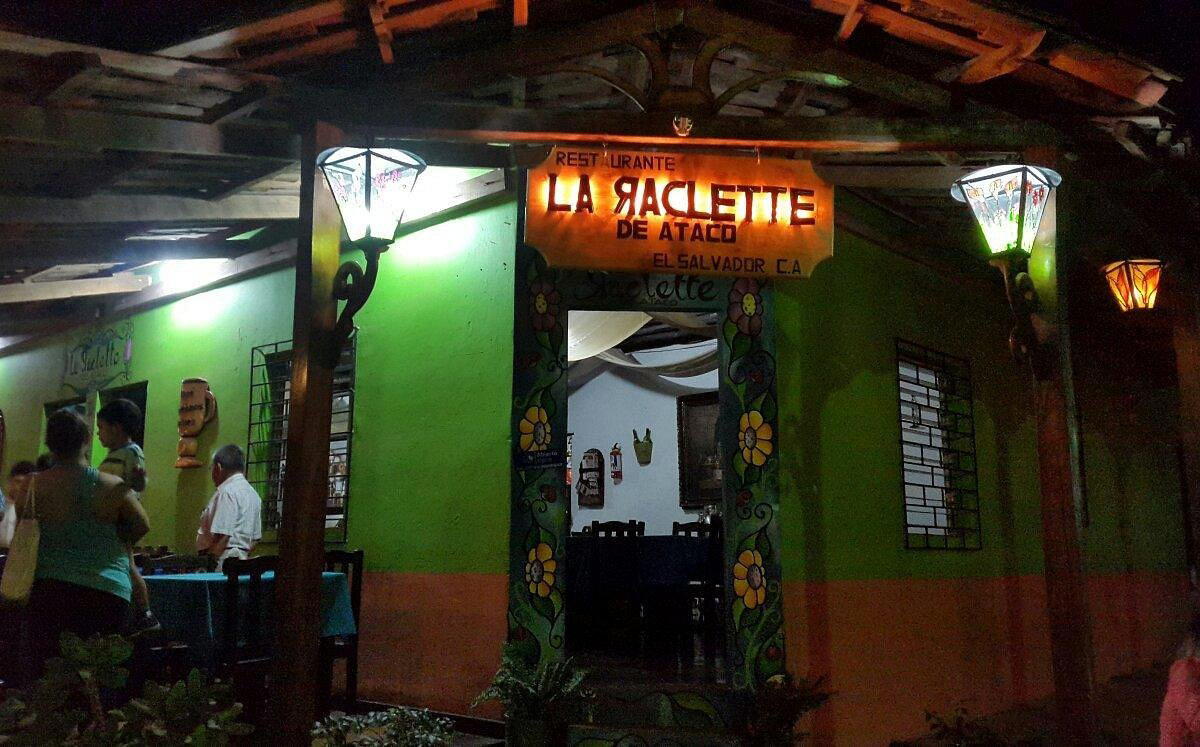
A European-accented restaurant on Concepción de Ataco's central park, La Raclette brings alpine cheese traditions to El Salvador's coffee-country highlands. The address alone, steps from Parque Rafael Fernández in one of the Ruta de las Flores' most-visited colonial towns, places it at the intersection of local craft tourism and foreign culinary reference points. Worth seeking out for anyone moving through Ahuachapán department on a longer itinerary.

Pearl is the En Primeur Club membership app, where members save venues, book tables and use the concierge.
The menu
What to order
- Raclette
- Fondue de queso
- Parrillada
Where Alpine Cheese Meets Central American Highland Coffee Country
Concepción de Ataco sits at roughly 1,200 metres above sea level in Ahuachapán department, and the climate shows it. Evenings cool faster than the coast and the surrounding hillsides produce some of El Salvador's most exported specialty coffee. The town's colonial grid, artisan textile shops, and painted murals draw a steady weekend crowd from San Salvador, and the food scene that has developed around that traffic is more varied than the village's population might suggest. French and Swiss alpine references are not the obvious culinary direction for a town in western El Salvador, but the cool air and the altitude do something to make the logic feel less strange than it would at sea level.
La Raclette occupies a position directly beside Parque Rafael Fernández, the central square that anchors the town's tourism activity. In a place where orientation is almost entirely organised around that park, where street food vendors, artisan stalls, and seated restaurants all orient toward it, a address on its edge puts any venue at the center of Ataco's visitor flow without requiring any navigation. Arriving on foot from the main street, the square functions as the natural gathering point between late afternoon and evening, which is when alpine cheese-led menus make the most atmospheric sense against the drop in temperature.
The Source Question: Cheese Traditions Transplanted
Raclette as a dish has a specific and verifiable origin: the French-Swiss border region of Valais, where a wheel of raw-milk cheese is heated and the melted surface scraped onto accompaniments. The name comes from the French verb racler, to scrape. In its European context, the dish is inseparable from provenance, because the protected-designation cheeses used in traditional raclette come from a defined alpine geography with regulated milk sources and ageing processes.
Transplanting that format to El Salvador raises an ingredient sourcing question that sits at the heart of what this restaurant represents. El Salvador does not produce raclette cheese domestically at any established commercial scale, which means that what arrives on the table reflects either import supply chains from Europe or regional dairy alternatives adapted to approximate the format. That gap between alpine origin and Central American execution is where the editorial interest lies. The most honest versions of European cheese dishes operating outside their source geography tend to either lean fully into imports (with the pricing that implies) or develop a hybrid approach using local dairy in the same heating and scraping format. Either choice tells you something about who the kitchen is cooking for and what the supply infrastructure in the region actually supports.
This is a broader pattern across El Salvador's emerging culinary towns, where proximity to agricultural highland regions provides strong local vegetable, coffee, and sometimes dairy inputs, but where specialised European cheese imports remain logistically complex. Venues along the Ruta de las Flores have been navigating that tension for more than a decade, building menus that reflect both genuine local sourcing and the import expectations of urban Salvadoran and foreign visitors. For a comparison of how different restaurants in Ataco position themselves along that spectrum, Pupuseria Primavera and Xochikalko represent more explicitly local reference points in the same town, while Las Brumas Grill & Cafe in Santa Tecla shows how highland-adjacent venues in El Salvador can blend international format with domestic agricultural context.
Ataco's Dining Scene in Context
The Ruta de las Flores corridor, of which Ataco is the southern anchor, has developed a restaurant culture driven almost entirely by weekend and holiday tourism. The clientele skews toward Salvadoran families from the capital, international visitors following coffee or craft itineraries, and backpackers moving between Guatemala and El Salvador's interior. That mix produces a dining scene with unusual range: traditional pupuserías alongside artisan coffee shops, grilled meat specialists, and occasionally European-format restaurants like La Raclette that arrive partly as novelty and partly as a genuine culinary statement.
What separates Ataco from the more heavily developed tourism corridors in the region is the relative absence of international hotel chains and the corresponding dependence on independent restaurants to define the town's food identity. The dining infrastructure is local in ownership even when the culinary references are not. La Posada de Suchitlán in Suchitoto offers a comparable example of how independent hospitality in El Salvador's heritage towns can build serious culinary reputations without institutional backing. Canada Bites in San Salvador and Los Asaditos de Coatepeque in Coatepeque represent the broader range of how small, independent operations across El Salvador are defining their local food cultures through specific format commitments rather than broad menus.
Among the more format-committed restaurants globally, where provenance and ingredient sourcing define the entire conceptual framework, the distance between a place like Aponiente in El Puerto de Santa María (built entirely around marine ingredients from its specific geographic bay) and a highland Central American village restaurant doing alpine cheese is enormous in resource and scale, but the underlying editorial question is the same: does the kitchen's ingredient sourcing support its culinary claims? That question matters whether you are reviewing a three-Michelin-star house like Alain Ducasse at Louis XV in Monte Carlo or a colonial-town cheese restaurant in Ahuachapán.
Planning Your Visit
La Raclette sits directly beside Parque Rafael Fernández in central Ataco, which means it is walkable from every accommodation option in the town centre. Ataco is approximately 100 kilometres west of San Salvador, a two-hour drive through the Apaneca mountain range; the final approach from Ahuachapán city takes around 30 minutes on the CA-8 highway before descending into the village. Weekends draw substantially larger crowds than weekdays across all of Ataco's restaurants, and the town's most active dining hours concentrate in the early evening as day visitors from the capital begin arriving after the afternoon drive. For a full picture of eating and drinking options across the town, the EP Club Concepcion De Ataco restaurants guide maps the full range across price points and cuisines.
Frequently asked questions
What part of town is La Raclette in?
La Raclette is located at Costado del Parque Rafael Fernández, 503-Concepción de Ataco, Ahuachapán, Concepcion De Ataco.
Is La Raclette in Ataco a good stop on the Ruta de las Flores?
Ataco is the southern anchor of the Ruta de las Flores, and La Raclette offers one of the few Alpine-tradition cheese concepts along the entire corridor, a format more common in Geneva than Ahuachapán. The restaurant's position directly beside Parque Rafael Fernández places it in the walkable core of town, making it a practical lunch or dinner stop within a broader day route through the highland pueblos.
What do people recommend at La Raclette?
Given the venue's name and concept, the raclette itself is the clear draw, melted wheel cheese scraped tableside in the Swiss-Valaisan tradition, adapted to Ataco's highland setting at around 1,200 metres above sea level.
Do I need a reservation for La Raclette?
La Raclette sits directly beside Parque Rafael Fernández in a town whose restaurant trade runs heavily on weekend and holiday traffic from the Ruta de las Flores corridor. Walk-ins may work on weekday evenings, but weekend visits to Ataco regularly see dining rooms fill by mid-afternoon. No phone number or online booking channel is currently listed, so arriving early or enquiring at the venue on the day is the practical approach.
Fast Comparison
| Venue | Cuisine | Price | Awards |
|---|---|---|---|
| La RacletteThis venue (the venue you are viewing) | Central American Raclette & Fondue | $10–20 | Not listed |
| El Xolo | Modern Salvadoran | $30–50 | World's 50 Best #87 · The Best Chef One Knife |
| La Clásica | Artisanal Italian-Style Pizza | $10–20 | 50 Top Pizza Latin America #5 |
| Pupuseria Primavera | Salvadoran Pupusería | Not listed | Not listed |
| Las Brumas Grill & Cafe | Salvadoran Grill with Local Specialties | $10–20 | Not listed |
| Canada Bites | Canadian Burgers | $10–20 | Not listed |
Continue exploring
More in Concepcion De Ataco
Restaurants in Concepcion De Ataco
All restaurants in Concepcion De Ataco →
Hotels in Concepcion De Ataco
Browse all →
Details
- Cozy
- Rustic
- Quiet
- Family
- Group Dining
- Casual Hangout
- Date Night
- Terrace
- Standalone
- Beer Program
- Street Scene
- Family Style
- A La Carte
- Sangria
- Beer
- Vegetarian Friendly
Tranquil, family-friendly atmosphere with fresh mountain climate; patio seating overlooks the plaza with opportunities for people-watching.