La Clásica

50 Top Pizza Latin America #5
Our verdict
La Clásica on Avenida Masferrer brings a studied approach to Italian dough traditions to San Salvador, with chef Juan Cárcamo's multi-format pizza program spanning Neapolitan, Roman, pan-stretched, and Chicago-style rounds alongside pasta and Italian sandwiches. The dining room runs warm and colourful, with attentive service extending to delivery. Fresh, carefully sourced ingredients anchor every format on the menu.

Pearl is the En Primeur Club membership app, where members save venues, book tables and use the concierge.
The menu
What to order
- Deep Dish Pizza
- Detroit Pizza
- Napolitana Pizza
- Nostra Reina
- Brooklyn
Where the Dough Tells the Story
On Avenida Masferrer Norte, the approach to La Clásica signals something specific before you have read a single menu item: this is a space built around a craft, not a category. Italian-format pizza in Central America has long suffered from a kind of cultural telephone game, Neapolitan gestures without the fermentation discipline, Roman slabs without the airy interior, pan pizzas cooked too hot or too fast. What distinguishes La Clásica within San Salvador's expanding Italian-inflected dining scene is the seriousness with which it treats dough itself as the primary ingredient, one that demands as much sourcing rigour and technical attention as any topping placed on it.
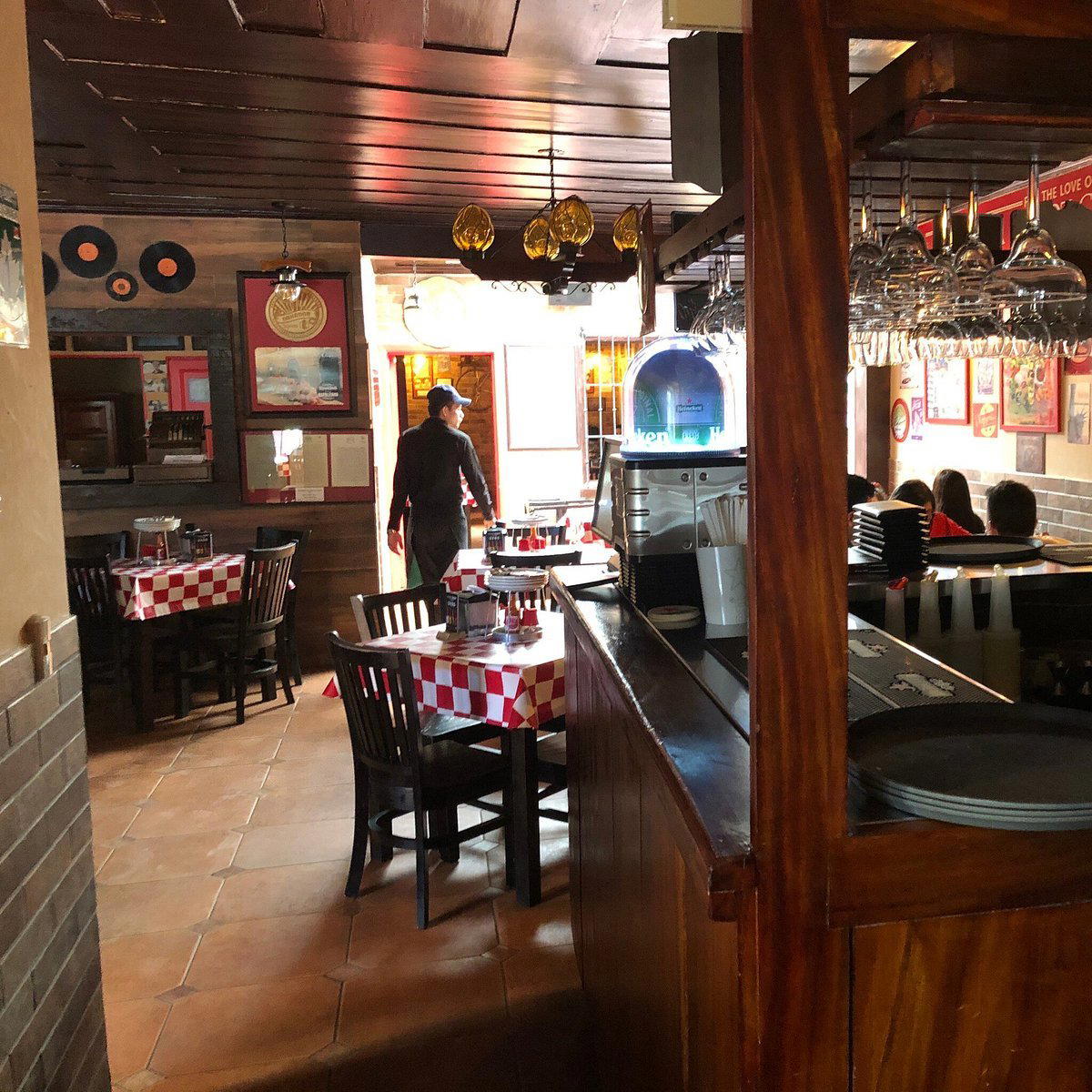
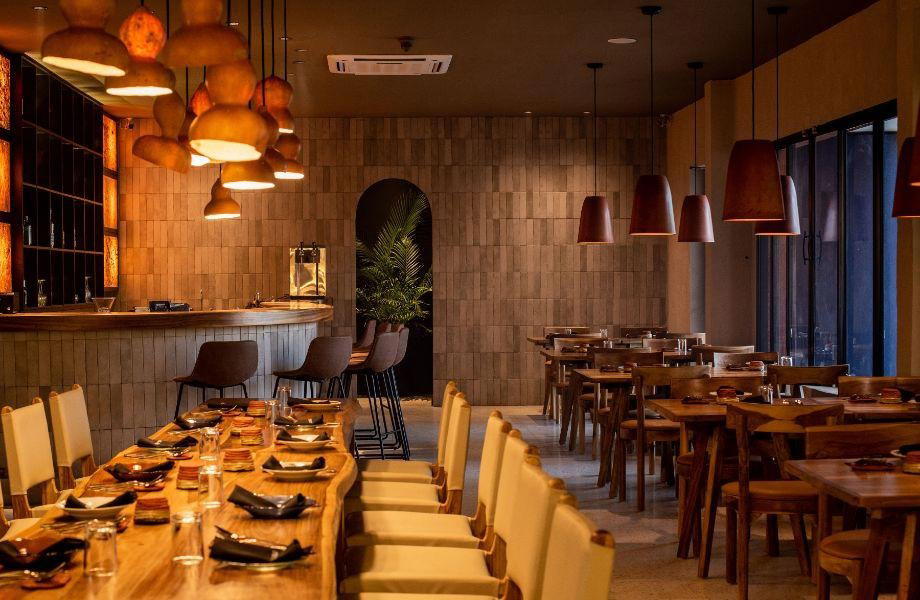
The dining room reflects that grounded approach. Warm colour details and a comfortable interior communicate a neighbourhood restaurant with convictions rather than a showpiece. This is not the stripped-back minimalism of a tasting-counter format; it is a room where groups eat well and the atmosphere is generated by the food and the people rather than by design theatrics.
A Multi-Format Program Built on Sourced Ingredients
The menu's breadth is its first declaration of intent. In cities where Italian pizza has fragmented into distinct style camps, Naples versus Rome versus the American Midwest, La Clásica presents all of them as a connected argument about what dough can do when handled correctly. Chef Juan Cárcamo spent years studying dough techniques across different pizzeria traditions internationally, and that training is visible in the range: classic Neapolitan with its characteristic cornicione and high-heat char, high and soft Roman-style slices, pan-stretched pizza topped and baked in the tray, thin-crust rounds in the Chicago flat tradition, and stuffed calzones that fold all of the above logic into a sealed format.
That breadth matters most when read through the lens of ingredient sourcing. Each format places different demands on the produce it carries. A Neapolitan crust, light and wet at the centre, cannot carry heavy or low-quality toppings without structural collapse; a pan pizza's longer bake caramelises moisture out of ingredients, intensifying flavour but also amplifying any weakness in freshness. La Clásica's commitment to fresh ingredients selected with care is not, in this context, a generic claim, it is a functional necessity for a program that cycles through this many formats under one roof. Poor sourcing would expose itself differently in every style.
Pasta dishes and classic Italian sandwiches extend the kitchen's reach beyond pizza without dispersing its focus. The logic holds: both categories reward the same attention to ingredient provenance that the pizza program demands. Coffee, drawn from a specialty-focused menu, closes the loop on an operation that treats each element of the Italian-restaurant format as something worth considering seriously rather than filling by default. The drinks menu is well-rounded and designed to complement rather than compete with the food.
Pizza Traditions and the Central American Context
It is worth placing La Clásica inside a broader regional pattern. In much of Latin America, Italian cuisine arrived through immigration in the early twentieth century and subsequently evolved into local hybrid forms, Argentine pizza, for example, has its own thick-crusted identity that diverges sharply from any Italian reference point. Central America did not receive the same wave of Italian immigration, which means that Italian-format dining here has developed more recently and draws more directly from contemporary international models than from an entrenched local adaptation.
This makes the chef's training abroad particularly relevant as a credential rather than as biography. The difference between a pizza program shaped by firsthand study of Neapolitan, Roman, and pan-style traditions and one assembled from recipe approximations is audible in the texture of a cornicione, visible in the crumb structure of a Roman slice. Cárcamo's international dough study functions as the sourcing logic for technique itself: he went to where the tradition lived and brought it back with precision. In a city that has fewer reference points for these styles than Naples, Rome, or even Buenos Aires, that grounding in primary sources matters.
For context on where La Clásica sits relative to other San Salvador dining, see our full San Salvador restaurants guide. Nearby, El Xolo represents a different side of the city's evolving food culture. And if you are building a broader trip, our San Salvador hotels guide, bars guide, and experiences guide cover the full picture.
Internationally, the conversation around ingredient-led Italian cooking is dominated by restaurants with significant critical infrastructure behind them. Venues like Arpège in Paris and Alain Ducasse at Louis XV in Monte Carlo have built their identities partly on sourcing discipline. At the opposite end of formality, the same principle that drives a great Neapolitan crust, exceptional base ingredients handled with technical honesty, connects a neighbourhood pizza operation in San Salvador to the broader argument being made in fine-dining rooms in Hong Kong, New York, and El Puerto de Santa María. The scale is different; the logic is the same.
Planning a Visit
La Clásica is located at 3a Calle Poniente and Avenida Masferrer Norte, San Salvador, CP 1101. The dining room operates with attentive service and the kitchen also fulfils delivery orders with the same level of care, which signals operational discipline beyond the in-house experience. The warm, comfortable dining room suits groups and families as much as individual visits. Coffee and a well-rounded drinks selection are available to accompany the meal. For broader trip logistics, the San Salvador wineries guide covers regional drink options worth exploring alongside the city's dining scene.
Frequently asked questions
Is La Clásica good for families?
The combination of a comfortable dining room, a broad multi-format menu spanning several pizza styles alongside pasta and sandwiches, and attentive but informal service positions La Clásica well for family visits. The warm, colourful decor at the Avenida Masferrer Norte location reinforces a relaxed, inclusive setting.
Is La Clásica formal or casual?
La Clásica reads as a casual neighbourhood restaurant. The dining room is described as comfortable, with warm and colourful decor, and service is attentive without being formal, the same standard applies to their delivery operation, which points to a consistent, unpretentious approach throughout.
Is La Clásica award-winning?
La Clásica has received recognition including: Open the menu and you have only the embarrassment of choice. It was founded by Juan Carcamo starting from a personal curiosity that he deepened by studying doughs in a long training in different pizzerias around the world. Today he bakes ma….
What dish is La Clásica famous for?
The kitchen is built around its multi-format pizza program. Chef Juan Cárcamo trained across pizzerias internationally, and the result is a menu that moves between classic Neapolitan, high Roman, pan-stretched, thin-round, and stuffed calzone formats, an approach rare in San Salvador's Italian dining scene. The pasta dishes and Italian sandwiches are also cited as worth ordering.
How do I find La Clásica?
La Clásica is located at 3a calle poniente y, Av. Masferrer Nte. San Salvador CP 1101, El Salvador, San Salvador.
Is there a head chef associated with La Clásica?
The chef associated with La Clásica is Juan Cárcamo.
How hard is it to get a table at La Clásica?
La Clásica operates as a neighbourhood-format restaurant on Avenida Masferrer Norte, and the venue also runs delivery service, suggesting accessible capacity. No reservation lead times are documented, so walk-in visits appear to be a reasonable option, particularly compared to high-demand limited-seat formats elsewhere in the region.
Booking and Cost Snapshot
| Venue | Cuisine | Price | Awards |
|---|---|---|---|
| La ClásicaThis venue (the venue you are viewing) | Artisanal Italian-Style Pizza | $10–20 | 50 Top Pizza Latin America #5 |
| El Xolo | Modern Salvadoran | $30–50 | World's 50 Best #87 · The Best Chef One Knife |
Recognition history
Dated appearances from independent guides and award organizations, with the underlying list record or original source where available.
50 Top Pizza Latin America #5
50 Top Pizza
Full recognition history (3 entries)
50 Top Pizza World #25
50 Top Pizza
50 Top Pizza World Best Pizza #63
50 Top Pizza
Continue exploring
More in San Salvador
Restaurants in San Salvador
All restaurants in San Salvador →
Hotels in San Salvador
Browse all →
Details
- Cozy
- Classic
- Family
- Group Dining
- Casual Hangout
- Open Kitchen
- A La Carte
- Vegetarian Friendly
- Vegan Options
Current opening hours
- Monday
- Closed
- Tuesday
- 12–1:45 PM, 6–9 PM
- Wednesday
- 12–1:45 PM, 6–9 PM
- Thursday
- 12–1:45 PM, 6–9 PM
- Friday
- 12–1:45 PM, 6–9 PM
- Saturday
- 12–9 PM
- Sunday
- 12–9 PM
Hours can change for holidays and private events. Hours as of .
Cozy and relaxed family atmosphere with open kitchen view.