La Provence

A Michelin-starred address on the quiet Hoofdstraat of Driebergen-Rijsenburg, La Provence has sustained classical French technique across more than five decades, earning recognition for precise fish work, confident meat cookery, and a wine program matched with care. Chef André van Alten's open kitchen brings the cooking into the room, while a verdant terrace extends the experience outward into one of Utrecht province's more composed village settings.
Pearl is the En Primeur Club membership app — saves, bookings, and concierge access live there. Same editors, same standards.
- Address
- Hoofdstraat 109, 3971 KG Driebergen-Rijsenburg, Netherlands
- Phone
- +31 343 512 920
- Website
- restaurantlaprovence.nl
- Directions
- Get directions
 Saves & bookings on Pearl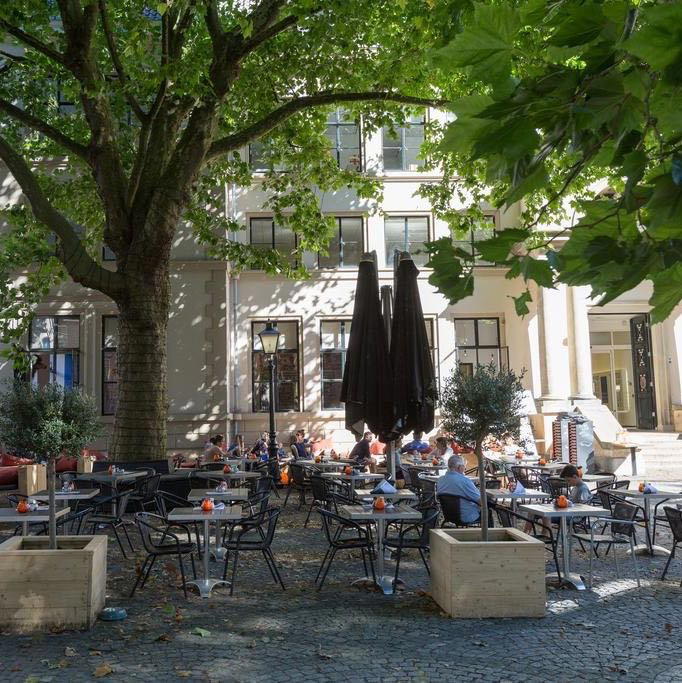
A Village Setting That Frames the Cooking
Driebergen-Rijsenburg sits in the Utrechtse Heuvelrug, the forested ridge that separates the Randstad's urban density from the quieter agricultural belt to the east. The Hoofdstraat runs through it with the unhurried character of a Dutch village that has never needed to compete for attention. La Provence is a one-Michelin-star restaurant in Driebergen-Rijsenburg serving modern French fine dining at a €€€ price point. The terrace, enclosed by greenery, offers a particular kind of stillness that is genuinely rare within an hour's drive of Amsterdam or Utrecht city centre.
That geographical context matters to how the food reads. Creative French cooking in the Netherlands has often carried a tension between the classical French canon and the Dutch terroir tradition, which prizes direct relationships with local producers and seasonal specificity over the abstraction of haute cuisine. At La Provence, that tension has been worked on for over fifty years, and what remains is a kitchen that draws from classical foundations while reaching toward the ingredients and textures that the surrounding region makes available.
Five Decades of Consistent Practice
Longevity in fine dining is not a neutral fact. A restaurant that has held Michelin recognition across multiple decades is, by definition, one that has survived the full cycle of trend shifts that have reshaped European dining since the 1970s: the decline of heavy sauces, the rise of nouvelle cuisine, the turn toward Scandinavian minimalism, the ingredient-focused counter format, and now the current period of creative eclecticism. La Provence has been operating through all of it, which means its classical French orientation is not nostalgic positioning but a continuously tested commitment.
The Michelin inspectors' notes are instructive on this point. The recognition given to the roasting of wild duck on the bone and the depth of the turbot jus points toward a kitchen that measures itself against technique rather than trend. Both preparations require substantial craft: bone-roasted duck demands control of heat and timing that no modernist shortcut replaces, and a reduction-based jus from turbot bones requires patience and a precise understanding of when extraction has gone far enough. These are not dishes that showcase novelty; they showcase repetition refined over time.
For context within the Dutch one-star tier, La Provence sits alongside houses like LIZZ, €€€ · Creative French in Gouda and Maeve, €€€ · Creative French in Utrecht. What distinguishes the restaurant within that peer group is the duration of its record and the evidence of classical depth rather than contemporary experimentation as its primary credential.
The Relationship Between Ingredient and Technique
The editorial focus here is the provenance-and-technique axis. The reference to wild duck, as opposed to farmed duck, is a deliberate sourcing signal: wild duck has a shorter, seasonally constrained window, and its flavour profile is more intense and less predictable than farmed alternatives, which makes the choice to feature it on the bone a statement about confidence in both the product and the method. The turbot similarly carries provenance weight; it is among the more demanding North Sea fish to handle, with a thick, gelatinous skeleton that yields exactly the kind of deep, mineral jus that the inspectors noted.
The lamb loin in sea salt crust, described as a house classic, functions as the anchor of the meat program. A salt crust preparation is one of the older French techniques for managing moisture retention and gentle, even heat during roasting, and the decision to keep it as a signature rather than rotate it out speaks to the kitchen's preference for tested excellence over rotation for its own sake.
Garnish work described in the inspectors' notes adds a separate layer of interest. The reference to diversity of texture, the interplay of hot and cold temperatures on a single plate, and the use of subtle acidity as a flavour counterpoint suggests a kitchen that has absorbed more contemporary thinking at the edges of the plate even as the protein preparations remain rooted in classical form. This is not an unusual pattern in restaurants of this generation and standing, but it is a pattern that requires a high degree of internal coordination.
The Open Kitchen and the Room
Open kitchen format at the restaurant places the cooking in direct relationship with the dining room. In an intimate setting, this has a specific effect: the brigade's composure becomes part of the experience, not incidentally but structurally. The room also puts the cooking on view, and the chef's ability to maintain calm leadership under observation matters. For diners, an open kitchen in a room of this scale means the distance between the plate being finished and the plate arriving at the table is short, which has practical consequences for preparations served at precise temperatures.
The wine pairing function operates as a distinct front-of-house role rather than a sommelier-by-default arrangement. Wine pairing at this level of cooking, where acidic garnishes and temperature contrasts are in play across a single plate, requires genuine fluency in the food rather than catalogue memorisation. A pairing program that earns specific mention in a Michelin citation has cleared a meaningful threshold.
Where La Provence Sits in the Dutch Fine Dining Tier
Dutch fine dining tier has breadth that its relatively small geographic footprint might not suggest. At the leading end, De Librije in Zwolle operates at three stars, while De Lindehof in Nuenen, 't Nonnetje in Harderwijk, and De Nieuwe Winkel in Nijmegen each hold two. Within the one-star tier, the €€€ price bracket that restaurant occupies includes addresses across the country, from Aan de Poel in Amstelveen and Ciel Bleu in Amsterdam to De Bokkedoorns in Overveen, Brut172 in Reijmerstok, De Groene Lantaarn in Staphorst, De Lindenhof in Giethoorn, and De Treeswijkhoeve in Waalre.
The restaurant's position in this tier is shaped by its village location and its longevity. It is not competing on the metropolitan visibility that benefits Amsterdam-area addresses, nor on the rural-destination theatrics that some country-house restaurants use to justify a detour. Its proposition is quieter: a half-century of refined practice in a composed setting, at a price point that sits below the two- and three-star tier.
Planning Your Visit
The restaurant is at Hoofdstraat 109 in Driebergen-Rijsenburg, reachable from Utrecht in under thirty minutes by car and accessible by train to Driebergen-Zeist station with a short onward transfer. The kitchen operates Wednesday evenings and Thursday through Saturday across both lunch and dinner service; Sunday and Monday are closed. The €€€ price bracket places it at the entry point of Dutch starred dining, which makes it a considered option for first-time visitors to this tier as well as regulars benchmarking a long-running address. Given the intimate room and the open kitchen format, booking in advance is prudent, particularly for weekend service.
Comparable Venues
Comparable venues nearby, for context on price, style, and recognition.
| Venue | Cuisine | Price | Awards | Notes |
|---|---|---|---|---|
| La ProvenceThis venue — the venue you are viewing | Modern French Fine Dining | $$$ | Michelin 1 Star | Not listed |
| Flavours | Modern French Fine Dining | $$$ | Michelin 1 Star | Weert center |
| Karel 5 | Modern French Fine Dining | $$$$ | Michelin 1 Star | City Center |
| Zoldering | Modern French-Dutch Bistro | $$$ | Michelin 1 Star | Utrechtsebuurt Zuid |
| ML | Modern French Fine Dining | $$$ | Michelin 1 Star | Centrum |
| De Moerbei | Modern French with North Sea Focus | $$$ | Michelin 1 Star | Warmond |
Recognition history
Dated appearances from independent guides and award organizations, with the underlying list record or original source where available.
Michelin 1 Star
Michelin
Michelin 1 Star
Michelin
Continue exploring
More in Driebergen-Rijsenburg
Restaurants in Driebergen-Rijsenburg
Browse all →
Bars in Driebergen-Rijsenburg
Browse all →
Hotels in Driebergen-Rijsenburg
Browse all →
Wineries in Driebergen-Rijsenburg
Browse all →
At a Glance
- Elegant
- Intimate
- Cozy
- Sophisticated
- Date Night
- Special Occasion
- Business Dinner
- Open Kitchen
- Extensive Wine List
- Garden
Current opening hours
- Monday
- Closed
- Tuesday
- Closed
- Wednesday
- 6–10 PM
- Thursday
- 12–10 PM
- Friday
- 12–10 PM
- Saturday
- 12–10 PM
- Sunday
- Closed
Hours can change for holidays and private events. Last verified .
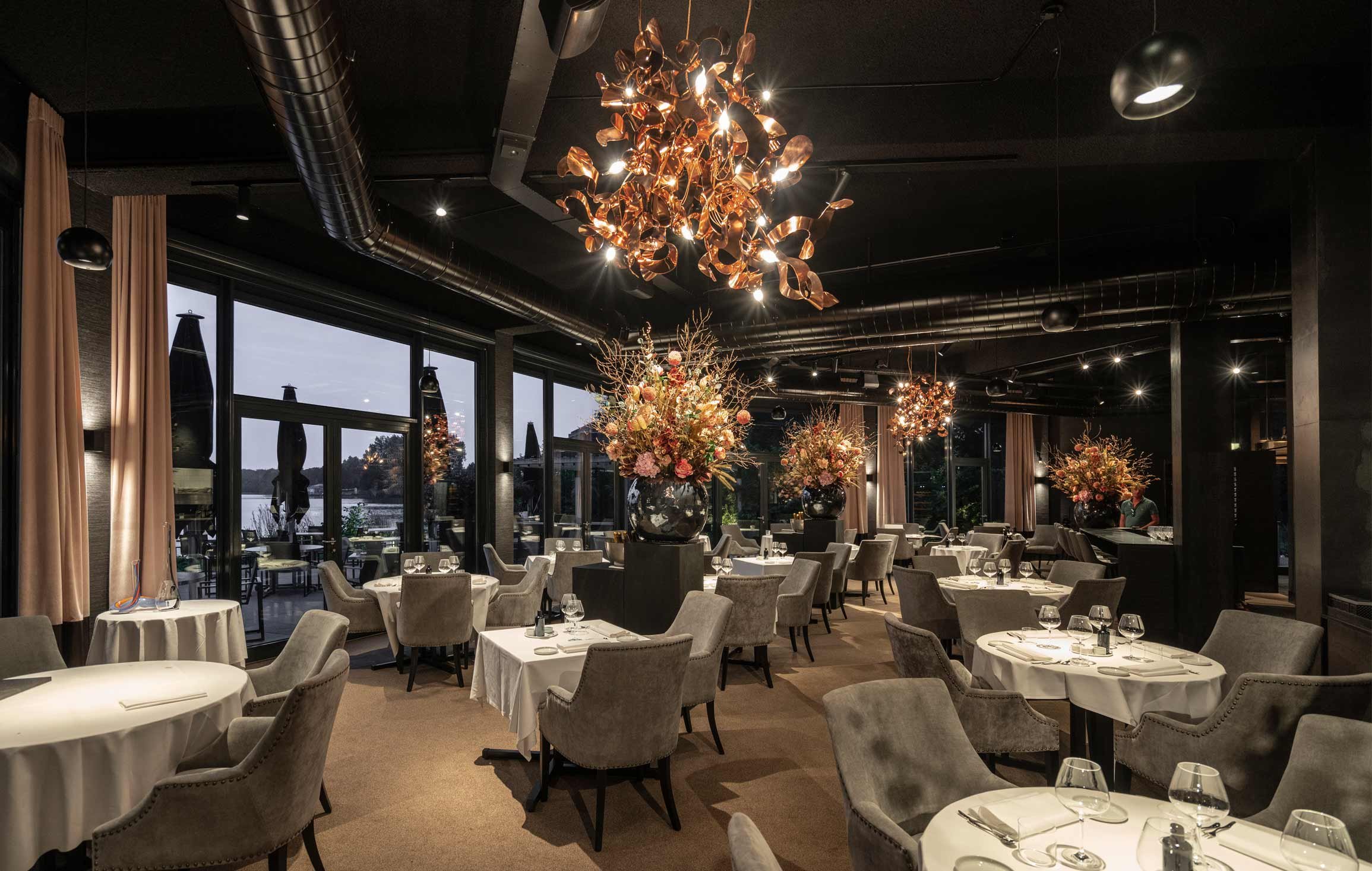
Intimate setting with a warm, home-like atmosphere, tranquil verdant terrace, and open kitchen view; some note lighting could be warmer.