La Pita

Michelin Bib Gourmand
Our verdict
La Pita holds a Michelin Bib Gourmand (2026) recognition in Makati's Poblacion neighbourhood, placing it among a small tier of Philippine restaurants where value and quality align with international critical standards. The address on Don Pedro puts it at the centre of one of Metro Manila's most active dining streets, where casual-format restaurants increasingly earn the kind of attention once reserved for formal dining rooms.

Pearl is the En Primeur Club membership app, where members save venues, book tables and use the concierge.
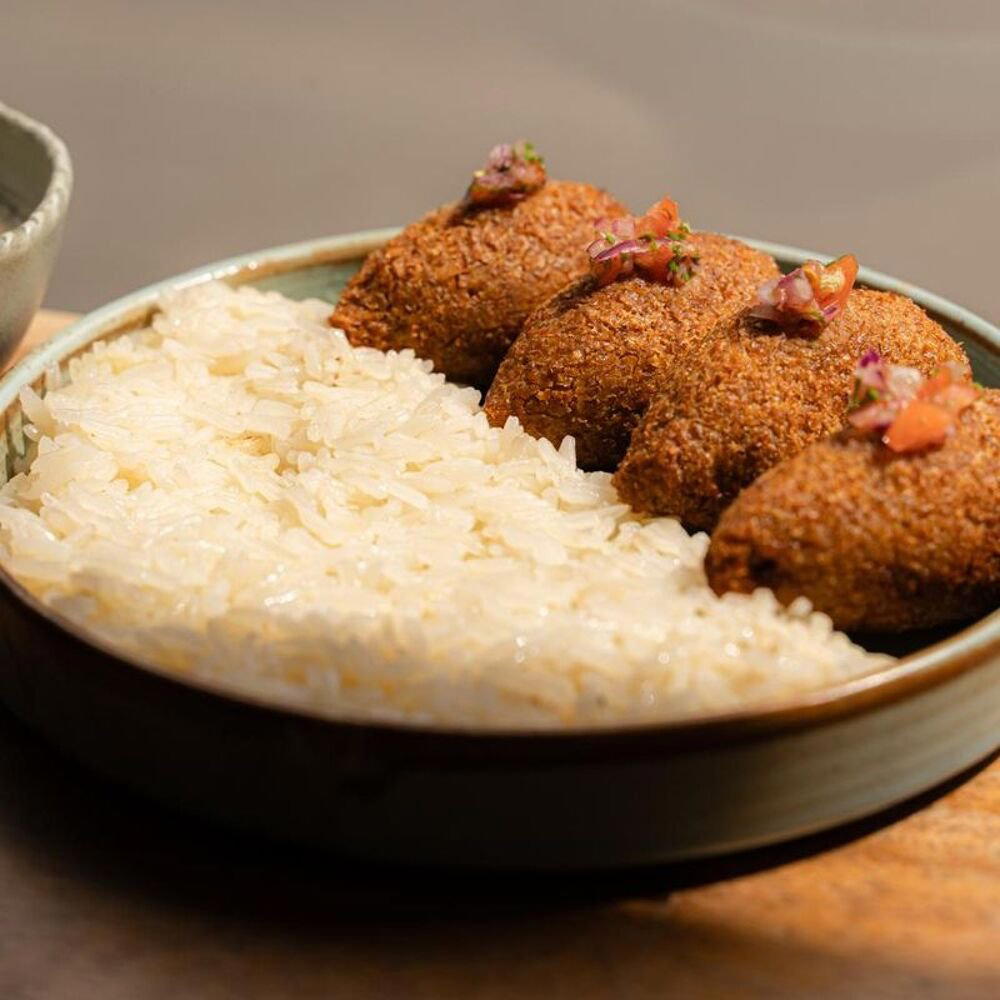
The menu
What to order
- Hummus
- Beef Arayes
- Kubbeh
Poblacion's Street-Level Ambition
Don Pedro Street in Poblacion has become shorthand for a particular kind of Makati dining: low-threshold entry, high culinary intent. The street sits within a neighbourhood that has spent the better part of a decade converting shophouses and corner lots into restaurants that operate well outside the formal dining-room conventions of Ayala or BGC. La Pita, at 5652 Don Pedro, belongs to this category of venue where the physical setting signals accessibility but the kitchen signals something more deliberate. Approaching along a block where signage competes with foot traffic and the ambient noise is constant, the format itself becomes a kind of editorial statement about what serious eating can look like in a city no longer dependent on tablecloths to prove a point.
What the Bib Gourmand Recognition Actually Means Here
The Michelin Bib Gourmand, awarded to La Pita in the 2026 guide, is the most legible trust signal the restaurant carries. In Michelin's own framework, the Bib Gourmand identifies restaurants offering food of notable quality at a price point below the starred tier. It is, in effect, a credential that speaks to the ratio of quality to cost rather than to ambition alone. In the Philippines, where Michelin's guide remains recent and the awarded pool is still relatively small, a Bib Gourmand is not a consolation prize for restaurants that narrowly missed a star. It is a deliberate category that recognises a different kind of excellence, one where the kitchen's output is measured partly against what the diner pays to access it.
Within Makati specifically, La Pita joins a recognised tier that includes starred venues like Hapag (Filipino), Kása Palma, and Celera, restaurants where the critical conversation has already shifted from whether Manila belongs on the international dining map to which specific formats and kitchens are driving it forward. The Bib Gourmand places La Pita in that broader conversation without requiring a tasting-menu price point as the entry fee.
Menu Architecture: Reading What the Format Reveals
The name La Pita points toward a bread-anchored menu tradition associated with the Eastern Mediterranean and Levantine kitchen. Pita as a structural element, not just an accompaniment, implies a menu logic built around combinations: what fills the bread, what accompanies it, how the surrounding dishes extend or contrast the central item. Menus built this way tend to have a different internal rhythm than either a tasting-menu format or a à la carte list of independent mains. The shared-plate or build-your-own architecture that often accompanies this tradition encourages ordering across the menu rather than vertically through it, which changes both the economics and the social dynamic of a meal.
In the context of Poblacion's broader dining shift, this kind of menu architecture occupies an interesting position. The neighbourhood has historically supported formats that lean either toward the casual (street food density, quick-turnover Filipino canteens) or toward the self-consciously sophisticated. A bread-centred, assembly-logic menu sits somewhere between those poles: it carries the structural intelligence of a kitchen that has thought carefully about composition, but it delivers that intelligence in a format that doesn't require the diner to commit to a fixed sequence or a long evening. That combination, when it works at a price point the Bib Gourmand implies, tends to generate exactly the kind of repeat-visit loyalty that sustains neighbourhood restaurants over time.
For comparison, other Michelin-recognised venues in the Philippines take very different structural approaches. Gallery By Chele in Manila operates in the long tasting-menu tier. Linamnam in Parañaque draws from a regional Filipino grammar. Blackbird Makati in Manila works within a different register entirely. La Pita's format, to the extent its name and location suggest a Levantine-influenced, bread-centred approach, positions it as one of the few venues in Metro Manila bringing that specific culinary tradition into the Michelin-recognised tier.
Positioning Within Makati's Recognised Dining Set
Makati's restaurant scene has developed a clear internal hierarchy over the last several years. At the formal end, venues like Helm and Inatô occupy the structured-tasting tier. Further down in terms of format complexity, but not in kitchen seriousness, sits a layer of neighbourhood restaurants where the Bib Gourmand now functions as a navigational signal for diners who want to eat well without committing to a full tasting-menu evening. La Pita operates in that layer, and it does so in Poblacion, the neighbourhood most responsible for convincing the city that the most interesting eating doesn't necessarily happen in hotel dining rooms or BGC tower-base restaurants.
The contrast with starred venues elsewhere in the Philippines is instructive. Asador Alfonso in Cavite works within a heritage-rooted Spanish-Filipino tradition that requires distance from the capital. Abaseria Deli and Cafe in Cebu operates within a Visayan food context specific to that city. Bolero in Taguig sits in a different urban geography. La Pita's specificity is both its cuisine reference and its street address: a Levantine-inflected kitchen in the middle of Poblacion, recognised by Michelin at the Bib level, is a fairly precise set of coordinates in the Metro Manila dining map.
Planning a Visit
La Pita is on Don Pedro Street in Poblacion, Makati City, a walkable area from several of the neighbourhood's bars and other restaurants, which makes it a practical anchor for an evening that moves between venues. Given that it holds a 2026 Bib Gourmand recognition, demand for tables is likely to track higher than a typical Poblacion neighbourhood spot, and arriving without a booking on busy nights carries the usual risk that comes with any recognised restaurant in a high-footfall area. For broader context on where La Pita sits within Makati's dining options, see our full Makati restaurants guide. For planning the rest of a trip, our full Makati hotels guide, our full Makati bars guide, our full Makati experiences guide, and our full Makati wineries guide cover the surrounding neighbourhood in detail.
Frequently asked questions
Is La Pita award-winning?
La Pita has received recognition including: Michelin Bib Gourmand (2026).
What's the address for La Pita?
La Pita is located at 5652 Don Pedro, Poblacion, Makati City, 1210 Metro Manila, Philippines, Makati.
What dish is La Pita famous for?
The name signals a menu built around pita as a structural element, pointing toward Levantine and Eastern Mediterranean preparations where bread anchors the format rather than accompanies it. The 2026 Michelin Bib Gourmand recognition confirms the kitchen delivers on that concept at a price point that reflects accessibility.
Do I need a reservation for La Pita?
La Pita sits on Don Pedro Street in Poblacion, a block that draws consistent foot traffic from the surrounding bar and restaurant cluster, which raises walk-in competition, particularly on evenings and weekends. The Michelin Bib Gourmand awarded in 2026 will increase demand further. No booking platform or phone number is currently listed publicly, so checking the restaurant's social channels or arriving early is the practical approach.
Awards and Standing
Comparable venues nearby, for context on price, style, and recognition.
| Venue | Cuisine | Price | Awards | Notes |
|---|---|---|---|---|
| La PitaThis venue (the venue you are viewing) | Middle Eastern Small Plates | $10–20 | Michelin Bib Gourmand | Not listed |
| Hálong | Asian-Mexican Fusion | $50–100 | Michelin Bib Gourmand | Legazpi Village |
| Your Local | Asian Contemporary with Filipino References | Not listed | Michelin Bib Gourmand | Makati |
| The Underbelly | Modern Japanese Ramen | $10–20 | Michelin Bib Gourmand | Makati |
| Super Uncle Claypot | Cantonese Claypot Rice | $10–20 | Michelin Plate | Poblacion |
| Kodawari (Salcedo) | Modern Japanese Home Cooking | $10–20 | Michelin Plate | Salcedo Village, Makati |
Recognition history
Dated appearances from independent guides and award organizations, with the underlying list record or original source where available.
Michelin Bib Gourmand
Michelin