La Pingüica
Our verdict
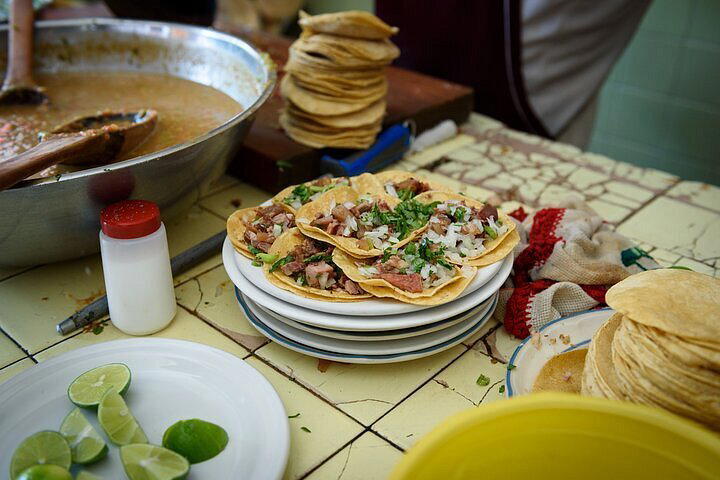
La Pingüica is a classic Mexican taqueria on Calz México-Tacuba in Miguel Hidalgo, serving pastor and suadero tacos for a casual, lively quick bite at dinner or late night.

Pearl is the En Primeur Club membership app, where members save venues, book tables and use the concierge.

The menu
What to order
- Pastor taco
- Suadero taco
Agricultura, Calzada México-Tacuba, and the Rhythm of a Neighbourhood Cantina
The stretch of Calzada México-Tacuba running through the Agricultura barrio of Miguel Hidalgo is not a destination that appears on most visitor itineraries. The neighbourhood sits in the older, denser residential fabric west of the historic centre, where corner tiendas and local fondas serve a population that eats early, eats well, and has little patience for theatre. In that context, La Pingüica occupies an address that tells you something before you walk through the door: this is a place calibrated for the people who live nearby, not for those arriving by rideshare from Polanco. That distinction matters, because it shapes everything from the pace of service to the logic of the menu to the fundamental difference between showing up at noon and showing up after dark.
Mexico City's dining culture has always operated on a pronounced lunch-dinner divide. The afternoon comida, traditionally eaten between 2pm and 4pm, remains the main meal of the day for much of the population, and neighbourhood restaurants in areas like Agricultura are built around that rhythm. The evening is a different register: lighter, sometimes more informal, occasionally more about drink than food. Understanding which mode a place operates in, and whether it shifts between them, is often more useful information than any single menu detail.
The Daytime Case: Comida as the Centrepiece
In cantina-adjacent venues across Mexico City, the midday service tends to carry the kitchen's real ambition. The comida corrida format, which typically delivers a multi-course set at a fixed price, allows a kitchen to concentrate its sourcing and prep around a single daily push. For diners, that means the afternoon window is where value and quality align most reliably. Venues at this tier, comparable in neighbourhood positioning to places like Rosetta in Roma Norte or the more casual end of the Mexico City dining spectrum, often run their most complete kitchen during the lunch hours, with evening menus pared back or simplified.
La Pingüica's address on Calzada México-Tacuba 19-E places it squarely in that neighbourhood-comida tradition. The surrounding Agricultura colonia is not a dining district in any curated sense; it lacks the concentration of press-covered restaurants found in Condesa, Roma, or Juárez. What it has instead is the kind of local clientele that sustains a place on repeat business rather than on tourism. That audience rewards consistency over novelty, which is a different kind of pressure than the one facing tasting-menu operations like Pujol or Quintonil.
Evening Mode and the Cantina Logic
The evening at venues of this type in Mexico City often shifts toward the cantina register: botanas, cold drinks, a shorter menu built around sharing rather than structured courses. The transition is not always formal, some kitchens simply slow down after 6pm, running a reduced card while the bar carries more of the weight. This pattern is well established across the city's older, non-tourist barrios, where the distinction between a restaurant and a cantina is often a matter of hour rather than category.
For visitors oriented toward the high-investment tasting-menu tier, the format that defines much of Mexico City's international reputation, from Em to Sud 777, a neighbourhood place operating on cantina logic represents a different kind of outing. The value proposition is not discovery of a new technique or a chef's evolving vision. It is the more durable pleasure of a kitchen cooking for its own community, on its own terms, without external validation as the operating motive.
Mexico's broader restaurant culture reflects this split at a national scale. The acclaimed venues that have drawn international attention, Alcalde in Guadalajara, KOLI Cocina de Origen in Monterrey, Levadura de Olla in Oaxaca, Animalón in Valle de Guadalupe, operate within the award-circuit conversation. Neighbourhood institutions like La Pingüica do not compete in that register and are not trying to. They compete on the terms that have always governed the comida corrida and the cantina: price, consistency, and the kind of ease that comes from a room that knows exactly what it is.
Placing La Pingüica in the City's Broader Map
Miguel Hidalgo is one of Mexico City's larger and more varied delegaciones, encompassing everything from the high-income streets around Polanco to working-class residential colonias like Agricultura. The colonia itself sits adjacent to the old Tacuba road, one of the ancient routes out of the capital, which gives the area a layered urban character that predates the twentieth-century growth that defines much of the city's periphery. Dining in this part of the city is rarely about spectacle; it is about the accumulated social infrastructure of a neighbourhood that has fed itself for generations.
For context on the wider Mexico City scene, our full Mexico City restaurants guide maps the city's dining across price tiers and neighbourhoods. Further afield, the Mexican coastal and regional dining circuit includes HA' in Playa del Carmen, Le Chique in Puerto Morelos, Huniik in Merida, Lunario in El Porvenir, Pangea in San Pedro Garza Garcia, and Olivea Farm to Table in Ensenada. For reference points outside Mexico, the technical-precision end of the restaurant spectrum is represented by venues like Le Bernardin in New York City and Atomix in New York City, which operate in an entirely different mode and price tier.
Planning a Visit
Frequently asked questions
What is the defining dish or idea at La Pingüica?
Is La Pingüica reservation-only?
What is the signature dish at La Pingüica?
Can La Pingüica accommodate dietary restrictions?
What part of Mexico City is La Pingüica in, and how does that shape the experience?
Comparable Spots, Quickly
Comparable venues nearby, for context on price, style, and recognition.
| Venue | Cuisine | Price | Notes |
|---|---|---|---|
| La PingüicaThis venue (the venue you are viewing) | Classic Mexican Taqueria | $10–20 | Not listed |
| El Bajio | Traditional Mexican | $10–20 | Polanco Chapultepec |
| Aromas | Mexican | Not listed | Lomas Virreyes |
| Vips | Casual Mexican Diner | $10–20 | Independencia |
| La Bipo | Contemporary Mexican Cantina | $20–30 | Del Carmen |
| Barrio Alameda | Mexican Rooftop Bar | Not listed | Tabacalera |
Continue exploring
More in Mexico City
Restaurants in Mexico City
All restaurants in Mexico City →
Bars in Mexico City
All bars in Mexico City →

Details
- Classic
- Casual Hangout
- Late Night
- Standalone
- A La Carte
Current opening hours
- Monday
- 3 PM–12 AM
- Tuesday
- 3 PM–12 AM
- Wednesday
- 3 PM–12 AM
- Thursday
- 3 PM–12 AM
- Friday
- 3 PM–12 AM
- Saturday
- 3 PM–12 AM
- Sunday
- 3 PM–12 AM
Hours can change for holidays and private events. Hours as of .
Casual, bustling street-side taco spot with a focus on slow food and authentic flavors.