On Rue Daunou in Paris's 2nd arrondissement, La Petite Régalade represents the kind of neighbourhood bistro that Parisian dining culture depends on but rarely celebrates loudly. The address sits at a practical remove from the grand-restaurant circuit, making it a reference point for how classical French cooking operates outside the Michelin spotlight. Lunch and dinner here move at different speeds, serving different Paris entirely.
Pearl is the En Primeur Club membership app — saves, bookings, and concierge access live there. Same editors, same standards.
- Address
- 14 Rue Daunou, 75002 Paris, France
- Phone
- +33142601100
- Website
- lapetiteregalade.com
- Directions
- Get directions
 Saves & bookings on Pearl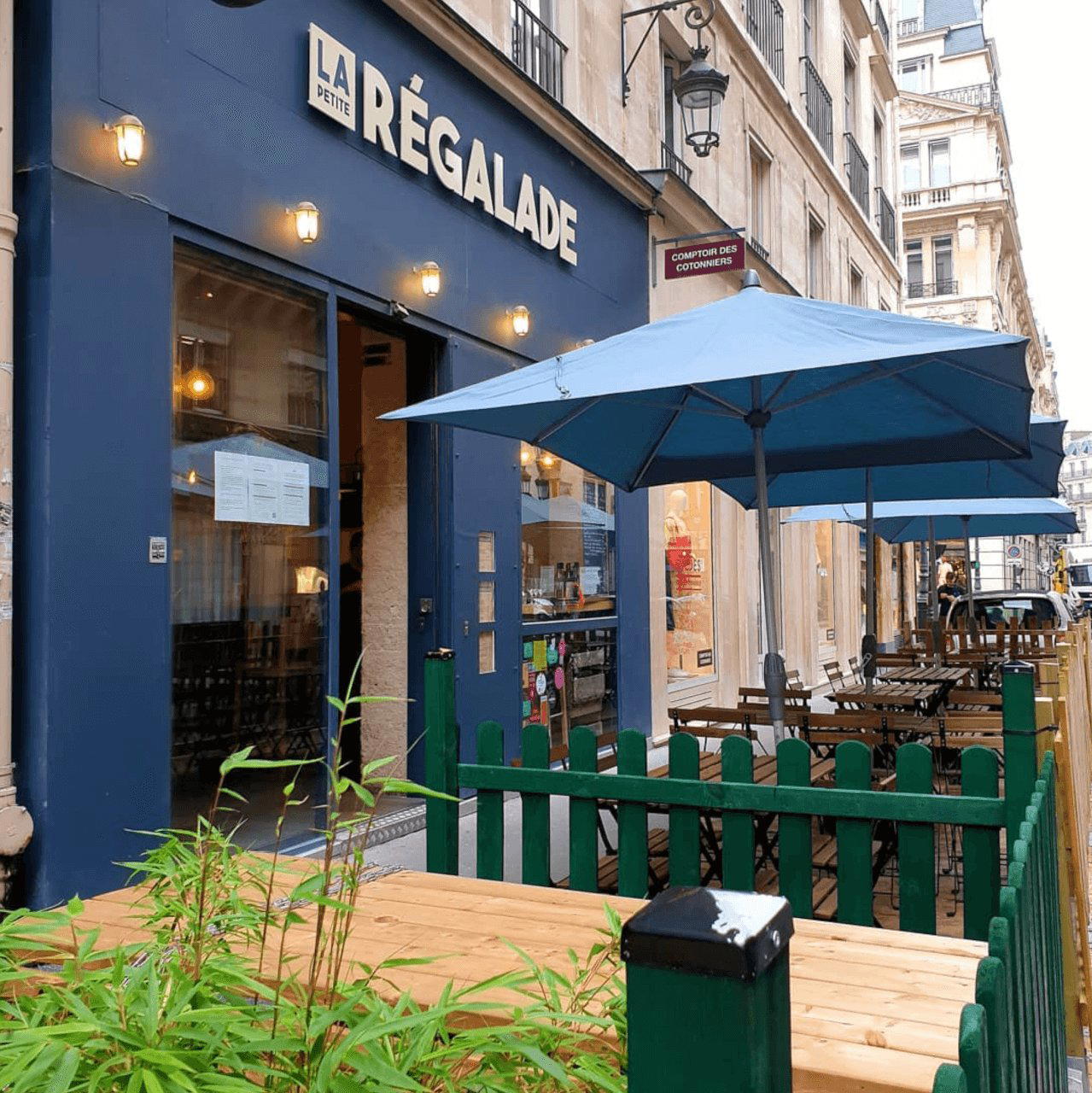
The Second Arrondissement's Bistro Register
Paris's 2nd arrondissement doesn't generate the same editorial attention as Saint-Germain or the Marais, but its dining posture is more representative of how the city actually eats. The streets around the Opéra Comique and the old press district still carry traces of their working lunch culture: restaurants that open for traders, editors, and office workers at noon and shift registers by evening. La Petite Régalade on Rue Daunou operates within that tradition. The address is a few minutes from the Place de la Bourse and a short walk from the Palais Royal gardens, which places it geographically between the grand-café world of the grands boulevards and the quieter residential feel of streets closer to Les Halles. It is a bistro in the structural sense, not a brasserie serving volume, not a gastronomic address pursuing stars, and in Paris that category carries real meaning.
For context on how Paris's premier league operates, the €€€€ tier represented by Alléno Paris au Pavillon Ledoyen, Kei, L'Ambroisie, and Le Cinq at the Four Seasons George V occupies a different competitive tier entirely, formal rooms, tasting menus, and booking windows measured in weeks. La Petite Régalade belongs to a separate stratum: the accessible bistro circuit that feeds repeat custom rather than destination diners.
Lunch vs. Evening: Two Restaurants in One Address
The lunch-dinner divide in French bistro culture is more pronounced than casual visitors expect, and La Petite Régalade illustrates it clearly. At midday, the room functions as it was originally designed to function: fast covers, a set-menu format that removes decision fatigue, and a clientele that expects to be back at a desk within ninety minutes. The value proposition at lunch in this tier typically centres on a two- or three-course formule at a price point that undercuts the same kitchen's evening offer by a meaningful margin. That pattern is consistent across the 2nd arrondissement's working bistro stock and reflects a pricing logic tied to cover turnover rather than margin per plate.
By evening, the room changes character. The pace slows. Tables that turned twice at noon hold for a single sitting. The clientele shifts from professionals eating on schedule to couples and small groups with time to consider the wine list. The light at this latitude in autumn and winter means that even an early dinner reservation at 7:30pm arrives in darkness, which changes how the room feels. The bistro format, closely spaced tables, a short but considered menu, a wine list weighted toward the Loire, Burgundy, and Rhône, suits the evening better in one sense: there is room to linger. The lunch version suits a particular kind of visitor better: those who want to eat seriously without surrendering a full afternoon.
This split is not unusual in Paris's neighbourhood restaurant stock. What matters is knowing which version of the address you are booking into. The 2nd arrondissement's lunch rhythm is among the more reliable expressions of how Parisian business culture and bistro cooking intersect, a dynamic that operates with similar logic at the working-lunch addresses around Arpège's neighbourhood in the 7th, though at a different price point and register.
Classical French Bistro Cooking in Its Natural Habitat
The category the restaurant occupies, classical French bistro cooking in a neighbourhood setting, has been under pressure in Paris for two decades. Rising rents in central arrondissements have pushed many of these addresses into either upmarket repositioning or closure. The ones that survive do so by maintaining a clear identity: a menu short enough to reflect what arrived at the market that morning, cooking technique that reads as French without nostalgia, and pricing that brings the same customer back monthly rather than annually.
This model differs structurally from what France's destination restaurants offer. Properties like Mirazur in Menton, Flocons de Sel in Megève, Bras in Laguiole, or Troisgros in Ouches ask visitors to travel to them and build an experience around destination and landscape. A Paris bistro like La Petite Régalade asks nothing of the diner except proximity and appetite. The cooking tradition behind it, stocks, reductions, seasonal proteins, a cheese course that arrives without being requested, is the same French culinary infrastructure that underpins Auberge de l'Ill and Paul Bocuse's Auberge du Pont de Collonges, just expressed without the ceremony or the invoice.
Regional French cooking at serious addresses outside Paris, Assiette Champenoise in Reims, Au Crocodile in Strasbourg, or Auberge du Vieux Puits in Fontjoncouse, draws on regional produce and identity in ways that a Paris bistro cannot replicate. What the Paris bistro offers instead is density of choice: the city's wholesale markets supply an enormous range of produce, and a kitchen on Rue Daunou can source at a level that provincial restaurants with larger reputations sometimes struggle to match.
Rue Daunou and How to Approach the Booking
The address, 14 Rue Daunou, places the restaurant two blocks from the Avenue de l'Opéra and within walking distance of the Palais Royal-Musée du Louvre metro station (lines 1 and 7) and Opéra (lines 3, 7, 8). The 2nd arrondissement is well served by public transit, and the walk from either station is flat and brief. For visitors based on the Right Bank, this is a practical lunch stop between cultural visits; for those based further out, it warrants a specific trip only if the bistro format is what they are looking for rather than a monument to French haute cuisine.
Booking is recommended, especially for dinner and weekend lunch. Given that the 2nd arrondissement's popular bistros frequently fill their evening covers by mid-week, arriving without a reservation is a reasonable strategy only at lunch, when walk-in chances are higher.
Le Bernardin in New York represents its most rigorous transatlantic expression, while AM par Alexandre Mazzia in Marseille shows where that tradition is being pulled in a more experimental direction within France itself. The bistro category sits between those poles, defined by repetition and reliability rather than innovation.
Quick Comparison
Comparable venues nearby, for context on price, style, and recognition.
| Venue | Cuisine | Price | Notes |
|---|---|---|---|
| La Petite RégaladeThis venue — the venue you are viewing | Aveyronnais Bistro | $$$ | Not listed |
| Le Voltaire | Classic French Brasserie | $$$ | 7e Arr. – Palais Bourbon |
| Le Poulpry | Modern Traditional French | $$$ | 7th Arr. - Palais-Bourbon |
| L'Ascension | Modern French Bistro | $$$ | Saint-Georges |
| Momen | Modern French Bistronomy | $$$ | Paris 08 |
| Market | French-Asian Fusion | $$$ | 8th Arr. - Élysée |
Continue exploring
More in Paris
Restaurants in Paris
Browse all →
Bars in Paris
Browse all →
Hotels in Paris
Browse all →
Wineries in Paris
Browse all →
At a Glance
- Cozy
- Classic
- Rustic
- Date Night
- Special Occasion
- Open Kitchen
- Sommelier Led
- Local Sourcing
Current opening hours
- Monday
- 12–2:30 PM, 7–10:30 PM
- Tuesday
- 12–2:30 PM, 7–10:30 PM
- Wednesday
- 12–2:30 PM, 7–10:30 PM
- Thursday
- 12–2:30 PM, 7–10:30 PM
- Friday
- 12–2:30 PM, 7–10:30 PM
- Saturday
- Closed
- Sunday
- Closed
Hours can change for holidays and private events. Last verified .
Cozy bistro atmosphere with a focus on generous, comforting French classics in a small, welcoming space near the Opera.