On Rue des Écoles in the 5th arrondissement, La Petite Périgourdine carries the culinary traditions of the Périgord into the heart of the Latin Quarter. The kitchen draws on one of France's most codified regional cuisines, built around duck confit, foie gras, and walnut-dressed salads. It occupies the tier of neighbourhood bistros that preserve regional specificity rather than chasing contemporary trends.
Pearl is the En Primeur Club membership app — saves, bookings, and concierge access live there. Same editors, same standards.
- Address
- 39 Rue des Écoles, 75005 Paris, France
- Phone
- +33143263335
- Directions
- Get directions
 Saves & bookings on Pearl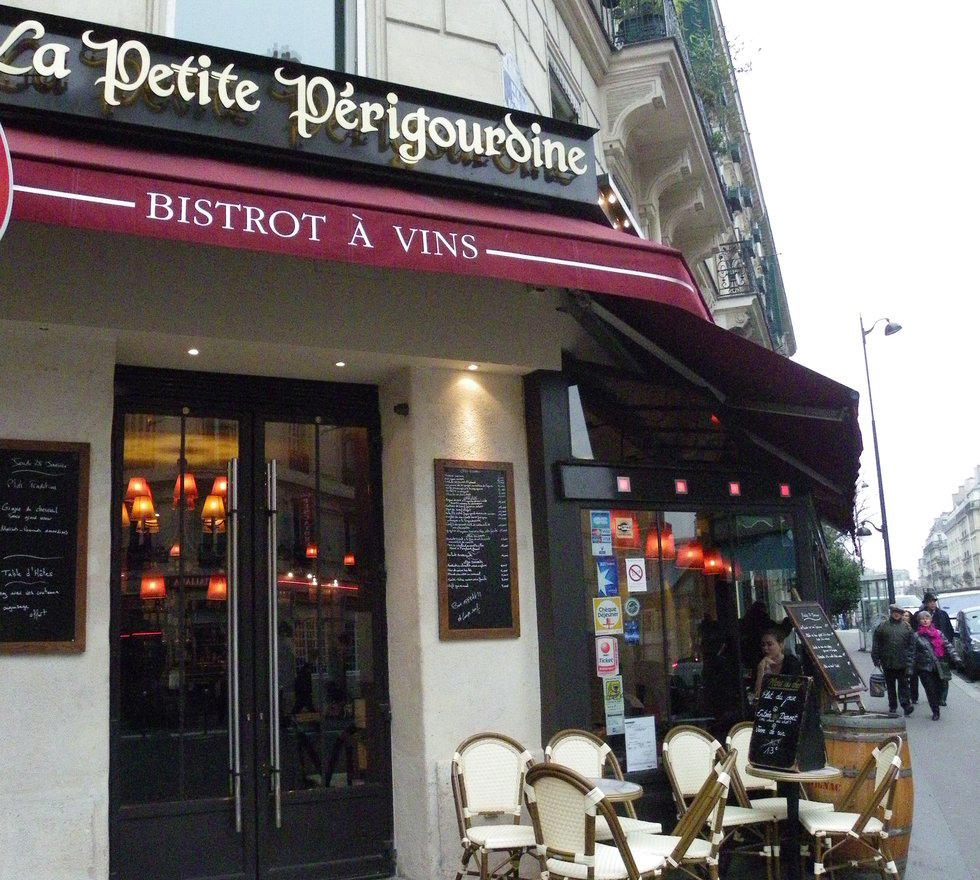
The Périgord in Paris: A Culinary Tradition on Rue des Écoles
French regional cuisine has always had an uneasy relationship with the capital. Paris absorbs, refines, and sometimes flattens what arrives from the provinces, but a handful of addresses on the Left Bank have spent decades doing the opposite: holding a specific regional identity steady against the pull of Parisian modernism. La Petite Périgourdine, at 39 Rue des Écoles in the 5th arrondissement, belongs to that category. It represents the Périgord, a region in the Dordogne whose cuisine is among the more self-consistent in France, built on a short list of ingredients that appear in almost every serious kitchen in the area: duck in its many transformations, foie gras, truffles in season, walnuts, and the fat-enriched sauces that the rest of French gastronomy spent the 1970s trying to abandon.
The Latin Quarter context matters here. The 5th arrondissement has supported neighbourhood restaurants serving students, academics, and long-term residents since before Haussmann reorganised the city. Rue des Écoles, named for the educational institutions clustered along it, runs close to the Sorbonne and the Collège de France, which has meant generations of regular clientele who want substance over spectacle. That neighbourhood dynamic has protected certain restaurants from the pressure to renovate every five years.
What the Périgord Actually Means at the Table
Périgordine cuisine is not a vague geographical label. It carries specific technical commitments. Duck confit, for instance, is not simply a slow-cooked leg: the traditional preparation involves curing in salt and aromatics, slow cooking in the bird's own rendered fat, and preserving under that same fat, a process that predates refrigeration and remains one of the more practical demonstrations of French charcuterie logic. Foie gras from the Périgord, particularly from the Dordogne and neighbouring Lot-et-Garonne, holds Protected Geographical Indication status in certain categories, distinguishing it from generic French foie gras by geography, breed, and feeding protocol.
This is the culinary tradition that La Petite Périgourdine anchors itself to. Where restaurants like Alléno Paris au Pavillon Ledoyen or Arpège operate at the intersection of French classicism and avant-garde technique, and where Kei blends French structure with Japanese precision, La Petite Périgourdine occupies a different register entirely: the preservation of regional specificity without apology or ironic reframing.
That distinction is not trivial. France's most celebrated restaurant addresses, from L'Ambroisie on Place des Vosges to Le Cinq at the Four Seasons Hôtel George V, operate within a tradition of haute cuisine that deliberately transcends regional identity. Regional specialists operate on a different logic, where authenticity to a specific geography is itself the value proposition. The same principle sustains a cluster of France's most durable provincial tables, from Auberge de l'Ill in Illhaeusern to Bras in Laguiole, where the landscape around the kitchen defines the plate as much as the chef's training.
The Latin Quarter Bistro Tier: Context and Peers
Within Paris, the category of regionally identified bistro operates in a crowded and often undifferentiated market. The 5th and 6th arrondissements have dozens of restaurants claiming Gascon, Basque, Lyonnais, or Alsatian identity, many of which have softened their regional commitments to accommodate broader appetites. The addresses that maintain discipline, specific sourcing regions, traditional preparations, and menus that change with season rather than trend, form a smaller subset. La Petite Périgourdine's position on Rue des Écoles places it within walking distance of the Seine and the major tourist corridors, which makes the maintenance of regional specificity both a commercial challenge and a differentiating asset.
For readers accustomed to the starred end of the French spectrum, the contrast is instructive. Flocons de Sel in Megève, Mirazur in Menton, and Troisgros in Ouches all practice forms of regional rootedness at the level of three Michelin stars. The bistro tier does the same work at a different price point and without the ceremony, trading tableside theatre for neighbourhood regularity. That trade-off suits a specific kind of traveller: one who wants to eat well in Paris without the advance booking logistics of the starred tier, and who values culinary specificity over spectacle.
Planning Your Visit: How La Petite Périgourdine Compares
| Restaurant | Category | Price Tier | Booking Lead Time |
|---|---|---|---|
| The restaurant | Regional French (Périgord) | Not confirmed | Walk-in or short notice likely |
| L'Ambroisie | French, Classic | €€€€ | Weeks to months ahead |
| Alléno Paris au Pavillon Ledoyen | Creative | €€€€ | Weeks to months ahead |
| Kei | Contemporary French / Modern | €€€€ | Weeks ahead |
| Le Cinq | French, Modern | €€€€ | Weeks to months ahead |
For a broader orientation across the full Paris dining spectrum, the EP Club Paris restaurants guide covers addresses from neighbourhood bistros to starred dining rooms across all arrondissements.
The regional bistro format represented by the restaurant also connects to a wider network of French addresses worth noting for readers travelling beyond Paris. Paul Bocuse's Auberge du Pont de Collonges near Lyon, Auberge du Vieux Puits in Fontjoncouse, AM par Alexandre Mazzia in Marseille, Assiette Champenoise in Reims, and Au Crocodile in Strasbourg each represent regional French cooking at different price points and ambition levels. For international comparisons in the French tradition, Le Bernardin in New York and Atomix in the same city demonstrate how French technique travels and transforms outside its home geography.
How La Petite Périgourdine Paris compares with similar nearby venues.
| Venue | Cuisine | Price |
|---|---|---|
| LAVA - Cuisine & Vin | Modern Cuisine | €€€ |
| Maison Cluny | Traditional Cuisine | €€ |
Continue exploring
More in Paris
Restaurants in Paris
Browse all →
Bars in Paris
Browse all →
Hotels in Paris
Browse all →

At a Glance
- Classic
- Cozy
- Elegant
- Casual Hangout
- Terrace
- Extensive Wine List
- Local Sourcing
- Street Scene
Current opening hours
- Monday
- 8 AM–12:30 AM
- Tuesday
- 8 AM–12:30 AM
- Wednesday
- 8 AM–12:30 AM
- Thursday
- 8 AM–12:30 AM
- Friday
- 8 AM–12:30 AM
- Saturday
- 8 AM–12:30 AM
- Sunday
- 8:30 AM–12:30 AM
Hours can change for holidays and private events. Last verified .
Welcoming bistro atmosphere with terrace seating and a focus on hearty, traditional French dishes.