Our verdict
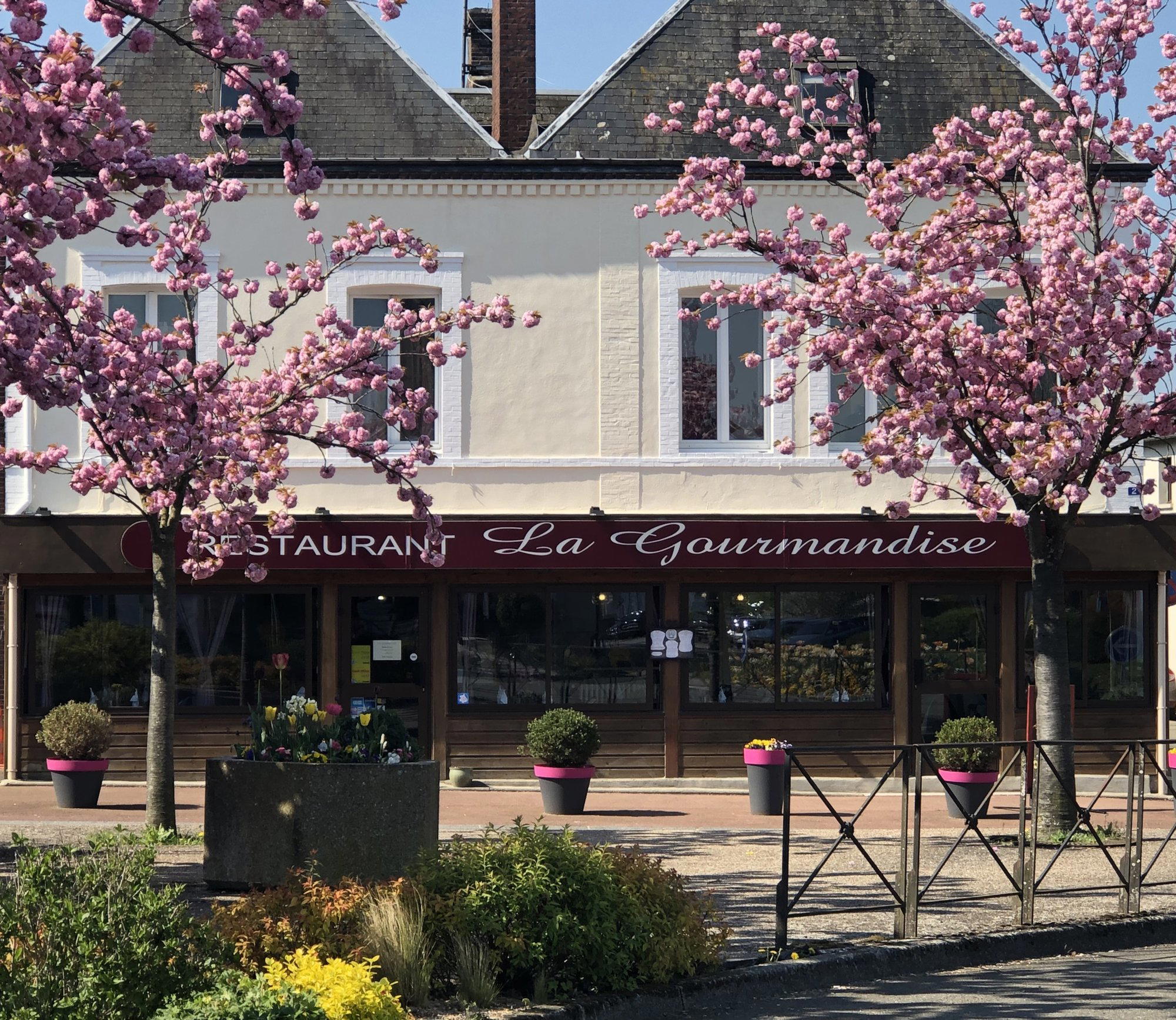
La Gourmandise occupies a quiet position on the Place de la Gare in La Loupe, a small market town in the Perche region of Eure-et-Loir. The surrounding agricultural country, with its bocage hedgerows and traditional farms, defines what ends up on plates in this part of France. For travellers passing through the Perche or making a deliberate detour from Paris, the address offers a grounded, locally rooted dining experience at a scale the capital cannot replicate.

Pearl is the En Primeur Club membership app, where members save venues, book tables and use the concierge.
The menu
What to order
- Chicken in goat cheese sauce
- Steak
- Dos de cabillaud
- Paris-Brest revisité
- Foie gras de canard
- Camembert chaud
Where the Perche Puts Something on the Table
The Place de la Gare in La Loupe is not a destination square. The station forecourt of a small Eure-et-Loir town, roughly 130 kilometres southwest of Paris along the old Le Mans line, it has the unhurried quality of a place that does not need to perform for tourists. That quality is, arguably, what makes La Gourmandise worth understanding. French regional dining at this scale operates under different logic than the celebrated tables at, say, Alléno Paris au Pavillon Ledoyen or Mirazur in Menton. The kitchen does not answer to a Michelin inspector's calendar or a critic's quarterly round-up. It answers, first, to what the Perche produces.
The Perche is an agricultural pays with a distinct identity: bocage landscape, traditional Norman cattle, game from managed forests, and a market culture that has survived the consolidation hitting rural France elsewhere. A town like La Loupe, with a weekly market and proximity to working farms, sits inside a supply network that urban restaurants spend considerable effort and money simulating. Here, that proximity is structural, not aspirational. It shapes what a kitchen like La Gourmandise can reasonably put on a plate without importing ingredients from three regions away.
The Sourcing Logic of Perche Cooking
French regional cuisine at the pays level has always operated on a shorter supply chain than the grands restaurants. The question for any kitchen in a town like La Loupe is whether it uses that proximity deliberately or simply takes it for granted. The Perche's agricultural character gives a local kitchen access to ingredients that require genuine effort to source from Paris: Percheron-raised poultry, river fish from the Huisne valley, game in season, and the dairy products that Normandy's proximity makes almost obligatory. Cream and butter in this part of France are not luxury additions; they are baseline materials.
This stands in contrast to the sourcing narratives you encounter at destination restaurants like Bras in Laguiole or La Marine in Noirmoutier-en-l'île, where ingredient provenance is a formal editorial position and appears on the menu with farm names and coordinates. At the town-restaurant level in provincial France, sourcing tends to be embedded in practice rather than announced in text. The value is real; the marketing apparatus around it is absent. For a certain kind of traveller, that absence is itself the point.
The broader Perche region has attracted attention in recent years as Parisian second-home buyers and food-conscious relocators have moved into the area, bringing with them demand for better local produce markets and artisan producers. That demographic shift has, in other parts of rural France, pushed local restaurants to formalise and sharpen what they were already doing informally. Whether La Loupe has followed that trajectory is something a visit rather than a database can answer, but the underlying ingredient geography remains favorable.
La Loupe in the Context of Perche Dining
La Loupe is not Nogent-le-Rotrou, the Perche's larger commercial centre, and it is not Bellême, the hilltop town that draws weekend visitors from Paris for its organic market and forest walks. It occupies a middle position: a working town with a rail connection and a local economy that does not depend on tourism. Restaurants in this context serve a community first and passing trade second, which tends to produce a different rhythm than resort or destination dining.
For anyone travelling the Paris-Le Mans corridor by rail, La Loupe is a logical stop. The TER regional service connects it to Chartres and onwards to Paris Montparnasse, making a lunch stop viable without a car. That accessibility is worth noting because much of what makes provincial French dining interesting is structurally difficult to reach. The celebrated auberges of the French countryside, from Auberge de l'Ill in Illhaeusern to Auberge du Vieux Puits in Fontjoncouse, generally require a car and a planned overnight. A town restaurant on a station square does not.
For those building a broader itinerary around French regional cooking, the Perche sits in a corridor that connects Greater Paris to the Loire Valley and the Atlantic coast. Combining La Loupe with a longer drive towards Christopher Coutanceau in La Rochelle or looping north to Assiette Champenoise in Reims is geographically coherent. The restaurant itself is not the anchor of such a trip, but it can function as an honest, regional meal at a moment in the journey when the grand-table format would feel mismatched.
What to Expect and How to Approach It
Planning a visit to La Gourmandise requires managing expectations in both directions. This is not a destination restaurant in the mode of Flocons de Sel in Megève or Georges Blanc in Vonnas, where the kitchen is the reason for the journey and the surrounding town is secondary. Nor is it a bistro cliché operating on autopilot. Town restaurants in this tier of French provincial life occupy a specific register: honest cooking, regional materials, a room that serves the community rather than performs for visitors. At its finest, that register produces meals that illustrate something about French food culture that no amount of reading about Paul Bocuse or Troisgros can fully convey.
The address on the Place de la Gare is confirmed at 2 Place de la Gare, 28240 La Loupe. Given La Loupe's size, walk-in availability at lunch is a reasonable expectation, particularly on weekdays, but verifying current hours before a trip is advisable. See our full La Loupe restaurants guide for further context on what the town offers.
For readers whose interest in French cooking extends to the more technically ambitious end of the spectrum, the broader EP Club coverage of AM par Alexandre Mazzia in Marseille, Au Crocodile in Strasbourg, and L'Oustau de Baumanière in Les Baux maps the higher end of the regional dining spectrum. La Gourmandise belongs to a different register, and the comparison is contextual rather than competitive. International diners accustomed to the format of Le Bernardin in New York or Atomix will find something categorically different here, which is precisely its relevance as a data point in any serious account of how French people actually eat.
Frequently asked questions
Would La Gourmandise be comfortable with kids?
La Gourmandise sits on the Place de la Gare in La Loupe, a working town square rather than a formal dining address, which typically signals a relaxed room with tolerance for families. That said, confirming current seating arrangements and service style directly with the restaurant before visiting with young children is advisable.
What should I expect atmosphere-wise at La Gourmandise?
The address, 2 Place de la Gare, the station forecourt of a small Eure-et-Loir town, positions La Gourmandise firmly in the neighbourhood-restaurant register rather than the destination-dining one. Expect a room that reflects La Loupe itself: a practical, unpretentious Perche market town roughly 130 kilometres southwest of Paris, not a weekend-visitor showcase like Bellême. The experience is oriented around the local rather than the tourist.
Is La Gourmandise worth a stop if you're passing through the Perche on the way to or from Paris?
La Loupe sits roughly 130 kilometres southwest of Paris, on a corridor that connects the capital to the deeper Perche and lower Normandy, making La Gourmandise a plausible lunch stop rather than a detour requiring separate planning. It is not a destination restaurant in the mode of a Michelin-starred address, so the calculation is straightforward for anyone already routing through Eure-et-Loir. The Place de la Gare location means parking and access are practical by French town standards.
What's the best thing to order at La Gourmandise?
What the La Loupe context does suggest is a kitchen working within the pays-level sourcing logic of Perche cooking, where the short supply chain between producer and plate shapes the menu more than any fixed signature dish. Checking with the restaurant directly will give you the most accurate picture of what is being served on a given day.
What's the address for La Gourmandise?
La Gourmandise is located at 2 Pl. de la Gare, 28240 La Loupe, France, La Loupe.
Comparable Spots, Quickly
Comparable venues nearby, for context on price, style, and recognition.
| Venue | Cuisine | Price | Notes |
|---|---|---|---|
| La GourmandiseThis venue (the venue you are viewing) | Traditional French Bistro | $30–50 | Not listed |
| L'Orbecquoise | Traditional French Normandy Bistro | $20–30 | town centre |
| La Reserve | French Bistro | $20–30 | Place de la République, city center |
| In Situ | Traditional French Tavern | $20–30 | centre ville |
| Le Bizetro | Traditional French Bistro | $30–50 | 16e Arrondissement |
| Chez André | Traditional French Brasserie | $50–100 | 8th Arr. - Élysée |
Continue exploring
More in La Loupe

Details
- Classic
- Cozy
- Rustic
- Family
- Casual Hangout
- Group Dining
- Terrace
- Beer Program
- Local Sourcing
- Prix Fixe
- A La Carte
- Wine
- Beer
Current opening hours
- Monday
- Closed
- Tuesday
- Closed
- Wednesday
- 12–1:30 PM, 7–8:30 PM
- Thursday
- 12–1:30 PM, 7–8:30 PM
- Friday
- 12–1:30 PM, 7–8:30 PM
- Saturday
- 12–1:30 PM, 7–8:45 PM
- Sunday
- 12–1:30 PM
Hours can change for holidays and private events. Hours as of .
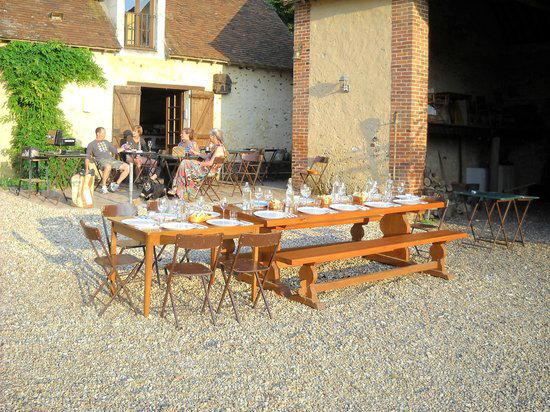
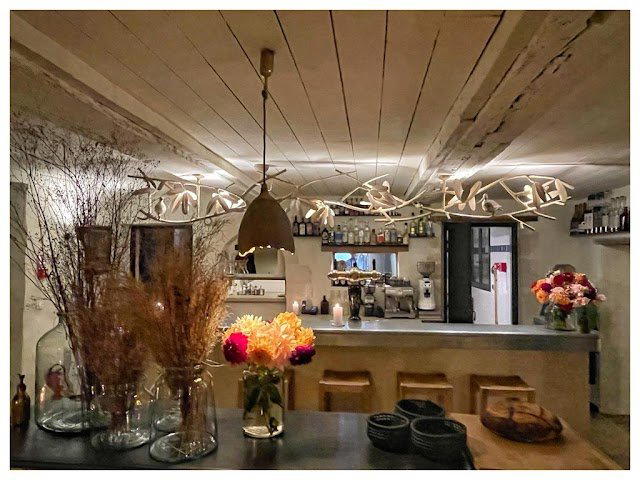
Unpretentious dining room with attentive service; warm and welcoming atmosphere focused on savoring the meal rather than rushing.