Kusaki
Kusaki occupies a quiet stretch of West Los Angeles where the city's serious Japanese dining conversation has been quietly shifting for years. The room earns attention through spatial restraint rather than spectacle, positioning it alongside the intimate counter-format tradition that defines the upper tier of LA's Japanese scene. For reservations and planning, the address is 2535 S Barrington Ave, Los Angeles, CA 90064.
- Address
- 2535 S Barrington Ave, Los Angeles, CA 90064
- Phone
- +14243989178
- Website
- kusakila.com
- Directions
- Get directions
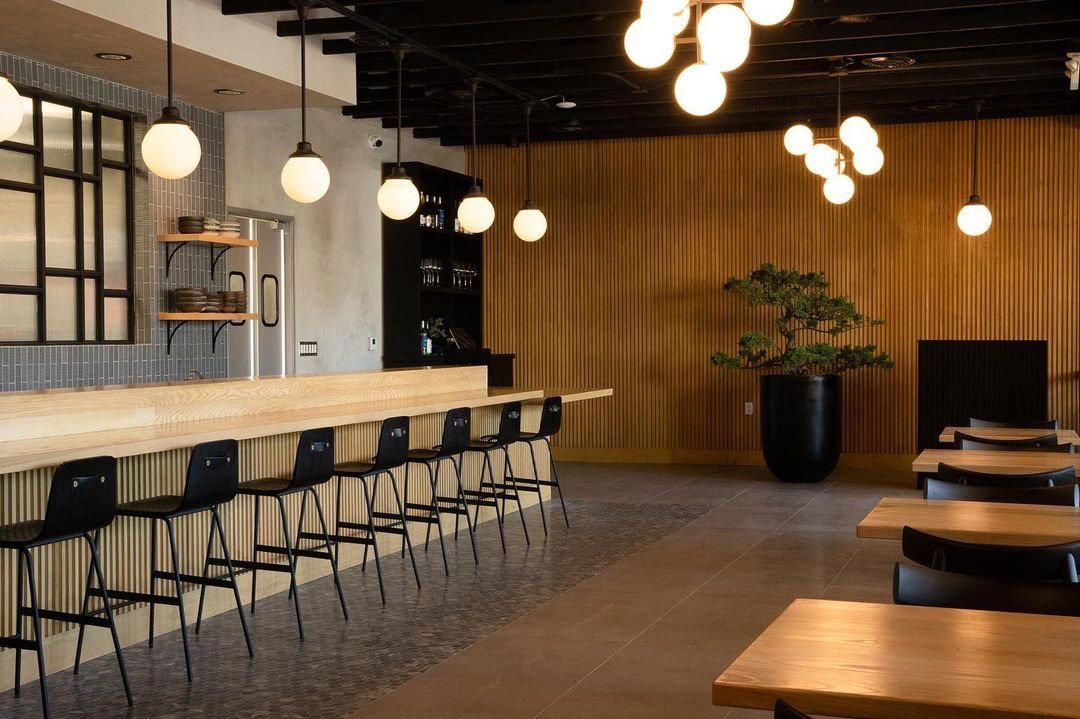
Where the Room Does the Talking
West Los Angeles has a particular relationship with Japanese dining that differs from the denser, more theatrical corridors of Beverly Hills or downtown. The restaurants that have taken hold along these quieter residential-commercial streets tend to operate on a register of deliberate restraint: smaller rooms, fewer seats, less signage. Kusaki, at 2535 S Barrington Ave, fits that pattern. The address sits in a part of the Westside where serious dining happens without announcement, where the physical container of the restaurant is itself a form of editorial — a signal about what the kitchen values and what kind of attention it expects from its guests.
Los Angeles's Japanese dining tier has bifurcated sharply over the past decade. On one side: the high-production omakase rooms oriented toward occasion dining and social media legibility, where the drama of the counter is partly the point. On the other: smaller, more architecturally spare spaces that foreground the food through subtraction rather than addition. Kusaki belongs to the second tendency. The West LA corridor that includes venues like Hayato — one of the few Los Angeles Japanese restaurants with documented Michelin recognition, has established a precedent for this quieter register, and Kusaki reads as a participant in that ongoing conversation rather than an outlier from it.
The Space as Argument
Interior architecture in this category of restaurant is not decorative but functional in a particular way. When a dining room is stripped of ornament, no elaborate lighting rigs, no curated soundtrack at volume, no theatrical plating theatrics performed tableside, the physical materials themselves carry the full weight of atmosphere. This is a demanding condition for a room to meet. The spatial logic of counter-format Japanese dining, which places guests in direct proximity to the kitchen's work, demands that every surface, every sightline, and every acoustic property be considered as part of the overall experience.
What this means in practice, at venues of this type, is that wood grain, stone, and negative space do the work that elsewhere falls to chandeliers or carefully distressed brick. The counter format, whether eight seats or twelve, creates a fundamentally different social contract than a restaurant floor of tables. There is no hiding in a corner. The kitchen's pace becomes the room's pace. That architectural intimacy is a commitment on both sides: the kitchen commits to full transparency, and the guest commits to attention. Restaurants in this tier in Los Angeles, from Kato's restrained New Taiwanese room to the more theatrical spatial language of Somni, have each solved that problem differently.
Situating Kusaki in the LA Fine Dining Map
Los Angeles's serious dining scene has never organized itself neatly around a single district, which makes peer-set comparisons more instructive than geography. The relevant comparison set for Kusaki is not defined by neighborhood but by format and price tier. At the upper end of the city's restaurant spectrum, you find venues like Providence, which anchors the contemporary seafood conversation with sustained critical recognition, and Osteria Mozza, which operates as the reference point for Italian in the city. Japanese dining occupies its own parallel track, one that has become increasingly credentialed over the past several years as Michelin's Los Angeles presence has matured.
Within that Japanese track, Hayato has functioned as a kind of benchmark, a kaiseki-format room in Boyle Heights that demonstrated Los Angeles could support the most demanding end of Japanese seasonal cooking. What the location and context do confirm is a market that will draw comparisons to the best-performing small-format Japanese rooms in the city.
Nationally, the counter-format fine dining model Kusaki appears to participate in has found its most rigorous expressions at places like Single Thread Farm in Healdsburg and The French Laundry in Napa, where the relationship between physical space and service tempo is architected as carefully as the menu. In the Japanese-rooted context specifically, the counter format carries additional weight: it is the primary vehicle through which the most technically demanding cooking in the tradition gets transmitted to guests. Venues like Atomix in New York City have demonstrated that the format can absorb significant critical and cultural ambition without losing the intimacy that defines it.
The West LA Dining Context
The stretch of West Los Angeles around Barrington Avenue does not function like a restaurant district in the conventional sense. There is no clustering effect, no block where three comparable venues operate in proximity and cross-pollinate audiences. What exists instead is a diffuse pattern of serious independent restaurants distributed across residential streets, supported by a local demographic with the disposable income and dining literacy to sustain them. This is the condition under which some of the city's most durable independent restaurants have operated, away from the foot traffic economics that drive decisions in more central locations.
That context has implications for how Kusaki should be approached. This is not a walk-in neighborhood restaurant in the sense of a casual drop-in, the format and likely price point position it as a planned destination. Guests coming from elsewhere in the city will find the Westside accessible by the 405 corridor, and the surrounding streets offer parking in volumes that more central districts cannot. For visitors staying in West Hollywood, Santa Monica, or Bel Air, the travel time is manageable in a way that a Boyle Heights or downtown destination would not be on the same evening's itinerary. For the full scope of what Los Angeles's serious dining scene offers across neighborhoods and cuisine types, the EP Club Los Angeles restaurants guide provides a structured map.
Comparable small-format ambition exists in other American cities, Lazy Bear in San Francisco, Alinea in Chicago, Addison in San Diego, Blue Hill at Stone Barns in Tarrytown, Bacchanalia in Atlanta, and The Inn at Little Washington, but Los Angeles's specific combination of Japanese culinary tradition, ingredient access from both Pacific and agricultural sources, and a maturing fine dining audience makes the Westside's current generation of intimate rooms particularly worth tracking.
Planning Your Visit
Kusaki is at 2535 S Barrington Ave, Los Angeles, CA 90064, in a section of West LA where street parking and nearby structure options are generally available without the pressure of denser commercial corridors. Given the format typical of serious small-format Japanese rooms in this tier, reservations should be treated as essential rather than optional, the inventory of seats at this scale of restaurant is limited by design, and demand in this price tier across Los Angeles has consistently outpaced availability for venues with genuine critical traction.
For context on what this tier of Los Angeles dining demands in terms of planning, the comparison to venues like Emeril's in New Orleans, Le Bernardin in New York City, or 8 1/2 Otto e Mezzo Bombana in Hong Kong is useful: at this level of ambition globally, booking windows of four to eight weeks are standard, and evening seatings at counter-format rooms typically run on a single or double-seating model that does not accommodate late arrivals.
The Short List
A quick peer reference to anchor this venue in its category.
| Venue | Cuisine | Price |
|---|---|---|
| KusakiThis venue — the venue you are viewing | Not listed | Not listed |
| Kato | New Taiwanese, Asian | $$$$ |
| Hayato | Japanese | $$$$ |
| Vespertine | Progressive, Contemporary | $$$$ |
| Camphor | French-Asian, French | $$$$ |
| Gwen | New American, Steakhouse | $$$$ |
Continue exploring
More in Los Angeles
Restaurants in Los Angeles
Browse all →
Bars in Los Angeles
Browse all →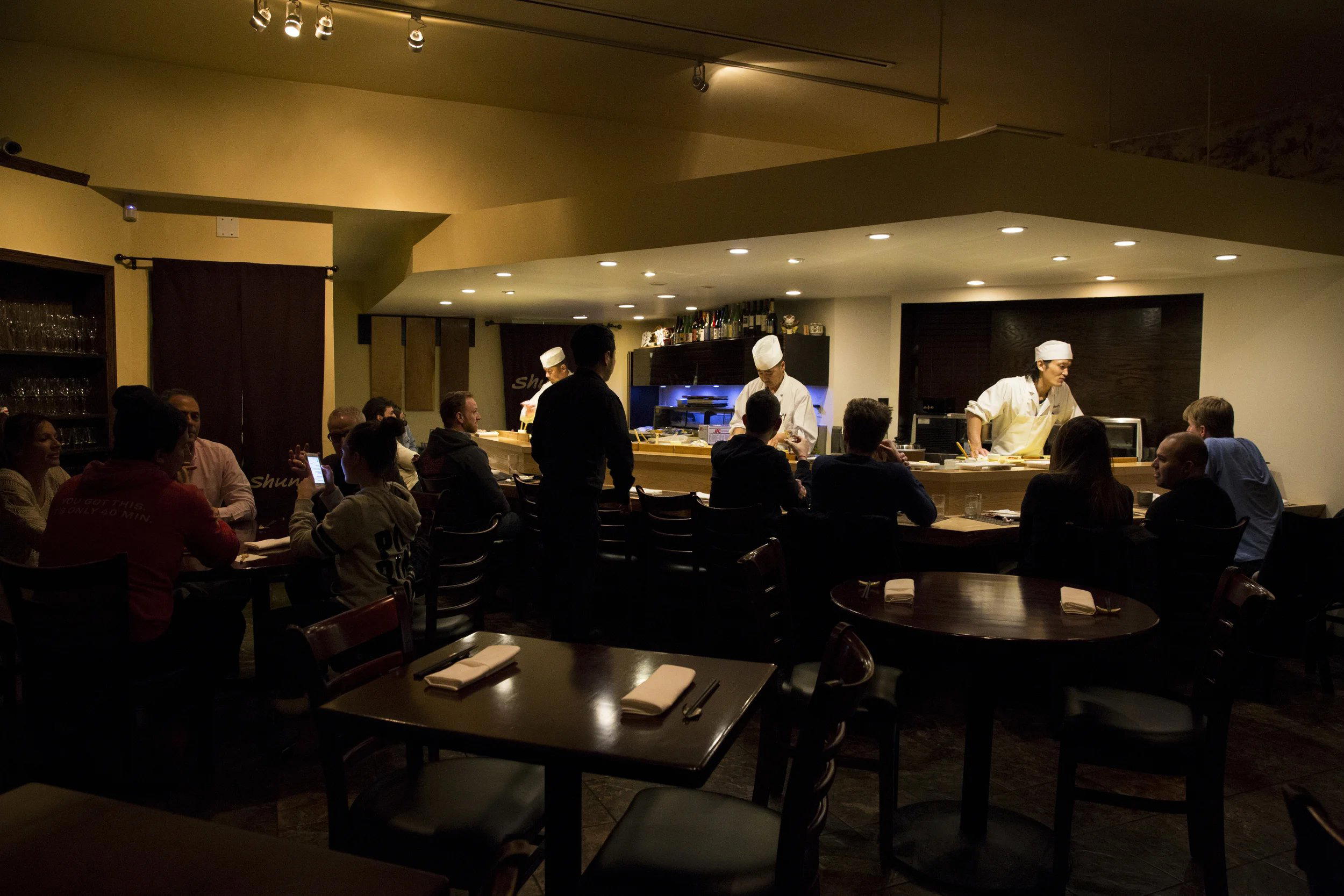
Hotels in Los Angeles
Browse all →
Wineries in Los Angeles
Browse all →
At a Glance
- Minimalist
- Modern
- Intimate
- Elegant
- Date Night
- Special Occasion
- Chefs Counter
- Open Kitchen
- Local Sourcing
- Organic
Modern, dimly lit minimalist space offering serene intimacy despite strip mall location.
Know Before You Go
- Getting there
- 2535 S Barrington Ave, Los Angeles, CA 90064