Kunjip

Our verdict
A Santa Clara Koreatown fixture since 2009, Kunjip draws two distinct crowds: those after the restorative pull of its oxtail bone broth seolleongtang, and those drawn to the galbijjim, a stone pot of short ribs and rice cakes in a sweet, fiery braising liquid. It is the kind of Korean kitchen where the food does the talking and the regulars know exactly what they came for.

Pearl is the En Primeur Club membership app, where members save venues, book tables and use the concierge.
The Koreatown Counter That Divides the Room
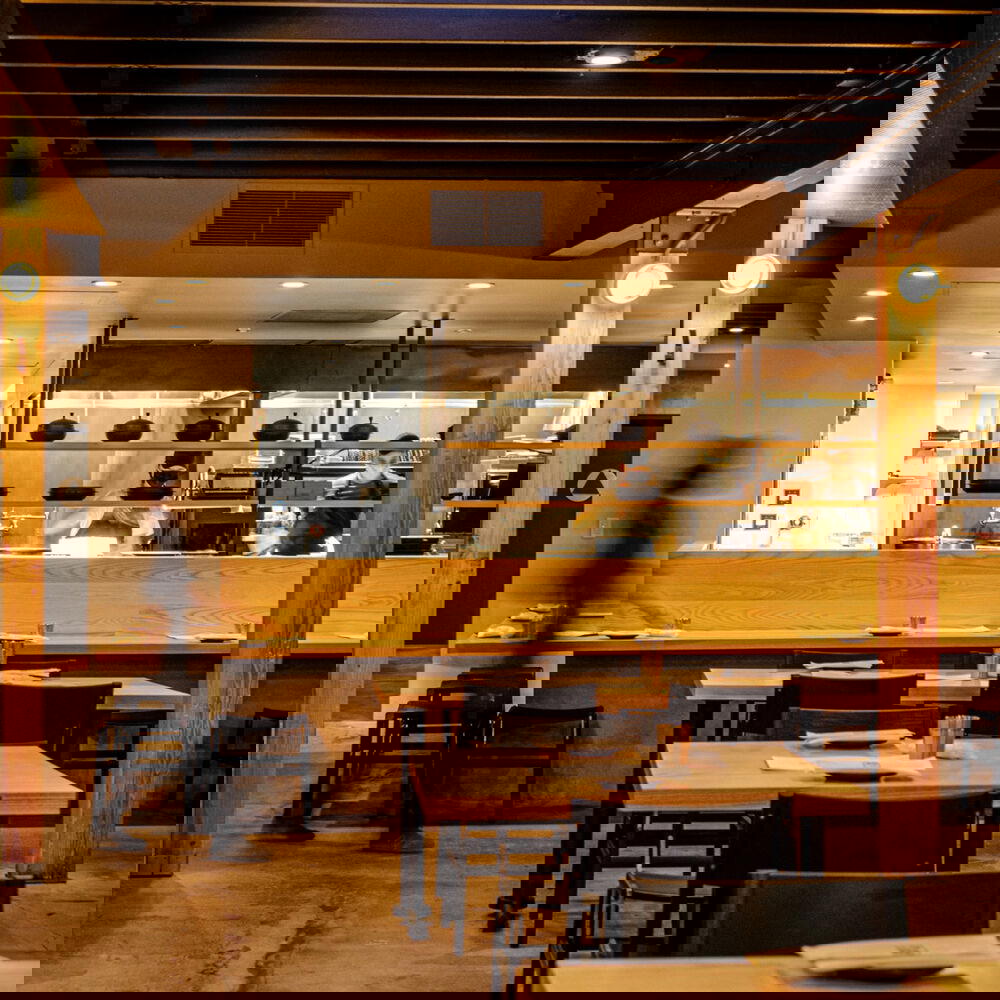
Pull into the stretch of Kiely Boulevard that anchors Santa Clara's Koreatown and the restaurant choices compress quickly into a focused set of Korean kitchens built for neighborhood regulars rather than passing visitors. Kunjip has occupied this strip since 2009, long enough to have outlasted trends and accumulated the kind of quiet authority that comes from serving the same community across more than fifteen years. The dining room signals nothing theatrical. What matters here is on the table.
That longevity places Kunjip in a specific tier within the Bay Area's Korean dining ecosystem. The South Bay has never generated the same volume of Korean-cuisine conversation as Los Angeles's Koreatown corridor, but Santa Clara's concentrated Korean community has sustained a group of serious, unpretentious kitchens that price for repeat visits rather than occasion dining. Kunjip sits at the center of that cohort, with a menu organized around the kind of dishes that require both time and technique to execute well.
Two Dishes, Two Reasons to Visit
Korean cuisine has a long tradition of sorting its dishes into registers: the restorative and the celebratory, the austere and the rich. Kunjip makes that division explicit. Its regulars split cleanly into two groups, each drawn by a different logic.
The first group comes for the seolleongtang. This is a soup that earns its reputation slowly: oxtail bones simmered for hours, sometimes an entire day, until the broth reaches the opaque, milky consistency that signals full collagen extraction. The result is not a bold statement but a quiet one, the kind of broth that restores rather than impresses. Seolleongtang in this form is one of Korean cuisine's oldest preparations, rooted in Joseon-era royal court cooking before it spread into everyday eating across Seoul. The ingredient logic here is total-animal and long-duration: there are no shortcuts to that cloudy consistency, and restaurants that produce it well are making a genuine commitment to process over convenience.
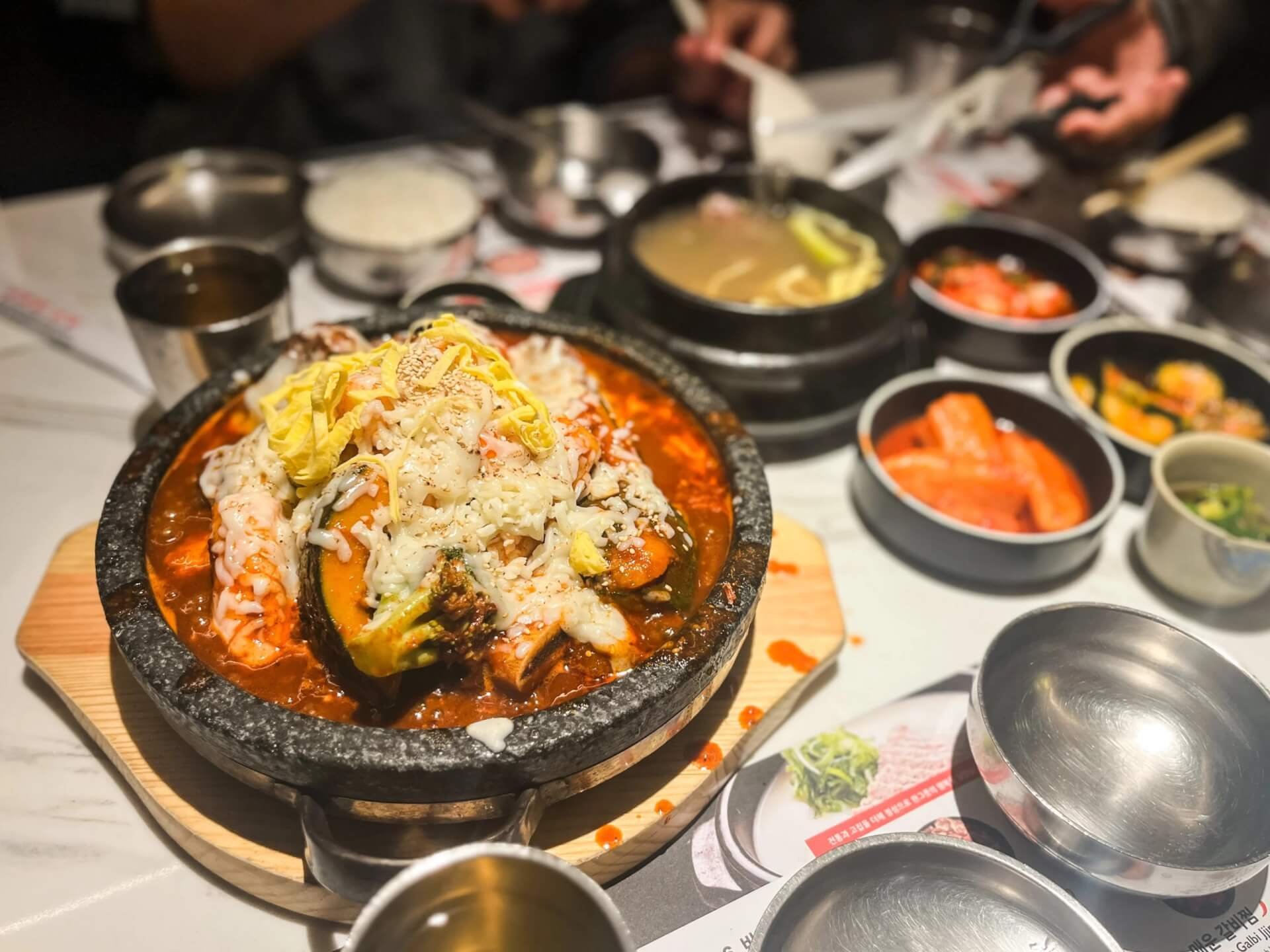
The second group gravitates toward the galbijjim, and the contrast in register could not be sharper. The dish arrives in a stone pot, still at a raging boil, packed with short ribs, inch-thick rice cakes, and soft chunks of pumpkin in a braising liquid that carries both sweetness and heat simultaneously. Galbijjim is traditionally a special-occasion dish in Korean home cooking, the kind prepared for Chuseok or Seollal rather than a weeknight. Its presence on a neighborhood restaurant menu at the level Kunjip executes it reflects a kitchen willing to commit the labor that braised short ribs demand: the collagen breakdown, the timing on the rice cakes, the balance of the sauce across a long cook. The sourcing logic follows: short ribs that respond well to this treatment need sufficient fat marbling and bone integrity to survive extended braising without losing structural interest.
That split between the restorative and the is not incidental. It maps directly onto the way Korean food culture has always understood the relationship between food and occasion, between nourishment and pleasure. Kunjip does not try to reconcile the two into a single identity. It simply offers both and lets the diner decide.
Where Kunjip Sits in a Wider Korean Dining Conversation
The American appetite for Korean cuisine has bifurcated considerably over the past decade. At one end, modern Korean tasting menus, represented nationally by places like Atomix in New York City, have moved the conversation toward fine-dining territory where Korean technique and ingredient sourcing get the same analytical attention applied to French or Japanese kitchens. At the other end, the everyday Korean restaurant, the kind with banchan on the table before you order and a menu built around soups, stews, and braises, continues to operate largely outside that critical conversation despite representing the deeper culinary tradition.
Kunjip belongs firmly to the second category, and that is not a qualification. The dishes that define it, seolleongtang and galbijjim, require a level of process commitment that many kitchens at higher price points would struggle to justify economically. The comparison venues most relevant to Kunjip are not the tasting-menu operations referenced elsewhere on EP Club, such as Lazy Bear in San Francisco, The French Laundry in Napa, or Alinea in Chicago.
Within Santa Clara's own restaurant range, Kunjip sits alongside Chungdam as part of the Korean dining concentration on and around Kiely Boulevard. For a different flavor of the South Bay's depth, Orenchi represents the Japanese ramen side of the neighborhood's East Asian kitchen range. The concentration of serious, technique-driven Asian cooking in this part of Santa Clara is one of the less-discussed aspects of the Bay Area dining scene, consistently overshadowed by San Francisco and the broader Peninsula corridor.
Planning Your Visit
Kunjip is located at 1066 Kiely Boulevard in Santa Clara, in the heart of the Koreatown strip. The address places it squarely within a walkable cluster of Korean businesses, which means the surrounding context reinforces rather than dilutes the experience. Visitors arriving from San Francisco or the broader Peninsula should factor in that South Bay traffic patterns differ from the city; midday visits on weekdays tend to draw the neighborhood lunch crowd, while weekends pull a broader mix. (experiences guide).
For those extending the trip further, the broader California dining circuit includes reference points as varied as Single Thread Farm in Healdsburg, Providence in Los Angeles, and Addison in San Diego, each operating in a different register but all reflecting California's capacity for serious food across formats and price points.
Frequently asked questions
Does Kunjip work for a family meal?
Kunjip fits a family table well. The menu divides naturally between restorative options like seolleongtang, a clean, bone-broth noodle soup, and richer, shareable dishes like galbijjim, a short rib and rice cake stew served at the boil. The format at this Koreatown strip staple, open since 2009, accommodates both light eaters and those ordering for the table.
How would you describe the vibe at Kunjip?
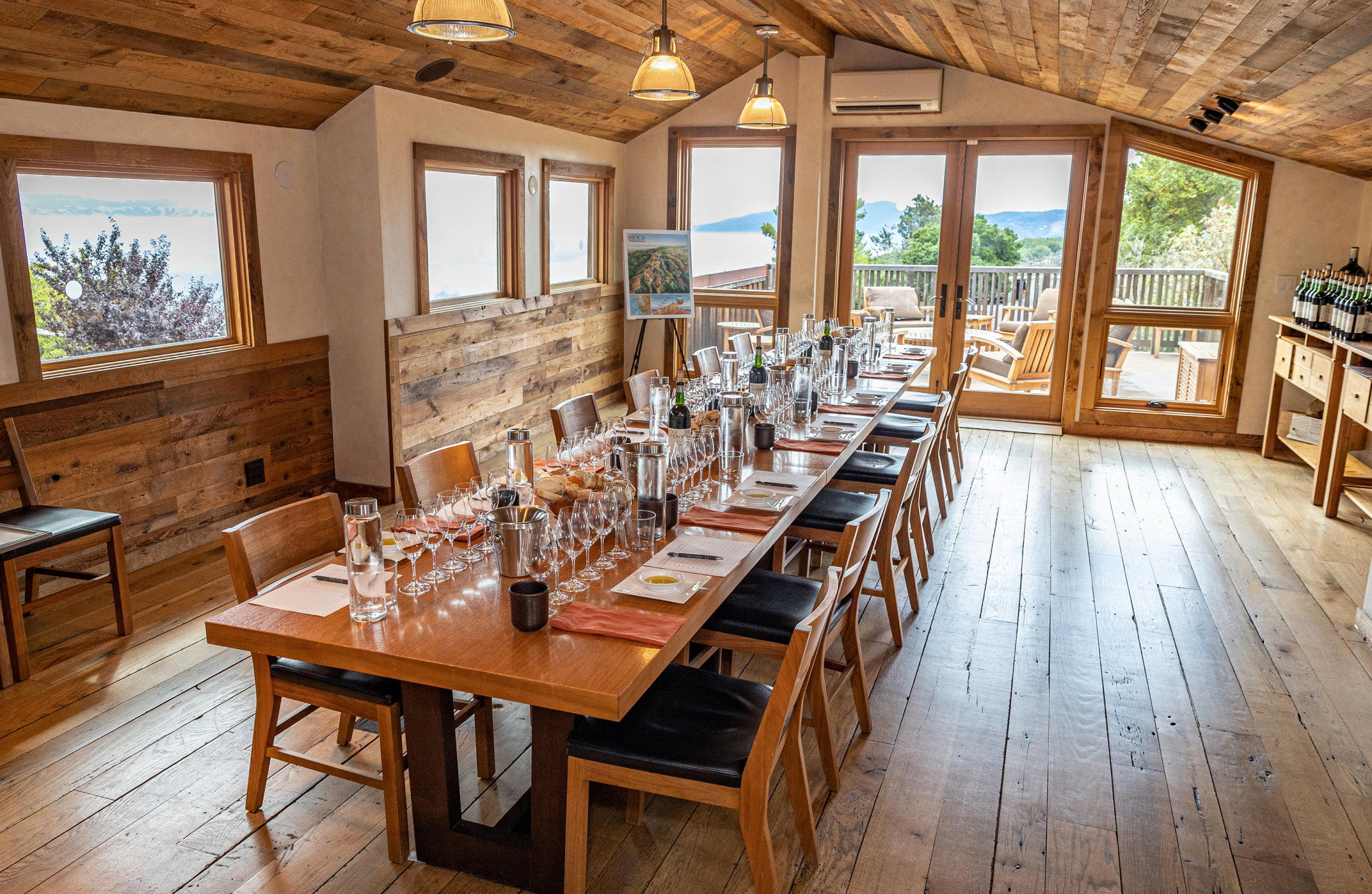
The atmosphere on Kiely Boulevard runs functional rather than formal. Kunjip draws a regular crowd split between people eating purposefully, a bowl of seolleongtang, a side of kimchi, and groups gathered around a bubbling stone pot of galbijjim. It reads as a neighbourhood anchor, not a destination production.
What's the signature dish at Kunjip?
Two dishes anchor the reputation here. The seolleongtang, a cloudy oxtail bone broth with noodles, draws the restorative crowd, particularly those who know the soup's long-simmered tradition in Korean cooking. The galbijjim, short ribs with thick rice cakes and pumpkin in a sweet, fiery braising liquid served in a stone pot, is the dish that gets ordered for the table and photographed. Both have been pulling in regulars since Kunjip opened in 2009.
What part of town is Kunjip in?
Kunjip is located at 1066 Kiely Blvd, Santa Clara, CA 95051.
In Context: Similar Options
| Venue | Cuisine | Price | Awards | Notes |
|---|---|---|---|---|
| KunjipThis venue (the venue you are viewing) | Korean Bone Broth Soups and Stews | $20–30 | Not listed | Not listed |
| Le Bernardin | French Seafood Fine Dining | $300–500 | 3 Michelin Stars · World's 50 Best #13 | French, Seafood |
| Atomix | Modern Korean Tasting Menu | $300–500 | 2 Michelin Stars · World's 50 Best #7 | Modern Korean, Korean |
| Lazy Bear | Modern American Tasting Menu | Not listed | 2 Michelin Stars · World's 50 Best #25 | Progressive American, Contemporary |
| Alinea | Avant-Garde Molecular Gastronomy | $300–500 | 2 Michelin Stars · World's 50 Best #37 | Progressive American, Creative |
| Atelier Crenn | Contemporary French Fine Dining | $300–500 | 3 Michelin Stars · World's 50 Best #44 | Modern French, Contemporary |
Recognition history
Dated appearances from independent guides and award organizations, with the underlying list record or original source where available.
San Francisco Chronicle Top 100 Bay Area Restaurants #67
San Francisco Chronicle
Continue exploring
More in Santa Clara
Restaurants in Santa Clara
All restaurants in Santa Clara →

Bars in Santa Clara
All bars in Santa Clara →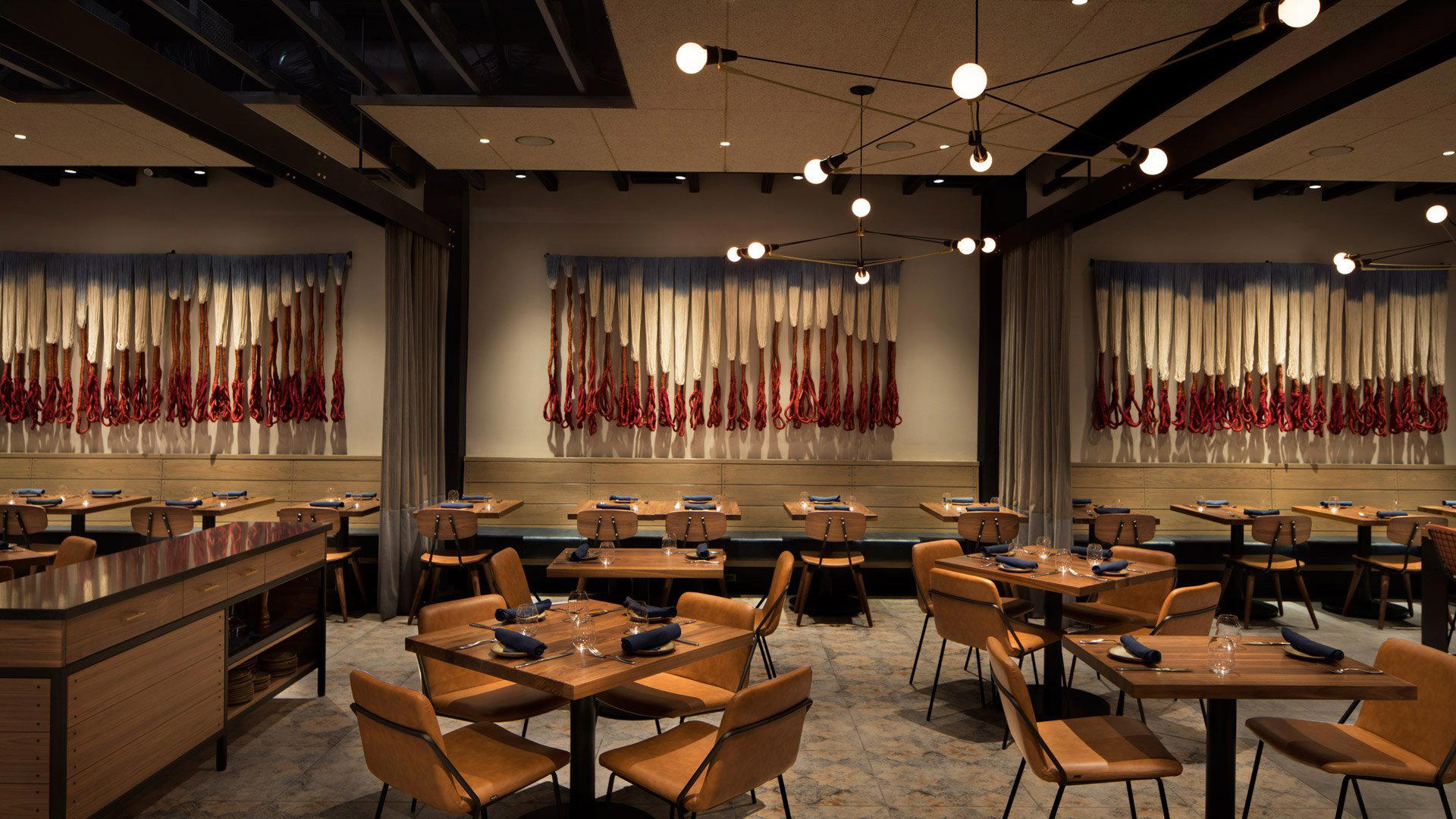







Details
- Cozy
- Lively
- Group Dining
- Family
- Casual Hangout
- A La Carte
Current opening hours
- Monday
- 10 AM–9 PM
- Tuesday
- 10 AM–9 PM
- Wednesday
- 10 AM–9 PM
- Thursday
- 10 AM–9 PM
- Friday
- 10 AM–10 PM
- Saturday
- 10 AM–10 PM
- Sunday
- 10 AM–9 PM
Hours can change for holidays and private events. Hours as of .
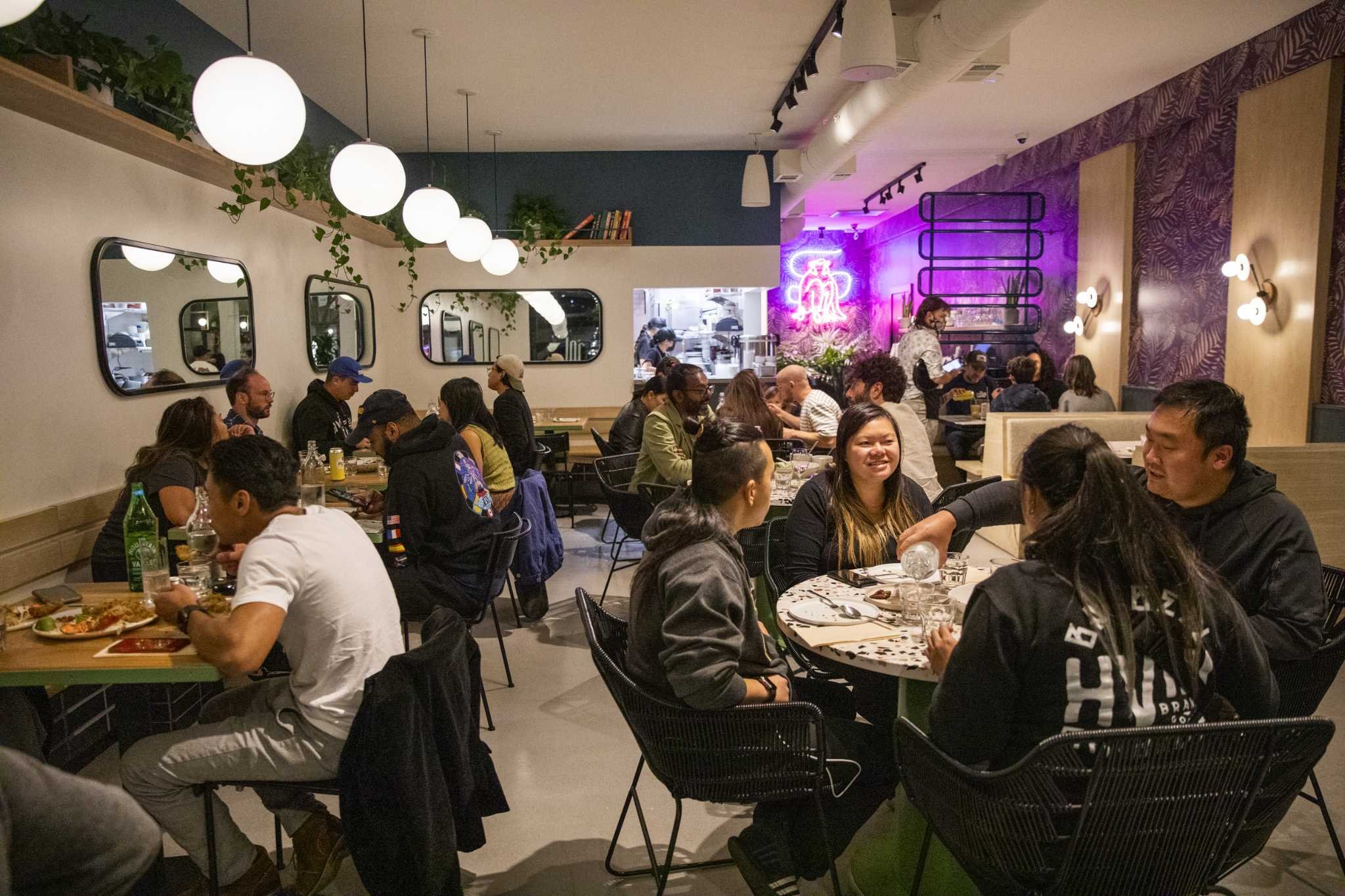
Cozy and homey with lively chatter from groups, communal seating, and a bustling atmosphere.