Kuma Izakaya brings the izakaya format to Lyon's 6th arrondissement, at 93 Rue Masséna, positioning Japanese drinking-kitchen culture against one of France's most self-assured dining cities. The menu architecture follows the izakaya logic of small, shareable plates designed for drinking alongside, rather than a formal progression. For Lyon, where the bouchon tradition still sets the default register, that structure reads as a considered counterpoint.
Pearl is the En Primeur Club membership app — saves, bookings, and concierge access live there. Same editors, same standards.
- Address
- 93 Rue Masséna, 69006 Lyon, France
- Phone
- +33472741312
- Website
- kumarestaurant.com
- Directions
- Get directions
 Saves & bookings on Pearl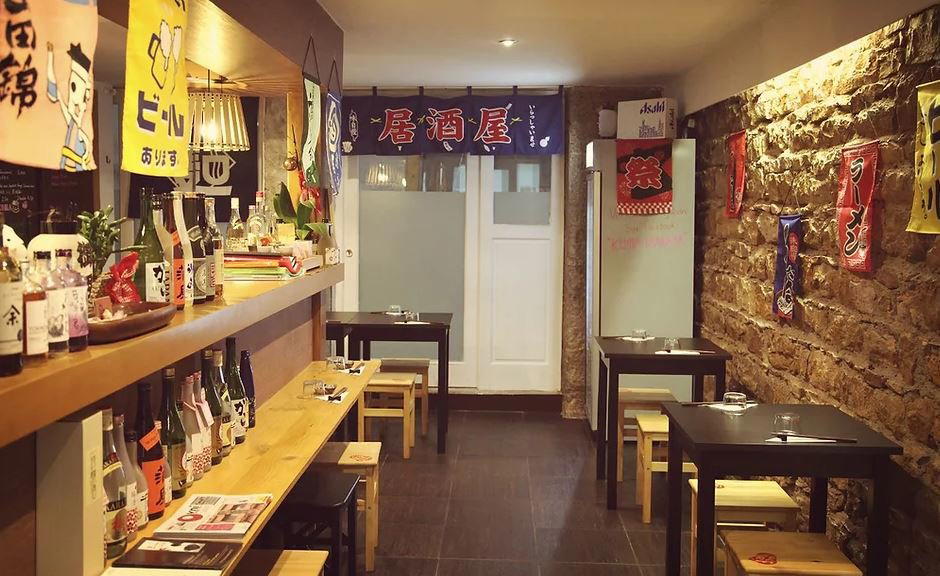
The Izakaya Format in a Bouchon City
Lyon's reputation as France's gastronomic capital rests on a specific kind of seriousness: long lunches at marble-topped tables, offal prepared without apology, and wine lists that treat Beaujolais as a serious category. The city's default dining register is French to its foundation, from the cathedral-like gravity of La Mère Brazier to the creative precision of Le Neuvième Art. Into that context, the izakaya format arrives as a structural counterpoint rather than a stylistic novelty.
The izakaya, in its Japanese form, is a drinking establishment with food, the inversion of how Lyon typically frames the relationship between kitchen and cellar. Dishes are designed to arrive without ceremony, in an order determined less by classical progression than by what the kitchen is ready to fire. That informality is the whole architecture. There is no amuse-bouche sequence to signal you are in the right hands; the food itself, arriving when it arrives, does that work.
Kuma Izakaya, at 93 Rue Masséna in the 6th arrondissement, operates inside that tradition. The address places it in a neighbourhood that runs between the residential calm of the 6th and the denser commercial energy closer to Part-Dieu, far enough from the Presqu'île's tourist circuit to suggest the room fills on local habit rather than passing trade.
What the Menu Structure Reveals
The izakaya menu's defining logic is accumulation rather than architecture. Where a French tasting menu builds toward a central protein moment, the izakaya format spreads across small plates that carry roughly equal weight, yakitori, gyoza, edamame, small fried things, cold dishes, and grilled items that arrive in overlapping waves. The diner's job is to keep ordering rather than to wait for the next prescribed course.
That structure carries a specific implication for a Lyon address. The city's bouchon tradition is built on a similar anti-pretension instinct, the idea that good food should not perform its own importance, but it achieves that through abundance and familiarity rather than through the izakaya's breadth-over-depth approach. A bouchon quenelle arrives once, enormous, self-sufficient. An izakaya counter builds the same sense of sufficiency through accumulation of smaller gestures.
For Lyon diners who have grown up understanding the bouchon's logic, the izakaya offers a recognisable emotional register through a completely different structural vocabulary. That alignment of intent across different culinary traditions is what gives the format genuine traction in a city this opinionated about how food should work. Compare that structural confidence with what Lyon's contemporary French tier is doing at places like Takao Takano or Au 14 Février, where the tasting menu format carries its own set of contractual obligations between kitchen and guest.
Positioning Inside Lyon's Mid-Register
The 6th arrondissement has developed a dining character distinct from the Michelin-heavy Presqu'île. The neighbourhood supports restaurants that are neither casual takeaway nor formal occasion dining, a middle register where a meal might cost what a Lyon bouchon charges but deliver something in a different cultural key. Burgundy by Matthieu works a similar mid-tier position with modern French execution. Kuma Izakaya operates in the same price neighbourhood but with a format that asks different things of its guests: less deference to a set sequence, more active participation in building the table.
That format is not new to French cities. Paris absorbed the izakaya model a decade earlier, and several arrondissements now have Japanese drinking kitchens that have become neighbourhood fixtures rather than novelty destinations. Lyon's slower adoption of the format reflects the city's general preference for established categories over imported ones, which makes the 6th a more plausible landing zone than the Vieux-Lyon tourist belt or the Presqu'île's more surveilled dining scene.
Across France more broadly, the concentration of serious restaurant energy is considerable. The Michelin infrastructure running from Paul Bocuse's Auberge du Pont de Collonges near Lyon to Troisgros in Ouches, Flocons de Sel in Megève, and Mirazur in Menton defines the formal end of the French dining spectrum. At the other pole, the izakaya format represents the anti-hierarchical instinct that has gained ground internationally since the mid-2010s, partly as a reaction to the expense and ceremony of the haute cuisine circuit.
That reaction has been well documented in cities further afield. In New York, the shift away from formal structure has reshaped whole neighbourhoods; Le Bernardin and Atomix both operate in a formal register that the izakaya deliberately refuses. The question for a Lyon address is whether the city's diners are sufficiently fatigued with formality to find the izakaya's refusal of it refreshing rather than simply different.
The Room and the Register
The izakaya's physical logic matters as much as its menu logic. The format traditionally rewards counter seating, where the proximity to the kitchen is part of the experience and the noise level sits somewhere between a restaurant and a bar. That atmosphere, in a Lyon context, is closer to the convivial register of a good wine bar than to the focused silence of a serious tasting menu room.
The 93 Rue Masséna address sits in a residential stretch of the 6th, suggesting a room scaled for neighbourhood regulars rather than large groups. The izakaya format can work at almost any scale, but it functions leading when the table is small enough that ordering feels collaborative and the plates, arriving when they arrive, can be passed and discussed rather than plated individually in front of each guest.
For context on what Lyon's scene looks like at its most formally ambitious, the city's dining tiers run from three-star institutionalism to the neighbourhood-level registers where places like Kuma Izakaya operate. The broader French fine dining conversation also extends to Alléno Paris au Pavillon Ledoyen, Auberge de l'Ill in Illhaeusern, Bras in Laguiole, AM par Alexandre Mazzia in Marseille, and Assiette Champenoise in Reims and Au Crocodile in Strasbourg.
Know Before You Go
Address: 93 Rue Masséna, 69006 Lyon, France
Neighbourhood: 6th arrondissement, Lyon
Format: Izakaya (Japanese drinking kitchen, small plates)
Price range: About $20 per person
Booking: Reservations recommended
Hours: Mon: 12–3 PM; Tue: 12–3 PM; Wed: 12–3 PM, 7–9:30 PM; Thu: 12–3 PM, 7–9:30 PM; Fri: 12–3 PM, 7–9:30 PM; Sat: Closed; Sun: Closed
Price Lens
Comparable venues nearby, for context on price, style, and recognition.
| Venue | Cuisine | Price | Notes |
|---|---|---|---|
| Kuma IzakayaThis venue — the venue you are viewing | Quartier Brotteaux, Japanese Izakaya | $$ | Not listed |
| Oto Oto | Not listed | $$ | Quartier Guillotière, Traditional Japanese Izakaya |
| BENTOGO | Quartier Guillotière, Asian Fusion Bento | $$ | Not listed |
| Yuzuya | Not listed | $$$ | Quartier Voltaire Part-Dieu, Japanese Izakaya |
| Bloom Sushi Lyon | Not listed | $$$ | Quartier Bas des Pentes Presqu'île, Vegan Botanical Sushi |
| Le Comptoir d'Ainay - Fermé Définitivement | Not listed | $$ | Quartier Bellecour Carnot, French Bistronomic with Lyonnais Specialties |
Continue exploring
More in Lyon
Restaurants in Lyon
Browse all →
Bars in Lyon
Browse all →
Hotels in Lyon
Browse all →
At a Glance
- Cozy
- Casual
- Trendy
- Casual Hangout
- Open Kitchen
- Sake Program
Current opening hours
- Monday
- 12–3 PM
- Tuesday
- 12–3 PM
- Wednesday
- 12–3 PM, 7–9:30 PM
- Thursday
- 12–3 PM, 7–9:30 PM
- Friday
- 12–3 PM, 7–9:30 PM
- Saturday
- Closed
- Sunday
- Closed
Hours can change for holidays and private events. Last verified .
Casual and relaxed Tokyo stall decor in a tiny, cozy space where tables are close together.