Our verdict
The address puts it within reach of the Presqu'île's densest restaurant corridor, where the competition sets a high baseline for precision and ingredient sourcing.

Pearl is the En Primeur Club membership app, where members save venues, book tables and use the concierge.
Japanese Counter Dining in Lyon's Most Competitive Arrondissement
Lyon's 1st arrondissement does not give ground easily to foreign cuisines. The streets between the Saône and the Presqu'île carry one of France's most concentrated clusters of serious kitchens, from the brasserie classicism of La Mère Brazier to the technique-forward creativity of Le Neuvième Art. For Japanese cuisine to hold a place here, it has to compete not just on novelty but on the same terms as the French kitchens around it: sourcing, consistency, and a defined spatial register.
That spatial register matters more in sushi dining than in almost any other format. The counter, where it exists, functions as both mise en scène and production line. The physical distance between the itamae's hands and the diner's plate is part of the communication, and the silence or conversation across that gap carries meaning that a table arrangement simply cannot replicate. Lyon has absorbed Japanese dining slowly and selectively, partly because the city's diners are accustomed to demanding that foreign formats earn their place within an already rigorous local hierarchy.
How the Space Frames the Experience
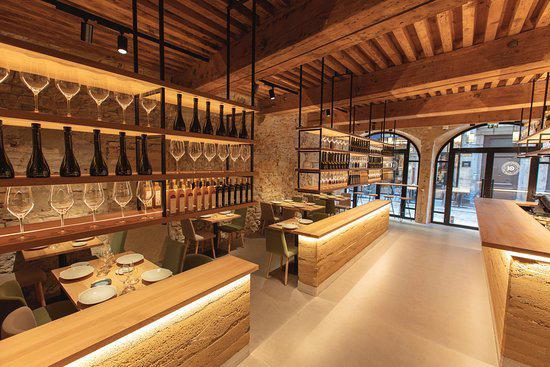
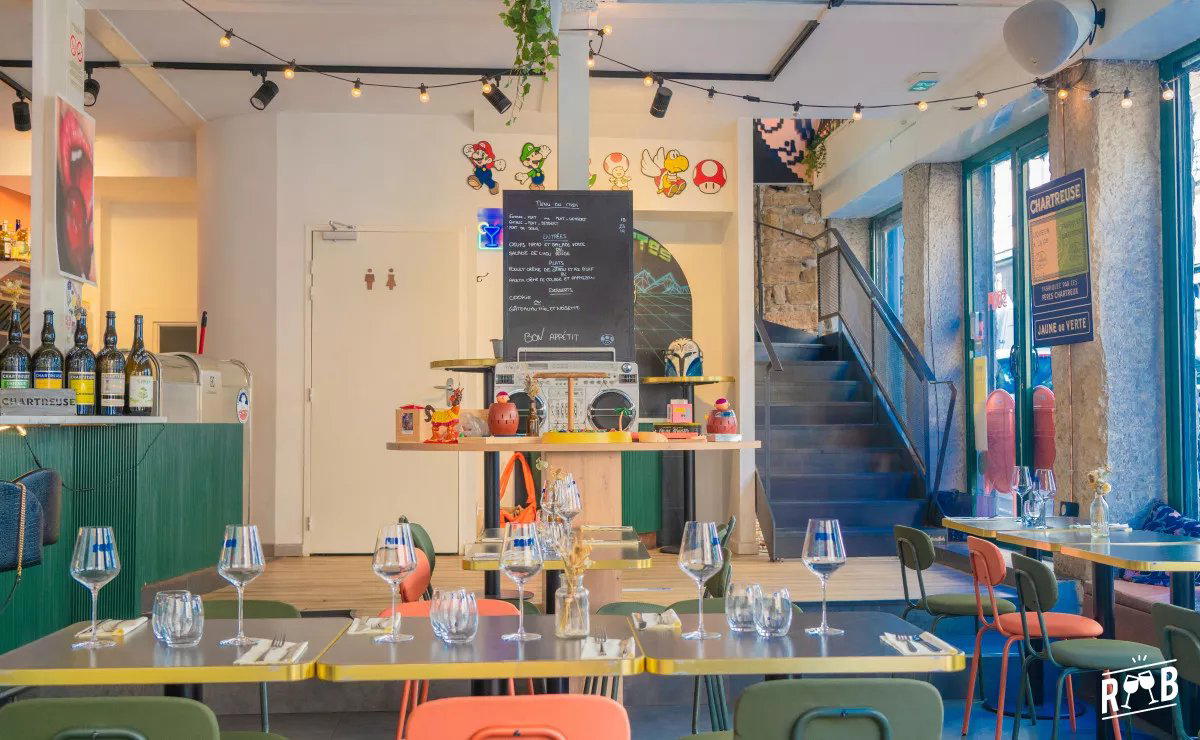
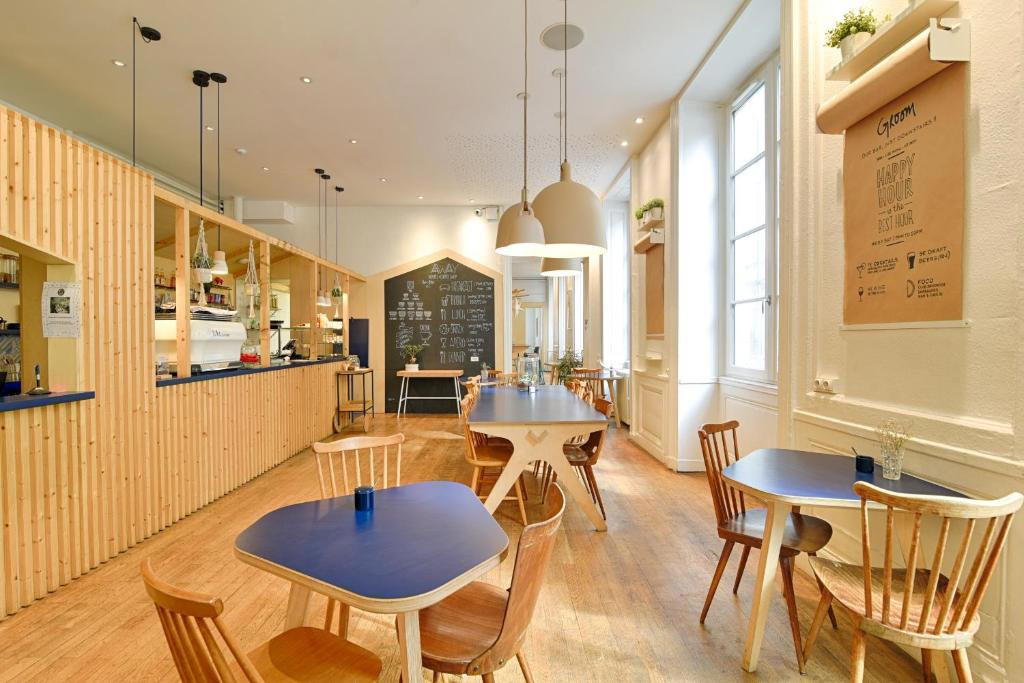
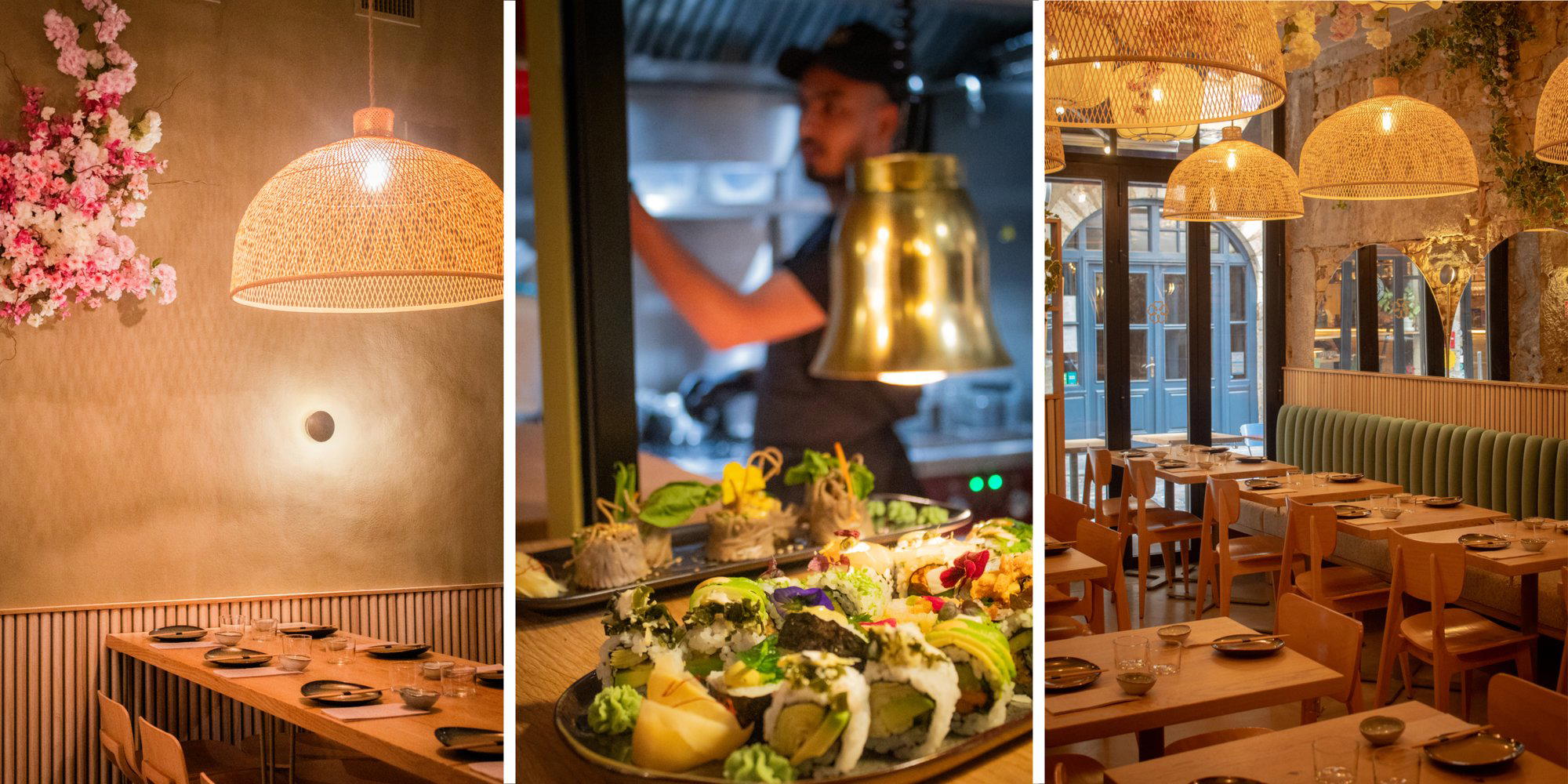
The editorial angle for any serious sushi address is the room itself, before a single piece of fish is cut. Sushi counters in European cities tend to fall into two architectural modes: the sparse minimalism of direct Japan-reference design, with raw timber, muted stone, and light fixtures that perform nothing; or the hybrid register that grafts Japanese restraint onto a Haussmann or period French interior. Each approach signals different things to the arriving diner about the ambition of the kitchen and the social contract being offered. That physical constraint can work in a sushi address's favour: the compression forces proximity, reduces the social noise that undermines counter dining, and keeps the focus on the work happening in front of the diner. Lyon's most serious contemporary French addresses, including Takao Takano and Au 14 Février, have both used intimate scale as a deliberate signal of intention.
Across the broader French sushi scene, the counters that have built the sharpest reputations share a consistent design discipline: no decorative clutter, materials that age visibly, and lighting calibrated to the colour temperature of fish rather than the comfort of ambient dining. Whether Bloom Sushi Lyon applies this discipline rigorously is something a visit would need to confirm, but the address and format category place it in a peer conversation where these standards apply.
Lyon in the French Fine Dining Map
Understanding Bloom Sushi Lyon requires understanding what Lyon asks of any serious restaurant. This is the city that produced the mères lyonnaises, a tradition of women-led kitchen craft that shaped much of French regional cooking. The legacy sits in institutions like La Mère Brazier and runs as an undercurrent through the city's broader dining culture: an expectation of rigour, economy of gesture, and fierce attention to produce. Lyon functions as a reference point for French dining in the same way that Paris is a reference point for French fashion, with the advantage that Lyon's standards are set by working kitchens rather than theory.
On the wider French fine dining map, the country's most decorated addresses include Flocons de Sel in Megève, Mirazur in Menton, and the long-standing institutional weight of Paul Bocuse's Auberge du Pont de Collonges just north of Lyon itself. The region also hosts Georges Blanc in Vonnas and the generational statement of Troisgros in Ouches. Bloom Sushi Lyon does not compete in this tier by format, but it operates in a city where diners holding those references walk through the door with calibrated expectations.
Japanese dining in Lyon also benefits from context that cities like Paris have had longer to establish. France's sushi scene has matured beyond the early wave of all-you-can-eat formats that diluted the category through the 2000s and 2010s. The addresses now drawing serious attention are those that have adopted Japanese counter protocols with some fidelity, sourcing fish through dedicated French wholesalers with Japanese connections, ageing fish at controlled temperatures, and structuring service around the itamae's rhythm rather than the kitchen's convenience. Where Bloom Sushi Lyon sits within that spectrum is information that the venue's own data does not yet supply, but the address and city context set the baseline for what the question should be.
Where Bloom Sushi Lyon Sits Among Lyon Restaurants
Lyon's contemporary dining scene has expanded considerably beyond its classical French core. Alongside the formal French addresses, the 1st and 2nd arrondissements now support a range of formats at different price points. Burgundy by Matthieu, positioned at a mid-to-high price tier for modern cuisine, illustrates how the city's diners have developed appetite for creative formats outside the traditional bouchon or classical French frame. For readers mapping the full range of serious Lyon dining, our full Lyon restaurants guide sets the competitive field in detail.
For comparison beyond Lyon's borders, the calibre of counter and precision dining that France can produce is visible in addresses like Alléno Paris au Pavillon Ledoyen, Bras in Laguiole, Auberge de l'Ill in Illhaeusern, and Les Prés d'Eugénie in Eugénie-les-Bains. Internationally, the counter-dining format that Bloom Sushi Lyon references finds its most advanced expressions at addresses like Le Bernardin in New York and Lazy Bear in San Francisco, where the theatrics of the open kitchen or counter have been formalised into a deliberate part of the offer. Also worth noting for the Lyon table is La Table du Castellet in Le Castellet, which shows how a regional French address can build a serious identity without the full weight of a major city behind it. As with most sushi formats in French cities, particularly those at the more serious end of the market, booking ahead rather than arriving speculatively is the practical default. Lyon's dining rooms at this address density fill quickly on Thursday through Saturday evenings, and a counter format with limited seats, if that is the configuration here, compounds the need to reserve.
Frequently asked questions
Is Bloom Sushi Lyon okay with children?
Sushi counter formats in France generally suit adults better than young children, given the pacing and close seating involved. Bloom Sushi Lyon is at 27 Rue de l'Arbre Sec in Lyon's 1st arrondissement, an area where restaurants tend toward focused dining rather than relaxed, family-style meals. check the venue's official channels to confirm their policy before bringing children.
Is Bloom Sushi Lyon formal or casual?
Japanese counter dining in Lyon's 1st arrondissement sits in a specific register: more composed than a casual bistro, but rarely as ceremony-heavy as a French gastronomic table. At 27 Rue de l'Arbre Sec, the counter format itself sets the tone, placing guests close to the preparation. Smart, relaxed dress is a reasonable starting point, though the venue's own dress code is worth confirming directly.
Is Bloom Sushi Lyon one of the few Japanese counter restaurants in central Lyon?
Japanese counter dining addresses in Lyon's 1st arrondissement remain sparse relative to the city's French restaurant density. Bloom Sushi Lyon at 27 Rue de l'Arbre Sec, 69001, occupies a specific gap in Lyon's dining scene, bringing a counter sushi format into a neighbourhood better known for traditional Lyonnaise cooking. For anyone seeking omakase-style progression in central Lyon, the options at this address level are limited, which makes advance research and reservation straightforward priorities.
What dish is Bloom Sushi Lyon famous for?
What is known is the address: 27 Rue de l'Arbre Sec, Lyon 69001, in the 1st arrondissement, where the counter format typically centres on nigiri or omakase progression. Checking directly with the restaurant will give the most current picture of their offering.
What part of town is Bloom Sushi Lyon in?
Bloom Sushi Lyon is located at 27 Rue de l'Arbre Sec, 69001 Lyon, France, Lyon.
Should I book Bloom Sushi Lyon in advance?
Sushi counters in Lyon's 1st arrondissement run limited covers by nature of the format, which means walk-in availability is rarely reliable. Bloom Sushi Lyon is on Rue de l'Arbre Sec, a central address that draws both residents and visitors to the Presqu'île. Reserving ahead is the practical approach, particularly for weekend sittings.
What's the standout thing about Bloom Sushi Lyon?
The standout element is positional: Bloom Sushi Lyon places Japanese counter dining inside Lyon's 1st arrondissement, a neighbourhood that has historically demanded serious credentials from any restaurant, French or otherwise. Operating at 27 Rue de l'Arbre Sec puts the venue within the competitive core of a city that measures restaurants against a demanding local benchmark.
Cuisine Lens
Comparable venues nearby, for context on price, style, and recognition.
| Venue | Cuisine | Price | Notes |
|---|---|---|---|
| Bloom Sushi LyonThis venue (the venue you are viewing) | Vegan Botanical Sushi | $30–50 | Not listed |
| BENTOGO | Asian Fusion Bento | $10–20 | Quartier Guillotière |
| Kuma Izakaya | Japanese Izakaya | $20–30 | Quartier Brotteaux |
| Oto Oto | Traditional Japanese Izakaya | $20–30 | Quartier Guillotière |
| Abstract | Modern French Bistro Bar | $30–50 | Quartier Ouest des Pentes |
| L'Atelier du Square | Modern French Bistronomie | $30–50 | Quartier Bellecour Cordeliers |