Kuma Inn
Our verdict
Kuma Inn occupies a second-floor walkup on Ludlow Street in the Lower East Side, where it has spent years operating as a neighborhood mainstay at the informal end of New York's Southeast Asian dining spectrum. The menu draws from Filipino and Thai cooking traditions, structured around small plates designed for sharing. It sits in a different tier from the city's formal tasting-menu circuit, trading ceremony for directness.
The menu
What to order
- Sautéed Chinese Sausage
- Yellowfin Tuna Tartare
- Grilled Salmon
- Rice Crepes
- Veggie Dumplings
Ludlow Street and the Lower East Side's Informal Register
The Lower East Side has long held a different relationship with dining formality than Midtown or the Upper West Side. Where restaurants like Le Bernardin or Per Se operate within a set of well-understood codes, long tasting menus, formal service, substantial per-head spend, the LES developed a parallel track built around smaller rooms, shorter menus, and a more transactional relationship between kitchen and guest. Kuma Inn sits firmly in that register. The address, 113 Ludlow St, places it in the heart of a block that has accommodated dive bars, vintage shops, and low-key kitchens for decades. The second-floor location, reached by a narrow staircase, filters out walk-in impulse traffic almost by design.
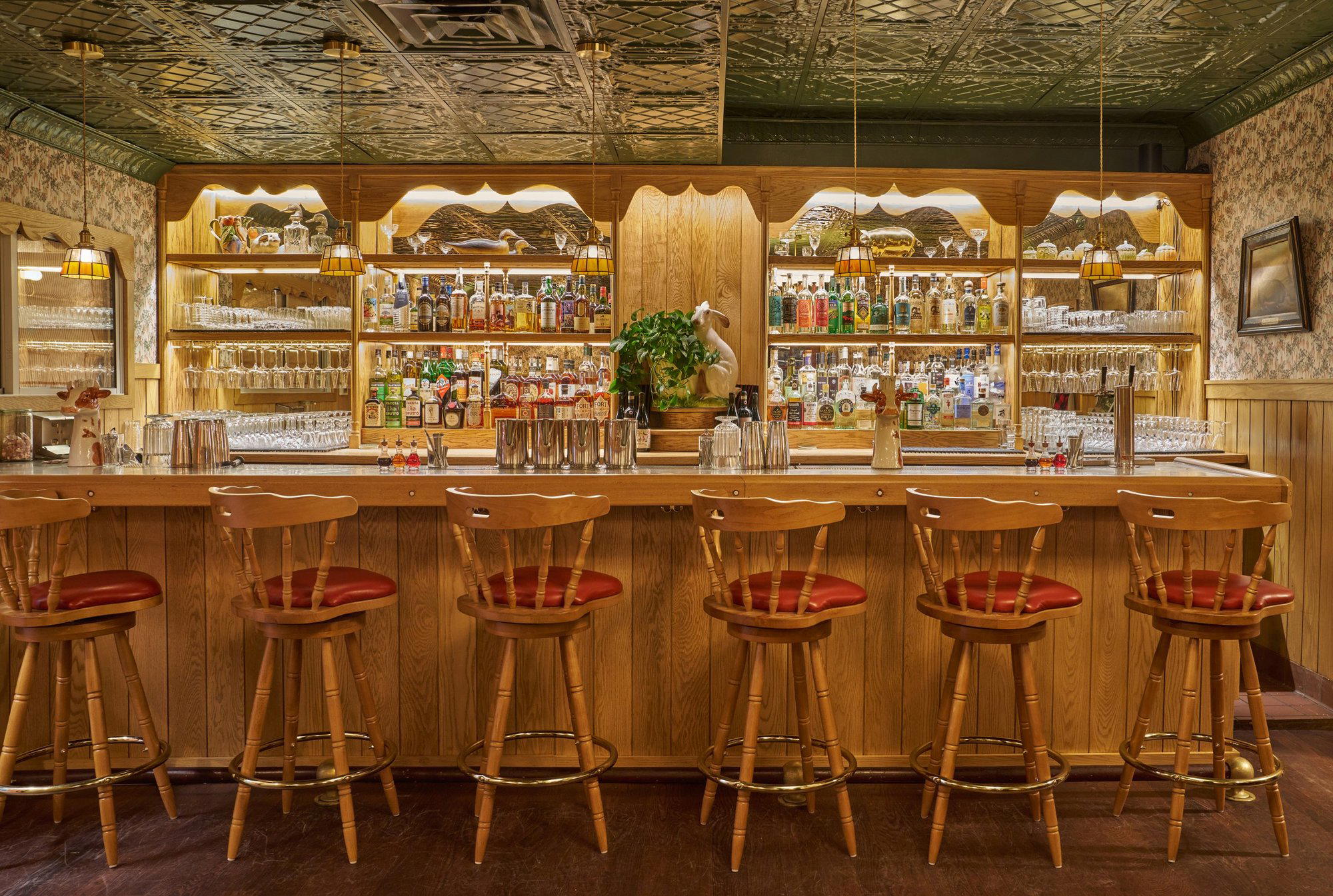
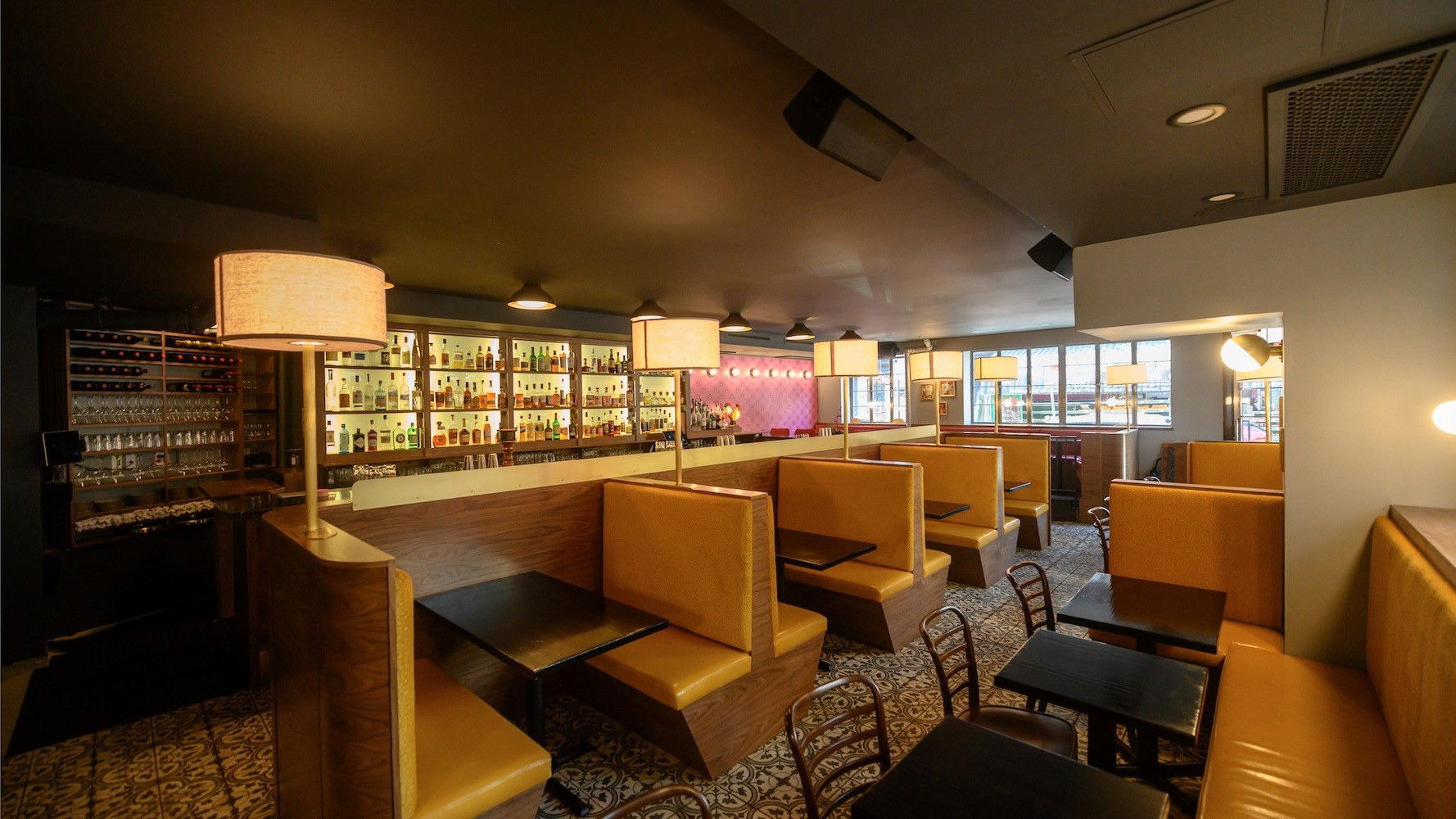
That physical remove matters to how the room functions. Guests who arrive have, to some degree, chosen to be there. The space tends toward the spare, dim light, modest square footage, tables arranged without the buffer distances that higher-tariff rooms build in. It is the kind of room that rewards the person who already knows what they are coming for.
How the Menu Is Organized, and What That Signals
Small-plate formats tell you something about a kitchen's priorities. When a menu is structured around sharing dishes rather than individual coursework, it positions the table, rather than the single diner, as the unit of experience. Southeast Asian cooking traditions have used this architecture for centuries: in the Philippines, the concept of kamayan eating places communal abundance at the center; in Thailand, a spread of dishes calibrated for balance across heat, acid, fat, and aromatics is the norm rather than the exception. Kuma Inn draws on both of these traditions, running a menu that reflects Filipino and Thai influences through a small-plate lens calibrated for the New York dining room rather than either source country.
This structure differs materially from the tasting-menu model that dominates coverage at the city's upper tier. At Atomix or Eleven Madison Park, the kitchen controls sequencing, pacing, and the order of flavors. The small-plate model at Kuma Inn inverts that: the table self-assembles its progression, which means a two-leading and a table of five will have categorically different meals even from the same menu. That kind of built-in variability is not a limitation. It is a deliberate structural choice that asks more of the diner and rewards those willing to engage with it.
The menu architecture also positions Kuma Inn differently from the Filipino restaurants that have drawn national attention in recent years. Where some kitchens in that wave leaned into the spectacle of kare-kare or lechon as centerpiece dishes for a broader audience, Kuma Inn's smaller, more selective format suggests a kitchen working closer to its own interests than to a calculated crossover pitch.
Where Kuma Inn Sits in the New York Southeast Asian Context
New York's Southeast Asian dining field spans an enormous range, from the Chinatown bakeries and Vietnamese sandwich shops of the outer boroughs to multi-course Filipino tasting experiences that now draw the kind of coverage once reserved for French kitchens. Kuma Inn occupies the middle of that range in format, though not in seriousness. It is not an inexpensive canteen, nor is it positioning itself against the city's formal circuit where Masa sets a benchmark for what a per-head spend can reach. It occupies the space where cooking conviction and neighborhood scale tend to intersect.
Across American cities, this tier of restaurant has shown durability that the attention economy sometimes obscures. Lazy Bear in San Francisco, Smyth in Chicago, and Providence in Los Angeles each represent the more formally awarded end of their respective city's dining identity. Kuma Inn represents something different: a room that has sustained itself through neighborhood loyalty and word-of-mouth over the years rather than through award cycles. That longevity in a New York block with high turnover is its own credential.
For readers cross-referencing against the broader EP Club network, the contrast with Blue Hill at Stone Barns, The French Laundry in Napa, or Single Thread Farm in Healdsburg is instructive: those properties are built around a complete sensory and logistical proposition, from the drive in to the post-dinner walk. Kuma Inn offers no such package. The proposition is narrower and more direct: a specific kitchen, a specific neighborhood, a specific way of eating.
Planning a Visit
The second-floor room on Ludlow Street is not large, and seating at this scale means the gap between a full room and a quiet one is measured in tables, not percentages. Anyone planning a visit on a weekend evening should confirm availability in advance rather than counting on walk-in access. The LES is well-served by the F and J/M/Z subway lines, with Delancey Street and Essex Street stations both within close walking distance. For those building a wider Lower East Side evening, the block and its immediate surroundings offer enough pre- or post-dinner options to anchor an itinerary without much additional planning.
For a broader orientation to where Kuma Inn sits within the full range of New York dining, the EP Club New York City restaurants guide covers the city across price tiers, neighborhoods, and cuisine categories. Readers with interest in the Italian-rooted small-plate tradition as a point of comparison might also look at Dal Pescatore in Runate or Atelier Moessmer Norbert Niederkofler in Brunico for how the sharing-format question plays out in very different culinary contexts.
Reservations: Advance booking recommended, particularly Thursday through Saturday. Location: 113 Ludlow St, second floor, Lower East Side, Manhattan. Transit: F train to Delancey St; J/M/Z to Essex St.
Frequently asked questions
What part of town is Kuma Inn in?
Kuma Inn is located at 113 Ludlow St, New York, NY 10002, New York City.
Is Kuma Inn a good option for a Southeast Asian meal in the Lower East Side?
Within Lower East Side dining, Kuma Inn occupies a specific niche: a long-running room at 113 Ludlow St that focuses on Filipino and Thai cooking at a time when both cuisines remain underrepresented at the sit-down restaurant level in Manhattan. The small-plate format and second-floor setting give it a register that sits apart from the neighborhood's louder, bar-forward spots. For the cuisine type, it fills a gap that few comparable rooms in the immediate area cover.
What should I order at Kuma Inn?
The menu draws from Filipino and Thai cooking traditions and is built around small plates designed for sharing. Ordering four to six dishes for a table of two gives you a reasonable read of the kitchen's range. The format rewards groups willing to spread across the menu rather than anchor on a single protein or section.
Do they take walk-ins at Kuma Inn?
The second-floor room on Ludlow Street is compact, which means walk-in availability depends heavily on the night and the hour. Earlier in the week and outside peak Friday-Saturday windows your chances improve, but the restaurant's long-running presence in the Lower East Side neighborhood keeps demand steady. A reservation is the more reliable approach for groups of three or more.
A Pricing-First Comparison
A quick peer check to anchor this venue’s price and recognition.
| Venue | Cuisine | Price | Awards | Notes |
|---|---|---|---|---|
| Kuma InnThis venue (the venue you are viewing) | Filipino-Thai Fusion Tapas | Not listed | Not listed | Not listed |
| Le Bernardin | French Seafood Fine Dining | $300–500 | 3 Michelin Stars · World's 50 Best #13 | French, Seafood |
| Atomix | Modern Korean Tasting Menu | $300–500 | 2 Michelin Stars · World's 50 Best #11 | Modern Korean, Korean |
| Per Se | French Fine Dining Tasting Menu | $300–500 | 3 Michelin Stars · World's 50 Best #40 | French, Contemporary |
| Masa | Traditional Japanese Omakase | $500+ | 2 Michelin Stars · World's 50 Best #27 | Sushi, Japanese |
| Eleven Madison Park | Contemporary Plant-Based Fine Dining | $300–500 | 3 Michelin Stars · World's 50 Best #4 | French, Vegan |
Continue exploring
More in New York City
Restaurants in New York City
All restaurants in New York City →
Bars in New York City
All bars in New York City →
Details
- Cozy
- Intimate
- Trendy
- Date Night
- Casual Hangout
- Byob
- Small Plates
- Byob
- Vegetarian Friendly
Cozy, dark, and intimate with a funky, lively hole-in-the-wall atmosphere.