Koyal

Koyal in Surbiton, London offers contemporary Indian cuisine led by Chef Nand Kishor Semwal. Must-try plates include Jakhiya Wild Mustard Curry, Tandoor-Marinated Lamb Chop and Tangy Street Chaat. The kitchen pairs Himalayan ingredients such as Jakhiya and Bhanjeera with British-sourced produce for sharply executed, richly spiced dishes. Recognised by the Global Recognition Awards 2025, Koyal transforms a Brighton Road dining strip into a 130-seat fine-dining destination with warm, inviting interiors, precise tandoor technique and seasonally driven menus. Expect aromatic spices, crisp textures and concentrated sauces that make each course vivid and memorable.
Pearl is the En Primeur Club membership app — saves, bookings, and concierge access live there. Same editors, same standards.
- Address
- 59-63 Brighton Rd, Surbiton KT6 5LR, United Kingdom
- Phone
- +44 20 8399 5533
- Website
- koyalrestaurant.com
- Directions
- Get directions
 Saves & bookings on Pearl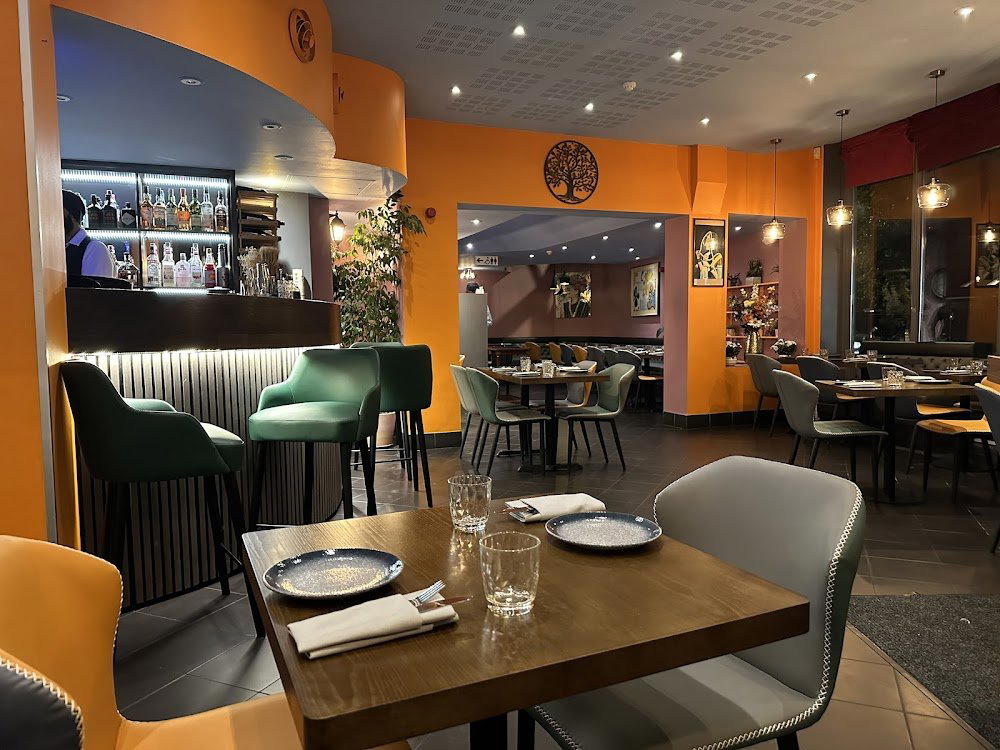
Surbiton's Subcontinental Dining Scene and Where Koyal Fits
South Asian restaurants in London's outer boroughs occupy a different position than they did two decades ago. The suburban curry house model that defined neighbourhood dining across zones 4 through 6 for much of the late twentieth century has fractured into several distinct tiers: the unreconstructed high-street staple, the mid-range establishment with regional ambitions, and a smaller cohort of addresses that have quietly accumulated loyal followings on the strength of consistent cooking rather than central-London proximity. Koyal, on Brighton Road in Surbiton, sits within that suburban dining fabric at a remove from the Michelin-decorated tier represented by central addresses like CORE by Clare Smyth or Sketch, The Lecture Room and Library, but that distance is precisely its context.
Surbiton itself has evolved considerably as a dining destination. Once characterised primarily as a commuter town with a reliable rail connection into Waterloo, it has developed a food and drink culture that reflects the demographic shifts across south-west London more broadly: younger residents, higher disposable incomes, and a preference for restaurants that offer genuine cooking rather than generic delivery-optimised menus. Brighton Road is one of the main arteries where that shift is legible, and Koyal's address at numbers 59 through 63 places it in a stretch that draws both local regulars and visitors crossing the borough boundary from Kingston and New Malden.
The Evolution of the Address
Understanding Koyal requires placing it within the longer arc of South Asian dining in outer south-west London. The early wave of Indian restaurants in this corridor opened primarily to serve a practical function: accessible, affordable, consistent. Over successive decades, that model came under pressure from two directions simultaneously. On one side, supermarket ready-meals and delivery aggregators eroded the convenience argument. On the other, a generation of diners raised on travel and food media began demanding more specificity: regional distinctions, better sourcing, cooking that reflected the actual diversity of the subcontinent rather than a homogenised approximation of it.
Restaurants that survived and matured through that transition did so by making a choice, implicitly or explicitly, about which direction to move. Some doubled down on value and volume. Others began to specialise. The ones with the longest-running loyal followings tended to be those that built consistency as a core identity, returning customers who could rely on the same dish tasting the same way across multiple visits. That form of reliability is harder to achieve than it looks, and it is distinct from the more dramatic reinventions pursued by central London operators like Dinner by Heston Blumenthal or the technically intensive formats at The Ledbury. Suburban restaurants operate under different pressures and serve different functions in the dining ecosystem.
The UK's broader appetite for this kind of evolution is visible not just in London but in destination restaurants outside the capital. Places like L'Enclume in Cartmel and Moor Hall in Aughton demonstrate how regional British dining has developed its own identity independently of the capital; the suburban South Asian tier in London has undergone a parallel, less discussed version of the same maturation.
Atmosphere and Setting
Surbiton's dining rooms in this price bracket tend toward the informal and accessible rather than the reverential. The format at addresses like Koyal is built around repeatability: the kind of restaurant where a table of regulars arrives without consulting a menu. That atmosphere contrasts with the structured, paced experience of central London's formal dining rooms, where silence and ceremony are part of the offering. Here the rhythm is more immediate, the noise level reflects the community function the space serves, and the measure of a successful evening is whether the cooking delivers what the neighbourhood expects of it. For comparison with London's higher-ceremony tier, see our coverage of Restaurant Gordon Ramsay.
Positioning Within the comparable set
Across the UK, the restaurants that attract most critical attention are concentrated in a handful of locations: central London, a cluster in the north-west, and scattered destination addresses in the countryside. The Fat Duck in Bray, Gidleigh Park in Chagford, and Hand and Flowers in Marlow represent the kind of destination dining that draws visitors specifically for the meal. Koyal operates in a structurally different mode: it is not a destination restaurant in that sense, and it would be a category error to evaluate it as one. Its comparable set is the active South Asian dining scene in south-west London's Zone 6 corridor, where the relevant questions are about consistency, value, and the quality of the cooking relative to what the neighbourhood offers.
Internationally, the contrast is equally instructive. The tasting-menu formats at Le Bernardin in New York City or the progression-focused counter at Atomix represent the maximalist, technique-intensive end of the restaurant spectrum. Suburban neighbourhood dining in London sits at the opposite pole of that axis, where the craft is in execution and repetition rather than invention. Similarly, hide and fox in Saltwood illustrates how a smaller, regionally anchored address builds credibility through focus rather than scale.
Planning Your Visit
Surbiton is served by South Western Railway from London Waterloo, with journey times typically under thirty minutes, making Brighton Road accessible as a weeknight destination for central and west London residents. The address at 59-63 Brighton Road, Surbiton KT6 5LR is within a short walk of Surbiton station. Koyal is recommended for reservations, with smart-casual dress.
Quick reference: Koyal, 59-63 Brighton Road, Surbiton KT6 5LR. Accessible via South Western Railway from London Waterloo.
Budget Reality Check
Comparable venues nearby, for context on price, style, and recognition.
| Venue | Cuisine | Price |
|---|---|---|
| KoyalThis venue — the venue you are viewing | Not listed | $$$ |
| Gunpowder Tower Bridge | Borough, Modern Indian Small Plates | $$$ |
| Tsaretta Spice | Twickenham, Modern Indian Tapas | $$$ |
| Annayu | Harlington, Modern Indian Fine Dining | $$$ |
| Chakra | Kensington Palace Gardens, Modern Indian | $$$ |
| Farzi Cafe | Charing Cross, Modern Indian Bistro | $$$ |
Recognition history
Dated appearances from independent guides and award organizations, with the underlying list record or original source where available.
Michelin Plate
Michelin
Continue exploring
More in London
Restaurants in London
Browse all →
Bars in London
Browse all →
Hotels in London
Browse all →



At a Glance
- Lively
- Modern
- Date Night
- Group Dining
- Celebration
- Open Kitchen
- Craft Cocktails
Current opening hours
- Monday
- 5:30–10:30 PM
- Tuesday
- 5:30–10:30 PM
- Wednesday
- 12–2:30 PM, 5:30–10:30 PM
- Thursday
- 12–2:30 PM, 5:30–10:30 PM
- Friday
- 12–2:30 PM, 5–10:30 PM
- Saturday
- 12–2:30 PM, 5–10:30 PM
- Sunday
- 12–2:30 PM, 5–9:30 PM
Hours can change for holidays and private events. Last verified .
Simple, colourful dining room with a lively, inviting atmosphere that feels like a polished curry house.