Koya Soho

Koya Soho on Frith Street is where Soho's lunch crowd goes for hand-made udon that has earned a devoted following through repetition and discipline rather than theatre. No reservations, counter seating, and queues at peak hours signal the priorities here: the noodles, silky, bouncy, made in-house, are the point. Open seven days with breakfast service included, it operates in a tier of its own among London's Japanese noodle options.
Pearl is the En Primeur Club membership app — saves, bookings, and concierge access live there. Same editors, same standards.
- Address
- 50 Frith St, London W1D 4SQ, United Kingdom
- Website
- koya.co.uk
- Directions
- Get directions
 Saves & bookings on Pearl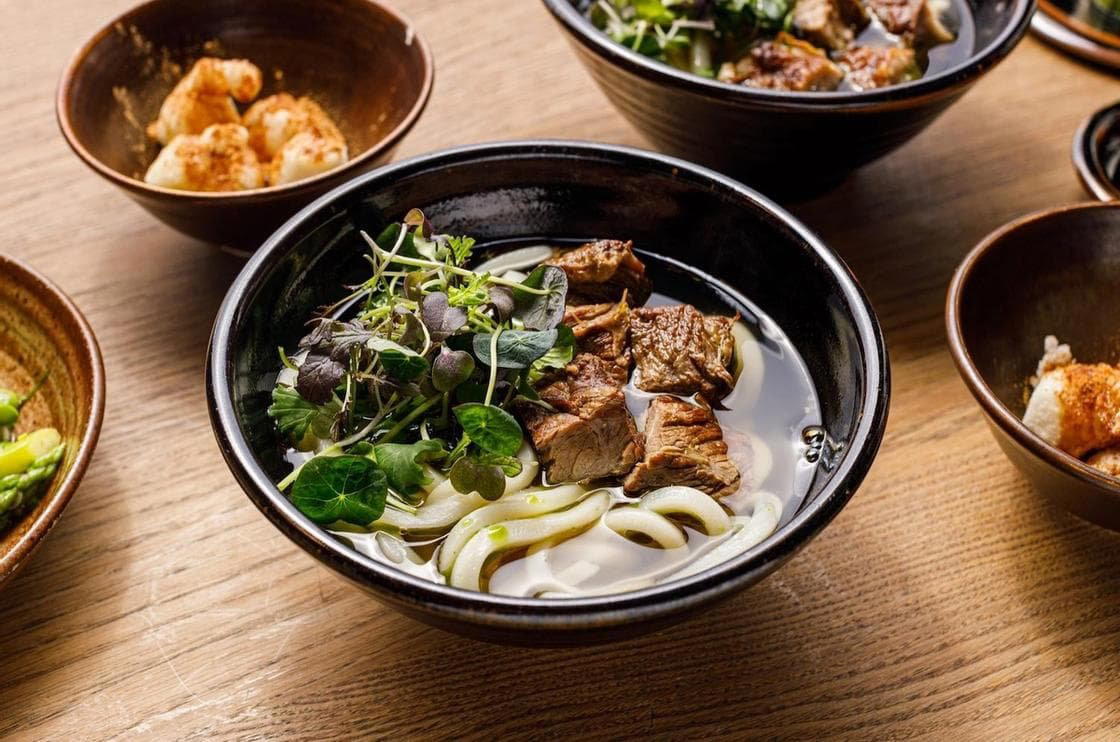
Counter Culture and the Udon Standard in Soho
Frith Street occupies a particular position in Soho's eating geography: narrow, unhurried by the standards of the surrounding streets, and home to a run of restaurants that reward return visits over spectacle. Koya at number 50 fits that pattern. The room is spare, counter seating, pared-back surfaces, no soft furnishings to encourage the table to linger. The signal is immediate and deliberate: this is a place organised around the bowl, not the occasion.
In a neighbourhood where London's most talked-about dining addresses cluster within a few hundred metres, that restraint carries its own authority. The city's premium end, places like CORE by Clare Smyth, The Ledbury, and Ikoyi, competes on elaboration, provenance narratives, and tasting format. Koya competes on a different axis entirely: consistency, craft, and the daily discipline of making udon by hand. The queues that form at busy periods are not a hospitality failure; they are evidence that the calculation works.
What the Noodles Actually Do
Udon as a category is broader than its reputation in London suggests. The wheat-flour noodle, thick and resilient, shifts character entirely depending on temperature and treatment. The Koya menu divides these configurations explicitly. Atsu-atsu brings hot noodles in hot broth; hiya-hiya sends cold noodles to a cold dipping sauce. Both formats depend on the structural quality of the noodle itself, the tension between exterior smoothness and interior bounce that distinguishes hand-made from industrial production. The kake broth, built on dashi and mirin, provides the mineral and sweet counterpoint that the noodle's neutral base requires.
Toppings follow the logic of the format. Tenzaru, prawn and vegetable tempura, adds crunch and fat against the clean broth. Niku arrives as tender beef, served rare, with the kind of temperature precision that signals kitchen attention to detail. These are not decorative additions; they shift the weight and register of the bowl in ways that make the choice between them worth considering.
Small plates extend the meal without competing with it. Sunomono salad brings vinegared freshness as a palate preparation. Marinated mushrooms carry concentrated umami that reads as a preview of the broth's depth. Chicken kara-age, fried, succulent, with the lacquered exterior the technique produces at its leading, functions as something between a starter and a snack, and consistently draws its own following among regulars. Donburi rice bowls are available for those who want the kitchen's range without the noodle format.
Breakfast as a Separate Argument
The breakfast offer at Koya is worth treating as a distinct reason to visit rather than an operational footnote. The kitchen runs seven days, open all day, and the morning menu spans formats that few Japanese restaurants in London attempt at that hour: a full Japanese spread, an English cooked breakfast, and kedgeree, which sits at the intersection of British colonial food history and South Asian spice in a way that makes it an oddly appropriate option for a Soho morning. The willingness to hold three breakfast registers simultaneously, Japanese, British, Anglo-Indian, says something about how the kitchen approaches the day-part, and it creates a genuinely different reason to arrive at opening rather than at lunch.
Reputation Built Without the Usual Machinery
Koya's reputation in London's food conversation has accumulated through a different mechanism: word-of-mouth from the kind of eaters who know what hand-made udon should feel like, and the observable evidence of regular queues at a no-booking counter. Koya occupies a separate credibility space where the credential is simply that informed people keep returning.
That positioning is not distinctive to London. The same logic applies at specialist noodle counters in Tokyo, ramen shops in Fukuoka, or any operation where the product's technical quality is sufficiently apparent that formal recognition becomes secondary to demand. Koya sits in that cohort within the London context, and the Koya City outpost at Bloomberg Arcade, a different neighbourhood, a different clientele, the same production standard, reinforces that the original's reputation travels on the noodle rather than the address.
For context on how London's broader dining scene distributes its reputation signals, The UK's wider critical geography, from Waterside Inn in Bray and L'Enclume in Cartmel to Moor Hall in Aughton and Gidleigh Park in Chagford, rewards the kind of precision that also explains why a Soho counter with no booking system develops a serious following. Hand and Flowers in Marlow and hide and fox in Saltwood operate in that same tradition of craft before category. Internationally, the same disciplined focus on a single technique connects places like Le Bernardin in New York City and Emeril's in New Orleans to their respective reputations.
Planning the Visit
Koya Soho takes walk-ins only, so timing is the practical variable. The counter fills at peak lunch and dinner hours; arriving outside those windows, mid-afternoon or at opening, reduces waiting time considerably. The format is designed for efficiency: staff are patient about explaining the menu's structure to first-time visitors, which matters given that the hot-cold, broth-dip permutations are not immediately obvious. For visitors who want to explore the surrounding neighbourhood further,
A Quick Peer Check
Comparable venues nearby, for context on price, style, and recognition.
| Venue | Cuisine | Price | Notes |
|---|---|---|---|
| Koya SohoThis venue — the venue you are viewing | Traditional Japanese Udon Noodles | $$ | Not listed |
| wagamama victoria | Japanese-inspired Ramen and Noodles | $$ | Victoria |
| AUN | Modern Japanese Izakaya | $$ | Stoke Newington |
| Sushi Bar Makoto | Fresh Sushi Bar | $$ | Chiswick |
| Kisaku | Authentic Japanese Sushi & Grill | $$ | Acton Green |
| wagamama camden | Japanese Ramen & Noodles | $$ | Chalk Farm |
Recognition history
Dated appearances from independent guides and award organizations, with the underlying list record or original source where available.
The Good Food Guide GFG Good
The Good Food Guide
Continue exploring
More in London
Restaurants in London
Browse all →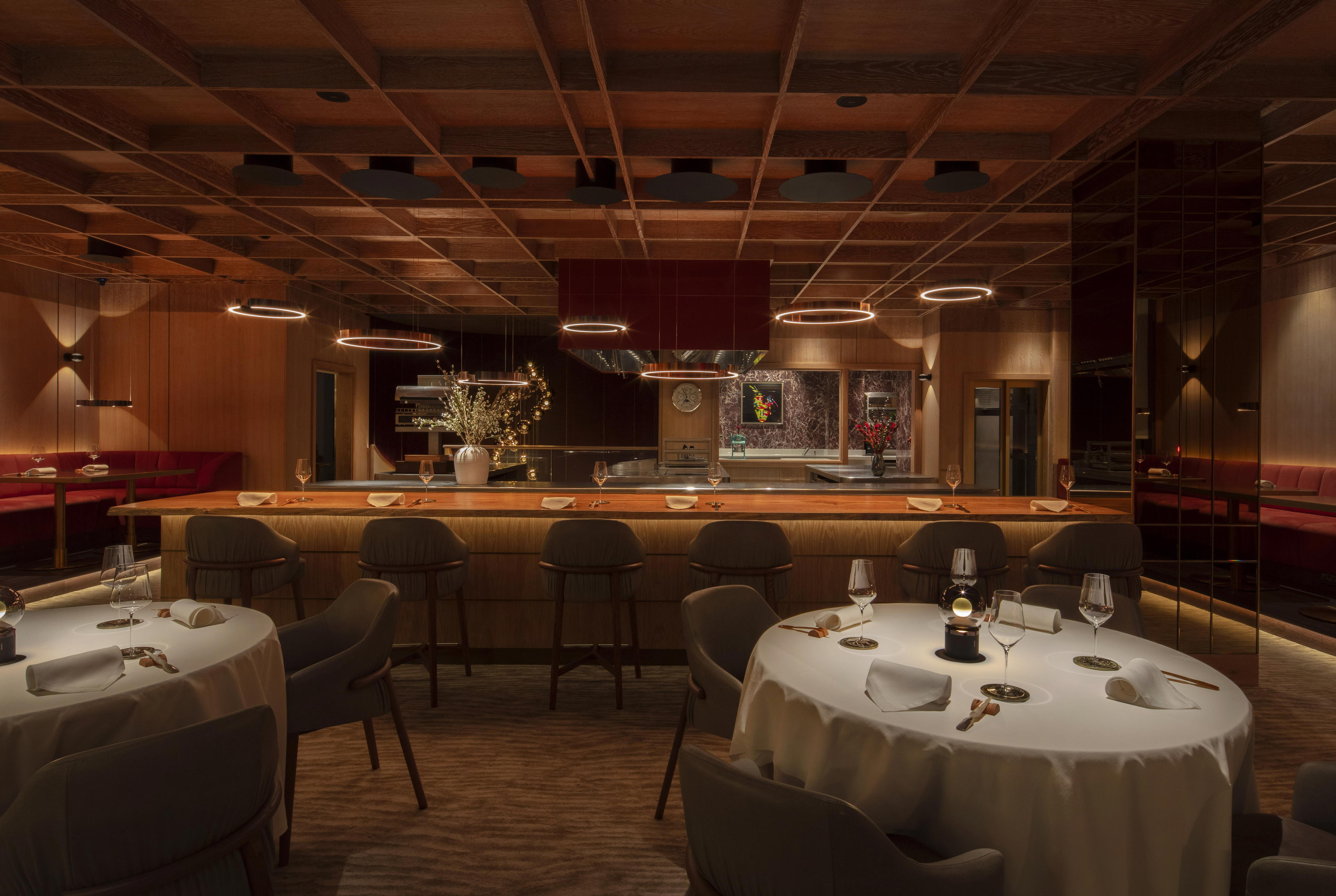
Bars in London
Browse all →
Hotels in London
Browse all →

At a Glance
- Cozy
- Minimalist
- Trendy
- Intimate
- Solo
- Casual Hangout
- Open Kitchen
- Sake Program
Current opening hours
- Monday
- 10 AM–10 PM
- Tuesday
- 10 AM–10 PM
- Wednesday
- 10 AM–10 PM
- Thursday
- 10 AM–10 PM
- Friday
- 10 AM–11 PM
- Saturday
- 10 AM–11 PM
- Sunday
- 10 AM–10 PM
Hours can change for holidays and private events. Last verified .
Pared-back minimalist decor with counter seating around an open kitchen, creating a cozy, authentic, and industrious Japanese udon-ya atmosphere.