Tabelog 100 #18
Our verdict
Mukojima’s wagashi culture sits apart from Tokyo’s counter-dining economy: modest prices, daytime rhythm, and sweets built around repetition rather than spectacle. Kototoi Dango belongs to that older register, with Tabelog 100 recognition for Tokyo Japanese sweets in 2023, a 3.74 score, 35 seats, tatami-room seating, and a format that rewards visitors treating it as part of Sumida’s river-and-temple itinerary rather than a dessert detour.

Pearl is the En Primeur Club membership app, where members save venues, book tables and use the concierge.
The menu
What to order
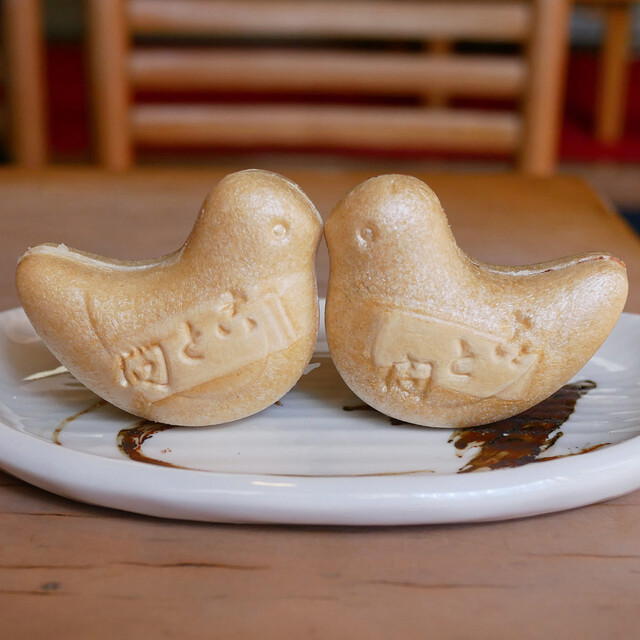
- Tri-colored unskewered dango (red bean, white bean, miso)
- Dango set with green tea
- Monaka
Approaching Tokyo through its older sweets culture changes the city’s register. The glass-and-reservation dining machine gives way to low-rise rhythms, daytime service, and shops paced by confectionery rather than dinner theatre. Japanese traditional sweets belong here: not as a tasting-menu finale, but as a self-contained act of craft, season, and restraint. Kototoi Dango sits in that older Tokyo grammar, closer to tea-room discipline than the contemporary café economy.
That distinction matters. Tokyo’s serious sweets scene is not only patisserie counters and parfait queues; it also preserves Japanese confectioners whose authority comes from narrow focus. The category has its hierarchy, and Tabelog’s 2023 Japanese traditional sweets and sweets café recognition places Kototoi Dango within that competitive field. A 3.74 score and a listed price band of - JPY 999 point to modest pricing under serious local scrutiny.
Tokyo wagashi belongs to the city's slower dining map
Tokyo food writing often over-indexes on omakase, grilled counters, and late-night bars because those formats travel well globally. Japanese traditional sweets behave differently. They ask less of the camera and more of timing, texture, and cultural literacy. In Tokyo, that is easier to read through small, focused shops whose appeal is tied to craft rather than spectacle. The result is a sweets stop best understood as part of a city walk, not a scarcity-engineered destination.
The comparison set helps. Chomeiji Sakura Mochi and Jiman Kusamochi occupy the same low-price sweets bracket in Tokyo, where individual specialisation matters more than menu breadth. This is the opposite of a multi-category café covering every possible mood at once. Here, the question is not how much a shop offers; it is whether a narrow repertoire has enough discipline to justify a specific trip. Kototoi Dango’s inclusion in Tabelog’s 2023 recognition for Japanese traditional sweets and sweets cafés gives the answer a measurable frame without turning the visit into trophy dining.
There is also a beverage lesson, even without treating the shop as a bar or restaurant. Serious Japanese sweets shops have a curation logic closer to a cellar than casual dessert culture suggests: sweetness, bitterness, starch, bean, tea, and temperature need balance. The point is proportion, not fine-dining pairing language. A good Japanese sweets stop works because the drink, room, and confection do not compete. That restraint keeps the format durable in Tokyo, where technical luxury and old everyday utility can sit close together.
A narrow sweets format, not a café trying to be everything
The categories are Japanese traditional sweets and a café featuring Japanese sweets, which is more specific than it first sounds. In Tokyo, café can mean laptop seating, seasonal drinks, and design-led interiors. Here, Japanese traditional sweets are the stronger signal: confectionery as craft, not dessert as lifestyle accessory. The useful way to read Kototoi Dango is through focus, restraint, and the expectation of a daytime sweets experience rather than through the vocabulary of an all-purpose café.
Price is part of the argument. At the listed - JPY 999 level, the experience sits far from Tokyo’s luxury dining economics, yet competes where recognition is earned through consistency rather than spend. That corrects itineraries skewed toward expensive counters. A city can be read through low-ticket institutions as clearly as formal restaurants. The craft may be small, but the cultural information is dense.
Planning should follow the genre. Japanese sweets shops rarely reward the same behaviour as high-end reservation dining. They reward attention to daypart, city flow, and the chance that a focused sweets stop may be best approached with flexibility. That is practical intelligence, not inconvenience. Treat Kototoi Dango as a precise Tokyo sweets stop, not a late-evening restaurant-crawl insert.
The format also marks old and new Tokyo habits. For international travellers, the main lesson is not design description but scale: this is a local-facing, price-accessible sweets address rather than a frictionless luxury dining machine. The natural approach is to fold the stop into a broader Tokyo itinerary, using it as a quiet counterweight to the city’s more heavily booked restaurant experiences.
Where it fits in a serious Tokyo food itinerary
A stronger Tokyo itinerary does not stack only famous reservations. It alternates registers: a sweets shop in Tokyo, a focused meal, a counter, a specialist stop, a bar with a defined drinks point of view. Kototoi Dango supplies the Japanese traditional sweets chapter. It is not competing with Sobakappo Nagano, Spice Bar Nekoroku, or Chinya; it answers a different question about how Tokyo preserves food culture at everyday prices.
For a wider map, the contrast is instructive. Other Tokyo dining rooms represent different city modes, from casual formats and dense urban restaurant districts to counter-focused cooking. Sweets and cafés occupy their own lane, distinct from specialists, bars, and full-service restaurants. For the full city spread, use Our full Tokyo restaurants guide alongside Our full Tokyo hotels guide, Our full Tokyo bars guide, Our full Tokyo wineries guide, and Our full Tokyo experiences guide.
Japan’s regional food map sharpens the point. Across the country, specialised formats carry place in different ways: sweets shops, cafés, casual counters, and contemporary dining rooms each create their own local grammar. Abroad, Japanese casual food culture also travels through focused concepts, but Kototoi Dango keeps the argument at home: a small Tokyo sweets stop, recognised in its category, priced for ordinary use, and rooted in the city’s enduring Japanese sweets culture.
Frequently asked questions
When is Kototoi Dango open?
Check current opening details directly with Kototoi Dango before visiting.
Where do I go for Kototoi Dango?
Tokyo.
What should I budget for a meal at Kototoi Dango?
Pricing at Kototoi Dango is listed as - JPY 999 View spending breakdown.
What is Kototoi Dango known for?
Kototoi Dango is known for Japanese traditional sweets and as a cafe featuring Japanese sweets in Tokyo.
A Tight Comparison
Comparable venues by cuisine and price in the same metro.
| Venue | Cuisine | Price | Awards | Notes |
|---|---|---|---|---|
| Kototoi DangoThis venue (the venue you are viewing) | Traditional Wagashi & Dango Shop | $1–10 | Tabelog 100 #18 | Not listed |
| Chomeiji Sakura Mochi | Traditional Japanese wagashi (Chomeiji-style sakuramochi) | $10–20 | Tabelog 100 #45 | JPY 999 - JPY 999 |
| Sobakappo Nagano | Soba Kappo | $50–100 | Michelin Bib Gourmand | Soba |
| Jiman Kusamochi | Traditional Japanese wagashi & kusa mochi shop | $1–10 | Tabelog 100 #72 | JPY 999 - JPY 999 View spending breakdown |
| Spice Bar Nekoroku | Spice Bar / Asian-Ethnic Fusion | $20–30 | Tabelog 100 #68 | JPY 4,000 - JPY 4,999 JPY 1,000 - JPY 1,999 |
| Chinya | Traditional Wagyu Sukiyaki & Shabu-shabu | $50–100 | Tabelog 100 #41 | JPY 10,000 - JPY 14,999 JPY 3,000 - JPY 3,999 |
Recognition history
Dated appearances from independent guides and award organizations, with the underlying list record or original source where available.
Tabelog 100 #18 · No. 18
Tabelog · Tabelog 100 - Japanese traditional sweets / Japanese sweets cafe - TOKYO - 2023