Cafe Van Kleef
Cafe Van Kleef on Telegraph Avenue has been a fixture of Oakland's bar culture for decades, drawing a crowd that values the bartender's craft and the room's accumulated character over any notion of trend-chasing. The space reads like a private collection made public, and the drinks program leans on house-made ingredients and a kitchen sensibility that sets it apart from the surrounding Uptown corridor.
Pearl is the En Primeur Club membership app — saves, bookings, and concierge access live there. Same editors, same standards.
- Address
- 1621 Telegraph Ave, Oakland, CA 94612
- Phone
- +1 510 763 7711
- Website
- cafevankleef.net
- Directions
- Get directions
 Saves & bookings on Pearl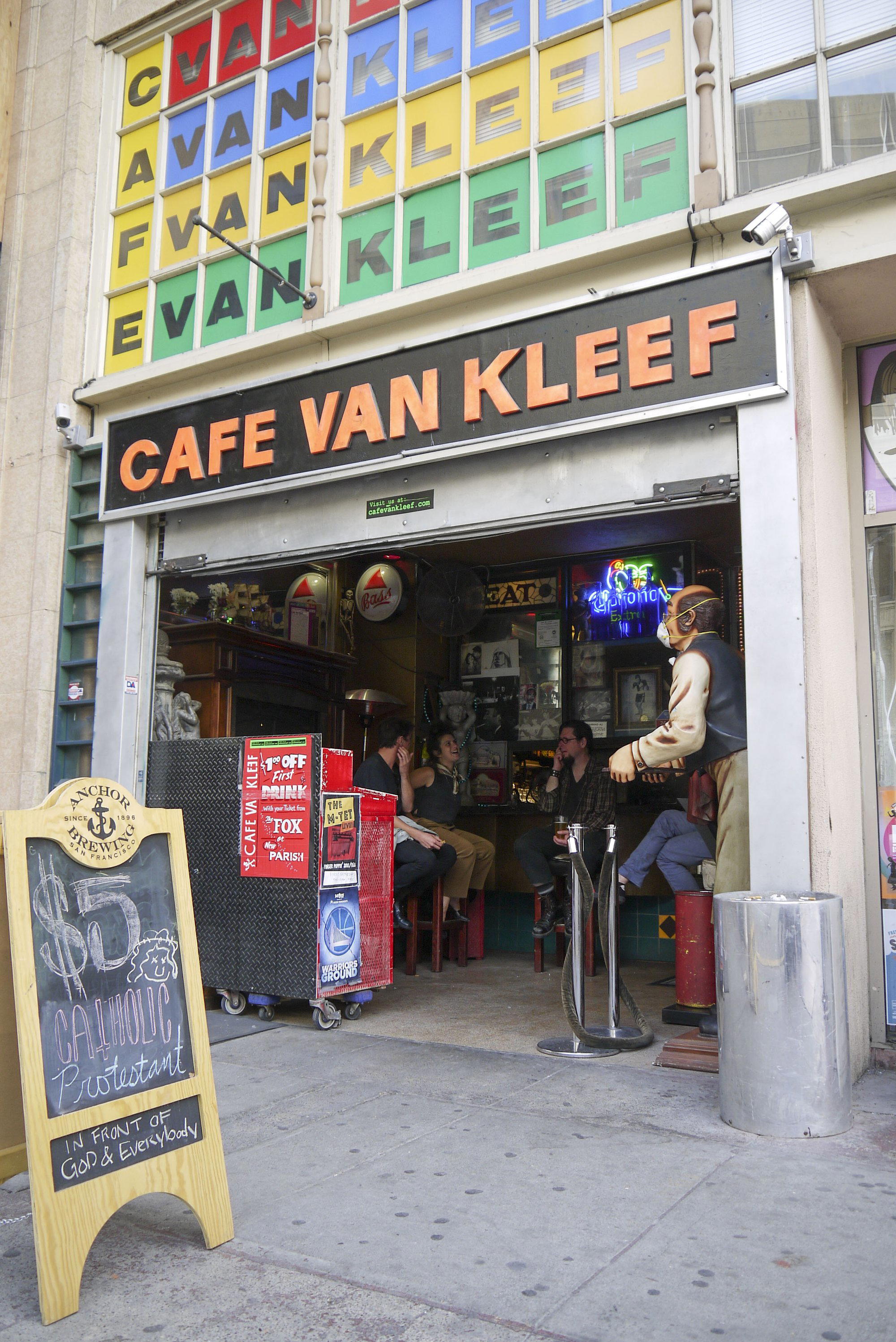
Telegraph Avenue After Dark: Where Oakland's Bar Scene Takes a Breath
Oakland's Uptown corridor has cycled through enough openings and closings in the last fifteen years to make any long-running institution feel like an anomaly. That's the context worth holding when you walk up Telegraph Avenue toward Cafe Van Kleef at 1621. The building announces itself before you reach the door: curiosities in the windows, a patina that accumulates over years rather than weeks, and a front room that looks like it was furnished by someone who bought the things they actually wanted rather than the things that photograph well. In a city that has produced genuinely serious cocktail culture alongside a few dozen places that merely perform it, Van Kleef occupies its own bandwidth.
The Oakland bar category has diversified considerably since the early 2010s, splitting between cocktail-forward rooms with tight, rotating menus and the older neighborhood bar format that values regulars over rankings. Cafe Van Kleef sits in neither lane cleanly. It draws from both: a drinks program attentive enough to interest someone who drinks at ABV in San Francisco across the bay, housed inside a physical space that feels more like the latter. That combination is what keeps it on the radar of people who know Oakland's bar scene in depth, and it's what makes a first visit disorienting in a productive way.
The Room as Artifact
Before the drinks, the room deserves a paragraph. Cafe Van Kleef runs counter to the stripped-back aesthetic that dominates much of the premium bar tier in American cities right now. Where Kumiko in Chicago or Bar Leather Apron in Honolulu project a carefully considered minimalism, Van Kleef goes the other direction: taxidermy, vintage signage, antique glassware, and the kind of visual density that rewards a second or third visit with details you missed the first time. This is not a designed eccentricity applied as branding. The accumulation reads as genuine, which is precisely why it works. Bars that attempt to simulate this atmosphere with prop purchases tend to feel like theater sets. The difference is time.
The Drinks, the Kitchen Sensibility, and Where Ingredients Come In
Oakland sits at the edge of one of the most ingredient-rich agricultural corridors in the United States. The produce, citrus, and botanicals available within a short drive of Telegraph Avenue are of a caliber that still draws attention from chefs and bartenders operating at the highest tier. Bars that understand this geography treat their local supply chain as a genuine resource rather than a marketing point, and the better Oakland drinks programs show that orientation in their sourcing. Van Kleef's approach to house-made ingredients follows that logic: when the raw material quality is this accessible, making components in-house rather than buying standardized commercial products is both a practical and a qualitative decision.
House grenadine is a useful case study in why this matters. Commercial grenadine has been sweetened, stabilized, and stripped of the pomegranate's sharper register for mass production. A bar making grenadine from pomegranate juice keeps both the brightness and the tannin, which changes the structure of any drink built around it. The same principle extends to other house-made components: the process of making something from sourced ingredients rather than buying a finished product gives the bartender a different kind of control over the final glass. This is not a Van Kleef-specific claim about technique; it is a general principle of ingredient-led bar programs, and one that the Oakland supply chain makes easier to execute than in most American cities.
The drinks here have also been described in the context of Oakland's broader cocktail conversation, which now includes rooms like 13 Orphans operating with a different format and a different competitive frame. What Van Kleef offers is less about the architecture of any single cocktail and more about the cumulative effect of a program that has developed its own reference points over years rather than reacting to what the industry produced last season. That consistency has a value independent of whether the menu scores high on technical innovation.
Placed in Oakland's Wider Drinking Map
Uptown Oakland has enough serious bars now that a visitor making a night of it could construct a genuinely interesting itinerary without repeating formats. Bay Grape operates as a wine-forward room, Belotti Ristorante E Bottega anchors the Italian dining and drinking corner, and alaMar Dominican Kitchen adds a completely different register to the evening. Van Kleef fits into that itinerary as a room that rewards unhurried time rather than a quick drink. The physical space and the drinks program are both built for duration, not throughput.
That positions it differently from bars optimized for high-volume weekend trade, and also differently from the kind of quiet, reservation-anchored rooms that have become more common in cities like New York, where Superbueno operates in a specific conceptual niche, or New Orleans, where Jewel of the South draws from a deep cocktail tradition. Oakland's drinking culture has always had a different texture than either city, and Van Kleef reflects that without trying to approximate a scene that isn't its own. Compare also to how Julep in Houston or The Parlour in Frankfurt on the Main have developed strong local identities within global cocktail discourse: the through-line is bars that know their own reference points and stick to them.
Practical Notes for Planning a Visit
Cafe Van Kleef sits at 1621 Telegraph Ave in Oakland's Uptown neighborhood, within walking distance of the Fox Theater and easy reach of BART's 19th Street station. The bar operates without a reservations requirement for most visits, which means the door is open to walk-ins, though popular nights in Uptown can compress the available space. The room is leading experienced with time to absorb it rather than as a stop between other commitments. Seasonal produce availability in the Bay Area runs longest for citrus through winter and into early spring, which affects the flavor profile of any house-made components built around fresh fruit. Visiting in those months, when California's citrus corridors are producing at volume, tends to align well with a bar program that sources locally. For a wider map of Oakland's food and drink options, see our full Oakland restaurants guide.
Continue exploring
More in Oakland
Bars in Oakland
Browse all →
Restaurants in Oakland
Browse all →
Hotels in Oakland
Browse all →

At a Glance
- Bohemian
- Well Known
- Lively
- After Work
- Late Night
- Group Outing
- Casual Hangout
- Live Music
- Standalone
- Historic Building
- Design Destination
- Standing Room
- Seated Bar
- Counter Only
- Classic Cocktails
- Craft Cocktails
- Gin
- Street Scene
Current opening hours
- Monday
- Closed
- Tuesday
- 6 PM–12 AM
- Wednesday
- 6 PM–12 AM
- Thursday
- 6 PM–12 AM
- Friday
- 6 PM–2 AM
- Saturday
- 6 PM–2 AM
- Sunday
- Closed
Hours can change for holidays and private events. Last verified .
Dimly lit, sepia-toned saloon atmosphere with walls densely covered in eccentric art, vintage musical instruments, busts, and curiosities creating a lived-in, bohemian aesthetic reminiscent of an estate sale or art gallery.
Know Before You Go
- Getting there
- 1621 Telegraph Ave, Oakland, CA 94612