Our verdict
A konoba in the old-town lanes of Šibenik operating within the Dalmatian tradition of sourcing close and cooking simply. Konoba Marenda sits on Ul. Nove crkve, a short walk from the Cathedral of St. James, and represents the kind of neighbourhood dining that prioritises seasonal, local supply over ambition-signalling menus. For visitors working through Šibenik's restaurant scene, it belongs in the conversation alongside the city's broader trattoria-style options.

Pearl is the En Primeur Club membership app, where members save venues, book tables and use the concierge.
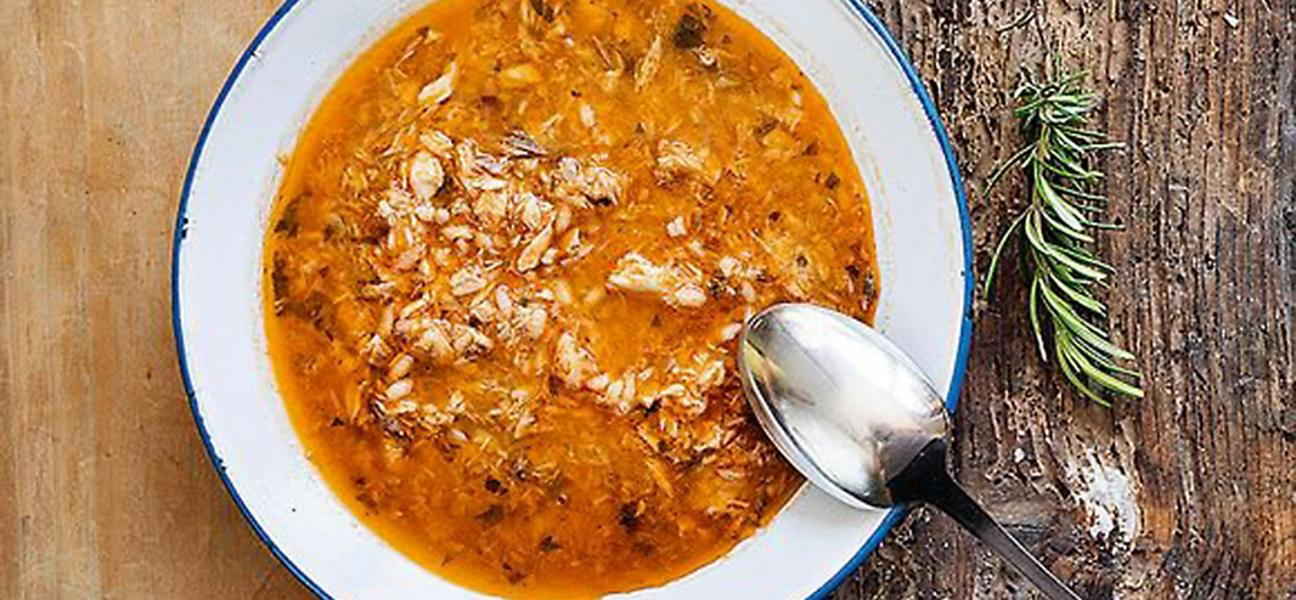
The menu
What to order
- Black risotto
- Pasta with seafood
- Braised beef with gnocchi
- Octopus salad
The Konoba Tradition and Where Šibenik Fits
Along the Dalmatian coast, the word konoba carries specific meaning. Originally referring to the ground-floor storage rooms where fishermen kept wine and dried goods, konobi evolved into the region's defining casual dining format: stone walls, shared tables, menus that follow the season and the catch rather than a fixed kitchen programme. In cities like Split, Trogir, and Šibenik, the konoba sits below the fine-dining tier occupied by destinations like Pelegrini but serves a different function entirely. It is where locals eat mid-week, where fish comes from boats that docked that morning, and where the wine list runs to a handful of Dalmatian labels rather than a cellar.
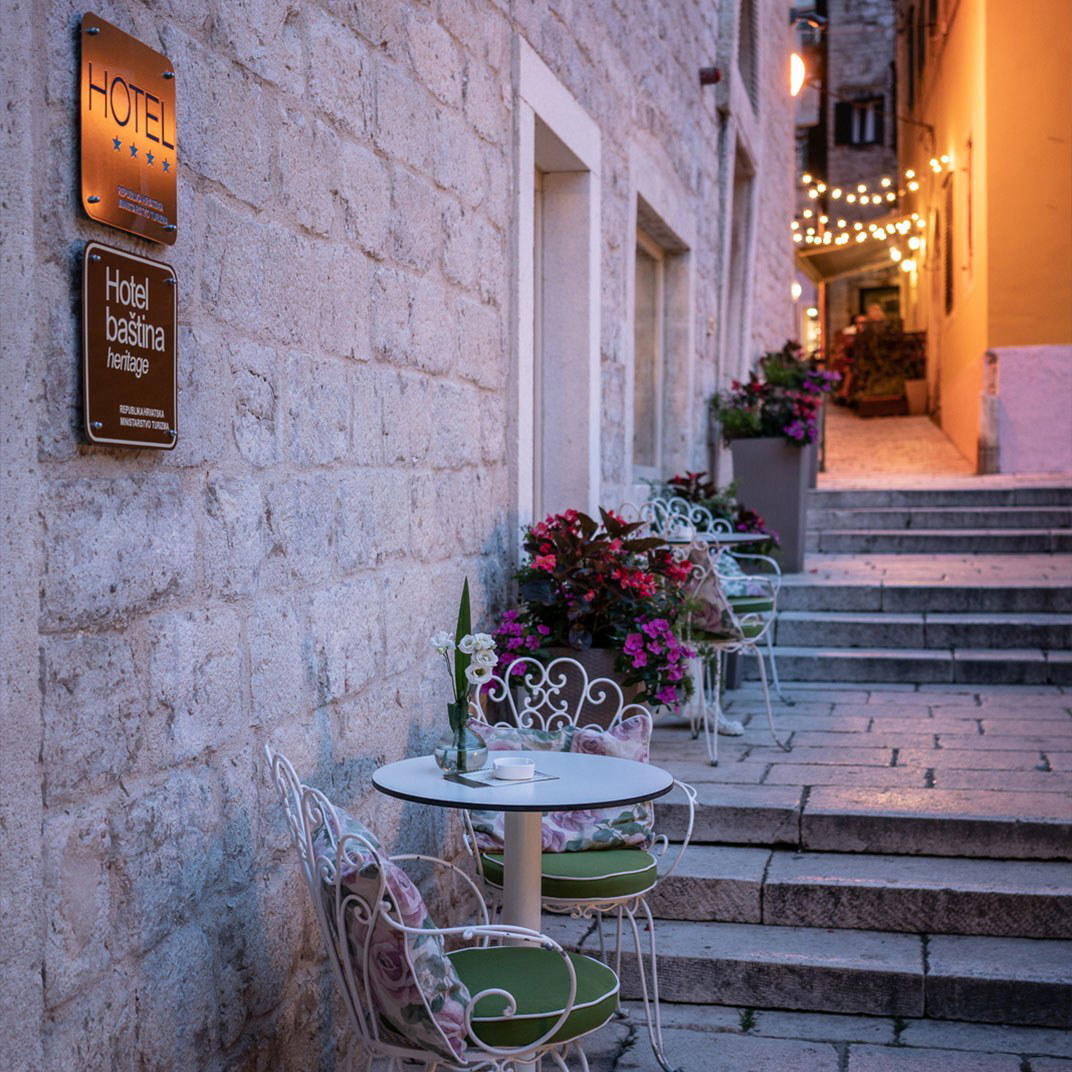
Šibenik's old town lends itself to this format. The city's medieval street grid, radiating out from the Cathedral of St. James (a UNESCO World Heritage site since 2000), is dense with narrow lanes where small dining rooms have operated for generations. Ul. Nove crkve, the address for Konoba Marenda, sits inside that fabric. Approaching along the uneven stone paving, the physical context does much of the work: thick walls, compressed proportions, the kind of space that resists the open-plan restaurant logic of newer builds.
What Ingredient Sourcing Means in This Part of Croatia
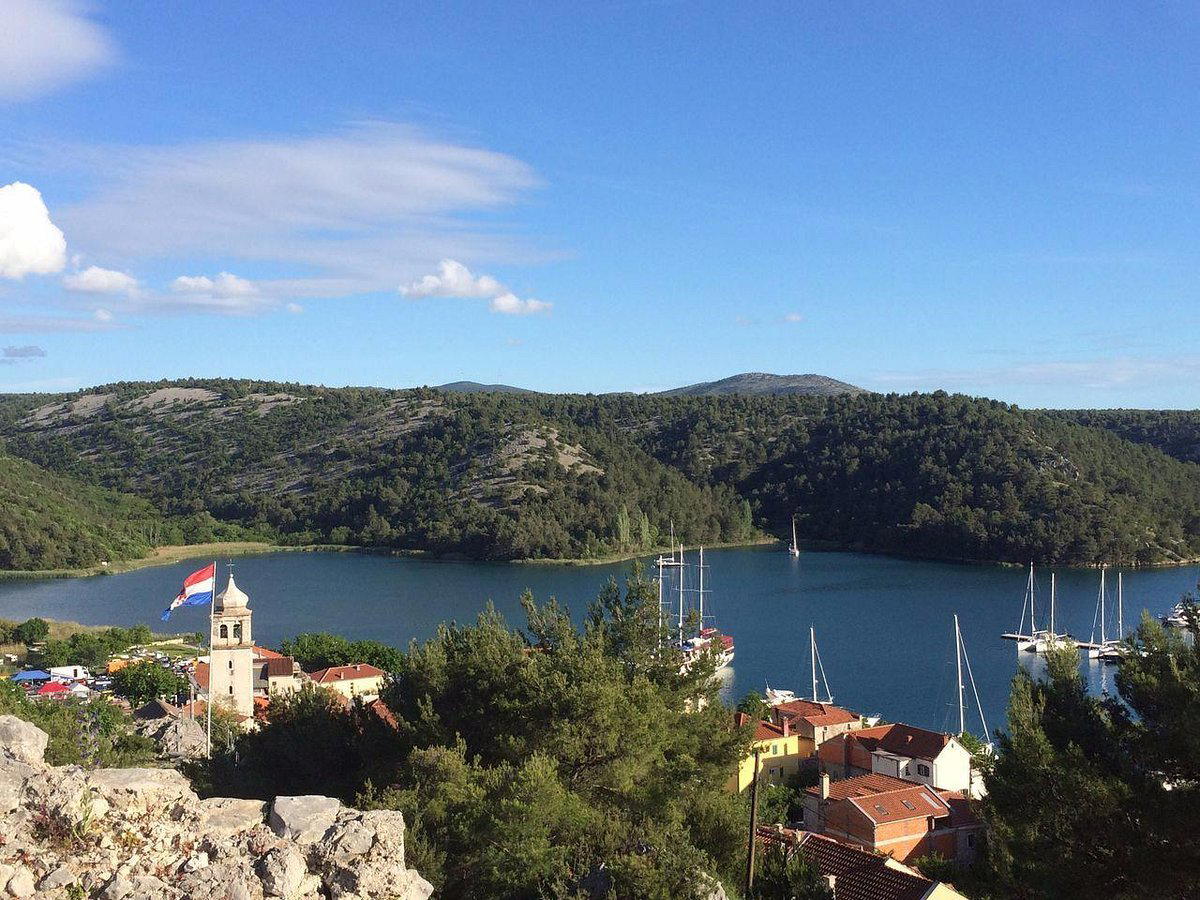
The Šibenik-Knin County coastline is one of the more varied stretches of the central Adriatic. The Krka river estuary, the islands of Prvić, Zlarin, and Kaprije, and the proximity to Kornati National Park create a supply geography that konoba kitchens have historically exploited directly. Shellfish from the Šibenik channel, white fish from smaller island fishing operations, and lamb from the Dalmatian hinterland represent the recurring proteins in this tradition. Seasonal vegetables from the Dalmatian zagora, the inland agricultural zone, round out plates that are structurally simple but depend entirely on supply quality for their credibility.
This sourcing logic is not marketing positioning in the way it functions at higher-end Croatian restaurants like Boskinac in Novalja or Agli Amici Rovinj, where provenance is documented and placed in dialogue with technique. In a konoba, it is closer to operational necessity: the kitchen cooks what arrived, prepares it with minimal intervention, and adjusts the menu daily as supply dictates. That discipline, enforced by tradition and economics rather than philosophy, often produces more honest plates than kitchens that curate provenance as a selling point.
For the comparative context: Šibenik's more formal dining tier, anchored by Pelegrini and the newer generation of the city's restaurants, operates on a different supply model, working with named producers and building menus around those relationships months in advance. The konoba format runs on shorter cycles. Knowing which register you are eating in helps calibrate expectations accurately.
Šibenik's Restaurant Spectrum in Brief
The city's dining scene is smaller than Split's or Dubrovnik's but has grown in seriousness over the past decade alongside increased summer tourism and a more engaged local food culture. At the upper end, Pelegrini and Bronzin represent the contemporary fine-dining layer. The middle tier includes seafood-focused restaurants trading on the city's harbour proximity. Below that, konobas and casual spots like Konoba Ronilac and Marenda 2 serve the daily-eating function, and Il-palazzo Galbiani occupies its own niche within the old town.
Konoba Marenda operates in that lower-formality, higher-frequency tier. It is not competing with Croatia's destination restaurants in the way that, say, Restaurant 360 in Dubrovnik or LD Restaurant in Korčula compete nationally.
Practical Notes for Visitors
Ul. Nove crkve 9 places Konoba Marenda within walking distance of Šibenik's cathedral and the main pedestrian zone. The old town's compact layout means most visitors staying centrally can reach it on foot without navigation challenges. As with most konobas in Croatian coastal cities, the practical advice holds: arrive earlier in the evening during peak summer months (July and August) when demand from both tourists and locals runs highest, and treat menu flexibility as part of the format rather than an inconvenience. Visitors intending to plan ahead should make local enquiries on arrival in Šibenik.
For those building a longer itinerary through the Croatian coast and interior, the broader EP Club coverage spans restaurants from Nebo by Deni Srdoč in Rijeka to Krug in Split, Dubravkin Put in Zagreb, and Korak in Jastrebarsko, giving a fuller picture of how Croatian dining operates across price points and regions. The full Šibenik restaurants guide covers the city's options in more depth. For those interested in how sustainable sourcing and ingredient-led cooking operate at different scales, the approach at BioMania Bistro Bol in Bol or, internationally, at Le Bernardin in New York City and Atomix provides instructive contrasts to the konoba format, where sourcing discipline comes without the technical apparatus.
Frequently asked questions
Where is Konoba Marenda in Sibenik?
Konoba Marenda is located at Ul. Nove crkve 9, 22000, Šibenik, Croatia, Sibenik.
How does Konoba Marenda compare to other restaurants near Šibenik's old town?
Šibenik's dining scene is smaller than Split's or Dubrovnik's, which means the pool of serious konobas in the old town is compact. Konoba Marenda's position on Ul. Nove crkve 9 puts it at the heart of the historic centre, distinguishing it from waterfront spots that trade more on location than on the konoba cooking tradition. For visitors focused on central Adriatic ingredients rather than harbour views, that distinction matters.
What's the signature dish at Konoba Marenda?
Konoba Marenda sits within the konoba tradition of Dalmatia, where the kitchen typically centres on whatever the local catch and season produce. Given its location in Šibenik, close to the Krka estuary and the islands of Prvić and Zlarin, the menu likely draws on shellfish, white fish, and local olive oil.
Is Konoba Marenda reservation-only?
No booking policy is formally documented for Konoba Marenda. Šibenik's old town dining spots tend to fill quickly during the summer months as tourism in the region has grown steadily over the past decade, so contacting the venue directly before arriving, particularly between June and August, is advisable.
What's the standout thing about Konoba Marenda?
The address at Ul. Nove crkve 9 places Konoba Marenda within walking distance of Šibenik's UNESCO-listed Cathedral of St. James and the main pedestrian zone, making it one of the more accessibly located konobas in the city. The konoba format itself is the draw: smaller, ingredient-led, and closer in character to a fisherman's table than a formal restaurant.
Do they accommodate allergies at Konoba Marenda?
No allergen policy is documented for Konoba Marenda. Traditional Dalmatian konoba kitchens are typically small operations where menus shift with the catch and season, which means the staff are often best placed to advise in person. Arriving with specific requirements written in Croatian is a practical step given the language context.
Is Konoba Marenda overpriced or worth every penny?
Šibenik sits in a middle tier within Dalmatian dining: less expensive than Dubrovnik's tourist-facing restaurants, but prices in the old town have moved upward alongside increased summer visitor numbers over the past decade. A konoba format generally signals straightforward pricing tied to what the local coast produces rather than a long à la carte menu with margin built into complexity.
At-a-Glance Comparison
Comparable venues nearby, for context on price, style, and recognition.
| Venue | Cuisine | Price | Notes |
|---|---|---|---|
| Konoba MarendaThis venue (the venue you are viewing) | Traditional Dalmatian | $10–20 | Not listed |
| Sedmo nebo | Authentic Dalmatian Seafood | Not listed | Kaprije (Otok Kakan) |
| Il-palazzo Galbiani | Modern Croatian Seafood & Mediterranean | $30–50 | Sibenik Old Town |
| Bronzin | Traditional Croatian Mediterranean Grill | $20–30 | Old Town |
| Nostalgija | Traditional Dalmatian Seafood | Not listed | Old Town |
| Marenda 2 | Traditional Dalmatian Home Cooking | $20–30 | Historical Center |
Continue exploring
More in Sibenik
Restaurants in Sibenik
All restaurants in Sibenik →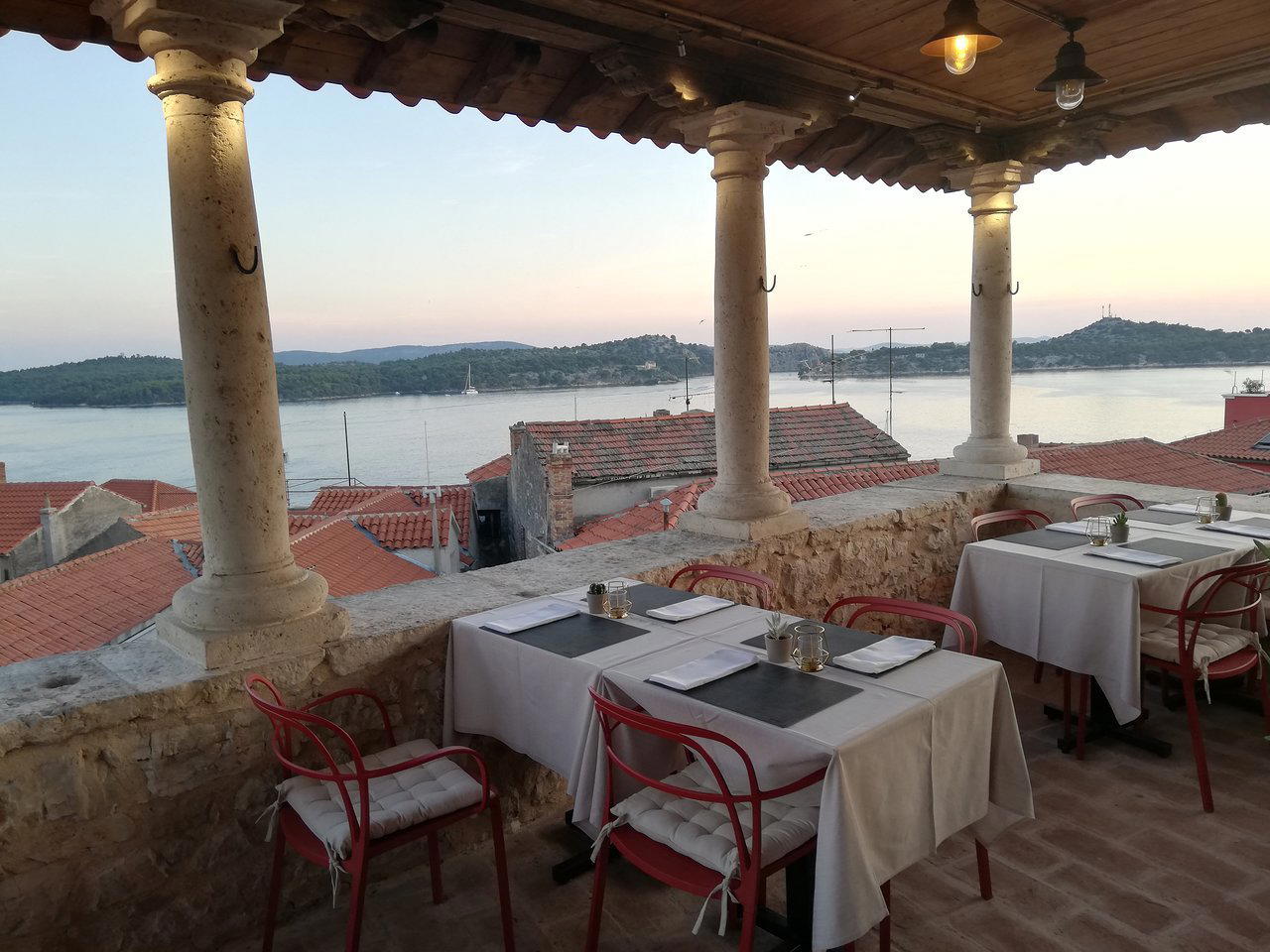
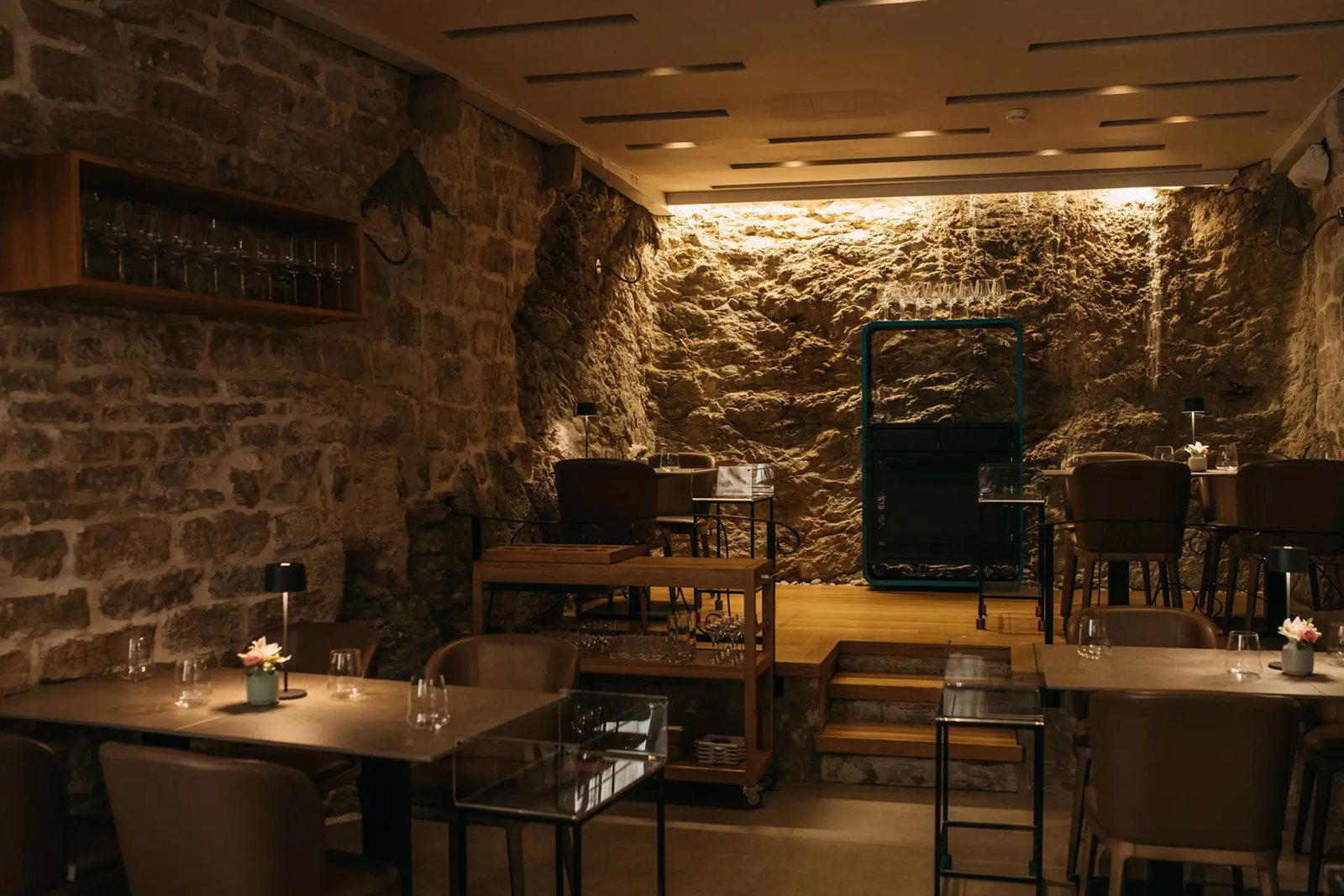
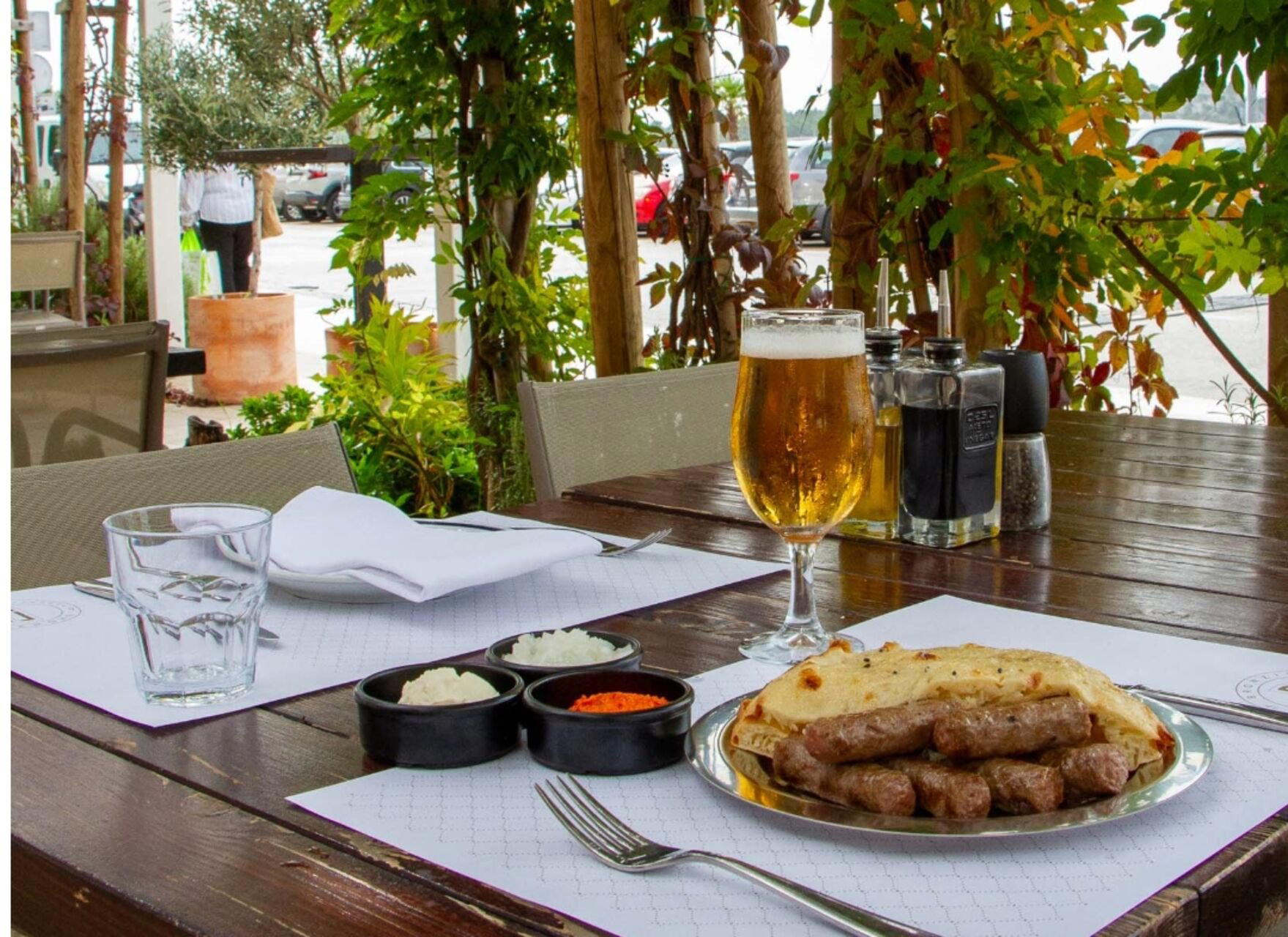
Bars in Sibenik
All bars in Sibenik →

Details
- Rustic
- Cozy
- Intimate
- Classic
- Casual Hangout
- Family
- Historic Building
- Local Sourcing
- Street Scene
- A La Carte
Current opening hours
- Monday
- 9 AM–3 PM
- Tuesday
- 9 AM–3 PM
- Wednesday
- 9 AM–3 PM
- Thursday
- 9 AM–3 PM
- Friday
- 9 AM–3 PM
- Saturday
- 9 AM–3 PM
- Sunday
- Closed
Hours can change for holidays and private events. Hours as of .