Kombu Sushi
On Sunset Boulevard in Silver Lake, Kombu Sushi occupies a well-worn stretch of Los Angeles where neighbourhood regulars and serious sushi seekers share the same room. The address places it in one of the city's most restaurant-dense corridors, where the standard for Japanese cooking has risen considerably over the past decade. Expect the customs and pacing of traditional sushi service in a setting that reads more local than destination.
Pearl is the En Primeur Club membership app — saves, bookings, and concierge access live there. Same editors, same standards.
- Address
- 3719 Sunset Blvd, Los Angeles, CA 90026
- Phone
- +13236631048
- Website
- kombula.com
- Directions
- Get directions
 Saves & bookings on Pearl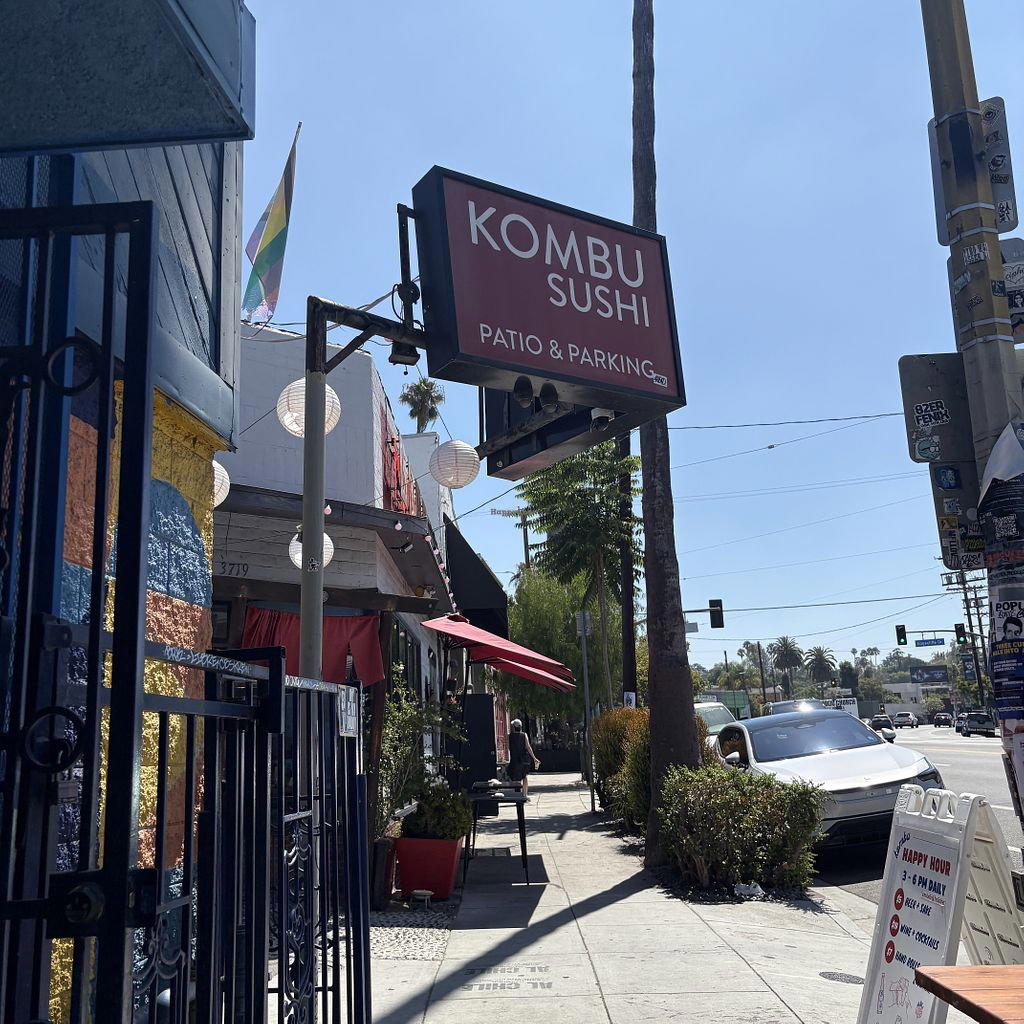
Where Silver Lake Meets the Sushi Counter
Sunset Boulevard through Silver Lake moves at a particular frequency: coffee shops giving way to taquerias, record stores beside wine bars, the whole stretch carrying the low-level hum of a neighbourhood that has gentrified without fully surrendering its character. Kombu Sushi at 3719 Sunset Blvd sits inside that rhythm. The address is east of the WeHo cluster and well west of the Downtown Japanese dining corridor, which means it occupies a genuinely neighbourhood position rather than a destination-dining zip code. That placement shapes expectations in useful ways: this is not the Michelin-circuit end of Los Angeles sushi, and it does not need to be.
Los Angeles has become one of the most consequential cities in North America for Japanese food, a fact that reflects both a large Japanese-American population with deep roots in the city and decades of cultural exchange across the Pacific. The sushi tier in LA now runs from conveyor-belt casual through neighbourhood omakase to the ultra-premium counters that price and book against Tokyo's finest. Hayato in the Row DTLA operates at the formal kaiseki end of that range, while Kato represents the New Taiwanese end of Asian fine dining in a city that continues to expand what that term covers. Kombu Sushi occupies a different register entirely: the neighbourhood sushi house, a format with its own distinct customs and its own loyal audience.
The Ritual of the Neighbourhood Counter
Traditional sushi service carries an etiquette that most neighbourhood restaurants inherit in some form, even when they are not running full omakase programs. The rhythm matters: the progression from lighter, cleaner fish toward richer, fattier cuts; the relationship between the guest and the person behind the counter; the pacing that distinguishes a sushi meal from a fast food transaction. In Los Angeles, where the restaurant culture is car-dependent and often sprawling, the sushi counter remains one of the few dining formats that imposes a kind of slowness — a requirement that you arrive, sit, and let the meal move at its own pace.
That ritual is worth taking seriously regardless of where a restaurant sits in the price hierarchy. A neighbourhood counter that observes the customs of the craft — freshness of fish relative to the day's delivery, the temperature of rice, the restraint in seasoning, provides a fundamentally different experience from a sushi restaurant that has drifted toward fusion menus and crowd-pleasing rolls. The name Kombu, referencing the kelp that forms the base of dashi and that wraps certain pressed sushi preparations, signals an awareness of the foundational vocabulary, though the specific menu and format here are not confirmed in available records and should be verified directly before visiting.
For those planning a visit, the address on Sunset Boulevard in Silver Lake is the primary logistical anchor: public transport reaches the corridor, street parking is variable in the way that all of Silver Lake is variable, and the neighbourhood rewards arriving slightly early to read the room before committing to a pace. Phone and website information are not currently confirmed through EP Club's records, so direct verification through Google Maps or a reservation platform before travelling is advisable.
Silver Lake in the Wider LA Dining Picture
To understand where Kombu Sushi sits, it helps to map the broader LA restaurant topology. The city's highest-profile fine dining addresses cluster in Beverly Hills, West Hollywood, and Downtown, where Providence holds its place as one of the city's foremost seafood destinations and Somni operates in the molecular-progressive tier. Osteria Mozza anchors the Italian conversation on Melrose. East of those corridors, Silver Lake and Los Feliz have built a restaurant culture that skews independent, neighbourhood-focused, and resistant to the celebrity-chef model that dominates the Westside.
That independence is a feature rather than a limitation. Some of the most consistent cooking in any city happens in neighbourhoods where the clientele is local, the rents are not astronomical, and the kitchen does not need to perform for a parade of first-time visitors. The neighbourhood sushi house, when it is working well, is one of the clearest expressions of this dynamic: a regular rotation of guests who know the counter, a chef who knows what fish is worth serving on a given Tuesday, and a meal that does not need a press release to justify itself.
Elsewhere in the United States, the same principle applies across different formats and cities. Lazy Bear in San Francisco has built a communal dining model on neighbourhood-first instincts. Addison in San Diego and Bacchanalia in Atlanta each represent cities where a restaurant earned serious standing without relying on a coastal media machine. In New York, Atomix has pushed Korean fine dining into conversation with the city's most decorated rooms. The pattern across all of these is that serious cooking finds its audience regardless of postcode. Le Bernardin in New York City, Alinea in Chicago, and The French Laundry in Napa all demonstrate that a restaurant earns its place through consistency rather than location alone. Blue Hill at Stone Barns in Tarrytown, The Inn at Little Washington, Emeril's in New Orleans, and Single Thread Farm in Healdsburg each carry that same earned authority. Even internationally, restaurants like 8½ Otto e Mezzo Bombana in Hong Kong illustrate how a specific culinary tradition, applied rigorously, can build a following far from its origin point.
For a fuller map of where Kombu Sushi sits relative to the rest of the city's restaurant conversation, EP Club's full Los Angeles restaurants guide covers the range from neighbourhood spots to the city's most awarded dining rooms.
Planning Your Visit
Kombu Sushi is located at 3719 Sunset Blvd, Los Angeles, CA 90026, in the Silver Lake neighbourhood. Given the absence of confirmed contact information in EP Club's current records, prospective visitors should confirm hours, booking policy, and any current menu format through an independent search before making a trip. Silver Lake's Sunset strip is leading approached with flexible timing: the neighbourhood is denser with foot traffic on weekend evenings, and the sushi counter format generally rewards a weeknight visit when the room is quieter and the pacing of service can unfold without pressure.
Continue exploring
More in Los Angeles
Restaurants in Los Angeles
Browse all →
Bars in Los Angeles
Browse all →
Hotels in Los Angeles
Browse all →
Wineries in Los Angeles
Browse all →
At a Glance
- Casual Hangout
- Family
- Sake Program
Current opening hours
- Monday
- 11:30 AM–10 PM
- Tuesday
- 11:30 AM–10 PM
- Wednesday
- 11:30 AM–10 PM
- Thursday
- 11:30 AM–10 PM
- Friday
- 11:30 AM–11 PM
- Saturday
- 11:30 AM–10:30 PM
- Sunday
- 11:30 AM–9:45 PM
Hours can change for holidays and private events. Last verified .
Casual neighborhood sushi spot with outdoor seating and welcoming atmosphere for various meals.
Know Before You Go
- Getting there
- 3719 Sunset Blvd, Los Angeles, CA 90026