
A back-to-back Michelin Bib Gourmand holder (2024 and 2025) in Balçova, Adil Müftüoğlu represents the kind of neighbourhood cooking that Michelin's value-recognition tier was designed for: honest Turkish food at a price point that keeps regulars coming daily.
Pearl is the En Primeur Club membership app — saves, bookings, and concierge access live there. Same editors, same standards.
- Address
- Korutürk, Mithatpaşa Cd. No: 159, 35330 Balçova/İzmir, Türkiye
- Phone
- +90 232 231 41 09
- Website
- adilmuftuoglu.com.tr
- Directions
- Get directions
 Saves & bookings on Pearl
Where Balçova Eats: The Neighbourhood Table Michelin Noticed
Mithatpaşa Caddesi runs through Balçova like a spine, connecting the residential weight of the district to the Aegean city beyond it. The restaurants that line it are not destination addresses in the conventional sense — they exist for the people who live nearby, the office workers who eat at midday, the families who return on weekends because the food does not disappoint and the price does not punish. Adil Müftüoğlu sits within this pattern, on the Korutürk stretch of the street, and its two consecutive Michelin Bib Gourmand awards — 2024 and 2025, are leading understood as confirmation of what the neighbourhood already knew. The Bib Gourmand category, Michelin's recognition for food that inspires quality-to-price confidence, does not require theatre or ambition for its own sake. It rewards consistency, honesty, and value. This restaurant earns those three things.
The Opening Spread: Dips, Mezze, and the Logic of Beginning
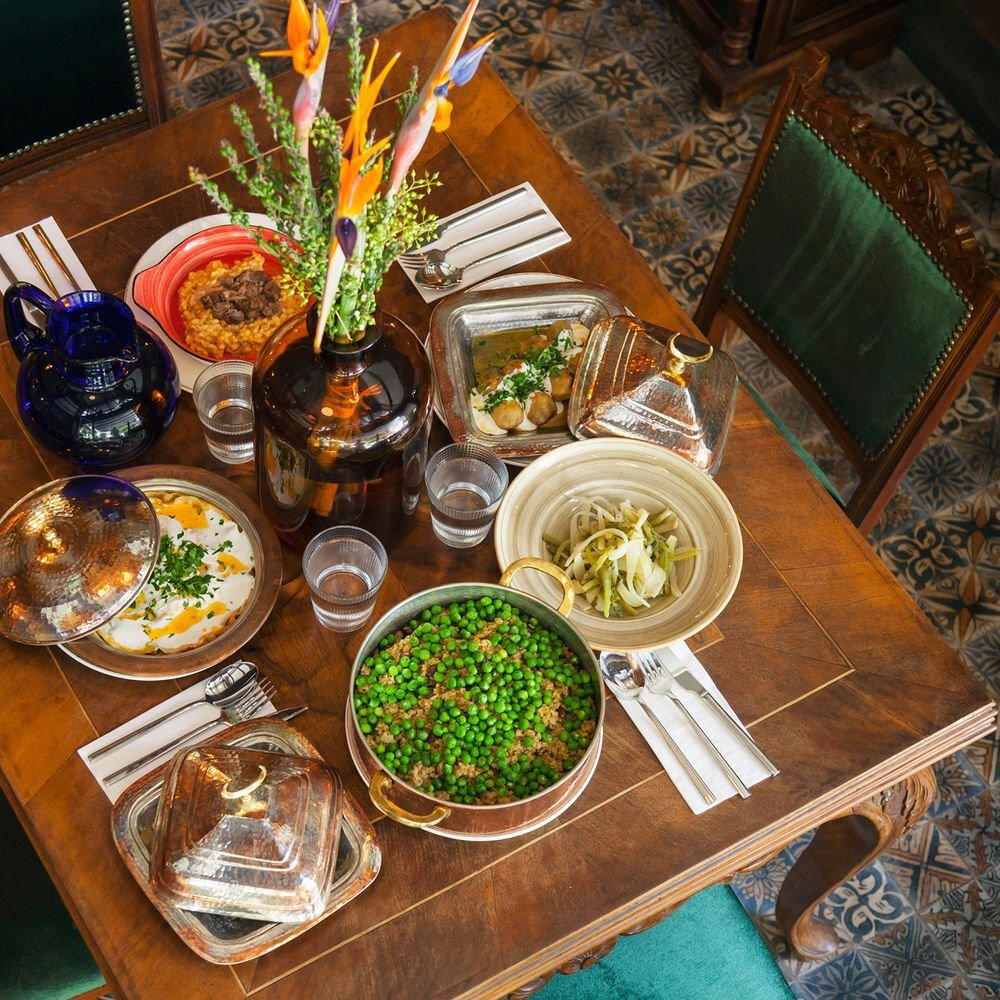
In Turkish cooking, the start of a meal is not a formality. The mezze spread functions as a statement of kitchen character: the fat content and texture of the hummus, the smokiness achieved in a baba ganoush, the freshness of cut herbs across a salad. These dishes arrive early, are shared without negotiation, and communicate whether the kitchen understands restraint. At the neighbourhood meyhane level, where Adil Müftüoğlu competes not against fine-dining peers but against the everyday Turkish table, the opening course carries particular weight because it is where guests make their first read of the place.
Turkish mezze culture in İzmir has its own regional character, distinct from Istanbul's more cosmopolitan interpretation. The Aegean coast pulls in olive oil generously, leans toward fresh herbs over heavy spice, and favours lighter textures in its cold dishes. A zeytinyağlı spread on this coast typically carries more brightness than its Anatolian equivalent, the influence of local olive production shapes what arrives at the table before any hot food appears. That regional specificity is worth noting when reading any İzmir restaurant's opening course.
For those coming to this address from a context of higher-format Turkish cooking, say, Turk Fatih Tutak in Istanbul, where the same culinary heritage is filtered through a tasting-menu lens, the contrast is instructive rather than diminishing. The neighbourhood kitchen is not a lesser version of the fine-dining kitchen. It operates on different terms, and its opening spreads are judged on different standards: accessibility, repetition-friendliness, the ability to feel right on a Tuesday.
Positioning Within İzmir's Eating Hierarchy
The Michelin presence in the greater İzmir area now covers a range of price tiers and formats. At the upper end, Narımor operates in the one-star bracket, as do OD Urla (₺₺₺, farm-to-table), Teruar Urla (₺₺₺₺, Mediterranean), and Vino Locale (₺₺₺, country cooking). These addresses set a different kind of table. Adil Müftüoğlu, priced at the single ₺ tier, sits at the opposite end of that spectrum, not as an entry point to the same conversation, but as a different conversation entirely.
The relevant comparison set is the mid-range neighbourhood Turkish table, where Aslında Meyhane (₺₺) and Beğendik Abi sit within the same broad category. Within that tier, Bib Gourmand recognition marks a clear distinction. The award implies a kitchen that achieves something Michelin inspectors considered worth noting, at a price most diners in the city can access without planning. That combination is harder to sustain than it looks. Consistency at volume, at low prices, over consecutive years, the 2024 and 2025 awards together suggest this is not an anomaly, is its own form of discipline.
A tourist-heavy profile typically produces more volatility. This pattern suggests the restaurant holds up to repeat visits, which is precisely the test the Bib Gourmand tier applies.
Turkish Cooking at This Price Point: What the Category Requires
Single-tier pricing (₺) in Turkey's current economic context means working with tight margins while maintaining sourcing standards. The Aegean advantage is that local produce, olive oil, vegetables, fresh fish in season, can be accessed at costs that allow the kitchen some flexibility. The broader challenge for any neighbourhood Turkish kitchen is that the cuisine itself does not hide failures well. A poorly executed mercimek çorbası, an underseasoned cacık, a watery patlıcan dish, these read immediately because the dishes are so familiar. There is no novelty to distract from execution.
This is why Bib Gourmand recognition at this tier carries more signal than it might at a ₺₺₺ address with a tasting menu. The inspectors are evaluating the basics, and the basics are what Turkish home-cooking tradition has refined over generations. Getting them right, reliably, is the whole task.
For broader context on how Turkish cuisine performs across different formats and cities, 7 Mehmet in Antalya, Kitchen By Osman Sezener in Bodrum, and Aravan Evi in Ürgüp each occupy different regional and price positions within the same culinary tradition. Turkish cooking at this scale is a national project, not a single-city story.
Balçova as a Dining District
Balçova does not appear on most İzmir restaurant maps aimed at visitors. The district sits west of the central city, closer to the thermal facilities at Agamemnon than to the waterfront promenade, and its dining offer is structured around residents rather than tourists. That context matters when reading the address: this is not a restaurant that has chosen a location to attract foot traffic from the bazaar quarter or the kordon. It has a postcode that filters for people who mean to be there.
Within İzmir's wider dining picture, which includes waterfront options at Levan and breakfast culture represented by Ayşa Boşnak Börekçisi, Adil Müftüoğlu fills a specific and less-visited slot: the neighbourhood table that earns awards without advertising for them. International visitors planning wider Aegean itineraries that include Ahãma in Göcek or Agora Pansiyon in Milas will find a meal here grounding in a way that resort-adjacent cooking rarely is.
For those building an İzmir itinerary from scratch, the full picture is covered in our full İzmir restaurants guide, with complementary context in our İzmir hotels guide, bars guide, wineries guide, and experiences guide. For Turkish cooking seen through a diaspora lens, dede in Baltimore and 29 in Istanbul offer contrasting angles on how the same culinary grammar travels.
Planning Your Visit
The restaurant is located at Korutürk, Mithatpaşa Caddesi No. 159, in Balçova, a district leading reached by car or taxi from central İzmir rather than on foot from the waterfront. No booking method, seat count, or hours are available through current data, so confirming service times directly before visiting is advisable, particularly for lunch, which is when neighbourhood kitchens at this format and price tend to operate at full pressure. The ₺ pricing means a meal here remains accessible at almost any budget, and the consecutive Bib Gourmand recognitions are a reliable indicator that quality holds across services.
What to Order at Adil Müftüoğlu
The Michelin Bib Gourmand award recognises Turkish cooking executed at honest standards and accessible prices, which points directly to the restaurant's core offer. The opening spread is where to pay attention: the cold mezze and dips carry the kitchen's signal on seasoning and sourcing, and on the Aegean coast, the zeytinyağlı dishes benefit from local olive oil in a way that distinguishes the region. Beyond the opening course, the fundamentals of Turkish neighbourhood cooking, soups, grilled proteins, seasonal vegetable preparations, are the kitchen's working vocabulary. There are no confirmed signature dishes in available data, but the pattern of consecutive Bib Gourmand recognition suggests the kitchen's reliability extends across the menu rather than concentrating in a single showpiece dish. Come with the expectation of honest food, not a tasting menu, and the experience reads exactly as intended.
| Venue | Cuisine | Price | Awards | Notes |
|---|---|---|---|---|
| Adil MüftüoğluThis venue — the venue you are viewing | Turkish | ₺ | Bib Gourmand | Not listed |
| Teruar Urla | Mediterranean Cuisine | ₺₺₺₺ | Michelin 1 Star | ₺₺₺₺ |
| Vino Locale | Country cooking | ₺₺₺ | Michelin 1 Star | ₺₺₺ |
| OD Urla | Farm to Table, Creative French | ₺₺₺ | Michelin 1 Star | ₺₺₺ |
| Aslında Meyhane | Turkish | ₺₺ | Turkish, ₺₺ | Not listed |
| Asma Yaprağı | Traditional Cuisine | ₺₺ | Traditional Cuisine, ₺₺ | Not listed |
Recognition history
Dated appearances from independent guides and award organizations, with the underlying list record or original source where available.
Michelin Bib Gourmand
Michelin
Michelin Bib Gourmand
Michelin
Continue exploring
More in Izmir
Restaurants in Izmir
Browse all →
Hotels in Izmir
Browse all →
Wineries in Izmir
Browse all →
At a Glance
- Classic
- Cozy
- Family
- Group Dining
- Casual Hangout
- Historic Building
Current opening hours
- Monday
- 11 AM–9:30 PM
- Tuesday
- 11 AM–9:30 PM
- Wednesday
- 11 AM–9:30 PM
- Thursday
- 11 AM–9:30 PM
- Friday
- 11 AM–9:30 PM
- Saturday
- 11 AM–9:30 PM
- Sunday
- Closed
Hours can change for holidays and private events. Last verified .
Know Before You Go
- Getting there
- Korutürk, Mithatpaşa Cd. No: 159, 35330 Balçova/İzmir, Türkiye