KOGI Korean BBQ occupies Level 3 of Market City in Haymarket, placing it at the centre of Sydney's most concentrated Korean dining precinct. The venue operates within a neighbourhood where Korean barbecue has shifted from specialist ethnic dining to a mainstream format that draws broad cross-sections of the city. For anyone planning a visit, the Market City address puts multiple dining options and public transport links within a short walk.
Pearl is the En Primeur Club membership app — saves, bookings, and concierge access live there. Same editors, same standards.
- Address
- Level 3 Market City, Shop R1.05/13 Hay St, Haymarket NSW 2000, Australia
- Phone
- +61409713423
- Website
- kogi.com.au
- Directions
- Get directions
 Saves & bookings on Pearl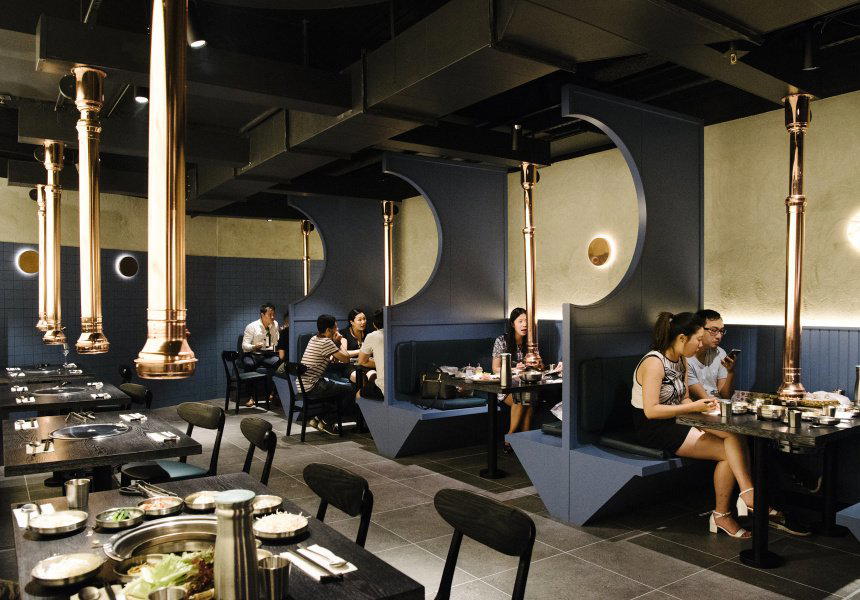
Haymarket and the Korean BBQ Equation
Sydney's Haymarket precinct has, over the past decade, become the city's most legible address for Korean cuisine at scale. The streets around Market City concentrate Korean barbecue restaurants at a density that invites direct comparison: diners walk past three or four options before committing, which means every venue in the building earns its seat through repeat traffic and word-of-mouth rather than destination bookings alone. KOGI Korean BBQ, occupying Shop R1.05 on Level 3 of Market City at 13 Hay Street, sits squarely inside this competitive cluster.
Korean barbecue as a format has a particular logic in the Australian context. Unlike the tasting-menu model that defines much of Sydney's premium dining, as seen at venues like Rockpool or the seafood-focused precision of Saint Peter, Korean BBQ is communal and self-directed. Guests cook their own meat over table-set grills, which changes the rhythm of service entirely. The kitchen's role is preparation and sourcing; the table's role is execution. That division of labour makes the category accessible to a wide range of diners while placing quality pressure squarely on the raw product.
The Physical Environment and What It Signals
Market City is a shopping centre, and Level 3 is its food floor, a configuration that shapes expectations before a dish arrives. The setting is high-volume and lit for throughput rather than atmosphere, which is a deliberate fit for the Korean barbecue format. Tables are equipped with built-in grills and extraction venting; the air carries the layered smoke of charcoal and marinated meat. This is not the clinical calm of a fine-dining room. It is loud, social, and built around the act of eating rather than the choreography of service.
That physicality is part of what the category promises. In Seoul's Mapo or Mapo-gu districts, the same sensory logic applies: fluorescent lighting, close-set tables, and the sound of sizzling fat are features rather than shortcomings. Sydney's Haymarket version compresses that tradition into a shopping-centre floor, which raises the question of how much context survives the translation, but also signals that the format has crossed from niche ethnic dining into something the mainstream city has absorbed as its own.
For a contrasting model of how Korean culinary technique translates at a different price point and formality level, Atomix in New York City is the reference: a two-Michelin-star Korean tasting counter that treats the same ingredient traditions with a precision-course format. The two ends of the spectrum share a source culture but occupy entirely different competitive sets.
Planning Your Visit: What to Know Before You Go
The editorial angle for KOGI is logistics rather than credentials. KOGI has no listed awards, no documented chef background, and no published booking policy in the record. Korean barbecue restaurants at this tier of the market rarely pursue Michelin recognition or table-magazine placement. They build their audience through consistent turnover, proximity to their customer base, and the format's inherent repeatability. You do not visit a Korean barbecue restaurant once; the communal cooking model is built for groups returning on occasion.
Market City's central Haymarket location makes access direct. The venue sits within the broader shopping complex at 13 Hay Street, and the surrounding area is dense with transport links: Central Station is a short walk, and the Light Rail network connects the precinct to the CBD and inner suburbs. For visitors arriving from other Sydney dining neighbourhoods, the commute is direct. Those coming from Bondi or the eastern beaches might pair a visit with a stop at bills in Bondi Beach for a contrast in format and register.
Timing matters in the Haymarket Korean BBQ cluster. Weekend evenings draw significant foot traffic to Market City's food floor, and peak hours can mean a wait for tables, particularly for larger groups, which are the natural audience for the communal format. Weekday lunches and early dinners tend to move more freely. For group visits, arriving early in the service window is the practical approach.
KOGI in the Broader Sydney Dining Map
Sydney's dining map is not monolithic. The fine-dining tier that includes venues like 10 William St and 1021 Mediterranean operates on a different set of pressures than the high-turnover communal dining that characterises Haymarket's Korean precinct. Both are legitimate expressions of what Sydney eats; they simply serve different functions in a dining week.
Korean barbecue, at KOGI's Market City address, serves the function of the shared meal: it is group-oriented, price-accessible relative to Sydney's tasting-menu tier, and designed to take up time rather than compress it. The table grill extends the meal naturally; there is no timed degustation logic, no amuse-bouche sequence, no wine pairing pressure. That informality is the point, and it makes the category a regular fixture in dining weeks that might also include a booking at Bayly's Bistro in Kirribilli or a longer trip down the coast to Kulcha Restaurant in Wollongong.
For those interested in how Korean culinary tradition shows up across different Australian cities, Attica in Melbourne and Brae in Birregurra represent the high-end Australian kitchen approach, while venues like Johnny Bird in Crows Nest and Bar Carolina in South Yarra show how the broader Australian dining scene handles casual and regional dining formats. The contrast sets a useful frame for understanding where a Haymarket Korean BBQ venue sits: not competing for degustation clientele, but serving a real and consistent demand for communal, self-directed dining. See our full Sydney restaurants guide for broader context across categories and neighbourhoods.
Those travelling to Sydney specifically for dining who want to map their broader itinerary might also consider options further afield: Jaani Street Food in Ballarat, Hungry Wolfs Italian Restaurant in Newcastle, and Barry Cafe in Northcote offer regional reference points for how food culture diffuses from city centres. Back in Sydney, 10 Pounds represents a different price tier and format for those building a varied dining week.
Practical Details
KOGI Korean BBQ is located at Shop R1.05, Level 3, Market City, 13 Hay Street, Haymarket NSW 2000. The venue is accessible via Central Station and the Inner West Light Rail. Group visits are best planned for off-peak times. The venue's dress code is business casual, reservations are recommended, and current service times should be checked before visiting. For wider Sydney dining context, the EP Club Sydney guide covers the full range of categories and neighbourhoods.
Peers in This Market
Comparable venues nearby, for context on price, style, and recognition.
| Venue | Cuisine | Price | Notes |
|---|---|---|---|
| KOGI Korean BBQThis venue — the venue you are viewing | Korean BBQ | $$$ | Not listed |
| K - Town Korean BBQ House | Korean BBQ | $$ | Cremorne |
| Sang by Mabasa | Modern Korean | $$ | Surry Hills |
| Paripé | Authentic Spanish Tapas | $$$ | Surry Hills |
| Long Chim Sydney | Authentic Thai Street Food | $$$ | Sydney |
| Spiced | Modern North Indian | $$$ | Barangaroo |
Continue exploring
More in Sydney
Restaurants in Sydney
Browse all →
Bars in Sydney
Browse all →
Hotels in Sydney
Browse all →
At a Glance
- Lively
- Trendy
- Energetic
- Group Dining
- Date Night
- Casual Hangout
- Open Kitchen
Current opening hours
- Monday
- 12–3 PM, 5–10 PM
- Tuesday
- 12–3 PM, 5–10 PM
- Wednesday
- 12–3 PM, 5–10 PM
- Thursday
- 12–3 PM, 5–10 PM
- Friday
- 12–3 PM, 4:30–11 PM
- Saturday
- 12–3 PM, 4:30–11 PM
- Sunday
- 12–3 PM, 4:30–10 PM
Hours can change for holidays and private events. Last verified .
Energetic and vibey atmosphere with sizzling grill aromas and lively crowds.