
Tabelog 100 #86
Our verdict
Nagoya’s Shinsakae area gives kibi a useful setting: central enough for a serious dinner, less predictable than the Sakae dining grid. The restaurant sits in the city’s creative cooking tier, with Innovative and Italian categories, a fish-led kitchen, firewood as a defining technique, and selection for Tabelog 100 Innovative / Creative cuisine 2025.

Pearl is the En Primeur Club membership app, where members save venues, book tables and use the concierge.
The menu
What to order
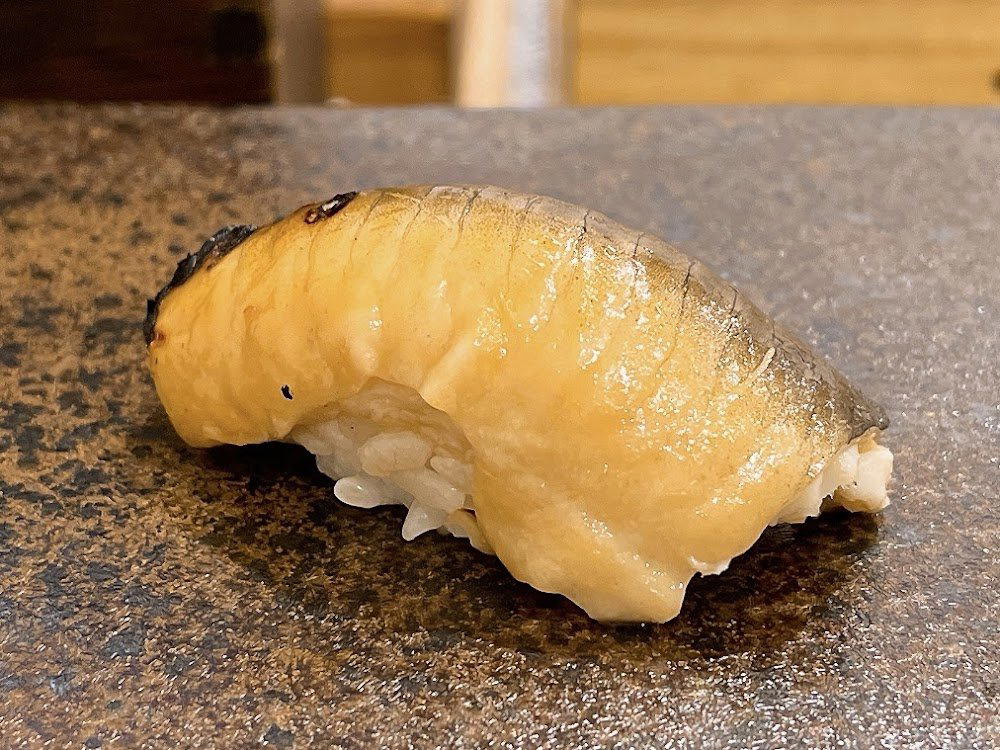
- Seasonal wood-fired course menu
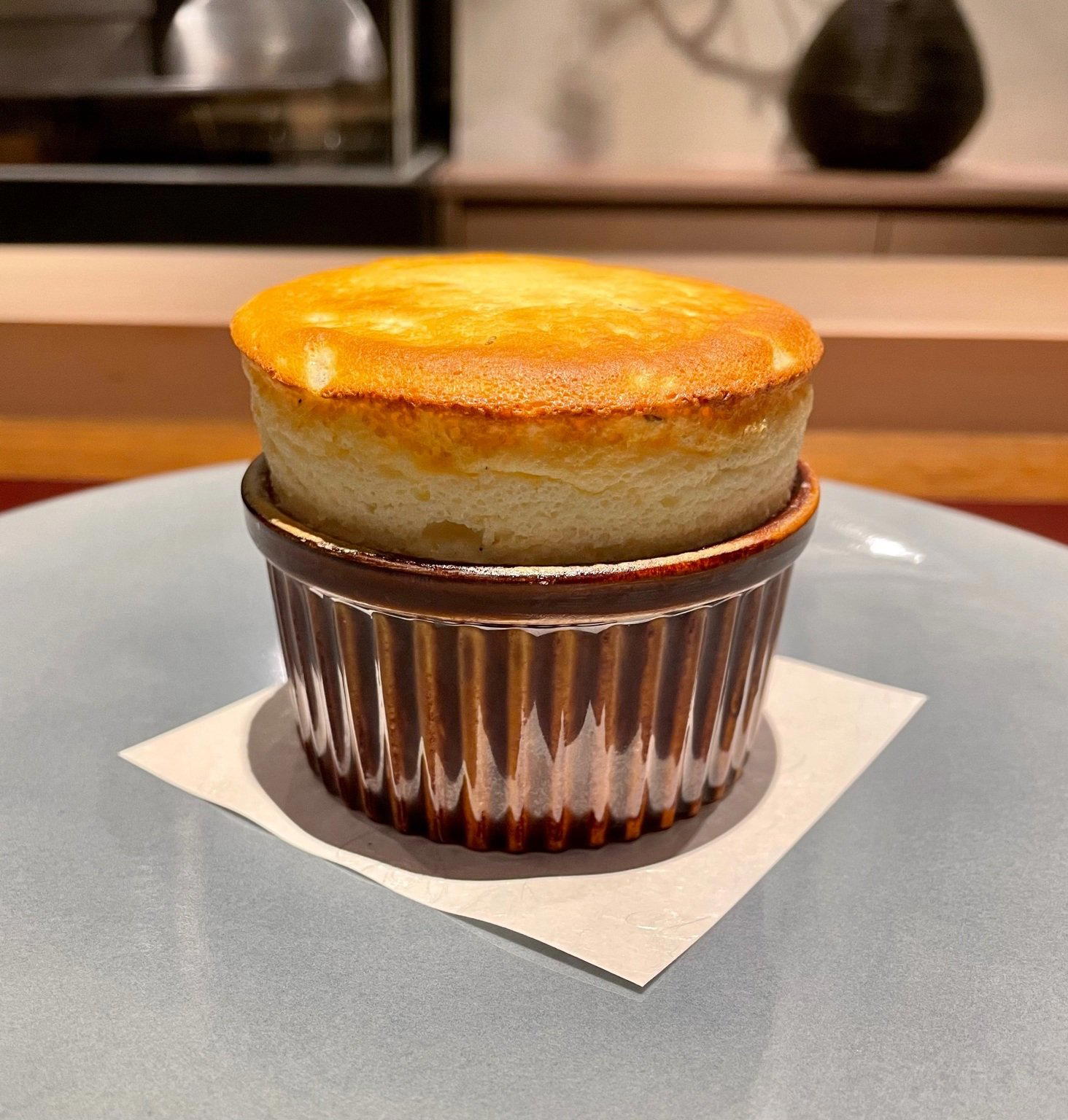
- Kibi dango-inspired signature dessert
In Nagoya, the room shifts the tempo before the meal begins. This is not simply the city’s polished hotel-dining register or its full-volume after-work sprawl. It is closer to the Nagoya pattern of smaller restaurants, reserved rooms, music-led evenings, and late-night addresses sharing one dining map. That matters because creative cooking in Nagoya often works well away from grand gestures: a focused room, a deliberate pace, and a kitchen built around a considered course.
kibi belongs to a narrow Nagoya category where Innovative and Italian cues meet without turning dinner into a genre exercise. Tabelog lists it under Innovative and Italian, which is the clearest public frame to use. It sits outside easy labels: not simply one familiar format, not a formal dining room defined by old boundaries, not a restaurant leaning on one theatrical technique. It is closer to the contemporary planned-meal model, where timing, portion rhythm, and the shape of the evening carry the meal.
Nagoya gives creative cooking a lower, tighter register
Nagoya’s dining identity is often read through comfort dishes, grilled meats, miso depth, and station-adjacent convenience. Its more ambitious restaurants occupy smaller pockets within the city’s broader dining map. kibi fits that pattern. Compared with lower-priced nearby options such as Torin Chi Nagoya shinsakae ten and Lucca, kibi sits in another decision category: a planned evening, not a casual stop.
The comparison shows the city’s range. Nagoya can absorb an everyday bill, a mid-range restaurant, and a full creative course meal without changing the larger urban rhythm. Within Nagoya’s serious restaurant tier, kibi’s dinner budget of JPY 15,000 to JPY 19,999 aligns more with Shutei Nawa or Otsuaji Asai than with casual local addresses, though the dining language differs. Yakiniku Taiga sits in another lane within the city’s restaurant range. The point is range: Nagoya supports several levels of intent, and kibi occupies the planned-dinner end.
The 2025 Tabelog Hyakumeiten recognition gives the restaurant a measurable signal in a category that can feel vague. “Creative” is overused in Japanese dining, but Tabelog’s listing helps frame restaurants that do not sit neatly inside old cuisine boundaries. For Nagoya, where national attention often tilts toward Tokyo, Kyoto, and Osaka, inclusion gives the city’s contemporary cooking scene a firmer reference point.
Innovative, Italian, and the course-menu discipline
Modern creative cooking can easily become shorthand, but the stronger version is restraint: a clear sequence, careful pacing, and enough focus for each course to make sense without needing a manifesto. kibi’s public markers point there without requiring invented signature dishes. The reliable categories are Innovative and Italian, supported by a price level that suggests a structured meal rather than casual grazing.
The room format also matters, though it should not be over-described beyond what is publicly grounded. kibi reads as the kind of Nagoya address where the meal is planned in advance and treated as the centre of the evening. In the city’s dining culture, business dinners, family celebrations, and serious food travel can overlap. A focused restaurant emphasizes process; a more private-feeling meal makes the evening conversation-led. Both serve different versions of Nagoya’s dining habits.
Drinks and service details should be read carefully unless confirmed directly at the time of booking. What is safe to say is that kibi’s budget and recognition place it among Nagoya restaurants designed for a deliberate dinner or lunch rather than a quick stop. That distinction separates a serious dinner address from a room merely using modern-cooking vocabulary.
Restraint is necessary. No named signature dish should define the restaurant unless the kitchen makes that claim publicly. The reliable read is structural: Innovative and Italian classification, a higher planned-meal budget, Nagoya setting, and Tabelog Hyakumeiten recognition. That is enough to understand the experience without inventing a menu around it.
How to place it in a Nagoya itinerary
For travellers building a Nagoya dining plan, kibi makes sense as the contemporary dinner, not the city primer. It does not replace the local canon; it follows it. A first-time visitor may want miso katsu, hitsumabushi, kishimen, or tebasaki elsewhere to understand the city’s flavour memory. This address reads Nagoya through current restaurant culture rather than regional shorthand.
Place it within the city’s newer serious-dining rhythm: limited availability, advance planning, and a meal that should not be squeezed between other commitments. Across Japan, serious mid-size cities have adopted formats once associated with the largest markets: tighter rooms, more focused menus, and stronger attention to pacing. Nagoya’s version is usually less performative, which helps. The city has wealth, excellent transport, and a strong local dining public, but rarely needs to announce itself as loudly as the capital.
Treat the meal as the night’s anchor, not an add-on between bars. Nagoya makes it easy to continue elsewhere in the city after dinner or keep the evening focused around one reservation.
Within EP Club’s wider Japan and restaurant coverage, the address belongs with highly specific rooms rather than broad crowd-pleasers. For Nagoya cross-checks, compare it with Lucca, Otsuaji Asai, Shutei Nawa, Torin Chi Nagoya shinsakae ten, and Yakiniku Taiga, each of which frames a different decision around budget, occasion, and style of evening. For contrast across Japan and beyond, use other dining rooms generically as reference points rather than forcing kibi into a borrowed identity.
The critical read is that kibi is strongest as evidence of Nagoya’s maturing creative-dining tier: focused enough for precision, flexible enough to sit within different dining occasions, and grounded in a city that keeps the experience from feeling imported. The Tabelog Hyakumeiten recognition supplies the external credential; the more persuasive detail is how the format matches the city around it.
Frequently asked questions
What price level is kibi?
Pricing at kibi is listed as Dinner: JPY 15,000 - JPY 19,999; Lunch: JPY 10,000 - JPY 14,999.
Where do I go for kibi?
Nagoya.
Do they take walk-ins at kibi?
For kibi, the safest approach is to check directly with the restaurant and arrange ahead for this Nagoya address.
What is kibi known for?
kibi is known for Innovative and Italian dining in Nagoya, with 2025 Tabelog Hyakumeiten recognition and a listed score of 3.74.
Just the Basics
Comparable venues by cuisine and price in the same metro.
| Venue | Cuisine | Price | Awards | Notes |
|---|---|---|---|---|
| kibiThis venue (the venue you are viewing) | Wood-fire Modern Italian & Fusion | $100–150 | Tabelog 100 #86 | Not listed |
| Torin Chi Nagoya shinsakae ten | Hakata-style grilled chicken izakaya | $20–30 | Tabelog 100 #22 | JPY 3,000 - JPY 3,999 |
| Lucca | Meat-focused Japanese Izakaya & Dining Bar | $30–50 | Tabelog 100 #98 | JPY 3,000 - JPY 3,999 |
| Shutei Nawa | Japanese Izakaya Seafood | $50–100 | Tabelog 100 #61 | JPY 10,000 - JPY 14,999 |
| Yakiniku Taiga | Modern wagyu yakiniku | $30–50 | Tabelog 100 #39 | JPY 6,000 - JPY 7,999 JPY 6,000 - JPY 7,999 |
| Otsuaji Asai | Creative Japanese cuisine with handmade soba | $50–100 | Tabelog 100 #69 | JPY 10,000 - JPY 14,999 JPY 8,000 - JPY 9,999 |
Recognition history
Dated appearances from independent guides and award organizations, with the underlying list record or original source where available.
Tabelog 100 #86 · No. 86
Tabelog · Tabelog 100 - Innovative / Creative cuisine - 2025
Continue exploring
More in Nagoya
Restaurants in Nagoya
All restaurants in Nagoya →
Details
- Intimate
- Elegant
- Cozy
- Modern
- Sophisticated
- Date Night
- Business Dinner
- Celebration
- Special Occasion
- Group Dining
- Private Event
- Open Kitchen
- Chefs Counter
- Private Dining
- Design Destination
- Standalone
- Extensive Wine List
- Sommelier Led
- Local Sourcing
- Tasting Menu
- Counter Dining
- Set Menu
- Wine
- Champagne
- Sake
Current opening hours
- Monday
- 6:30 PM–12 AM
- Tuesday
- 12–2 PM, 6:30 PM–12 AM
- Wednesday
- 6:30 PM–12 AM
- Thursday
- 12–2 PM, 6:30 PM–12 AM
- Friday
- 6:30 PM–12 AM
- Saturday
- 12–2 PM, 6:30 PM–12 AM
- Sunday
- Closed
Hours can change for holidays and private events. Hours as of .
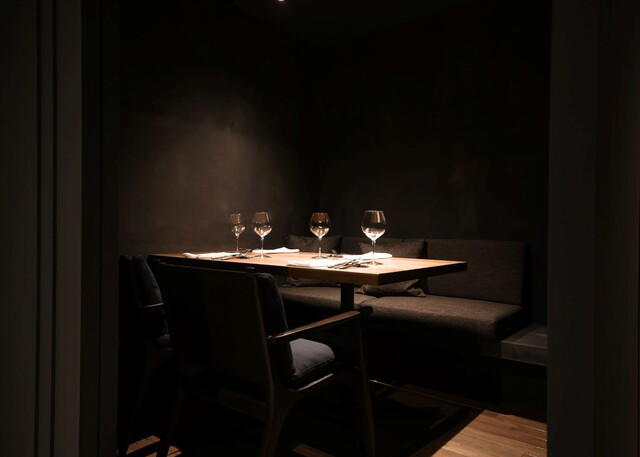
Located in a basement with minimalist decor and dim, warm lighting, the room centers on the glow, crackle, and aroma of the wood fire, creating a calm, immersive and quietly theatrical atmosphere suited to special, lingering meals.