
Tabelog 100 #64
Our verdict
Kawauo Nemoto places Misato’s river-fish dining tradition in a clear, unfussy frame: unagi and seafood, a house-restaurant setting, and recognition in Tabelog’s 2024 Unagi 100 selection. It suits travelers who care less about Ginza polish and more about ingredient-led cooking, local rhythm, and a room built for families and regulars rather than ceremony.

Pearl is the En Primeur Club membership app, where members save venues, book tables and use the concierge.
The menu
What to order
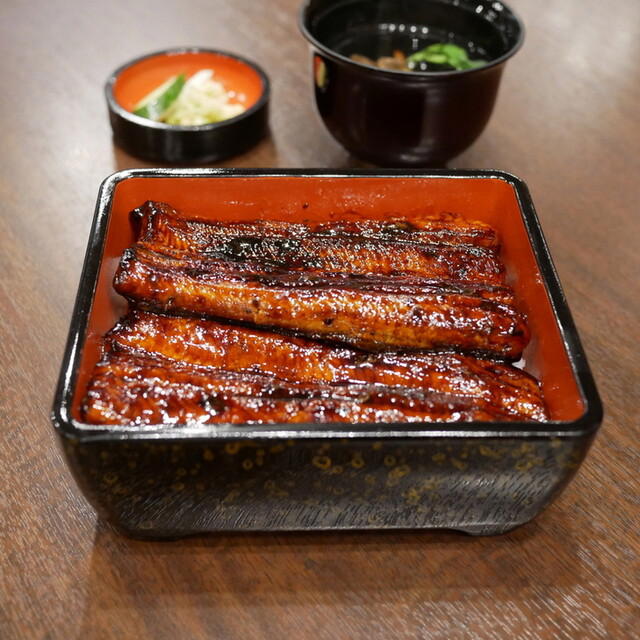
- Unaju (grilled eel over rice)
- Hitsumabushi
- Shirayaki
- Kabayaki
Approach Misato and the dining mood changes quickly from central Tokyo theatre to suburban appetite: lower buildings, practical access, local tables, and restaurants that survive on repeat trust rather than destination gloss. In that setting, unagi has a different charge. It is not a luxury performance so much as a focused, ingredient-led meal rooted in Japanese food culture and the habit of treating a single main product with unusual seriousness.
Kawauo Nemoto belongs to that tradition. The public category is unagi and seafood, and its inclusion in Tabelog’s 2024 Unagi 100 gives it a useful signal for readers comparing eel houses beyond Tokyo’s heavily trafficked dining corridors. The point is not that Misato competes with the capital on ceremony. It offers another version of authority: a local restaurant whose draw is category credibility, steady appeal, and a format that reads as grounded rather than performative.
River fish, not restaurant theatre, drives the meal
Unagi restaurants are often judged by details the casual diner may miss: ingredient focus, timing, and the kitchen’s ability to keep a narrow specialty at the centre of the meal. Japan’s eel culture has long tied craft to repetition. The house does not need a broad identity to make its case when the central ingredient carries the burden of the meal. That is why Tabelog’s dedicated Unagi 100 list matters more here than a generic popularity marker; it places the restaurant inside a category where specialists are compared against other specialists.
The broader Misato context sharpens the reading. This is not the same dining proposition as lighter everyday stops in the wider Saitama orbit. Comparison venues such as Handicraft Works, TORAYA BAKERY, Tsukemen Michi, Karachi no Sora, and Al Karam sit in different everyday categories. Kawauo Nemoto occupies the slower, more ingredient-sensitive lane, where eel and seafood set expectations for a full meal rather than a quick refuel.
For travelers building a Misato food day, the useful comparison is not only cuisine but pacing. A bakery stop or a casual meal elsewhere in the area answers a different appetite. Eel asks for a narrower plan. It rewards diners who choose one serious meal, accept the local rhythm, and let the product define the outing.
Misato's suburban setting changes the value equation
In Tokyo, eel can easily become a heritage purchase: polished rooms, long reputations, and pricing shaped by address as much as ingredient. Misato shifts that equation. A local-restaurant format points toward a meal built for regular occasions as much as special trips. The useful signal is practical rather than theatrical: this is dining where the draw is the fish, not a sealed-off sense of occasion.
That matters because unagi’s appeal depends on repetition as much as spectacle. The dish has associations with stamina, summer heat, and Doyo no Ushi no Hi, the Day of the Ox, when eel demand surges across Japan. Kawauo Nemoto should be read within that broader food culture rather than as a room built only for seasonal rush. For an ingredient-focused angle, the restaurant’s recognition reads as a reminder that eel houses operate within supply pressure, local demand, and kitchen capacity, not only guest desire.
The room’s practical character also gives the restaurant a different audience from formal counters. With dinner and lunch both listed in the JPY 3,000 - JPY 3,999 range, it sits in a contained price band for a recognized eel specialist. Those facts make it easier to understand why the restaurant can hold recognition while remaining grounded in the habits of the city. It is serious about fish without asking diners to perform seriousness back.
How to place it in a wider Japan itinerary
Misato is a useful corrective for travelers whose Japan dining map is tilted toward central-city names. The region sits close enough to Tokyo’s orbit to be accessible, but the restaurant culture feels less edited for visitors. A meal here pairs better with a broader Saitama or eastern Tokyo day than with a compressed luxury crawl. Readers planning around the city can start with Our full Misato restaurants guide, then separate food planning from overnight, drinks, wine, and activities through Our full Misato hotels guide, Our full Misato bars guide, Our full Misato wineries guide, and Our full Misato experiences guide.
For contrast across Japan, the appeal is clearest when set beside categories that advertise themselves more loudly: formal meat dining, urban seafood rooms, café culture, and modern regional restaurants. Those formats move through different signals: design, nightlife, drinks, or city energy. Unagi here is quieter and more specific.
The same contrast applies beyond eel. A traveler comparing imported formats, regional comfort, meat-led dining, rice snacks, and sake-bar hospitality is comparing food cultures as much as individual meals. Kawauo Nemoto’s lane is narrower: eel, seafood, and the trust that comes when a local restaurant is assessed within a specialist national category.
The editorial case is therefore simple. Choose this for a Misato meal when the priority is ingredient focus over spectacle, category credibility over décor-driven drama, and a suburban Japanese room where the value sits in eel and seafood, not in the performance around it.
Frequently asked questions
Is Kawauo Nemoto okay with children?
Kawauo Nemoto is a Misato restaurant known publicly for unagi and seafood, with dinner and lunch both listed in the JPY 3,000 - JPY 3,999 range. Check the venue's official channels for the latest details before visiting.
What is the atmosphere like at Kawauo Nemoto?
Expect a practical local unagi and seafood restaurant in Misato rather than a destination built around ceremony. Its appeal is best understood through ingredient focus and Tabelog’s 2024 Unagi 100 recognition.
What's the pricing like at Kawauo Nemoto?
Pricing at Kawauo Nemoto is listed as Dinner: JPY 3,000 - JPY 3,999; Lunch: JPY 3,000 - JPY 3,999.
When can I go to Kawauo Nemoto?
Opening times are not provided here. Check Kawauo Nemoto's official channels for the latest hours before visiting.
Snapshot
Comparable venues by cuisine and price in the same metro.
| Venue | Cuisine | Price | Awards | Notes |
|---|---|---|---|---|
| Kawauo NemotoThis venue (the venue you are viewing) | Traditional Unagi (eel) Restaurant | $20–30 | Tabelog 100 #64 | Not listed |
| backerei sakatuji | Artisan Bakery & Pastry Shop | $10–20 | Tabelog 100 #60 | Hikona, Misato |
| Yokobori Gyoza | Specialty Gyoza Shop | $10–20 | Tabelog 100 #44 | Misato |
| Goya | Okinawan Izakaya | Not listed | Not listed | Hirara Nishizato |
| Mentakumi Takamatsu (麺匠 たか松) | Takamatsu Ramen | $10–20 | Not listed | central Kyoto |
| Gion Tokuya | Traditional Japanese Desserts & Sweets | $10–20 | Tabelog 100 #62 | Gion |
Recognition history
Dated appearances from independent guides and award organizations, with the underlying list record or original source where available.
Tabelog 100 #64 · No. 64
Tabelog · Tabelog 100 - Unagi - 2024
Continue exploring
More in Misato
Restaurants in Misato
All restaurants in Misato →

Bars in Misato
Browse all →

Details
- Classic
- Cozy
- Family
- Group Dining
- Casual Hangout
- Special Occasion
- Solo
- Standalone
- Local Sourcing
- Sustainable Seafood
- A La Carte
- Tea
- Beer
- Pescatarian Friendly
Current opening hours
- Monday
- Closed
- Tuesday
- 11 AM–1:30 PM, 4:30–7 PM
- Wednesday
- 11 AM–1:30 PM, 4:30–7 PM
- Thursday
- 11 AM–1:30 PM, 4:30–7 PM
- Friday
- Closed
- Saturday
- 11 AM–1:30 PM, 4:30–7 PM
- Sunday
- 11 AM–1:30 PM, 4:30–7 PM
Hours can change for holidays and private events. Last verified .