Tabelog 100 #68
Our verdict
Kan Bukuro sits in Sakai’s old sweets register rather than Osaka’s restaurant spectacle, with Japanese traditional sweets, a sweets-cafe format, and kakigori in the same compact orbit. Its repeated Tabelog 100 selections, including Japanese traditional sweets / Japanese sweets cafe WEST 2023, make it a useful read on how Kansai judges everyday wagashi with serious critical weight.

Pearl is the En Primeur Club membership app, where members save venues, book tables and use the concierge.
The menu
What to order
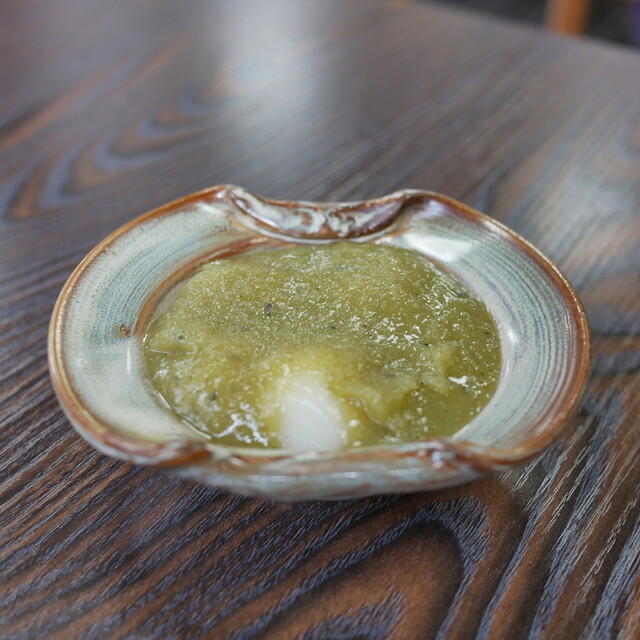
- Kurumi mochi (walnut mochi in green bean sauce)
- Kurumi mochi kakigori (shaved ice with kurumi mochi)
Approaching Kan Bukuro in Osaka, the mood is quieter than the city’s busiest food halls and train-station counters. This is Osaka sweets culture at street level: compact, practical, repetitive rather than theatrical. The appeal is not a chef’s table or long tasting sequence, but the Kansai habit of treating wagashi and kakigori as serious craft while the bill stays everyday and the format works as a focused sweets stop.
Kan Bukuro sits in a category visitors chasing sushi counters and kaiseki often under-read. Japanese traditional sweets shops use a different prestige system: less ceremony, more product memory, and strong dependence on local loyalty. Recognition matters because it separates places with neighborhood affection from those that also register in critical lists. Selection for Tabelog’s Japanese traditional sweets / Japanese sweets cafe WEST 2023 list places this Osaka shop in a Kansai-wide conversation, not just a casual errand.
Osaka sweets culture, judged by repeat recognition rather than spectacle
Osaka dining is usually explained through appetite: takoyaki, kushikatsu, okonomiyaki, late-night izakaya runs. That misses the quieter half of the city’s food intelligence, where sweets counters and tea-adjacent cafes carry local pattern. Osaka adds another layer. Beyond the most visitor-facing dining areas, it rewards places embedded rather than styled for visitors. A sweets cafe here does not need dramatic design; it needs a product people return to and a format that survives daily use.
The awards record is the cleanest trust signal available here. Kan Bukuro was selected for Tabelog’s 2023 Japanese traditional sweets / Japanese sweets cafe WEST recognition, with a listed score of 3.73 and a budget shown as Dinner: JPY 1,000 - JPY 1,999; Lunch: - JPY 999. That combination is more useful than a viral spike. In a category where social media can favor seasonal desserts and photogenic shaved ice, listed recognition suggests evaluation within wagashi and sweets-cafe craft standards, not novelty alone.
The format explains the reputation. Listed categories are Japanese traditional sweets, cafe featuring Japanese sweets, and kakigori. That sits between confectioner and casual cafe: not a dessert course after a restaurant meal, bakery run, or hotel-style tea salon. It is a short-format stop with Japanese sweets as the main event. For travelers building an Osaka food day, it counterweights richer savory addresses and destination meals across the city without needing to compete with them directly.
The value of a sweets cafe in a city built on quick decisions
Osaka rewards decisiveness. Much eating happens in short bursts: a snack between trains, a bowl before a meeting, a counter stop after work. Wagashi fits that rhythm while asking slower attention. Texture, temperature, and sweetness level matter more than abundance. Kan Bukuro’s public listing places it in Japanese traditional sweets, Japanese sweets cafe, and kakigori, giving it a cooling, tactile register rather than the layered cream-and-fruit style common in many contemporary dessert cafes.
That distinction matters when comparing categories. Other Osaka bakeries answer the morning-carb question; other cafes belong to a broader urban coffee-and-sweets circuit. A wagashi cafe in Osaka has a narrower brief. It is not trying to cover brunch, laptop time, cocktails, or dinner. Its credibility comes from doing a small set of Japanese sweets within a category specific enough to earn 2023 regional recognition.
Compared with Osaka’s high-commitment reservation culture, the planning calculus differs. Sushi Oga represents formal counter dining at the other end. Honke Kojima belongs to another food tradition. The useful comparison is not ambition, but how Osaka’s reputation includes both exacting counters and low-cost specialists whose reputations accumulate through consistency. Kan Bukuro shows the latter without turning sweets into luxury performance.
The setting is practical rather than hushed. The public information supports reading Kan Bukuro as a focused sweets stop rather than a formal restaurant. Its listed budget remains everyday by destination-dining standards, and its categories keep the experience centered on Japanese sweets and kakigori. For visitors used to elaborate tasting menus or hotel-district dining, that matters more than stylistic description.
How to place it inside an Osaka food itinerary
The strongest use of an Osaka sweets stop is not as a dinner substitute. It works as daytime punctuation in a broader Osaka plan, especially when the rest of the day is heavier. Pairing wagashi and kakigori with savory Osaka classics gives a more accurate city reading than stacking only restaurants with long menus and alcohol programs. The broader planning grid lives in Our full Osaka restaurants guide, while adjacent city decisions can be mapped through Our full Osaka hotels guide, Our full Osaka bars guide, Our full Osaka wineries guide, and Our full Osaka experiences guide.
For a wider Japan itinerary, the contrast is instructive. Formal dining rooms, urban casual counters, and regional specialists all show how Japanese dining categories resist a single hierarchy. So do small-format operators in other cities and Japanese-leaning formats overseas. The same point holds from a distance: compact formats can carry serious food culture when the brief is tight and the product has a clear reason to exist.
The editorial case for Kan Bukuro is not that every traveler must detour for dessert. It is that Osaka’s food reputation becomes more complete when a recognized wagashi cafe sits beside the city’s louder signatures. The Tabelog 2023 record gives external validation; the categories explain the craft lane; the accessible listed budget explains daily local use. Read that combination correctly and the visit becomes less about checking off a name than understanding how Kansai gives prestige to sweets without stripping away their everyday function.
Frequently asked questions
Is Kan Bukuro good for families?
Kan Bukuro is best understood as a focused Japanese sweets and kakigori stop in Osaka. Check the venue's official channels for the latest details.
What kind of setting is Kan Bukuro?
Kan Bukuro is a Japanese sweets cafe in Osaka. Tabelog selected it for its WEST 2023 recognition in Japanese traditional sweets / Japanese sweets cafe.
What price level is Kan Bukuro?
Pricing at Kan Bukuro is listed as Dinner: JPY 1,000 - JPY 1,999; Lunch: - JPY 999.
When can I go to Kan Bukuro?
Check Kan Bukuro's official channels for current opening days and hours before visiting.
Style and Standing
Comparable options at the same price tier.
| Venue | Cuisine | Price | Awards | Notes |
|---|---|---|---|---|
| Kan BukuroThis venue (the venue you are viewing) | Traditional Japanese wagashi & kakigori | $1–10 | Tabelog 100 #68 | Not listed |
| Chiikawa Bakery | Chiikawa-themed Japanese bakery café | $10–20 | Not listed | Umeda |
| Menza Gin | Ramen & Tsukemen Shop | $10–20 | Tabelog 100 #84 | Sakai Ward |
| Menya Saisai Shouwa chou honten | Ramen shop specializing in chicken-based broth | $1–10 | Tabelog 100 #46 | Abeno |
| Angetsu | Traditional Japanese Wagashi (Confectionery) | $10–20 | Tabelog 100 #56 | Chūō |
| Udon Jojo | Casual Udon Noodle Shop | $1–10 | Tabelog 100 #71 | Higashinari |
Recognition history
Dated appearances from independent guides and award organizations, with the underlying list record or original source where available.
Tabelog 100 #68 · No. 68
Tabelog · Tabelog 100 - Japanese traditional sweets / Japanese sweets cafe - WEST - 2023