Kaffeine
On Great Titchfield Street in Fitzrovia, Kaffeine has earned a firm reputation among London's serious coffee crowd as a benchmark for craft espresso and considered café culture. The address sits at the quieter, residential edge of W1, where the neighbourhood's media and creative industries converge over flat whites and seasonal filter options. It operates at the sharper end of London's independent café tier.
Pearl is the En Primeur Club membership app — saves, bookings, and concierge access live there. Same editors, same standards.
- Address
- 66 Great Titchfield St., London W1W 7QJ, United Kingdom
- Phone
- +44 20 7580 6755
- Website
- kaffeine.co.uk
- Directions
- Get directions
 Saves & bookings on Pearl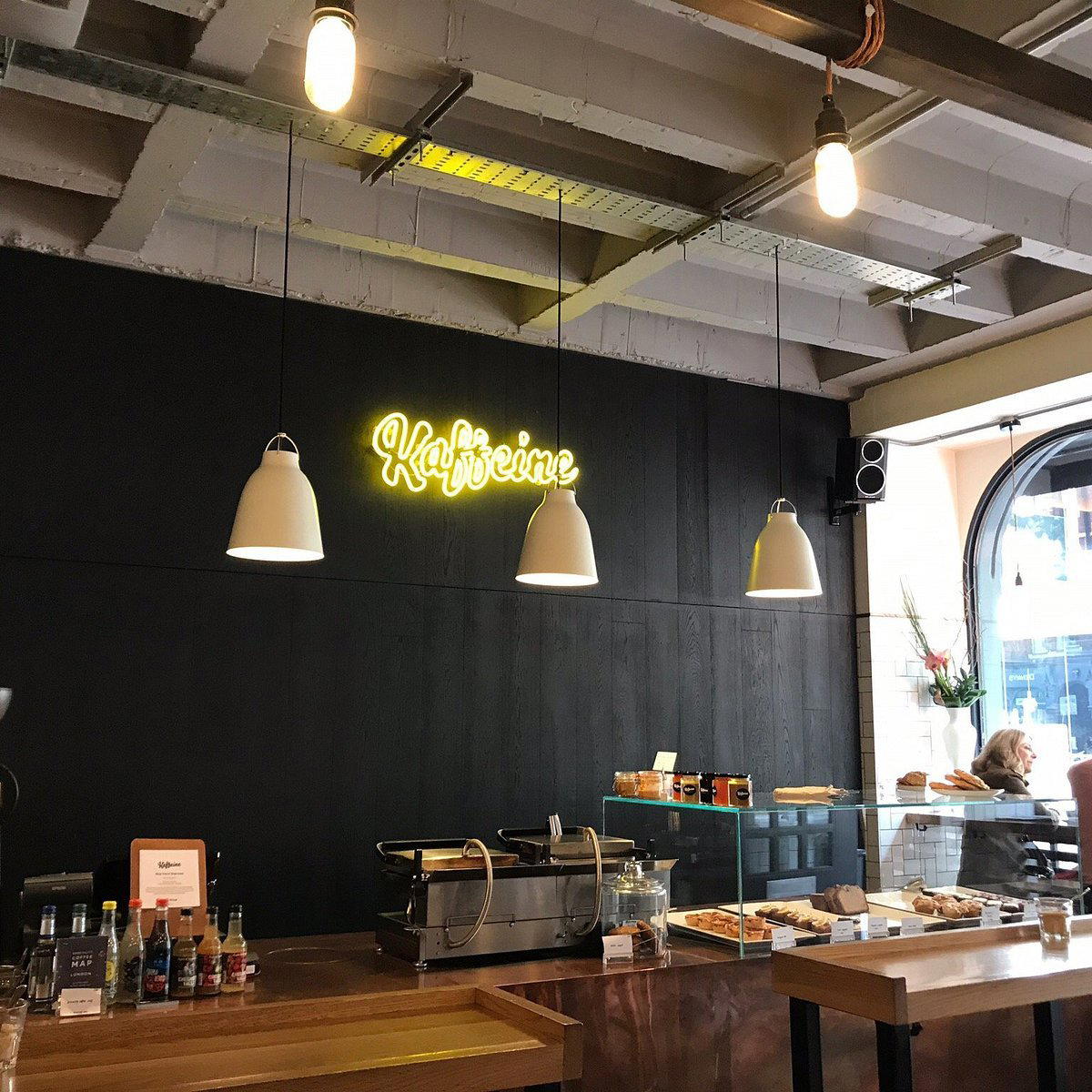
Fitzrovia's Coffee Standard
Great Titchfield Street occupies a particular register in London's West End geography: close enough to Oxford Street to catch foot traffic, far enough removed to retain the character of a working neighbourhood. The blocks between Goodge Street and Oxford Circus have long been home to production companies, architects' offices, and small agencies, and the café culture that has developed here reflects that mix. The clientele arrives with laptops and deadlines, but also with opinions about extraction ratios. Kaffeine, at number 66, sits precisely at that intersection.
London's independent café scene has matured considerably over the past decade. The early wave of Australian-influenced espresso bars that arrived in the 2010s introduced a more demanding standard for milk texture and single-origin sourcing, and a second tier of cafés subsequently emerged that absorbed those lessons and applied them with more consistency. Stronger examples from that second tier now operates less as coffee shops in the traditional sense and more as focused hospitality environments, where the service sequence, the equipment calibration, and the physical space each carry deliberate intent. Kaffeine belongs to that cohort.
The Floor and the Counter
In a city where café service can often feel transactional, Fitzrovia's stronger independent venues have moved toward something closer to coordinated front-of-house discipline. The editorial angle here is not about any single staff member but about how craft café culture in London has started to borrow team dynamics from restaurant hospitality. At addresses like this one on Great Titchfield Street, the counter operates with a division of labour that mirrors the way a good restaurant separates the roles of barista, floor, and expediter. The coffee side requires precision in dosing, temperature, and timing; the food component, even in a café context, requires its own preparation logic; and the front of house bridges both toward the customer.
This kind of internal coordination is what separates a café that is merely well-stocked from one that delivers a reliable experience across a full service period. Morning rush in this part of W1 is genuinely demanding: the office workers from the surrounding streets move in waves, and the capacity to hold quality through that volume is a better measure of operational strength than any quiet Tuesday afternoon visit. Kaffeine's reputation on this street has been built across both conditions.
Where This Address Sits in London's Café Hierarchy
London's premium café tier now runs from multi-site roaster-retailers with international recognition down to tightly operated single-site independents with strong neighbourhood followings. Kaffeine occupies the latter category and has done so with enough longevity to have influenced the blocks around it. The area between Goodge Street and Oxford Circus now supports several strong independent options, but Great Titchfield Street carries particular density, partly because the address mix creates a customer base that understands the difference between a commercial chain option and a considered independent.
For context on how London's restaurant and hospitality scene layers at the leading end, the city's fine dining addresses, including CORE by Clare Smyth, Restaurant Gordon Ramsay, Sketch, The Lecture Room and Library, The Ledbury, and Dinner by Heston Blumenthal, anchor one end of the hospitality spectrum. Kaffeine operates at a different point on that spectrum, but the underlying discipline around service, product quality, and team execution is not unrelated. Cities that produce strong fine dining cultures tend also to produce stronger café cultures, and London's café scene has genuinely benefited from that cross-pollination of standards.
The broader UK picture extends well beyond London. Serious hospitality operates at venues including Waterside Inn in Bray, L'Enclume in Cartmel, Moor Hall in Aughton, Gidleigh Park in Chagford, Hand and Flowers in Marlow, hide and fox in Saltwood, Midsummer House in Cambridge, Opheem in Birmingham, Ynyshir Hall in Machynlleth, and Restaurant Andrew Fairlie in Auchterarder. The accumulated culture around hospitality standards that those venues represent has a genuine influence on what the better independent cafés in British cities now attempt. Internationally, the same conversation about team coordination and product rigour plays out at venues such as Le Bernardin in New York City and Lazy Bear in San Francisco.
Seasonal and Time-of-Day Considerations
Fitzrovia's café rhythm is distinctly weekday-weighted. The surrounding office population thins sharply on weekends, which changes the pace of service considerably. Visitors arriving on a Saturday morning will find a calmer version of the room: the counter moves at a different tempo, and the space accommodates a longer visit more easily. Weekday mornings, particularly between eight and ten, represent the address in full operational mode, which is the more instructive visit for anyone assessing the strength of the service team rather than simply the coffee.
Seasonally, London's independent café scene tends to cycle through filter coffee interest in cooler months and cold brew and alternative formats in summer. The Fitzrovia addresses that handle this transition well are those with enough staff depth to retrain the counter rather than simply introducing a new item on the board. How a café manages these rotations is a reasonable indicator of operational maturity.
The W1W postcode is accessible from both Oxford Circus and Goodge Street on the London Underground, making the address convenient from most parts of central London without requiring a specific journey. For a fuller picture of dining and hospitality options across the city, the full London restaurants guide covers the range from neighbourhood independents through to the city's most decorated addresses.
Comparable Venues
Comparable venues nearby, for context on price, style, and recognition.
| Venue | Cuisine | Price | Notes |
|---|---|---|---|
| KaffeineThis venue — the venue you are viewing | Australian-Style Coffee Cafe | $$ | Not listed |
| Tukdin | Authentic Malaysian | $$ | Bayswater |
| Cafe Strudel | Austrian Café | $$ | Mortlake |
| Chuku’s | Nigerian Tapas | $$ | South Tottenham |
| Silk Stockings | Cocktail Bar Snacks | $$ | Dalston |
| Rasa Sayang | Authentic Malaysian & Singaporean | $$ | Chinatown |
Continue exploring
More in London
Restaurants in London
Browse all →
Bars in London
Browse all →
Hotels in London
Browse all →

At a Glance
- Cozy
- Modern
- Trendy
- Brunch
- Casual Hangout
- Open Kitchen
Current opening hours
- Monday
- 7:30 AM–5 PM
- Tuesday
- 7:30 AM–5 PM
- Wednesday
- 7:30 AM–5 PM
- Thursday
- 7:30 AM–5 PM
- Friday
- 7:30 AM–5 PM
- Saturday
- 8:30 AM–5 PM
- Sunday
- 9 AM–5 PM
Hours can change for holidays and private events. Last verified .
Cozy and lively with minimalist decor, high stools, copper-clad counter, and a busy atmosphere popular with young office workers.