Jurin podrum
Our verdict
A stone-cellar address on Ul. Duolnjo Kola in Stari Grad old town, Jurin podrum occupies the kind of Dalmatian dining format where the architecture does as much work as the kitchen. The setting places it within Hvar island's broader tradition of sourcing from immediate land and sea, and its position on the quiet residential edge of one of Croatia's oldest continuously inhabited towns signals a meal pitched at locals and returning visitors rather than passing cruise traffic.

Pearl is the En Primeur Club membership app, where members save venues, book tables and use the concierge.

The menu
What to order
- Wild boar
- Octopus pasta
Stone, Cellar, and the Sourcing Logic Behind Dalmatian Cooking
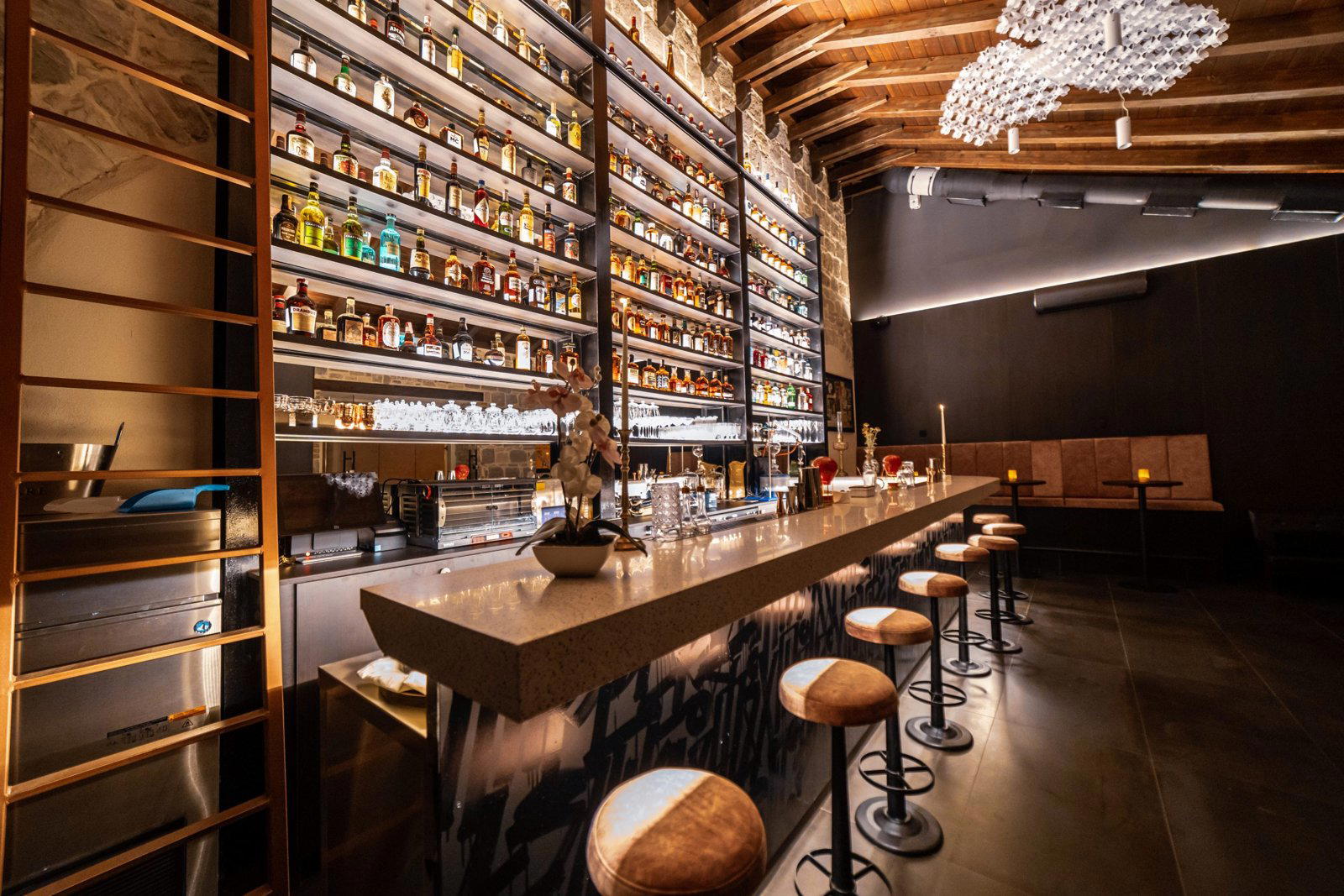
Stari Grad's old quarter operates on a different register from the busier southern end of Hvar island. The streets narrow into flagstone corridors, the crowds thin, and the restaurants that survive here without heavy tourist throughput tend to do so because they serve food that reflects an actual place rather than an abstracted version of Mediterranean cuisine. Ul. Duolnjo Kola sits in that quieter residential fabric, and Jurin podrum, the name translates roughly as "Jurin's cellar", occupies a physical form common to serious Dalmatian dining: stone walls, low ceiling, the kind of space that keeps its temperature regardless of the August heat outside.
The podrum format matters as a culinary signal. A cellar restaurant in this context is not a design affectation but a structural fact of old Dalmatian town houses, where ground-floor storage rooms were repurposed for communal eating over generations. The best of these spaces in Croatia, from the Adriatic coast to the Dalmatian hinterland, tend to foreground sourcing precisely because they evolved in towns where fishing boats docked within walking distance and olive groves occupied the hills immediately above. That provenance logic is baked into the format itself.
Hvar's Ingredient Geography
Hvar island sits in a position that concentrates Dalmatian produce at relatively high density. The island's interior is planted with lavender, olive, and vine, while its coast and the surrounding Pakleni channel feed local fishing operations that bring in dentex, sea bass, and cephalopods depending on season. Stari Grad Plain, the flat agricultural stretch just inland from the old town, holds the distinction of being a UNESCO-listed ancient Greek land-use grid still farmed today, one of the oldest continuously cultivated agricultural landscapes in Europe. Restaurants in the old town that source locally are drawing from that continuity, whether explicitly or by proximity.
This matters when assessing any kitchen in Stari Grad. The supply chains available here are shorter than in most European dining cities. Lamb from the island's drier central ridge, fish from the morning boats at Stari Grad's modest harbour, olive oil pressed from groves that predate the current building stock, these are not imported credentials but direct geographic facts. Where a kitchen chooses to source from, and how transparently it communicates that, tells you more about its ambitions than any menu description.
Where Jurin Podrum Sits in Stari Grad's Dining Range
The dining options within Stari Grad old town cluster into a few legible tiers. At the upper end, resort-affiliated restaurants such as The Restaurant at Maslina Resort and Terra Restaurant by Maslina Resort operate with hotel infrastructure behind them, international wine lists, and price points (the former at €€€€, the latter at €€€) that reflect their investment. Below that tier, independent addresses such as Antika and Kod Barba Luke occupy the middle ground where Dalmatian cooking is served without resort framing.
Jurin podrum belongs in that independent category, positioned by address and format as a neighbourhood-facing address rather than a destination property. That distinction shapes what to expect: less engineered presentation, more reliance on what the market and harbour produced that week, and a price logic that reflects the local economy rather than international visitor expectations. On Hvar, that positioning tends to correlate with stronger sourcing discipline, because kitchens in this tier depend on supplier relationships built over seasons rather than procurement contracts.
For broader context across Croatia's serious dining tier, the reference points include Pelegrini in Sibenik, LD Restaurant in Korčula, and Boskinac in Novalja, all of which have built their identities around regional sourcing with formal recognition to show for it. Coastal addresses at a different scale, such as Agli Amici Rovinj in Rovinj and Nebo by Deni Srdoč in Rijeka, indicate how far the regional cooking ambition extends up the coast. Further afield, Restaurant 360 in Dubrovnik and Krug in Split anchor the Adriatic's more formally recognised dining end. Jurin podrum operates at a different register from all of these, but understanding where local cellar restaurants sit relative to that spectrum clarifies what they are and are not trying to do.
Planning a Visit
Stari Grad is accessible by ferry from Split, with crossings to the nearby port of Stari Grad running multiple times daily in summer and reducing in frequency through the off-season. The old town is walkable from the ferry terminal in under fifteen minutes. Ul. Duolnjo Kola lies within the old town grid, and the address, number 11, is direct to locate on foot once inside the historic quarter. Given the cellar format and the size typical of this building type in the old town, seating capacity is likely limited, and arriving without a reservation in high summer carries real risk.
The Croatian Adriatic dining season runs from roughly late May through October, with August representing peak pressure on every table in the old town. Visiting in June or September gives access to the full seasonal menu with materially less competition for seats, and the sourcing quality at those shoulder moments is often stronger because the kitchen is less stretched. Off-season visits are possible but require confirming that the address is operating, as smaller independent restaurants in Dalmatian old towns frequently close through winter. For a fuller picture of what Stari Grad offers across its dining range, the EP Club Stari Grad restaurants guide maps the town's options in full.
Comparable cellar-and-sourcing formats elsewhere in Croatia include Dubravkin Put in Zagreb and Korak in Jastrebarsko for the continental interior, and BioMania Bistro Bol in Bol as a Brač island counterpart focused on provenance-driven eating. For those arriving from the international fine-dining circuit, Le Bernardin in New York City and Atomix in New York City represent the formal end of sourcing-led cooking, providing a useful calibration point for how ingredient provenance operates at different scales and formality levels. Alfred Keller in Mali Lošinj rounds out the Kvarner-to-Dalmatia island comparison set.
Frequently asked questions
Does Jurin podrum work for a family meal?
Jurin Podrum sits on Ul. Duolnjo Kola in the old quarter of Stari Grad, where the streets are narrow and the pace is slower than the busier southern end of Hvar. A cellar setting in this part of town tends toward the relaxed and unpretentious, which suits a mixed-age group reasonably well. Families looking for a polished resort-style experience should note this is a neighbourhood konoba-type environment, not a resort-affiliated restaurant.
Is Jurin podrum better for a quiet night or a lively one?
The address on Ul. Duolnjo Kola places it deep in Stari Grad's flagstone old quarter, away from the harbour-side foot traffic that defines livelier dining on Hvar. Expect a quieter register here: stone walls, a cellar atmosphere, and a crowd that has generally sought out the old town rather than stumbled upon it. This is not where you go for a late-night scene.
Is Jurin Podrum a good restaurant to visit after arriving by ferry from Split?
The ferry from Split docks at Stari Grad's port, making it one of the most directly accessible restaurants on the island for arriving passengers. Ul. Duolnjo Kola is within the old town quarter, a short walk from the ferry terminal. That proximity, combined with Stari Grad's quieter character compared to Hvar Town, makes Jurin Podrum a logical first stop for travellers arriving by sea rather than continuing south to the island's busier centre.
What's the best thing to order at Jurin podrum?
In this part of Croatia, grilled fish, peka-style slow-cooked dishes, and locally sourced vegetables are the structural backbone of cellar-restaurant cooking. Ask the kitchen what arrived that day.
What's Jurin podrum's location?
Jurin podrum is located at îUl. Duolnjo Kola 11, 21460, Stari Grad, Croatia, Stari Grad.
Fast Comparison
Comparable venues nearby, for context on price, style, and recognition.
| Venue | Cuisine | Price | Awards | Notes |
|---|---|---|---|---|
| Jurin podrumThis venue (the venue you are viewing) | Traditional Dalmatian Mediterranean | $20–30 | Not listed | Not listed |
| A-Bay Beach Bar | Mediterranean tapas & cocktails beach bar | $30–50 | Relais Chateaux Award | Maslinica Bay |
| Antika | Mediterranean & Dalmatian | $20–30 | Not listed | Stari Grad |
| Kod Barba Luke | Mediterranean Seafood | $30–50 | Not listed | Stari Grad |
| Terra Restaurant by Maslina Resort | Mediterranean Fine Dining | Not listed | Michelin Plate · Relais Chateaux Award | Stari Grad |
| The Restaurant at Maslina Resort | Mediterranean Fine Dining | Not listed | Michelin Plate · Relais Chateaux Award | Stari Grad |
Continue exploring
More in Stari Grad
Restaurants in Stari Grad
All restaurants in Stari Grad →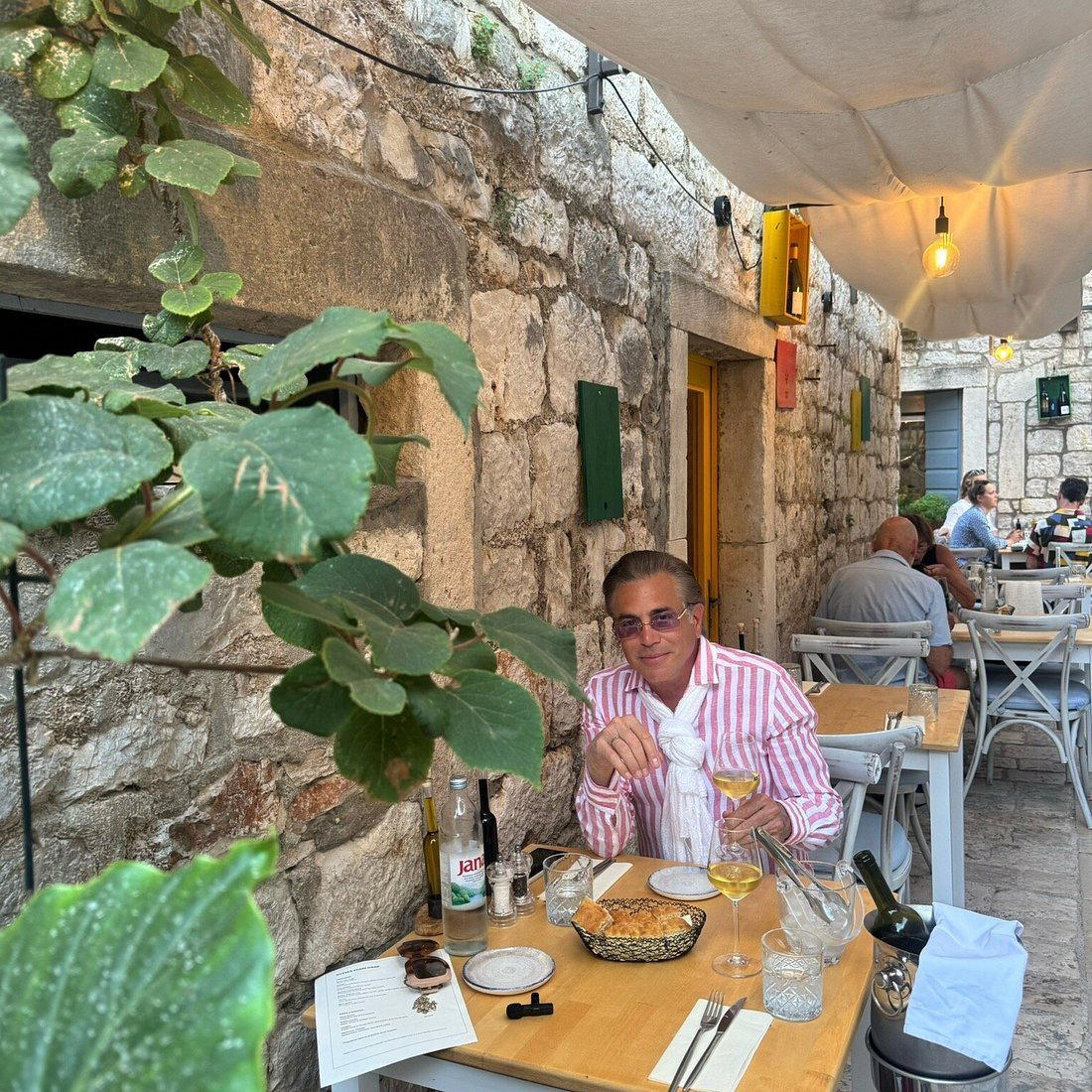
Bars in Stari Grad
All bars in Stari Grad →

Details
- Cozy
- Rustic
- Intimate
- Family
- Date Night
- Casual Hangout
- Historic Building
- Organic
- Local Sourcing
- A La Carte
- Vegetarian Friendly
- Vegan Options
- Gluten Free Options
Current opening hours
- Monday
- 12–11 PM
- Tuesday
- 12–11 PM
- Wednesday
- 12–11 PM
- Thursday
- 12–11 PM
- Friday
- 12–11 PM
- Saturday
- 12–11 PM
- Sunday
- 12–11 PM
Hours can change for holidays and private events. Hours as of .
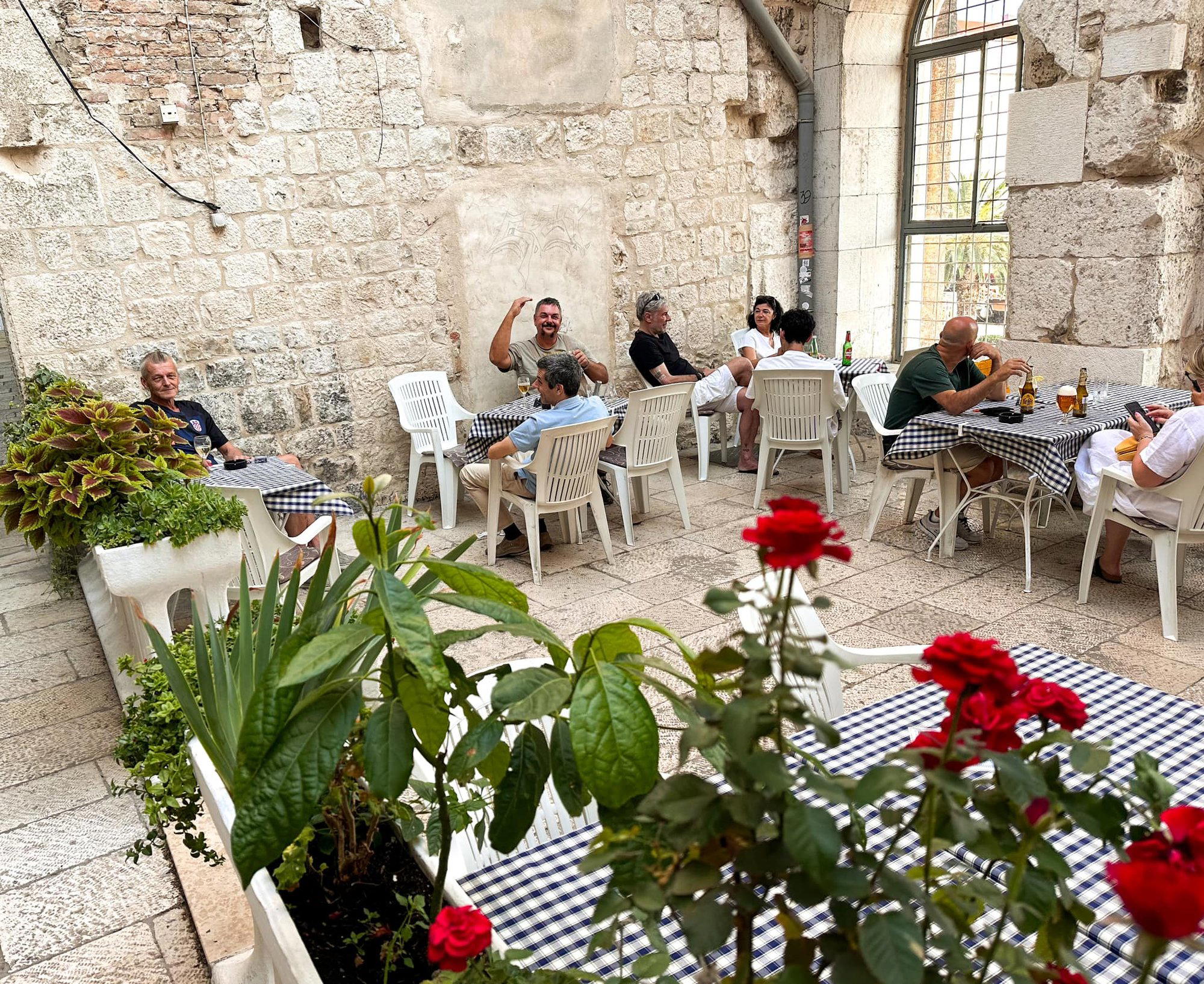
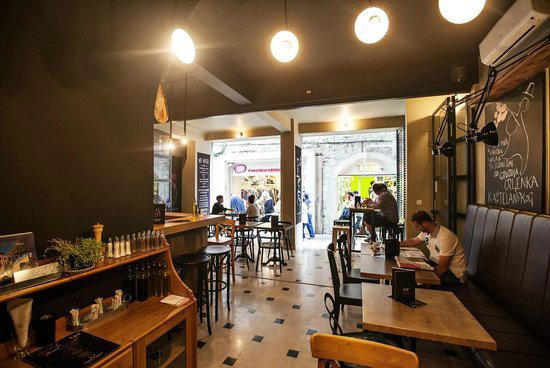
Charming stone interior with warm family atmosphere and outdoor tables in a narrow historic alley.