Juniper & Kin

Juniper & Kin was the rooftop bar and kitchen garden concept within Amsterdam's QO Hotel, operating as a companion to the hotel's Persijn restaurant. The format centred on produce grown in a high-tech rooftop greenhouse, with a raw-preparation philosophy capping dish temperatures at 41°C. The venue has since closed, but its approach remains a reference point in Amsterdam's sustainability-led dining conversation.
- Address
- Amstelvlietstraat 4, 1096 GG Amsterdam, Netherlands
- Website
- juniperandkin.nl
- Directions
- Get directions
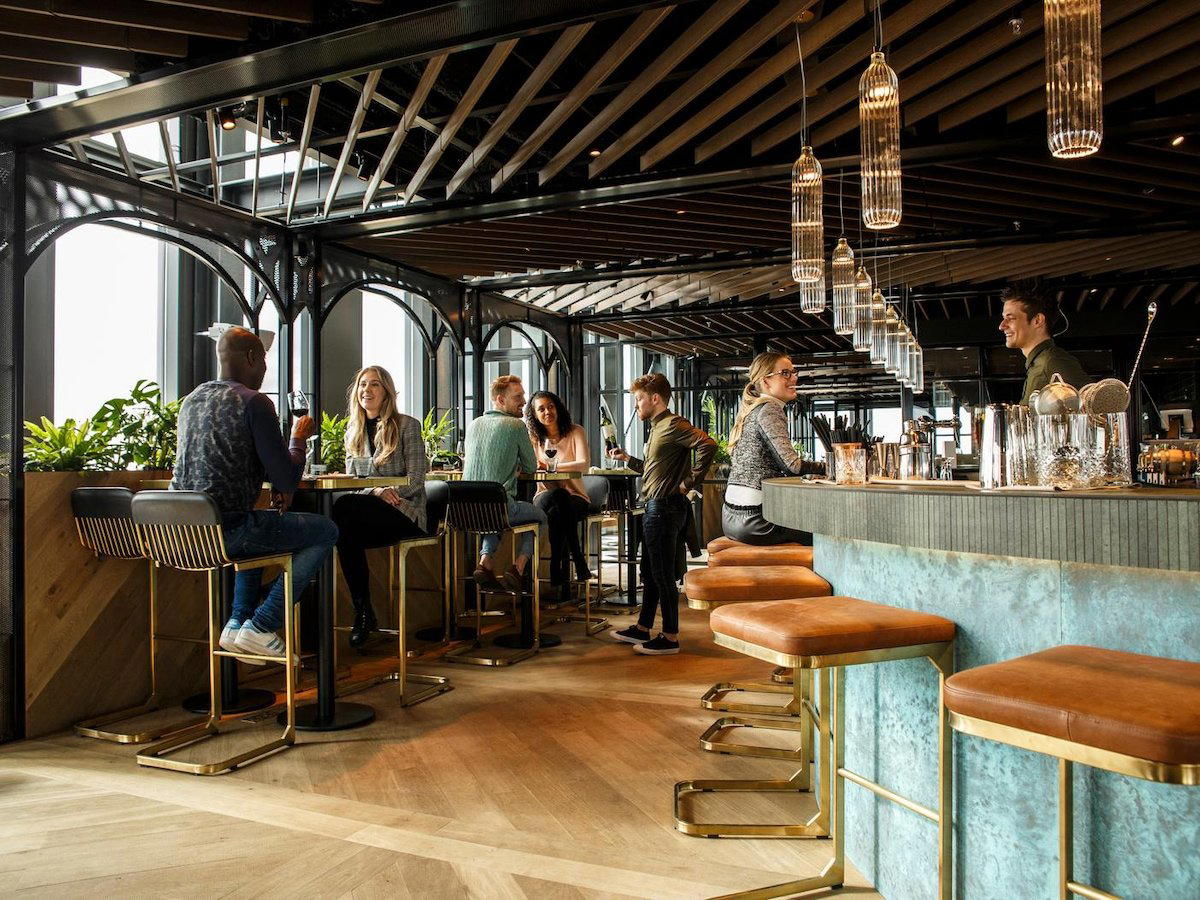
A Rooftop Garden That Took Its Own Produce Seriously
Amsterdam's sustainability-led restaurant movement has, over the past decade, split between venues that treat provenance as a marketing footnote and those that build their entire format around it. Juniper & Kin, the rooftop bar and kitchen garden of the QO Hotel on Amstelvlietstraat in the city's eastern district, sat firmly in the latter category. The concept was not simply about sourcing well, it was about collapsing the distance between soil and plate to near zero, with a rooftop greenhouse that supplied the kitchen directly and a preparation philosophy that treated heat itself as a variable to be controlled.
The QO Hotel building was constructed under a closed-loop sustainability framework: waste, water, and energy cycles were managed internally, facade panels provided insulation and solar gain, and recycled materials were used throughout. The rooftop greenhouse operated as a genuinely circular system in which fish and plants maintained each other's growing conditions. That context mattered for how Juniper & Kin should be read, not as a bar with a herb garden attached, but as the hospitality expression of an infrastructure project with real ecological ambition. The sister restaurant, Persijn, also within the QO Hotel, shared the same supply chain.
The 41°C Rule and What It Meant for the Plate
The kitchen's self-imposed ceiling of 41°C on all dish preparation was the detail that defined the food programme most sharply. Raw and low-temperature cooking at this level is not unusual in fine dining, chefs at venues like Ciel Bleu and Spectrum deploy precision temperature work as one tool among many. What distinguished the Juniper & Kin approach was applying the constraint universally, as a statement about flavour integrity rather than technique. The argument being made was direct: produce grown twenty metres away and prepared below the threshold at which cellular structures begin to break down should taste more purely of itself.
Juniper & Greens menu gave that argument its clearest expression. A fully vegetable-based format, it included dishes such as black radish with enoki and horseradish sorbet, carrots with tartare and a preparation at minus 18°C, and a dessert of string bean with apple and sorbet. The temperature range deployed across that menu, from below freezing to the 41°C ceiling, required a precise kitchen operation and communicated something specific about the team's priorities: textural contrast and flavour concentration over conventional cooking warmth. Within Amsterdam's plant-forward dining cohort, which includes Bolenius and the garden-to-table format at De Kas, Juniper & Kin occupied a niche defined by technical rigour rather than rusticity.
Where It Sat in Amsterdam's Dining Map
QO Hotel's eastern address placed Juniper & Kin outside Amsterdam's traditional fine dining corridor. The city's highest-profile creative restaurants, Vinkeles, Ciel Bleu, Bistro de la Mer, cluster in the canal ring and Museum Quarter. Juniper & Kin's position in the Amstelkwartier, a neighbourhood that has developed substantially since 2010, aligned it with a newer wave of Amsterdam hospitality that does not anchor itself to the historic centre.
That geographic positioning also shaped the likely audience. Hotel rooftop bars draw a mix of staying guests and local residents who track the space specifically. The format was accessible in register, a bar with serious food, not a tasting-menu destination requiring weeks of advance planning in the way that, say, De Librije in Zwolle or Aan de Poel in Amstelveen demand. Within Amsterdam itself, the relevant peer comparison was less about Michelin brackets and more about which hotel food and beverage programmes had built a genuine culinary identity rather than a perfunctory one.
Booking, Visiting, and What You Should Know Now
Juniper & Kin has closed. The QO Hotel remains operational at Amstelvlietstraat 4, 1096 GG Amsterdam, and Persijn continues as the hotel's primary restaurant.
The city's plant-focused options at the more casual end of the price spectrum remain, but the combination of hotel infrastructure, circular greenhouse supply, and technical raw preparation that Juniper & Kin represented has not been directly replaced. Those extending their trip beyond the capital will find comparable ambition in different registers at De Bokkedoorns in Overveen and Brut172 in Reijmerstok, both of which take Dutch produce and seasonal constraint as a serious organising principle.
Cost and Credentials
Comparable venues nearby, for context on price, style, and recognition.
| Venue | Price | Notes |
|---|---|---|
| Juniper & KinThis venue — the venue you are viewing | $$$ | Not listed |
| Little Plant Pantry | $$ | Da Costabuurt Zuid, Plant-Based Zero-Waste Deli |
| Pllek | $$ | NDSM terrein, Sustainable Vegetarian with Waterfront Views |
| Chez Nina | $$$ | Fannius Scholtenbuurt, Modern Vegetarian Neo-Bistro |
| Ristorante 51 | $$$ | Amstel III deel A/B Noord, Authentic Italian Trattoria |
| de Willem | $$$ | Westergasfabriek, Modern French-Asian Fusion |
Recognition history
Dated appearances from independent guides and award organizations, with the underlying list record or original source where available.
We're Smart World 5 Radishes
We're Smart World
Continue exploring
More in Amsterdam
Restaurants in Amsterdam
Browse all →
Bars in Amsterdam
Browse all →
Hotels in Amsterdam
Browse all →
Wineries in Amsterdam
Browse all →
At a Glance
- Modern
- Trendy
- Elegant
- Scenic
- Date Night
- Business Dinner
- Special Occasion
- Rooftop
- Open Kitchen
- Craft Cocktails
- Local Sourcing
- Skyline
Laid-back yet classy with large indoor plants, central bar, and dramatic city views; modern design with steel elements.