Jubba

Our verdict
The Bay Area's only Somali restaurant occupies a round, carousel-shaped building at a San Jose train station, where counter service and complimentary spiced tea set the tone. Large parties gather around hulking trays of fatty goat ribs, a format that places communal eating at the center of the experience. Jubba has been cited by the SF Chronicle as evidence of San Jose's singular food identity.

Pearl is the En Primeur Club membership app, where members save venues, book tables and use the concierge.
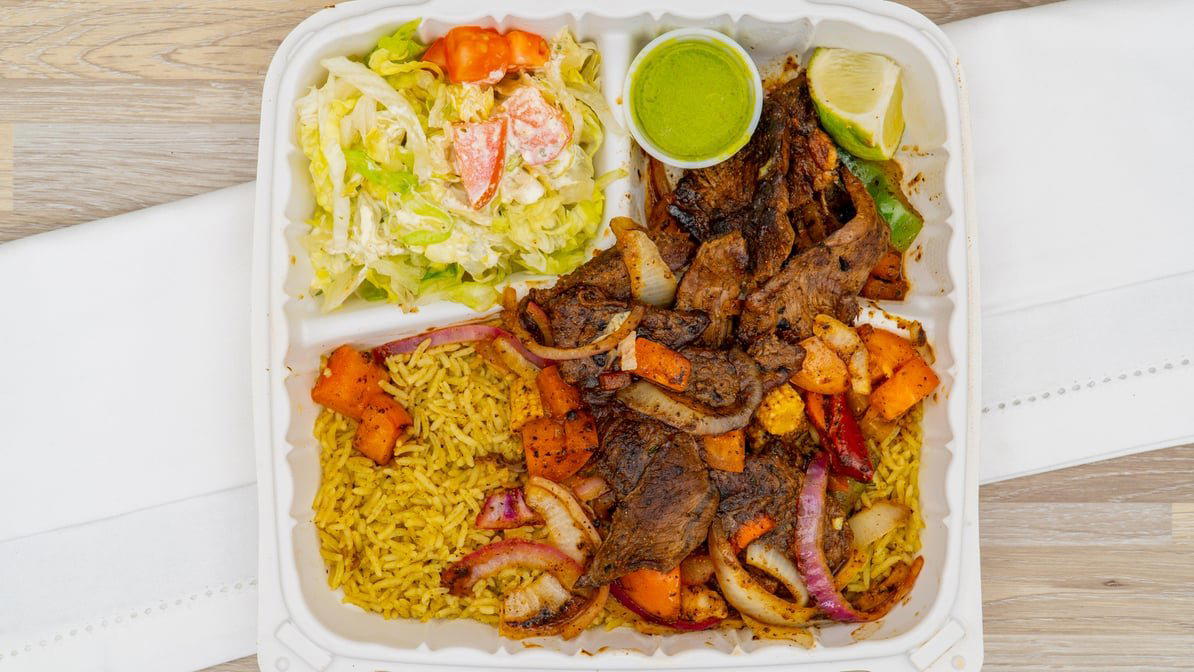
The menu
What to order
- Chicken Suqaar
- Roasted Goat Cutlet
- Sambusa
A Round Building, a Train Station, and the Bay Area's Only Somali Table
There is a particular category of restaurant that a city's food writers reach for when making the case that their city actually matters: the singular, structurally improbable spot that exists nowhere else in the region. In San Jose, Jubba occupies that role. Housed in a round building at a train station on Terner Way that looks, not inaccurately, like it may have once been a carousel, it is the only Somali restaurant in the entire Bay Area. The SF Chronicle has pointed to it as one of the markers of San Jose as a singular food city, which is a meaningful credential in a metro region that includes San Francisco, Berkeley, and Oakland in its competitive set.
Approaching the building, the circularity is the first thing you register. There is no obvious front or back, just a continuous curved wall that invites you to walk the perimeter before finding the entrance. Inside, the layout reflects the architecture: the register occupies one end of the arc, and at the other, a self-serve tea station dispenses complimentary chai-adjacent tea, hot and heavily sweetened, threaded through with spice. That tea is not a footnote. In Somali hospitality culture, the offering of sweet, spiced tea is an act of welcome that precedes almost every social interaction, and its presence here, available to all guests without charge, signals the cultural register Jubba is working in.
Somali Cuisine and What San Jose's Dining Spread Actually Represents
San Jose's restaurant scene is often discussed in terms of its Vietnamese and Mexican depth, both of which are genuinely formidable. The city's immigrant corridors have produced, over decades, a dining spread that reflects the actual demographics of Silicon Valley's working and professional population rather than a curated tourist version of California food. Jubba sits within that broader pattern, representing the Somali diaspora community that has settled across the Bay Area. Somali cuisine itself draws from an intersection of East African, Arab, and South Asian culinary traditions, shaped by centuries of Indian Ocean trade routes. The cooking tends toward slow-cooked meats, aromatic rice preparations, and accompaniments like canjeero, a fermented flatbread that functions roughly as the platform for everything else on the table.
This culinary tradition is barely represented anywhere in Northern California outside of Jubba. For context, Ethiopian food has found a foothold in the Bay Area and in San Jose specifically. LeYou is among the San Jose restaurants representing that East African tradition, which shares some structural similarities with Somali food in its emphasis on communal eating and fermented grain components.
The Sports Plate: Communal Eating as the Organizing Principle
Counter service restaurants that anchor themselves on a single format dish are making an editorial statement about what the experience is for. At Jubba, that dish is the sports plate: a large shared tray loaded with fatty goat ribs, the kind of preparation that requires time, fire, and a willingness to eat with your hands. The dining room fills with large parties organized around these trays, which points toward something important about how the space functions. This is not a restaurant designed for solo diners working through a tasting progression or couples on a date-night itinerary. It is designed for groups, for the kind of eating that happens when food is a shared occasion rather than an individual transaction.
The goat rib format also reflects Somali meat culture directly. Goat is the dominant protein across much of the Horn of Africa and the Arabian Peninsula, and fatty cuts prepared low and slow are the register of celebration and gathering rather than weekday subsistence. Ordering the sports plate at Jubba is not ordering a dish; it is participating in a format.
Where Jubba Sits in San Jose's Broader Dining Picture
San Jose's restaurant range runs from counter-service lunch spots with no price range to speak of, through mid-tier immigrant-tradition restaurants in the $$ bracket, to a small number of fine-dining destinations at the upper end. Adega, the Portuguese fine-dining room that holds two Michelin stars, represents the high end of that range. Petiscos and Luna Mexican Kitchen occupy the accessible mid-tier. Jubba operates in a different register entirely, one where price point is secondary to cultural specificity and where the counter-service format is not a compromise but a deliberate match to the food's communal logic.
The comparison set for restaurants like Jubba is less about price tier and more about what they represent for a city's identity. The same argument the Chronicle is making about Jubba and San Jose applies broadly to how diaspora-driven restaurants function in American cities: they are often the most accurate indicators of who actually lives somewhere. San Jose, with the largest Vietnamese-American population of any city in the country outside of Little Saigon, and with significant communities from across South Asia, Central America, and East Africa, has a restaurant spread that reflects those demographics more than most Bay Area cities do. Jubba is part of that argument.
For visitors building a San Jose itinerary, the full range of what the city offers is covered in our full San Jose restaurants guide. Those exploring the Bay Area more broadly may also want to cross-reference Lazy Bear in San Francisco or Single Thread Farm in Healdsburg for the upper end of the Northern California dining spectrum. For the full picture of what to do in San Jose beyond restaurants, see our San Jose hotels guide, bars guide, wineries guide, and experiences guide. Those comparing Jubba to other immigrant-tradition restaurants at different price points nationally might also reference Atomix in New York or Emeril's in New Orleans to understand how different cities anchor culinary identity. Fine-dining comparison points like Le Bernardin, Alinea, The French Laundry, and Alain Ducasse at Louis XV operate in an entirely different category but help calibrate where counter-service cultural restaurants sit in the broader dining hierarchy. After eating, Goodtime Bar is a reasonable option for a drink.
Getting There and Planning Your Visit
Jubba is at 5330 Terner Way, San Jose, CA 95136, positioned at a train station, which makes it one of the few Bay Area restaurants with a genuinely practical public transit connection built into its location. The counter-service format means no reservation is required, and groups should plan for the sports plate as the organizing anchor of the meal. The complimentary spiced tea at the self-serve station is available throughout your time there; treat it as part of the meal rather than a waiting-room gesture.
Frequently asked questions
Where is Jubba in San Jose?
Jubba is located at 5330 Terner Way, San Jose, CA 95136, San Jose.
Is Jubba award-winning?
Jubba has received recognition including: Jubba, the Bay Area’s sole Somali restaurant, is another mark of [San Jose as a singular food city]. Located at a train station, the counter service restaurant is housed ….
What's the must-try dish at Jubba?
The sports plate is the centerpiece: a large communal tray of fatty goat ribs designed for groups. Pair it with the complimentary self-serve tea at the counter, which arrives hot and heavy with sugar and spice.
Is Jubba reservation-only?
Jubba operates as a counter service restaurant, which means walk-in ordering rather than advance reservations. Large parties congregate around the sports plate, so expect a communal, casual format at the Terner Way location.
What's the defining dish or idea at Jubba?
The sports plate, a hulking tray of goat ribs, functions as the organizing principle of the meal and the reason large groups come here. As the Bay Area's only Somali restaurant, Jubba fills a gap that no other counter in San Jose or the wider region covers.
Budget and Context
| Venue | Cuisine | Price | Awards | Notes |
|---|---|---|---|---|
| JubbaThis venue (the venue you are viewing) | Authentic Somali | $10–20 | Not listed | Not listed |
| Luna Mexican Kitchen | Modern Mexican | $20–30 | Michelin Bib Gourmand | Mexican |
| Petiscos | Authentic Portuguese Small Plates | $30–50 | Michelin Bib Gourmand | Portuguese |
| Adega | Portuguese Fine Dining | $100–150 | Michelin Plate | Portuguese |
| LeYou | Modern Ethiopian | $20–30 | Michelin Plate | Ethiopian |
| Goodtime Bar | Natural Wine Bar with Small Plates | $30–50 | Not listed | Not listed |
Recognition history
Dated appearances from independent guides and award organizations, with the underlying list record or original source where available.
San Francisco Chronicle Top 100 Bay Area Restaurants #79
San Francisco Chronicle
Continue exploring
More in San Jose
Restaurants in San Jose
All restaurants in San Jose →
Bars in San Jose
All bars in San Jose →


Details
- Cozy
- Family
- Casual Hangout
- Standalone
- Street Scene
- A La Carte
- Vegetarian Friendly
- Halal
Current opening hours
- Monday
- 11:30 AM–9 PM
- Tuesday
- 11:30 AM–9 PM
- Wednesday
- Closed
- Thursday
- 11:30 AM–9 PM
- Friday
- 11:30 AM–9 PM
- Saturday
- 11:30 AM–9 PM
- Sunday
- 11:30 AM–9 PM
Hours can change for holidays and private events. Hours as of .
Cozy and welcoming with simple, ultra-clean decor in a casual setting next to light rail.