J.Sheekey


Michelin Plate
Our verdict
A seafood institution operating from the heart of London's theatreland since 1896, J. Sheekey occupies a particular niche in the city's dining hierarchy: old-school in atmosphere, technically grounded in execution. Michelin Plate recognition in both 2024 and 2025, a loyal theatrical clientele, and a fish pie that has become a reference point across the city's seafood canon make it one of the West End's most durable addresses.

Pearl is the En Primeur Club membership app, where members save venues, book tables and use the concierge.
Where the West End Eats After Curtain Call
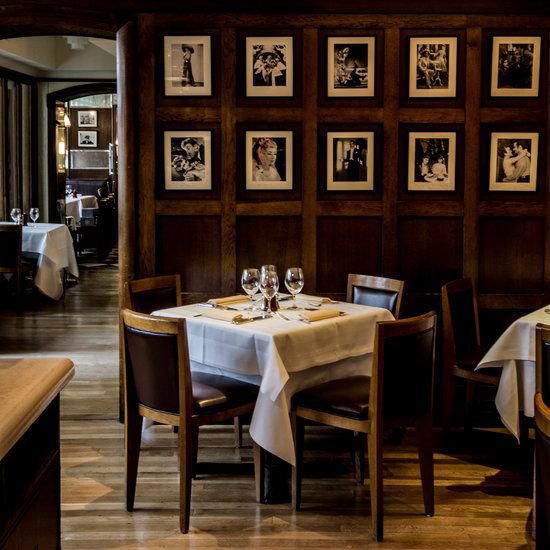
St Martin's Court is a narrow pedestrian lane tucked behind Charing Cross Road, the kind of passage that belongs to an older London, before the glass towers, before the chains. Walking towards J. Sheekey on a weeknight, the soft light bleeding through its windows reads less like a restaurant and more like a stage set: wood panelling, frosted glass, the suggestion of a room that has been doing the same thing, confidently, for a very long time. The restaurant opened in 1896, and the interior has not been updated to pretend otherwise. Banquette seating lines the walls, photographs of actors cover every available surface, and the lighting keeps things intimate in a way that modern restaurant design often attempts and rarely achieves.
London's seafood dining sits across a wide range of formats and price points. At the apex, addresses like Angler deliver tasting-menu precision with a Michelin star to match. Further along the spectrum, neighbourhood-focused spots like Olivomare bring a Sardinian lens to fish cookery in Belgravia. J. Sheekey occupies a different position: it is the city's most persistent grand-format seafood room, where longevity itself has become a form of authority.
The Seafood Tradition Behind the Menu
British seafood cookery has historically sat in an awkward position relative to its French and Iberian counterparts. The raw material has never been the issue: the waters around the British Isles produce crab, lobster, native oysters, Dover sole, and turbot that compete with anything landed on the continent. The gap has traditionally been in technique and ambition, a tendency to over-cook and under-season that left the country's fish restaurants looking timid beside their European peers.
The better end of London seafood, and J. Sheekey sits firmly at that end, has corrected this over decades. The approach here reads as a localist one: British and Irish coastal produce treated with the kind of classical preparation that acknowledges French influence without being subordinate to it. Shellfish platters draw from the same supply chains that feed Scott's in Mayfair, another long-running seafood institution that shares the theatricality if not the theatrical address. The distinction between these rooms is one of register: Scott's tilts towards glamour and open-room visibility; J. Sheekey tilts towards discretion and intimacy.
The editorial angle on this kitchen is one of local ingredients handled through accumulated classical technique rather than imported experimentation. The seasonal availability of British shellfish, flat fish, and migratory species means the menu shifts with the calendar. Extravagant shellfish presentations sit alongside more composed fish dishes where the cooking is direct but not simple, the kind of work that takes decades of repetition to make look effortless. Alongside the seafood focus, a substantive vegetarian offering demonstrates range beyond what the restaurant's identity might suggest at first glance.
The Fish Pie Question
No dish in J. Sheekey's canon has attracted more sustained attention than the fish pie. In a city where signature dishes are often manufactured by PR cycles, this one arrived through repetition and word of mouth. The fish pie at J. Sheekey has become a reference point for the genre in London, the dish against which other versions are measured and frequently found wanting. It represents the restaurant's core argument in concentrated form: high-quality British produce, classical preparation, no conceptual diversion. For a more detailed breakdown of the dish's place in the restaurant's identity, see the FAQ section below.
Theatreland as Context, Not Decoration
The theatrical connection at J. Sheekey is structural rather than decorative. The restaurant opened in 1896 in direct proximity to what was then, and remains, one of the densest concentrations of theatre in the world. The photographs lining the walls document more than a century of post-performance dining, actors and directors whose names run across several generations of West End history. This is not a room that acquired its theatrical associations through marketing; it is a room that has been, functionally, the post-show dining room for the district for most of its existence.
The practical consequence of this is a booking pattern tied to performance schedules. Early sittings are populated by pre-theatre diners; later tables, particularly on weekend evenings, carry the energy of an audience that has just come from two hours in the dark and wants to debrief over good fish and cold white wine. The atmosphere changes accordingly across the evening, a function of when people arrive as much as what they order.
For a broader survey of where J. Sheekey sits within London's restaurant ecosystem, our full London restaurants guide maps the city's dining across neighbourhood and format. Readers building a wider London itinerary will also find relevant recommendations in our full London hotels guide, full London bars guide, full London wineries guide, and full London experiences guide.
Placing J. Sheekey in the UK Seafood Conversation
The serious end of British seafood cookery extends well beyond London. Coastal proximity shapes what kitchens like hide and fox in Saltwood and Gidleigh Park in Chagford can do with local catch, while destination restaurants including The Fat Duck in Bray, L'Enclume in Cartmel, and Moor Hall in Aughton each demonstrate how regional produce informs fine dining at the upper tier. The Hand and Flowers in Marlow applies a similar locally-anchored logic to pub-format cooking. J. Sheekey's position is urban and institutional rather than regional, but the produce argument runs parallel: the quality of what arrives from British waters justifies the room's confidence.
Internationally, the comparison is instructive. Mediterranean seafood institutions like Gambero Rosso in Marina di Gioiosa Ionica and Alici Restaurant on the Amalfi Coast operate from a different culinary grammar, one built around proximity to warm-water catch and a Mediterranean cooking tradition. The comparison underscores rather than undermines J. Sheekey's case: British coastal produce is different, not lesser, and the kitchen here has spent the better part of 130 years making that argument through repetition. For those curious about where London seafood sits in a contemporary British fine dining frame, addresses like Behind Restaurant and River Restaurant by Gordon Ramsay offer useful adjacent reference points across different price brackets and formats.
Planning Your Visit
J. Sheekey operates at the £££ price tier, placing it above casual seafood but below the ££££ bracket occupied by addresses such as CORE by Clare Smyth or Restaurant Gordon Ramsay. The address is 28-32 St Martin's Court, London WC2N 4AL, a short walk from Leicester Square and Charing Cross stations. Pre-theatre booking pressure is significant; later evening tables offer a more relaxed experience. Consecutive Michelin Plate recognition confirms this is a kitchen performing at a consistent level, not coasting on reputation.
Quick reference: J. Sheekey, 28-32 St Martin's Court, London WC2N 4AL. Price tier: £££. Michelin Plate 2024 and 2025.
FAQ: What dish is J. Sheekey famous for?
J. Sheekey's fish pie is the dish most closely associated with the restaurant and the one most frequently cited by critics and returning guests alike. In a city with considerable competition across the seafood category, it has accumulated the kind of reputation that comes not from a single review but from years of consistent delivery. The pie represents the kitchen's central approach in distilled form: quality British produce, classical preparation, no decorative distraction. It sits alongside extravagant shellfish platters as the other end of the restaurant's range, with the pie acting as the more grounded, everyday-luxury counterpart to the more theatrical shellfish presentations. The fish pie has also, by extension, become a reference point against which similar dishes at other London addresses are informally measured. Awards recognition from Michelin (Plate, 2024 and 2025) and an Opinionated About Dining recommendation (2023) confirm the broader kitchen quality that makes the dish's reputation credible rather than merely nostalgic.
| Venue | Cuisine | Price | Awards | Notes |
|---|---|---|---|---|
| J. SheekeyThis venue (the venue you are viewing) | Classic British Seafood Brasserie | $50–100 | Michelin Plate | Not listed |
| The Ledbury | Modern British Fine Dining | $300–500 | 3 Michelin Stars · World's 50 Best #42 | Modern European, Modern Cuisine |
| Sketch, The Lecture Room and Library | Modern French Fine Dining | $200–300 | 3 Michelin Stars · World's 50 Best #18 | Modern French |
| CORE by Clare Smyth | Modern British Fine Dining | $150–200 | 3 Michelin Stars · World's 50 Best #97 | Modern British |
| Restaurant Gordon Ramsay | French Fine Dining | $200–300 | 3 Michelin Stars · World's 50 Best #13 | Contemporary European, French |
| Dinner by Heston Blumenthal | Historic British Fine Dining | $200–300 | 2 Michelin Stars · World's 50 Best #45 | Modern British, Traditional British |
Recognition history
Dated appearances from independent guides and award organizations, with the underlying list record or original source where available.
Michelin Plate
Michelin
Opinionated About Dining Casual in Europe Recommended
Opinionated About Dining
Full recognition history (5 entries)
Michelin Plate
Michelin
Michelin Plate
Michelin
Opinionated About Dining Casual in Europe Recommended
Opinionated About Dining
Continue exploring
More in London
Restaurants in London
All restaurants in London →
Bars in London
All bars in London →
Hotels in London
All hotels in London →


Details
- Classic
- Elegant
- Historic
- Romantic
- Sophisticated
- Date Night
- Special Occasion
- Business Dinner
- Historic Building
- Open Kitchen
- Extensive Wine List
- A La Carte
- Small Plates
- Vegetarian Friendly
Current opening hours
- Monday
- 12–10:45 PM
- Tuesday
- 12–10:45 PM
- Wednesday
- 12–10:45 PM
- Thursday
- 12–10:45 PM
- Friday
- 12–10:45 PM
- Saturday
- 12–10:45 PM
- Sunday
- 12–10 PM
Hours can change for holidays and private events. Hours as of .
Warm, comfortable, and cosy with banquette seating, horseshoe bar, and a classic, upmarket atmosphere.