Jockomo
Jockomo occupies a low-key stretch of NE Fremont Street in Portland's Beaumont-Wilshire neighborhood, fitting into a local dining scene where neighborhood spots often outperform their modest appearances. With sparse public data, the address places it squarely in a residential corridor where Portland's most consistent cooking frequently happens away from the Pearl District spotlight. Worth tracking for locals navigating the northeast quadrant.
Pearl is the En Primeur Club membership app — saves, bookings, and concierge access live there. Same editors, same standards.
- Address
- 4765 NE Fremont St, Portland, OR 97213
- Phone
- +17073016422
- Website
- opentable.com
- Directions
- Get directions
 Saves & bookings on Pearl
NE Fremont and the Case for Portland's Residential Dining Belt
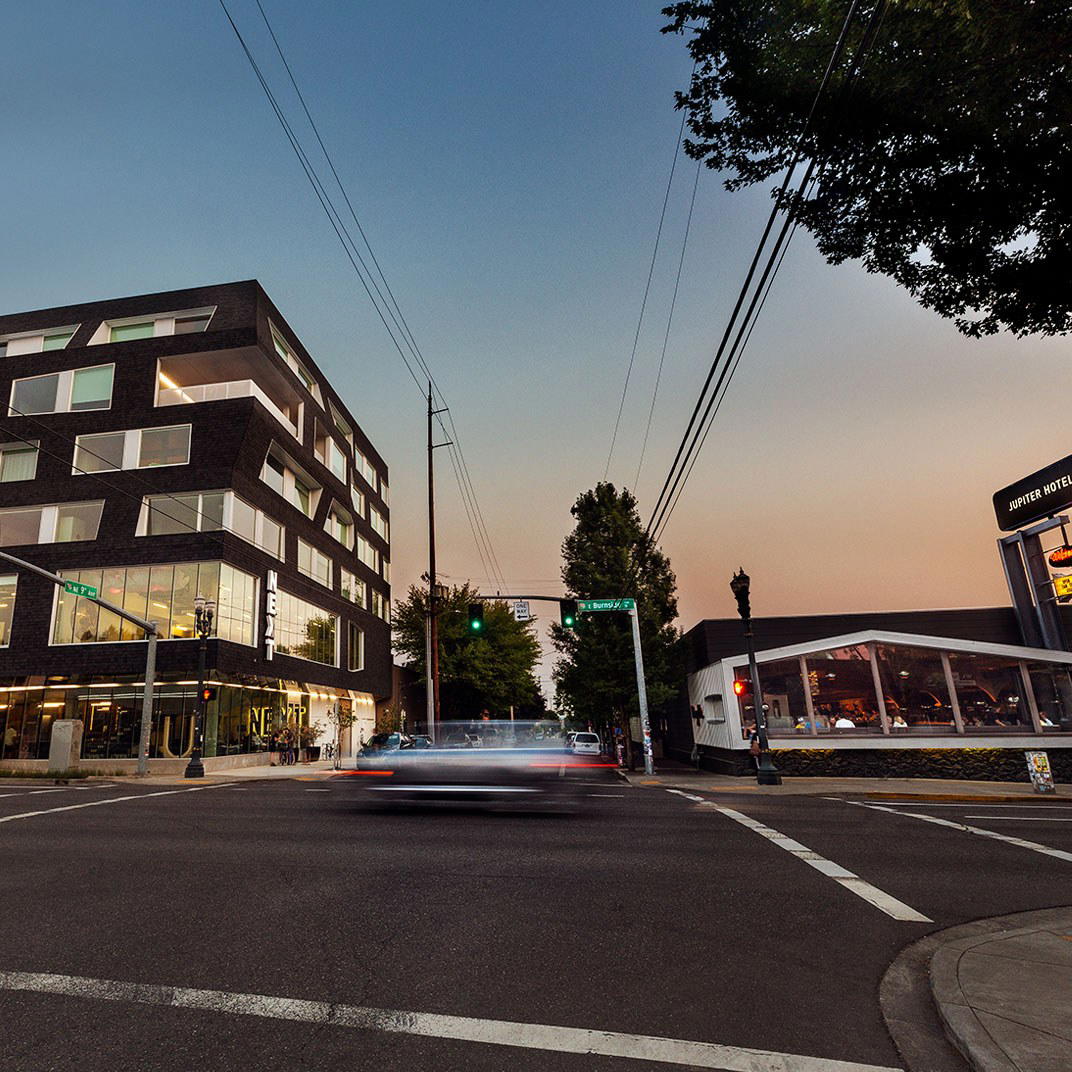
Portland's most interesting eating has long migrated away from its downtown core and the Pearl District, settling instead into the residential corridors of the northeast quadrant. NE Fremont Street, where Jockomo sits at 4765, runs through Beaumont-Wilshire, a neighborhood that functions as a kind of proving ground for the city's independent restaurant culture. The stretch is walkable, and the dining room audiences tend to be regulars rather than tourists working through a checklist.
Portland's neighborhood dining scene operates differently from most American cities of comparable size. You'll find Langbaan, one of the city's most rigorous Thai tasting menus, tucked behind a sandwich shop in SE Portland. Kann brought Haitian cooking to a level of ambition that warranted national attention. Berlu has made Vietnamese technique a point of serious editorial discussion. Jockomo, positioned in that same dispersed pattern on Fremont, fits a city model where address tells you less than most cities about what you're walking into.
What the Address Reveals About the Dining Proposition
The NE Fremont corridor functions as a neighborhood main street in traditional sense: a mix of long-running locals, occasional newcomers, and the kind of spots that survive on repeat business rather than destination traffic. Restaurants here tend to operate with leaner formats than their counterparts downtown, which often translates into more focused menus and tighter execution. The economics of a residential strip demand consistency over spectacle.
Portland's pizza culture provides one useful frame of reference for this kind of neighborhood proposition. Ken's Artisan Pizza on NE 28th operates on a similar logic: a neighborhood address, a product-focused approach, and a loyal local following that makes reservations competitive on weekends. Nostrana, a few blocks off SE Cesar Chavez, has built a decade-plus reputation on wood-fired cooking without ever requiring a destination-dining premise. These aren't comparisons of cuisine, but comparisons of operating model and audience expectation. Jockomo sits in the same category of place: a neighborhood address with the credibility that comes from proximity to a city that takes its independent restaurant scene seriously.
Menu Architecture and What It Signals
But the architecture of a menu, even in outline, tells you most of what you need to know about a restaurant's ambitions and its relationship with its audience. A neighborhood spot on NE Fremont is likely calibrated for frequency of visit rather than occasion dining, which typically means a menu that rotates at a pace that rewards regulars, portions sized for satisfaction rather than theater, and a beverage program that supports rather than leads.
Compare this against the higher-architecture end of American dining: Lazy Bear in San Francisco and Alinea in Chicago operate on tasting-menu logic where the menu IS the statement, every course a point in a structured argument. Single Thread Farm in Healdsburg and Blue Hill at Stone Barns in Tarrytown frame their menus around agricultural sourcing as the primary editorial lens. At the fine-dining end of major city dining, Le Bernardin in New York and The French Laundry in Napa use classical French architecture as their structural principle. Jockomo at 4765 NE Fremont is not in that tier of declared ambition, and that's not a criticism. A neighborhood restaurant that operates with clarity about what it is frequently outperforms the dining experience of a destination restaurant that doesn't.
Portland has enough reference points across that spectrum to make the distinction meaningful. Diners who have eaten at Providence in Los Angeles or Addison in San Diego understand what declared fine-dining ambition looks like in a West Coast context. What Portland does well, and what the NE Fremont address suggests for Jockomo, is the register between those poles: serious cooking without the apparatus of occasion dining.
Portland as a Reference City for Independent Restaurant Culture
Portland sits in an interesting position among American food cities. It lacks the critical mass of New York, where Atomix operates at the Korean fine-dining frontier, or the institutional weight of New Orleans, where Emeril's represents a decades-long anchor in the dining calendar. It doesn't carry the international fine-dining gravity of a city like Hong Kong, where 8½ Otto e Mezzo Bombana operates at the three-Michelin-star level. Portland's identity is built instead on density of independent operators, relatively low barriers to entry compared with coastal gateway cities, and a local audience with genuine appetite for quality at the neighborhood level.
That structure produces a city where a restaurant on a residential street can become a consistent part of the critical conversation without needing a Michelin frame or a James Beard nomination to validate it. The full Portland restaurants guide maps that broader pattern. Jockomo's Fremont address places it inside it. The question of where exactly it lands within that pattern is best answered by a visit.
What's also worth noting about the northeast quadrant specifically: it has absorbed a higher concentration of long-running independent spots than SE Portland's more celebrated corridors, partly because the residential density supports repeat traffic and partly because lower commercial rents have historically allowed operators to stay independent rather than scaling. That's a structural advantage for the kind of focused cooking that defines Portland's reputation at its leading, and it's the context into which Jockomo was placed when it opened at its Fremont address. For a fuller read on Portland's dining geography, the Kann and Langbaan pages offer two reference points at the more decorated end of the city's independent scene. The Inn at Little Washington represents the other end of the American independent restaurant model entirely, a useful contrast for understanding what Portland's scale actually allows.
Know Before You Go
- Address: 4765 NE Fremont St, Portland, OR 97213
- Neighborhood: Beaumont-Wilshire, NE Portland
- Reservations: Walk-in friendly
- Price range: About $25 per person
- Parking: Street parking available on NE Fremont and side streets
Cost and Credentials
Comparable venues nearby, for context on price, style, and recognition.
| Venue | Cuisine | Price | Notes |
|---|---|---|---|
| JockomoThis venue — the venue you are viewing | Cully, Soul Food | $ | Not listed |
| Steely’s | Hawthorne, American Gastropub | $ | Not listed |
| Blue Star Donuts | Portland, Gourmet Donuts & Coffee | $ | Not listed |
| Sure Shot Burger | Concordia, Smashburgers | $$ | Not listed |
| PLS on Sixth | Downtown, American Burgers & Shakes | $$ | Not listed |
| The Woodsman Tavern | Not listed | $$ | Division/Clinton, New American Tavern |
Continue exploring
More in Portland
Restaurants in Portland
Browse all →
Bars in Portland
Browse all →

Hotels in Portland
Browse all →
At a Glance
- Lively
- Casual Hangout
- Group Dining
- Standalone
Casual dining atmosphere with a relaxed, welcoming vibe focused on authentic soul food experience.