
Black Pearl 1 Diamond
Our verdict
Jin House holds a Black Pearl 1 Diamond award (2025), placing it among a small tier of formally recognised dining destinations in Tianjin's Hexi District. Located on Binguan West Road, it represents the city's growing presence on China's competitive fine dining circuit. For visitors building a serious dining itinerary around northern China, it warrants early attention.

Pearl is the En Primeur Club membership app, where members save venues, book tables and use the concierge.
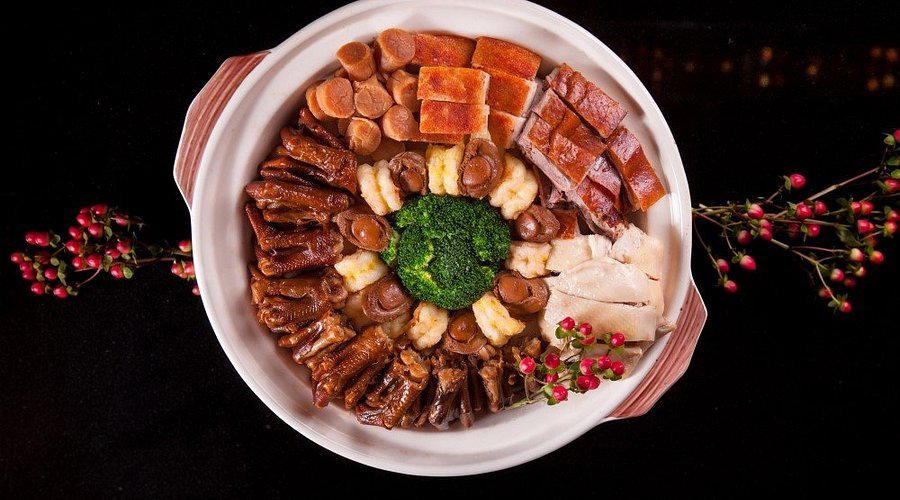
The menu
What to order
- Black Gold Flowing Sand Buns
- Crispy Roasted Chicken with Flaxseeds
- Barbecue Delicacy Selection
- Coral Trout Eight Ways
Hexi District and the Logic of Tianjin Fine Dining
Tianjin occupies an unusual position in China's dining conversation. As a port city with deep foreign concession history, its culinary identity is layered in ways that Beijing's more imperial-coded dining scene is not. The Hexi District, where Jin House sits on Binguan West Road, has become the address of choice for the city's more considered restaurant openings: close enough to major hotel infrastructure to draw business travellers and visiting delegations, yet sufficiently removed from the tourist-facing waterfront to maintain a neighbourhood cadence that rewards repeat visits over one-night curiosity.
The Black Pearl Restaurant Guide, operated by Meituan-Dianping and now in its eighth edition, functions as mainland China's most closely watched independent recognition programme for Chinese cuisine. Its single-diamond designation, which Jin House received in 2025, sits at the entry tier of a three-diamond system, but entry tier here means something specific: it places a restaurant within a formally vetted national cohort, reviewed against criteria that weight culinary execution, consistency, and cultural grounding. Across China, that cohort is selective enough that a 1 Diamond listing functions as a genuine signal of quality rather than a participation award. For context, comparable 2025 Black Pearl recipients in other cities include Xin Rong Ji (Xinyuan South Road) in Beijing, Ru Yuan in Hangzhou, and Dai Yuet Heen in Nanjing, which indicates the standard Jin House is being measured against.
Where Jin House Sits in the Regional Tier
Chinese fine dining on the mainland has been splitting into two broad currents over the past decade. One current runs through the high-volume, banquet-format houses that built their reputations on scale and ceremonial presentation. The other current is smaller, more controlled, often linked to provincial culinary traditions that have been refined rather than standardised. The Black Pearl programme has consistently rewarded the second current, seeking out restaurants where a clearly defined culinary position is maintained across visits rather than diluted by size.
Jin House belongs to the latter tendency. That placement aligns with a pattern visible in recognised restaurants across northern China, where address choice often signals operational intent before a single dish arrives.
For a sense of what a Black Pearl 1 Diamond restaurant looks like across different Chinese cities and cuisine categories, the EP Club editorial team has documented comparable addresses: Xin Rong Ji in Chengdu holds Black Pearl recognition for its approach to Sichuan flavour without the tourist-facing exaggeration that defines much of that city's dining export; Imperial Treasure Fine Chinese Cuisine in Guangzhou operates at a similar award tier within Cantonese tradition; and Dingshan·Jiangyan (Xiangcheng) in Suzhou occupies a comparable position for Jiangnan-style cooking. Placing Jin House against these peers establishes that it operates within a nationally competitive quality band, not merely a local one.
The Cultural Weight of Northern Chinese Dining
Tianjin's culinary roots draw from court-adjacent northern tradition, the influence of the treaty-port era, and a strong working-class food culture that produced dishes now recognised across China. The tension between these layers is what makes the city's higher-end restaurants interesting: the best of them do not simply adopt the codes of Beijing or Shanghai fine dining, but work with ingredients and techniques that are specific to this part of the Bohai coast. That specificity is what the Black Pearl programme has historically rewarded when it designates restaurants in second-tier cities, where local distinctiveness carries more weight than proximity to a Michelin circuit.
This context matters when reading Jin House's award. A restaurant in Tianjin earning Black Pearl recognition in 2025 is not using the city's reputation for fine dining, because that reputation is still being established. It is instead contributing to it, which is a harder position to hold. Comparable efforts to build serious dining identities in cities outside the Michelin-covered tier are visible at Fleurs Et Festin in Xiamen and Jiangnan Wok·Rong in Fuzhou, both of which have earned recognition in cities without established fine dining ecosystems. Jin House operates in the same structural position in Tianjin.
For international visitors tracking how Chinese fine dining is developing beyond Shanghai, Beijing, and the Pearl River Delta, Tianjin is worth understanding as a city where that development is active. The Er Duo Yan Luxury Restaurant 1892 represents another formally recognised address in the city, and the two together begin to sketch a dining map that EP Club's full Tianjin restaurants guide continues to develop as more recognitions emerge.
Planning a Visit
Jin House is located at Binguan West Road in the Hexi District (postal code 300061). Visitors should plan to book through local channels, including Meituan or Dianping, where the restaurant's Black Pearl status may be confirmed directly on its listing.
Given the 2025 Black Pearl designation, demand at this tier in a city like Tianjin can move quickly after recognition. Booking with lead time rather than on arrival is the safer approach, particularly for weekend evenings or group dining. For those building a broader Tianjin itinerary, the EP Club guides to hotels, bars, wineries, and experiences in Tianjin provide the surrounding context for a full stay.
Travellers with broader itineraries across China's recognised dining circuit may also want to cross-reference 102 House in Shanghai and Chef Tam's Seasons in Macau, both of which operate at award-recognised levels in cities with denser fine dining infrastructure, to calibrate expectations and comparison points before visiting Tianjin.
Frequently asked questions
Where exactly is Jin House?
Jin House is located at China, Tianjin, Hexi District, Tianjin, Binguan W Rd, 宾馆西道 邮政编码: 300061, Tianjin.
What distinctions does Jin House have?
Jin House has received recognition including: Black Pearl 1 Diamond (2025).
What's the signature dish at Jin House?
EP Club's confirmed database for Jin House does not include menu detail. What is documented is a Black Pearl 1 Diamond award for 2025, a designation issued by Meituan that specifically evaluates culinary quality in the Chinese fine dining tier. Dish-level specifics are worth confirming directly with the restaurant at its Hexi District address on Binguan West Road.
How hard is it to get a table at Jin House?
Jin House does not currently have a confirmed international booking channel in EP Club's records. Its 2025 Black Pearl 1 Diamond status places it in a nationally recognised tier of Chinese fine dining, which typically corresponds to advance planning being advisable, particularly on weekends. Prospective diners should contact the Hexi District location directly to confirm reservation procedures.
Price and Positioning
Comparable venues nearby, for context on price, style, and recognition.
| Venue | Cuisine | Price | Awards | Notes |
|---|---|---|---|---|
| Jin HouseThis venue (the venue you are viewing) | Contemporary Cantonese with Tianjin Influences | Not listed | Black Pearl 1 Diamond | Not listed |
| Er Duo Yan Luxury Restaurant 1892 | Contemporary Chinese Fine Dining | Not listed | Black Pearl 1 Diamond | Tianjin, Contemporary Chinese Fine Dining |
| Banquet No. 28 · Fine Chaozhou & Cantonese Dining | Fine Chaozhou & Cantonese Dining | $30–50 | Black Pearl 1 Diamond | Wudadao / Five Great Avenues, Fine Chaozhou & Cantonese Dining |
| Wynn Macau Hotel - Golden Flower | Imperial Tan Cuisine | $500+ | Star Wine List | NAPE, Tan Cuisine Fine Dining |
| Meet the Bund Skyline | Modern Fujianese Fine Dining | $150–200 | Tatler Listed in Best Restaurants Asia-Pacific | North Bund, Modern Fujianese Fine Dining |
Recognition history
Dated appearances from independent guides and award organizations, with the underlying list record or original source where available.
Black Pearl 1 Diamond
Black Pearl
Continue exploring
More in Tianjin
Restaurants in Tianjin
All restaurants in Tianjin →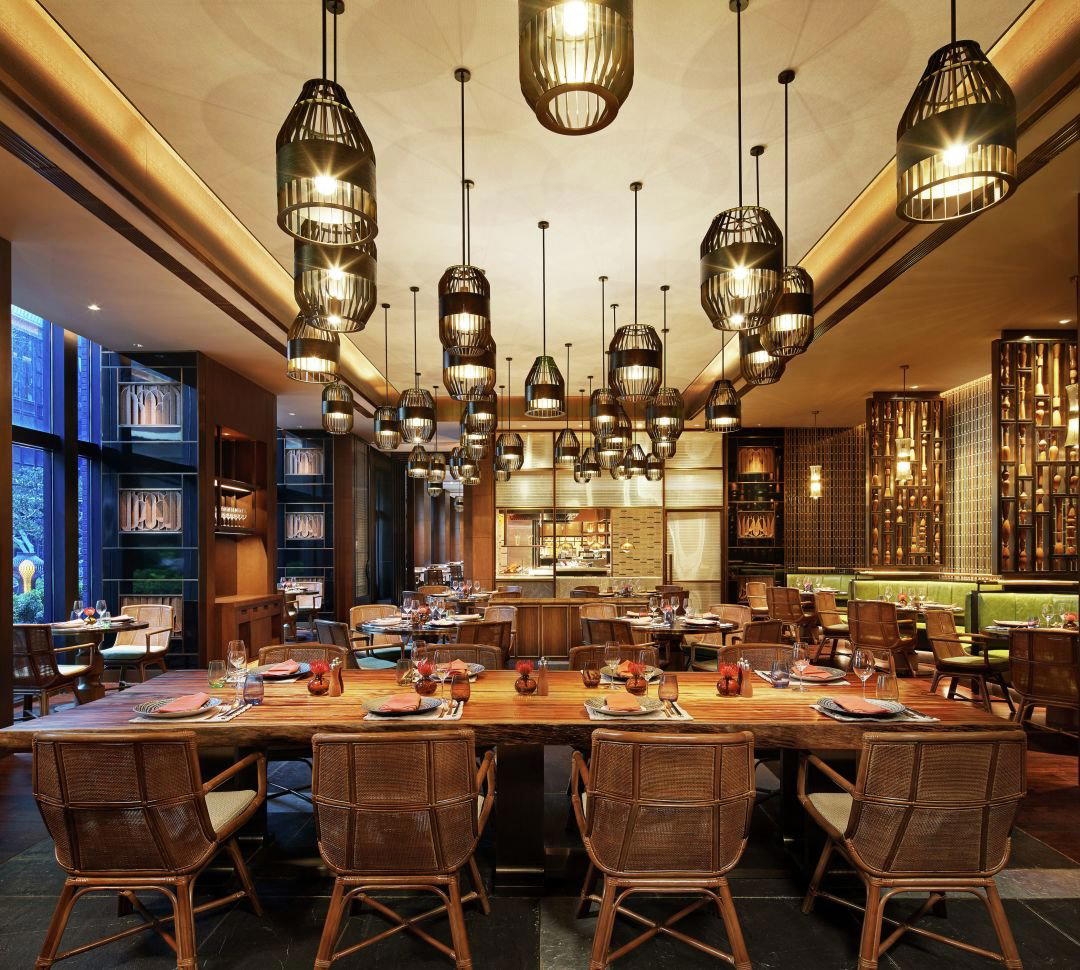
Bars in Tianjin
All bars in Tianjin →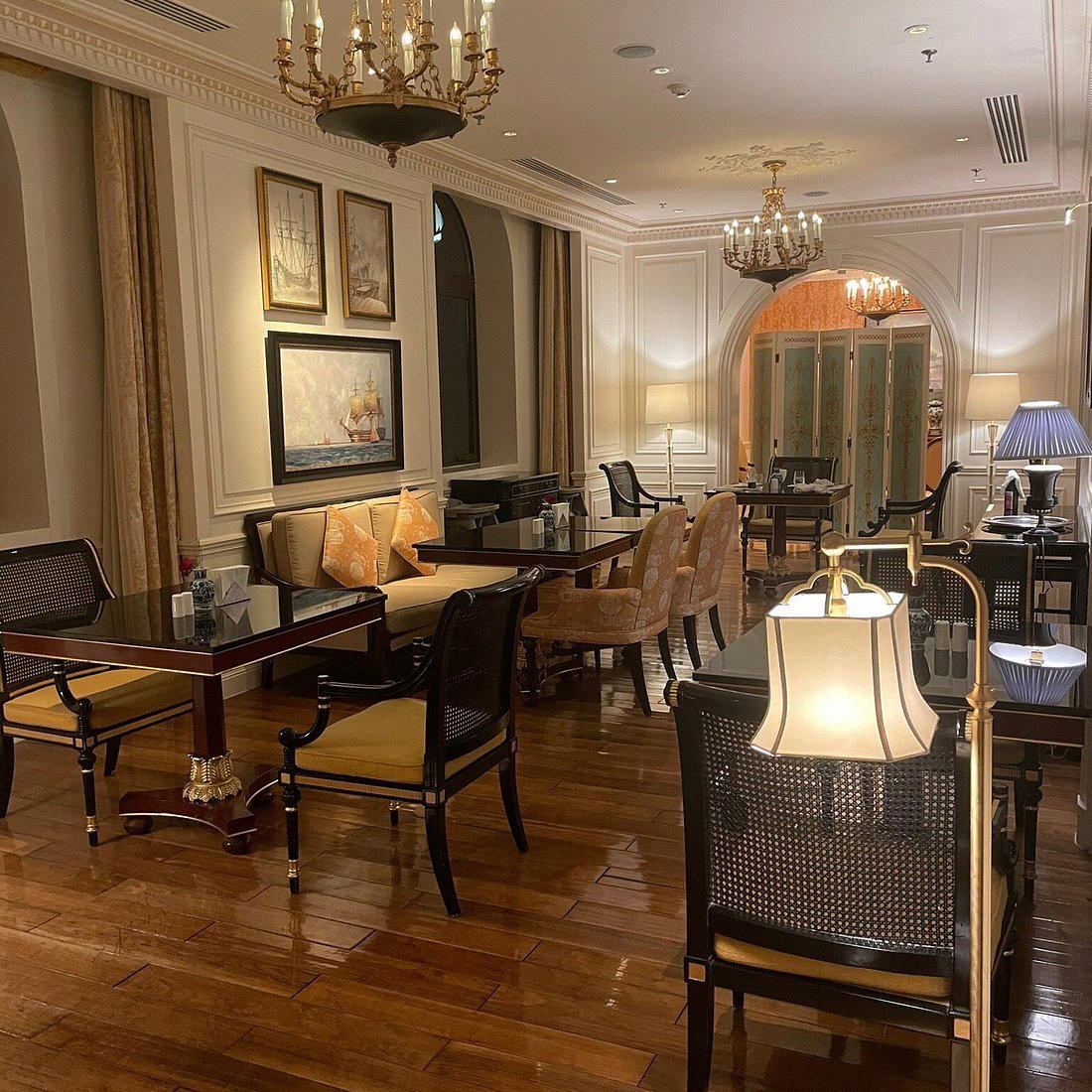

Details
- Elegant
- Modern
- Intimate
- Sophisticated
- Business Dinner
- Celebration
- Special Occasion
- Private Dining
- Open Kitchen
- Hotel Restaurant
- A La Carte
- Tasting Menu
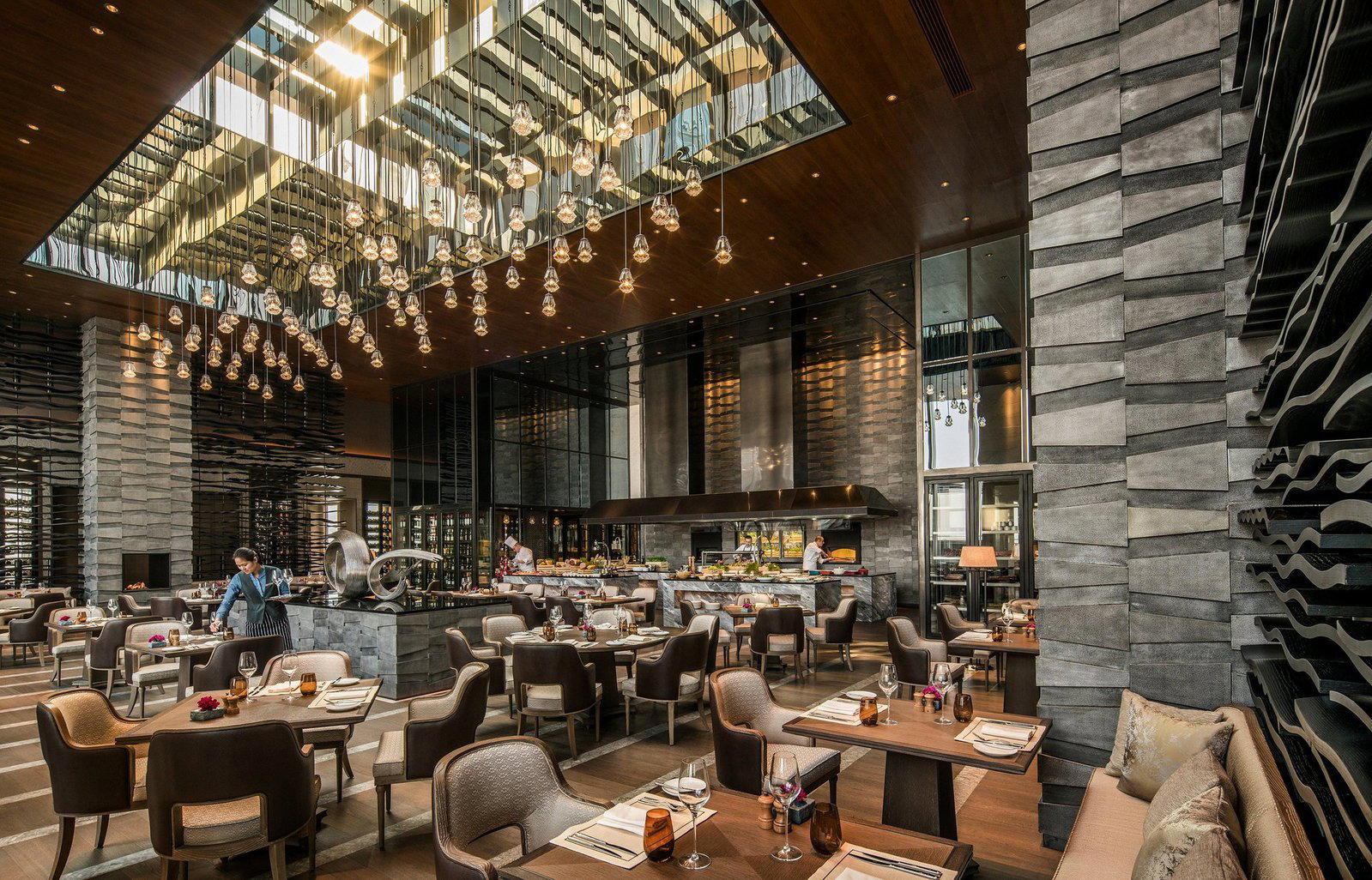
Modern and restrained interior with clean lines, soft upholstery, muted tones, acoustic panels, and careful lighting that maintains conversation comfort in the sunken dining hall.