Our verdict
Jin Feng Braised Pork Rice is one of Taipei's most referenced lu rou fan institutions, drawing locals and visitors alike to its counter-style format and decades-long presence in the city's street food fabric. The kitchen centres on the slow-braised pork rice that defines Taiwanese comfort cooking at its most direct. For context on where it sits within Taipei's wider dining spectrum, see our full Taipei restaurants guide.

Pearl is the En Primeur Club membership app, where members save venues, book tables and use the concierge.
The menu
What to order
- Lu Rou Fan
- Braised Pork Belly
Where Street Food Becomes Ritual: Lu Rou Fan in Taipei
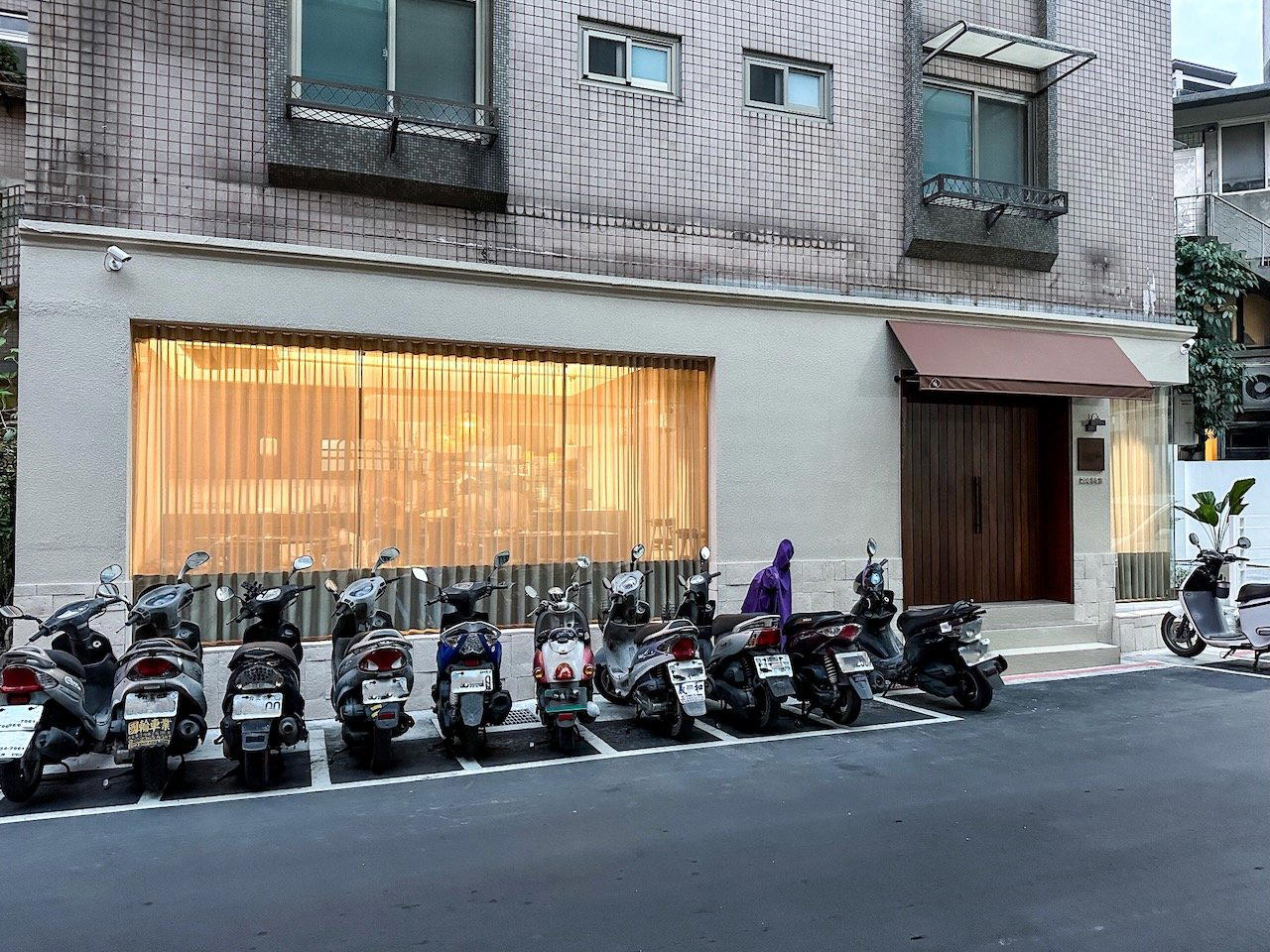
Approach the Zhongzheng District on a weekday lunch hour and the scene repeats itself across dozens of storefronts: fluorescent-lit interiors, laminate tables, ceramic bowls arriving fast from a kitchen that has been running the same preparation since well before the current generation of diners was born. This is the register in which Jin Feng Braised Pork Rice operates, and it is a register that Taipei has refined over decades into something close to a municipal institution. The smell reaches you before the signage does: slow-cooked pork fat, soy, and rice wine reducing together, a combination that defines lu rou fan as a dish and places it in a culinary lineage stretching back through Taiwanese home cooking to southern Fujianese braising traditions.
Braised pork rice is not a dish that rewards reinvention. Its credibility is built on consistency, on the accumulation of repeated bowls served at the same temperature, with the same ratio of braising liquid to rice. Jin Feng has held that standard long enough to become a reference point in conversations about what a lu rou fan counter should deliver. At the price tier this category occupies, well below the Taiwanese contemporary restaurants like Taïrroir or the Cantonese fine dining of Le Palais, the expectation is not evolution but fidelity. Jin Feng earns its reputation by meeting that expectation without variation.
The Counter Dynamic and How the Room Runs
The format here is characteristic of Taipei's older street food institutions: a counter or open kitchen arrangement where the division of labour is visible and the pace is high. At these counters, the coordination between the person ladling braising liquid, the one portioning rice, and the floor staff managing a constant turnover of seats is the operational equivalent of front-of-house choreography at a tasting menu restaurant. The difference is that mistakes are visible immediately, and the clientele, regulars who have eaten this dish hundreds of times, will notice them. That daily accountability shapes a team discipline that more formal dining environments sometimes achieve only through structured training programs.
This kind of counter service is a Taipei dining tradition in its own right. It differs meaningfully from the hawker formats of Singapore or the izakaya model of Tokyo in that the menu is typically narrow, the kitchen's entire identity rests on a handful of preparations, and the measure of quality is purely internal: does today's bowl match yesterday's? The team dynamic at a place like Jin Feng is built around that single standard. Taiwan's broader dining scene offers a wide spectrum from this register all the way to the modernist precision of logy or the Spanish contemporary ambition of Molino de Urdániz, but the counter braised pork rice shop occupies a category that none of those restaurants are trying to replace.
What the Dish Actually Is
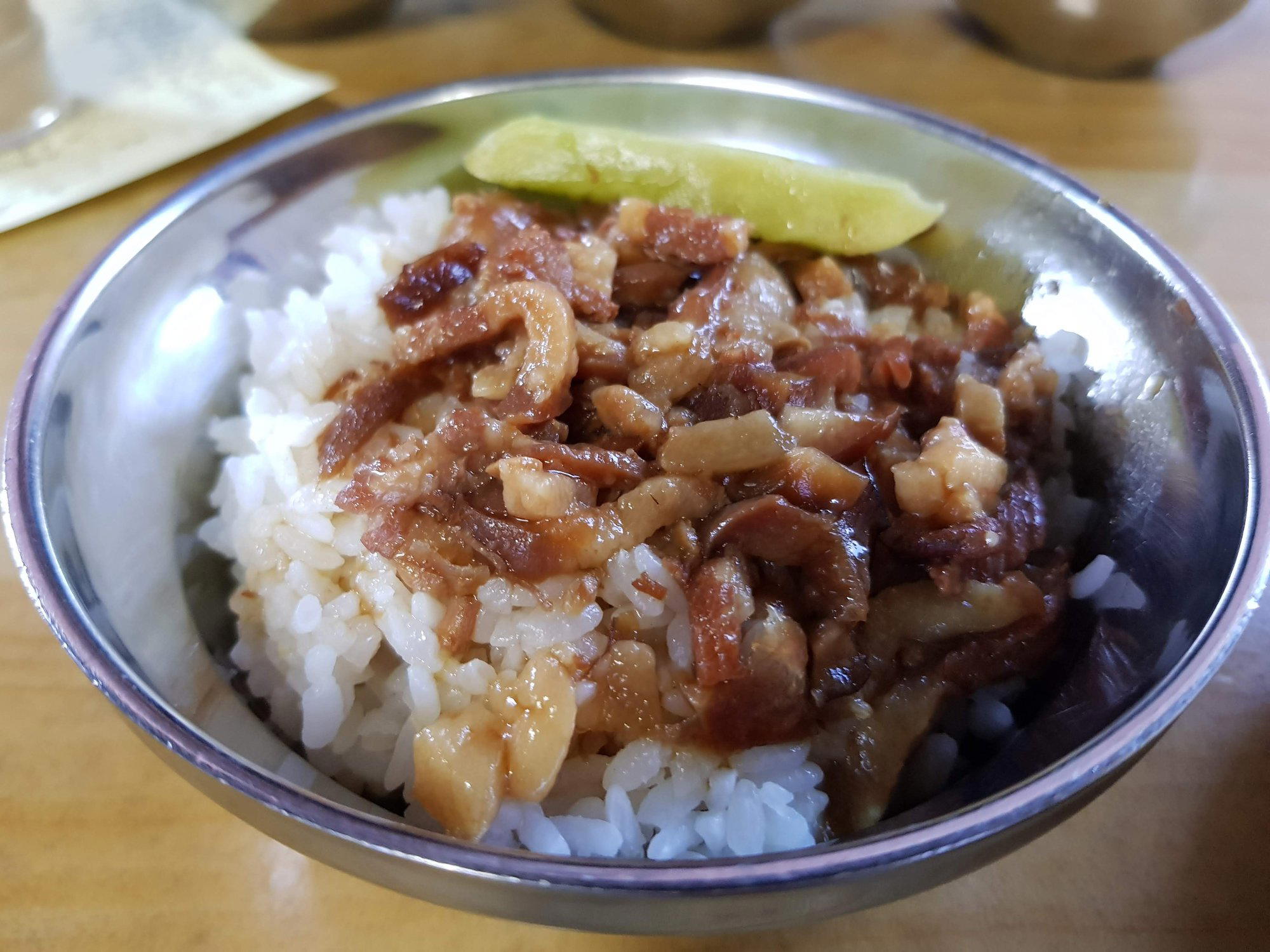
Lu rou fan, braised pork rice, is built around fatty pork belly or ground pork simmered in a mixture of soy sauce, rice wine, and aromatics including five-spice and shallot, then served over steamed white rice. The braising liquid, thickened through long reduction and the rendering of fat, functions as both sauce and seasoning. The dish is calibrated by balance: enough fat to carry the soy without heaviness, enough acidity in the wine to cut through. A bowl that works has a cohesion that takes time and repeated adjustment to achieve. Side dishes at this category of restaurant typically include braised egg, pickled vegetables, and tofu preparations that have absorbed the same braising liquid from secondary cooking. The accompaniments are not optional extras; they are part of the system.
For comparison within the same street food tradition, braised pork rice counters across Taiwan show regional variation, versions in Tainan tend toward a lighter, sweeter profile compared to the Taipei style, which carries a deeper soy character. Restaurants like A Xia in Tainan or GEN in Kaohsiung operate in different culinary registers but serve as anchors for understanding the regional breadth of Taiwanese food culture beyond the capital.
Taipei's Street Food Tier and Where Jin Feng Sits
Taipei's dining economy runs across a wider price span than most visitors initially account for. At the leading, Michelin-starred tasting menus at L'Atelier de Joël Robuchon operate in a different commercial and experiential world from the NT$35–60 bowl served at a street-level counter. But both depend on Taipei's willingness to treat food seriously across all price points. The city's food culture does not organise prestige exclusively around price, which is part of why a braised pork rice institution can hold genuine civic status without Michelin recognition. That standing reflects something about local food values that the formal award system does not always capture.
Jin Feng operates in the same neighbourhood economy that sustains dozens of similar counters across Zhongzheng and surrounding districts. What separates it from the competition is duration: the years of operation that have turned a reliable preparation into a known quantity. That kind of track record functions as its own trust signal in a city where options are plentiful and memories are long. For readers building a broader Taiwan itinerary, the full Taipei restaurants guide maps the spectrum from street food to fine dining. Regional options worth pairing include JL Studio in Taichung for a very different angle on Taiwanese culinary identity, and GARDENh in Yonghe District for a local alternative closer to the centre.
Planning Your Visit
Peak hours run during the standard Taiwanese lunch window, roughly 11:30 to 13:30, and again in the early evening. Arriving outside those windows significantly reduces waiting time. The address falls within the Zhongzheng District, accessible via Taipei's MRT network. Payment is cash-based at most counters in this category, though practices vary. For allergy or dietary information, direct contact with the restaurant is advisable before visiting, as standard menu items at lu rou fan counters typically involve pork fat, soy, and wheat-based preparations throughout.
Frequently asked questions
How does Jin Feng Braised Pork Rice compare to other lu rou fan spots in Taipei?
Jin Feng operates in Zhongzheng District, which concentrates several of Taipei's long-running braised pork rice counters within a compact area. What separates individual vendors in this category is the fat ratio of the pork, the depth of the braising liquid, and consistency across service, not décor or concept.
What do people recommend at Jin Feng Braised Pork Rice?
The draw is lu rou fan itself, braised pork rice built from fatty pork simmered in soy sauce, rice wine, and spiced aromatics, served over white rice. In Taipei's street food circuit, this dish is the only reason to visit, and at Jin Feng it is the menu's anchor. Regulars often add a side of braised tofu or egg, which are standard accompaniments across Zhongzheng District lunch counters.
What's the best way to book Jin Feng Braised Pork Rice?
Jin Feng does not operate a reservation system, the format is walk-in, consistent with Taipei's older street food institutions. Arriving outside peak lunch hours on a weekday reduces wait time. No phone booking or online reservation platform is confirmed.
What's the defining dish or idea at Jin Feng Braised Pork Rice?
The defining idea is lu rou fan as a daily ritual rather than an occasion. Fatty pork belly or ground pork, long-braised in soy sauce and rice wine with five-spice aromatics, served over steamed white rice at a counter, it is a dish measured in repetition and consistency, not innovation. In Taipei, this format represents one of the city's most recognisable street food categories.
Is Jin Feng Braised Pork Rice allergy-friendly?
Lu rou fan is built on soy sauce and pork, making it unsuitable for soy allergies, pork-free diets, or those avoiding gluten without substitution. Visitors with dietary restrictions should communicate directly at the counter, as is standard practice at Taipei street food venues of this type.
Should I splurge on Jin Feng Braised Pork Rice?
There is nothing to splurge on here, which is precisely the point. Lu rou fan in Taipei sits at the low end of the city's dining economy, a bowl costs a fraction of what you would spend at a Zhongzheng café, let alone a tasting menu. Jin Feng belongs to a category where the value proposition is portion and craft, not ambience or occasion.
When is the best time to go to Jin Feng Braised Pork Rice?
Weekday midmorning, before the Zhongzheng District lunch rush, is when counter space at institutions like Jin Feng is most accessible. The lunch window in Taipei's street food district moves fast and queues form quickly at recognised addresses.
Price and Positioning
Comparable venues nearby, for context on price, style, and recognition.
| Venue | Cuisine | Price | Awards | Notes |
|---|---|---|---|---|
| Jinfeng Braised Meat RiceThis venue (the venue you are viewing) | Taiwanese Braised Pork Rice | $1–10 | Not listed | Not listed |
| Tian Jin Onion Pancake | Taiwanese Scallion Pancakes | $1–10 | Not listed | Fuzhu, Taiwanese Scallion Pancakes |
| Fu Hang Soy Milk | Traditional Taiwanese Breakfast | $1–10 | Not listed | Xingfu, Traditional Taiwanese Breakfast |
| 心心港式腸粉 | Hong Kong Style Rice Rolls | $1–10 | Not listed | 松山區饒河街夜市, Hong Kong Style Rice Rolls |
| Yong-Kang Beef Noodle | Traditional Taiwanese Beef Noodle Soup | $1–10 | Not listed | Fuzhu, Traditional Taiwanese Beef Noodle Soup |
| Mochi Baby | Taiwanese Street Food Mochi | $1–10 | Michelin Plate | Songshan District, Taiwanese Street Food Mochi |
Recognition history
Dated appearances from independent guides and award organizations, with the underlying list record or original source where available.
Opinionated About Dining Casual in Asia Ranked #61
Opinionated About Dining
Full recognition history (4 entries)
Opinionated About Dining Casual in Asia Ranked #50
Opinionated About Dining
Opinionated About Dining Casual in Asia Ranked #58
Opinionated About Dining
Opinionated About Dining Casual in Asia Ranked #53
Opinionated About Dining