Jikoni

The Good Food Guide GFG Good
Our verdict
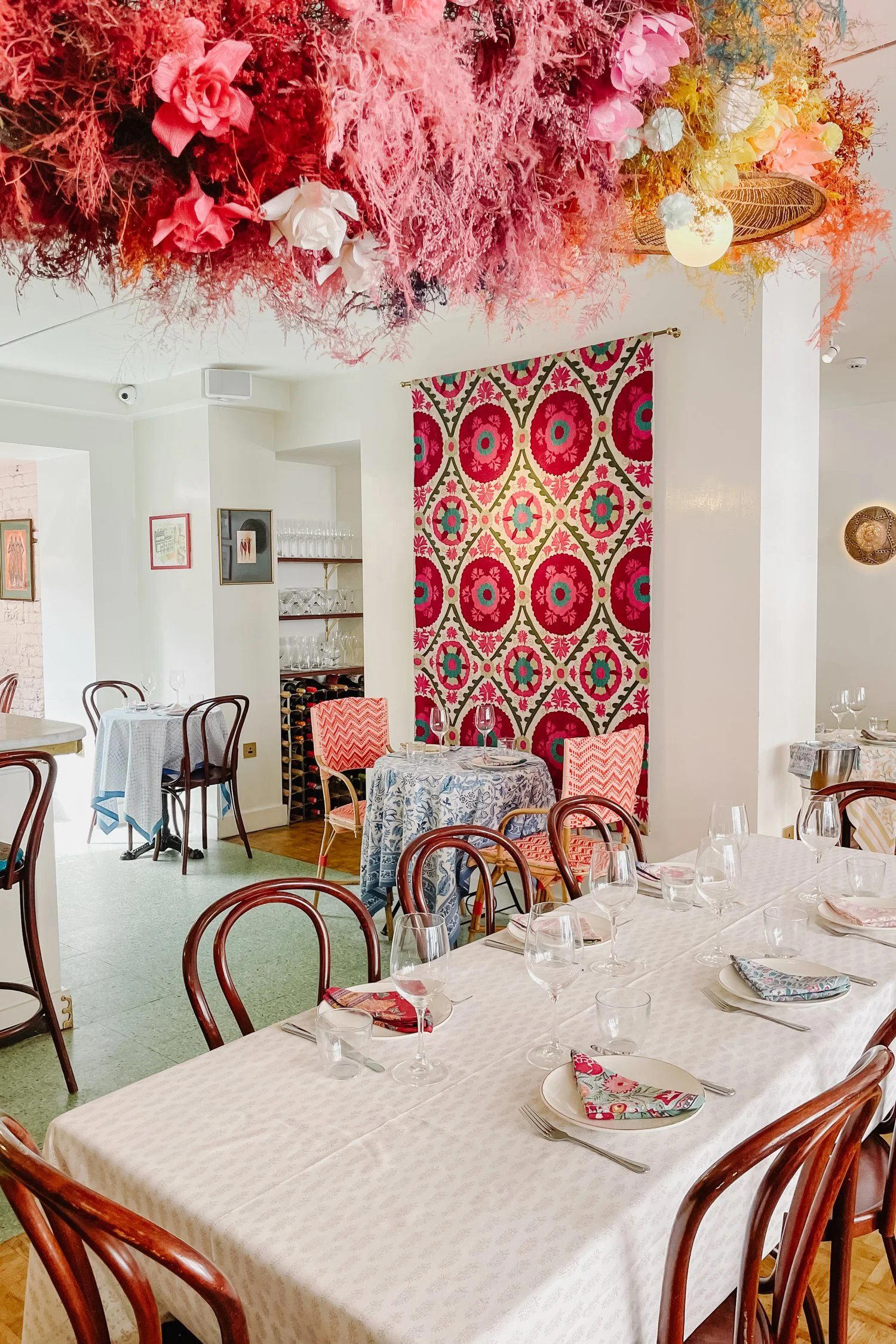
Ravinder Bhogal's Marylebone restaurant has built a following around a kitchen that treats geography as optional. The menu moves between East African coconut curries, Indian-inflected British ingredients, and Southeast Asian-European hybrids with a confidence that feels earned rather than eclectic. The room's pastel tones and homely warmth make it one of the more welcoming addresses in W1.

Pearl is the En Primeur Club membership app, where members save venues, book tables and use the concierge.
The menu
What to order
- Prawn Toast Scotch Egg
- Banana Cake
- Crispy Kale Chaat
- Lamb Shoulder
Where Marylebone Meets a No-Borders Kitchen
London's relationship with cross-cultural cooking has matured considerably over the past decade. Where earlier restaurants often framed hybrid menus as novelty, a newer cohort of kitchens treats the blending of Asian, African, and European traditions as a natural baseline rather than a selling point. Jikoni, on Blandford Street in Marylebone, belongs firmly to that second generation. Since chef and television presenter Ravinder Bhogal opened the restaurant, it has occupied a distinct tier: casual enough to draw families and neighbourhood regulars, technically considered enough to earn sustained critical attention in a London dining scene that does not sustain goodwill lightly.
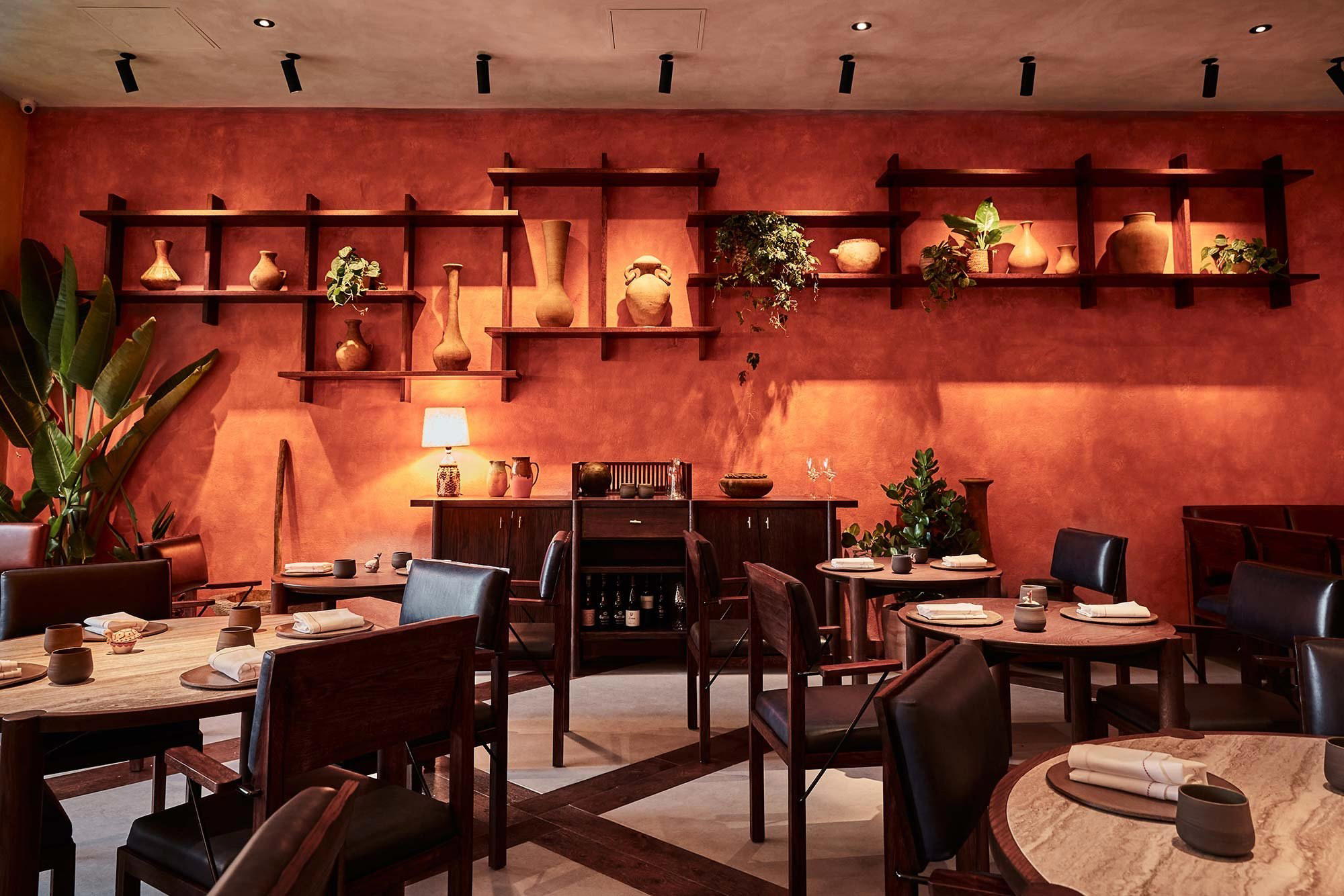
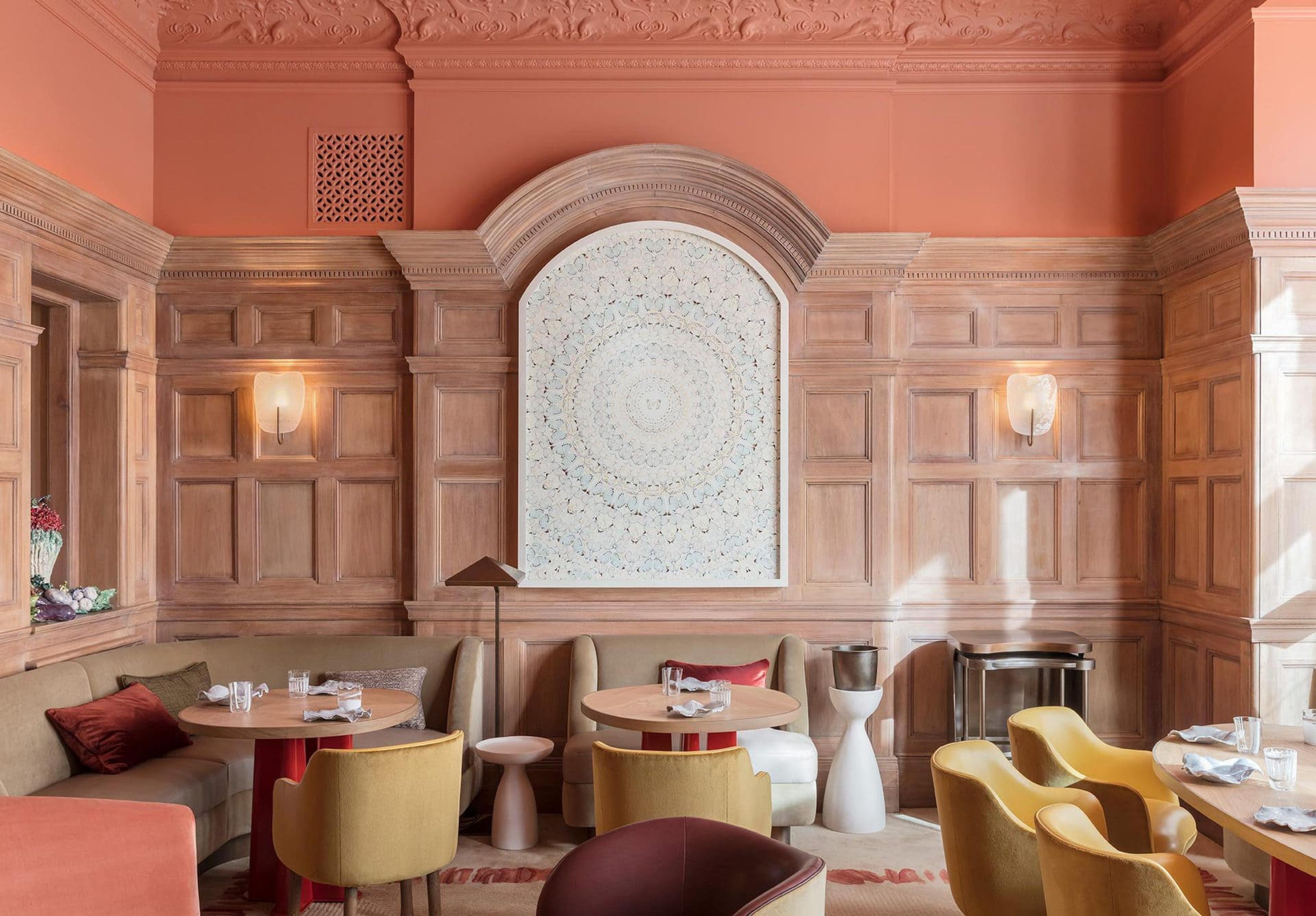
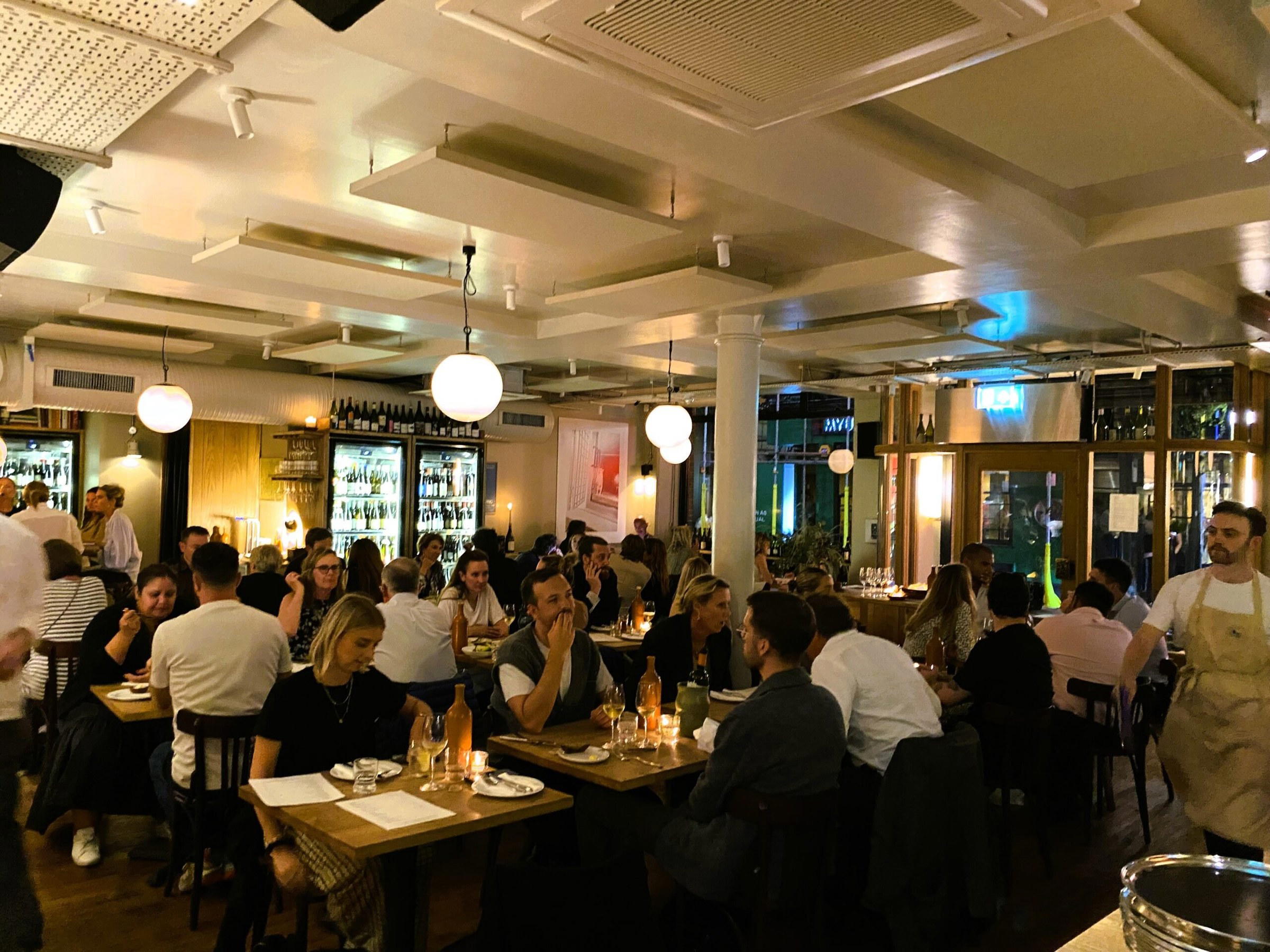
Blandford Street itself sits in an increasingly active corner of W1, close enough to the concentration of high-end addresses around Manchester Square to benefit from foot traffic, yet separate enough to maintain its own character. The room reads domestically: scatter cushions, individually designed napkins, covetable tablecloths, and arty lampshades in shades of peach and pastel pink. That aesthetic is a deliberate signal. This is not the minimalist counter format that dominates the premium end of London dining at places like CORE by Clare Smyth or the grand room formality of Restaurant Gordon Ramsay. Jikoni's register is warmer, more communal, and its queues outside the door are a reliable indicator that the format is working.
Local Ingredients, Global Method
The editorial angle that leading describes Jikoni's kitchen logic is the intersection of imported technique with indigenous British produce. Devon crab appears in courgette fritti alongside avocado and coconut chutney, a dish that runs an Italian frying tradition through East African flavour notes and grounds it in a South West England catch. That approach, using a local or British-sourced ingredient as the anchor and then routing it through a method or spice logic drawn from elsewhere, is what separates Jikoni from restaurants that simply offer an international menu.
The prawn toast Scotch egg is the most-cited example of that method: a format borrowed from British pub tradition, a coating borrowed from Cantonese dim sum culture, and a banana ketchup that reaches toward Filipino and broader Southeast Asian condiment traditions. It is a dish with three passports. Similarly, the Indian riff on pan con tomate applies a technique associated with Catalan home cooking to flavour logic drawn from the subcontinent. Neither dish is trying to be something it is not. Both are the product of a kitchen that has absorbed multiple culinary grammars and uses them with precision.
Larger plates follow the same principle. Kuku paka, a grilled chicken dish paired with spicy coconut sauce, braised collard greens, and saffron rice, draws from East African coastal cooking. The saffron rice introduces a Persian or South Asian note, and the sukuma wiki (braised collard greens) keeps the dish rooted in the Kenyan and Tanzanian tradition from which it originates. The thali-format sharing options extend the logic further: a sweet mango curry with steamed dhokla cake, puri, thoran, and a crispy mini papad for scooping is a meal that covers western India, Kerala, and the general Indian snack tradition within a single spread.
For context on how London's premium kitchens handle British produce through European technique, see The Ledbury, Sketch, The Lecture Room and Library, and Dinner by Heston Blumenthal. Jikoni operates at a different price point and with a different cultural reference set, but the underlying discipline of grounding dishes in ingredient quality while applying learned technique is recognizable across all of them.
The Drinks Program and Why It Matters
Spice-forward kitchens present a genuine challenge for wine and cocktail programs. High tannin reds fight the heat; light-bodied whites can be overwhelmed by coconut or tamarind. Jikoni's response is a selection of spice-friendly wines chosen specifically to work with the menu rather than alongside it. The cocktail list draws from global references to mirror the kitchen's geographic range. Single-estate teas provide a non-alcoholic option with as much specificity as the wine list, and the Toast beer range, brewed from surplus fresh bread, adds a sustainability angle that is also, practically speaking, a product with enough body and breadth to handle the food. These are choices that reflect kitchen thinking applied to the glass, not a drinks list assembled independently.
Where Jikoni Sits in the London Dining Picture
London's broader dining scene rewards category clarity. The city's highest-rated addresses, from The Ledbury to Sketch, tend to operate within recognizable European fine dining frameworks. The most-discussed regional kitchens, whether Korean at Atomix in New York or seafood-focused at Le Bernardin, typically anchor to a single culinary tradition even when they extend it. Jikoni's refusal to anchor is its position. The self-described 'no borders kitchen' is not a marketing phrase; it is an accurate description of a restaurant that has built a coherent identity out of deliberate geographic instability.
That positioning carries a risk: menus without a clear cultural home can read as unfocused. Jikoni avoids that failure by maintaining internal logic within each dish rather than across the menu as a whole. The banana cake with miso butterscotch, peanut brittle, and Ovaltine kulfi at the dessert stage is the most discussed item on the sweet side of the menu, noted in multiple editorial assessments as a dessert that rewards the cultural layering it contains. The strawberry and yuzu roulade, described as bright, airy, and creamy in published reviews, sits in a more European dessert format but uses Japanese citrus to redirect the flavour profile.
For readers building a London itinerary, Jikoni operates in a different register from the city's purely British-focused kitchens. See our full London restaurants guide for a broader picture, including properties like CORE by Clare Smyth and Dinner by Heston Blumenthal. For those travelling beyond London, The Fat Duck in Bray, L'Enclume in Cartmel, Moor Hall in Aughton, Gidleigh Park in Chagford, Hand and Flowers in Marlow, and Le Manoir aux Quat' Saisons in Great Milton represent a range of British fine dining contexts. Our London hotels guide, London bars guide, London wineries guide, and London experiences guide complete the city picture.
Planning Your Visit
Address: 19-21 Blandford Street, London W1U 3DH. Reservations: Demand is high enough to generate queues outside the door; booking in advance is the practical approach. Contact details and current availability should be confirmed directly with the restaurant. Dress: No stated code; the room's casual-smart character sets a comfortable mid-register. Budget: Leading for: Groups comfortable with sharing formats, solo diners interested in snack and thali-style grazing, and anyone whose dining interests run across South Asian, East African, and European cuisine simultaneously.
Frequently asked questions
What's the address for Jikoni?
Jikoni is located at 19-21 Blandford St, London W1U 3DH, United Kingdom, London.
What kind of drinks program does Jikoni run, and does it work with the food?
Jikoni addresses one of the more practical challenges in spice-forward cooking by curating a wine list selected specifically for compatibility with heat and aromatic complexity. Alongside that, the cocktail list draws from a global range of references, and the single-estate teas add a non-alcoholic option with genuine depth. Toast beers, brewed from surplus fresh bread, round out a drinks program that treats the pairing question as seriously as the kitchen treats the food.
What do people recommend at Jikoni?
The banana cake with miso butterscotch, peanut brittle, and Ovaltine kulfi has become the dish most associated with Jikoni, described as rightly renowned by reviewers. The prawn toast Scotch egg with banana ketchup and the kuku paka, grilled chicken in spicy coconut sauce with saffron rice, draw consistent praise. The thali-style sharing combos, which might include sweet mango curry, steamed dhokla cake, and puri, are a practical way to cover the menu's range in a single sitting.
Do I need a reservation for Jikoni?
Yes. Demand is high enough that queues form outside 19-21 Blandford Street, which makes advance booking the practical approach rather than an optional one. Walk-ins are possible but carry real risk of a wait or no table at all.
What's the defining dish or idea at Jikoni?
Ravinder Bhogal, chef, TV presenter, and the restaurant's founder, frames Jikoni as a 'no borders kitchen', drawing on her mixed Asian and African heritage to produce a menu that refuses a single regional category. The logic shows in dishes like an Indian riff on pan con tomate sitting alongside East African kuku paka or Devon crab courgette fritti with coconut chutney. The unifying thread is not geography but a kitchen method that treats global technique and British produce as equally valid starting points.
Can Jikoni accommodate dietary restrictions?
The menu's construction, built around sharing plates, vegetable-forward starters, and thali-style combinations, offers practical flexibility for diners avoiding meat. Dishes such as aloo chaat with burrata and the dhokla-based thali demonstrate a kitchen comfortable working across dietary lines. For specific allergen or dietary requirements, contacting the restaurant at 19-21 Blandford Street, London W1U 3DH directly before booking is advisable.
Standing Among Peers
Comparable venues nearby, for context on price, style, and recognition.
| Venue | Cuisine | Price | Awards | Notes |
|---|---|---|---|---|
| JikoniThis venue (the venue you are viewing) | No Borders Fusion Kitchen | $50–100 | The Good Food Guide GFG Good | Not listed |
| Itto | Asian Fusion | $20–30 | Not listed | Stoke Newington |
| The Alchemist | International Fusion with British Influences | $50–100 | Not listed | Covent Garden |
| Doost & Amici - Flavorful Dishes of Iran to Italy | Persian-Italian Fusion | $20–30 | Not listed | Vauxhall |
| Inamo | Interactive Pan-Asian Fusion | $30–50 | Not listed | Soho |
| Pantechnicon | Modern Japanese-Nordic Fusion | $50–100 | Not listed | Belgravia |
Recognition history
Dated appearances from independent guides and award organizations, with the underlying list record or original source where available.
The Good Food Guide GFG Good
The Good Food Guide