
Black Pearl 1 Diamond
Our verdict
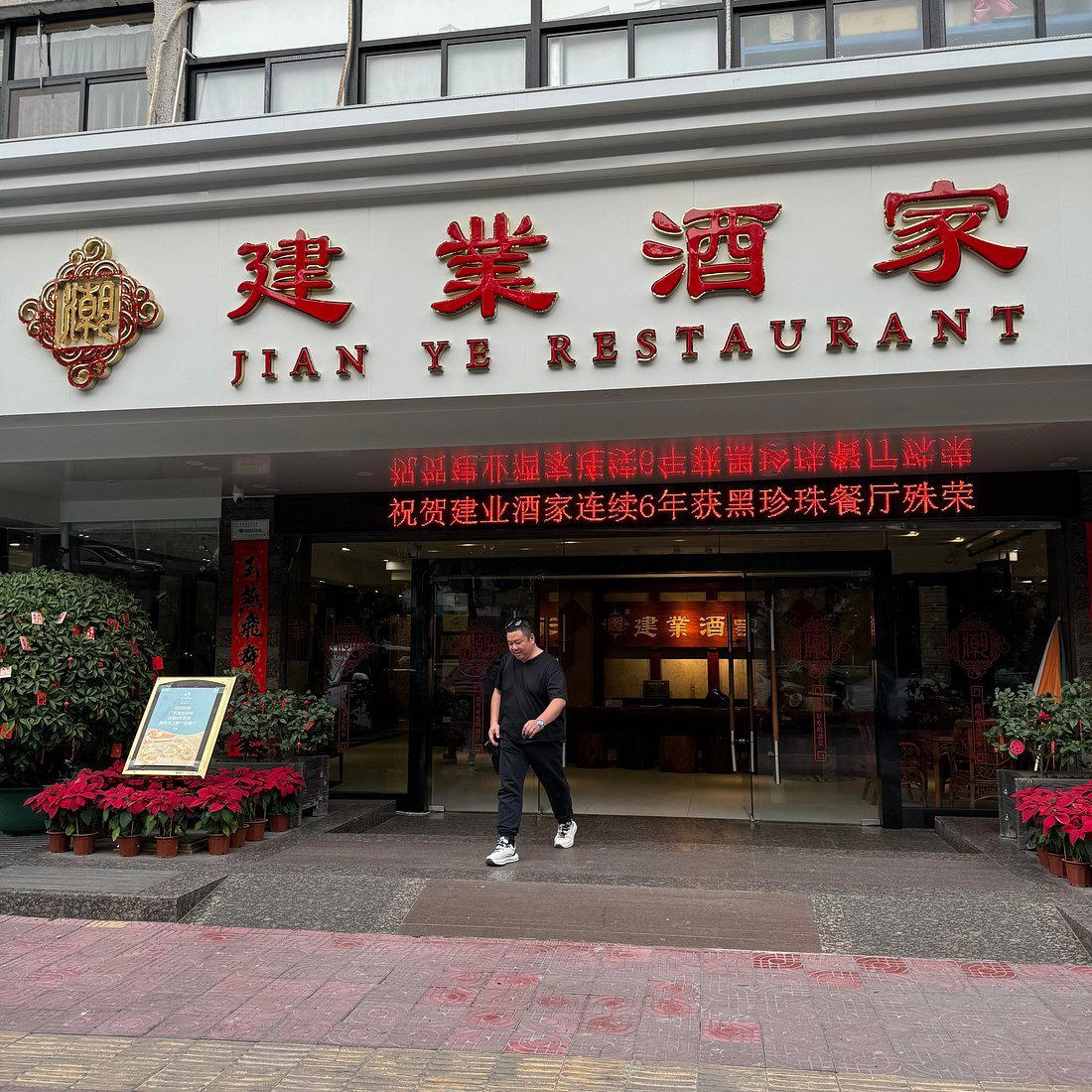
Jianye Restaurant holds a 2025 Black Pearl 1 Diamond award, placing it among Shantou's recognised addresses for Chaoshan cuisine. Located on Fenghuangshan Road in Longhu District, the restaurant operates within a city whose cooking tradition prizes ingredient provenance above almost everything else. For anyone tracing serious Chaoshan food in Guangdong, it belongs on the shortlist.

Pearl is the En Primeur Club membership app, where members save venues, book tables and use the concierge.
The menu
What to order
- Aromatic stewed goose with trimmings
- Braised goose liver
- Raw marinated sand shrimp
- Fish maw soup with lemon
- Braised pork feet
- Fried goose intestines
Shantou and the Ingredient Obsession at the Heart of Chaoshan Cooking
Shantou occupies a specific and demanding position in Chinese culinary geography. The city sits at the mouth of the Han River on Guangdong's eastern coast, and the cooking tradition that developed here, broadly called Chaoshan or Chaozhou cuisine, is built almost entirely around provenance. Where Cantonese cooking in Guangzhou or Hong Kong often synthesises technique and ingredient in roughly equal measure, Chaoshan cuisine tips the scales decisively toward what is on the plate before anything touches the wok. Seafood arrives from the South China Sea fishing grounds that press directly against the coast. Vegetables come from the alluvial plain behind the city. The sauces, particularly the fermented and brined condiments that frame almost every meal, are produced locally and aged according to schedules that haven't changed in generations. This is not a cuisine that imports its identity from elsewhere.
That orientation toward sourcing is what makes Shantou a meaningful destination rather than simply a stop on a broader Guangdong itinerary. The restaurants that carry weight here, including those recognised by structured awards programs, are typically the ones that have maintained purchasing relationships with specific suppliers rather than those with the most elaborate kitchens. Jianye Restaurant, located at 10 Fenghuangshan Road in Longhu District, holds a 2025 Black Pearl 1 Diamond designation, which places it within the tier of Chinese restaurants that the Black Pearl Guide considers reliably strong on food quality and sourcing discipline.
What the Black Pearl Recognition Signals in This Context
The Black Pearl Restaurant Guide, now in its sixth year of publication, functions as China's most prominent domestic fine-dining benchmark. Its 1 Diamond tier covers restaurants that meet a consistent quality threshold without necessarily reaching the rarefied bracket of its 2 and 3 Diamond designations. For a city like Shantou, which does not attract the volume of international food press that Shanghai or Beijing commands, a Black Pearl listing is a meaningful signal. In Shantou specifically, that recognition carries weight because the city's dining scene is not one that generates press visibility easily, making third-party validation more useful than it would be in a higher-profile market.
For comparison, other decorated Chinese tables operating at higher intensity include Chef Tam's Seasons in Macau and Dai Yuet Heen in Nanjing, both of which benchmark what serious Chinese cooking looks like at the top of the award tiers. Jianye operates in different territory, but the principle connecting them is the same: sourcing accountability as the primary expression of kitchen philosophy.
Longhu District and the Physical Approach
Fenghuangshan Road runs through Longhu District, one of Shantou's more developed commercial and residential zones on the city's eastern side. The district sits away from the older port quarter that defines Shantou's historical character but has developed into a recognisable dining address over the past decade. Approaching from central Shantou, the neighbourhood feels orderly rather than atmospheric in the old-town sense, with the kind of mid-rise built environment that characterises newer Chinese urban development. What matters at the street level is what's being cooked, not the architectural backdrop.
Shantou's dining scene as a whole rewards some patience in orientation. Visitors coming from other Guangdong cities, particularly those who have spent time at the kind of Cantonese addresses represented by Wu Modern Chao or the more formal register of Lin Mansion, will notice that Shantou's better restaurants tend to operate with less ceremony around service format and more concentration on the ingredients themselves. Zhuhai represents another point of comparison within the city's range. The full Shantou restaurants guide maps the broader field if you're building a multi-meal itinerary.
Sourcing as the Defining Variable in Chaoshan Dining
Any serious account of Chaoshan cooking returns to a single variable: where the food comes from. The cuisine's most celebrated preparations, from braised goose to raw marinated crab to the cold poached seafood that structures many banquet-style meals, depend on ingredient quality in a way that makes sourcing not a supporting consideration but the central one. A restaurant working with lesser-grade product cannot compensate through technique the way a French kitchen might rescue an inferior cut through sauce work. The cooking is too transparent for that. Steaming, gentle braising, and room-temperature presentations all expose the ingredient directly.
This is what distinguishes the better Shantou tables from their regional peers at the same price tier. The question being asked of every kitchen is not primarily whether the cook is skilled but whether the purchasing is disciplined. Black Pearl's evaluation methodology, which involves anonymous visits and comparative benchmarking across categories, tests precisely that. A 1 Diamond result for a Shantou restaurant is, in practical terms, a finding about sourcing consistency as much as it is about cooking execution.
For context on how ingredient sourcing drives recognition at different scales internationally, the contrast with technical-forward Western fine dining is instructive. Tables like Le Bernardin in New York City or the Korean fine-dining approach visible at Atomix in New York City both foreground ingredient provenance within a heavily technique-mediated framework. Chaoshan cooking arrives at a similar conclusion through the opposite route: minimal intervention applied to ingredients selected with the same seriousness.
Planning a Visit
Jianye Restaurant is at 10 Fenghuangshan Road, Longhu District, Shantou, Guangdong Province. Shantou is accessible by high-speed rail from Guangzhou (approximately two hours on the G-class service) and has its own airport with connections to major mainland cities. Longhu District is reachable from the city centre by taxi or ride-hailing apps, which are the practical transport options within Shantou. The Black Pearl designation applies to the 2025 guide cycle.
For a fuller picture of what Shantou offers beyond dining, the Shantou hotels guide, bars guide, wineries guide, and experiences guide cover the remaining categories. For comparable sourcing-focused Chinese cooking in other cities, Xin Rong Ji in Chengdu and Dingshan·Jiangyan (Xiangcheng) in Suzhou represent points of reference in different regional traditions. 102 House in Shanghai occupies a different register entirely but illustrates how ingredient-forward positioning reads across the broader Chinese fine-dining market.
Frequently asked questions
What awards or recognition does JianyeResturant have?
JianyeResturant has received recognition including: Black Pearl 1 Diamond (2025).
Is Jianye Restaurant good for families?
Chaoshan dining at the level signalled by Jianye's 2025 Black Pearl 1 Diamond recognition typically centres on shared-plate formats, which suit group and family meals well. The cuisine's structure, built around multiple dishes served communally rather than individual courses, makes it practical for tables of mixed ages. Shantou's dining culture broadly skews family-oriented, and restaurants in this tradition tend to accommodate larger groups as a matter of course.
What kind of setting is Jianye Restaurant?
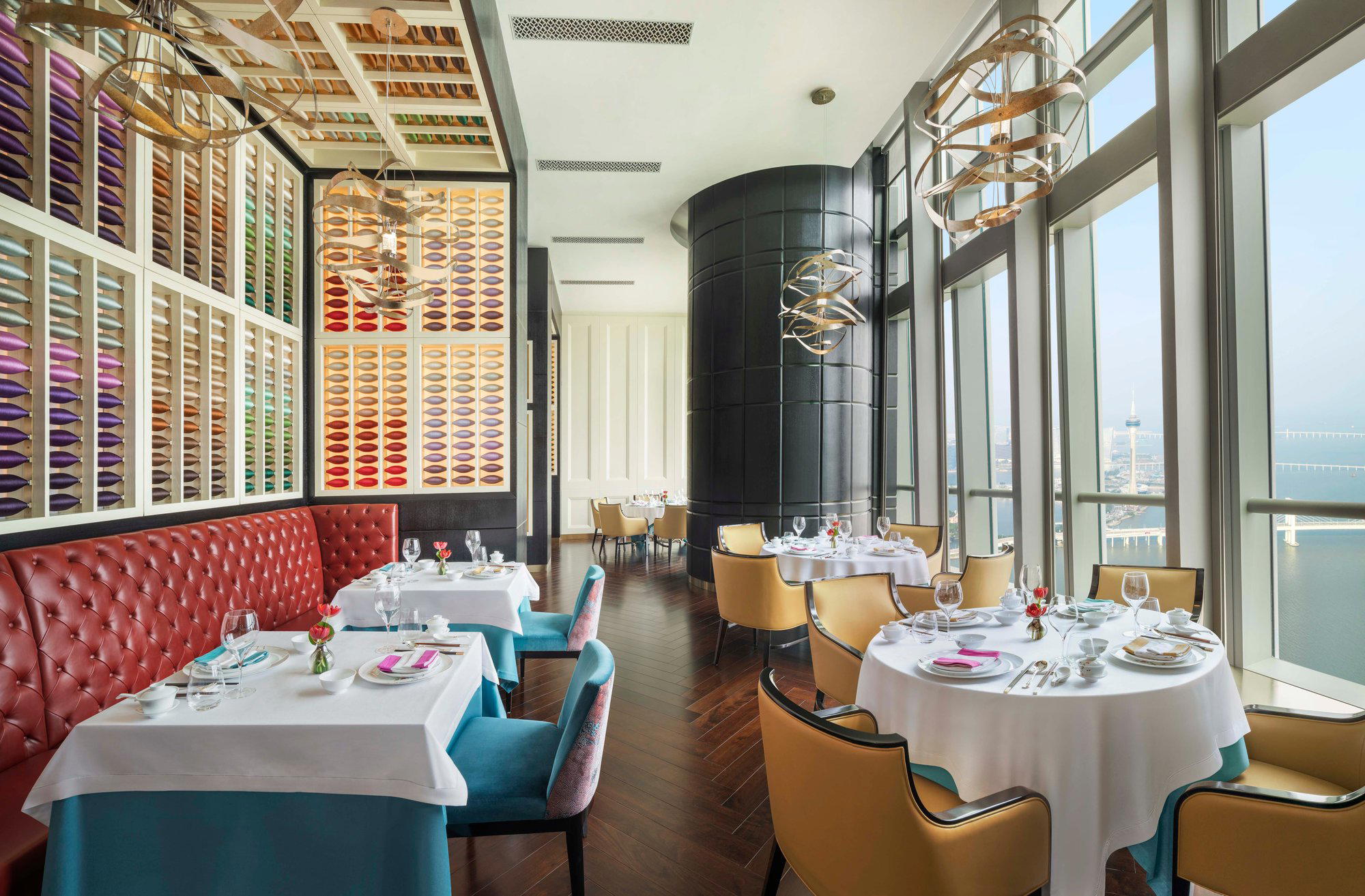
The restaurant sits on Fenghuangshan Road in Longhu District, one of Shantou's more developed commercial and residential zones on the city's eastern side. That placement puts it in a contemporary urban context rather than the older waterfront neighbourhoods closer to the city centre. A Black Pearl 1 Diamond listing in 2025 places it within China's domestic fine-dining tier, which generally implies considered interiors and table service calibrated to the food.
Comparable Spots, Quickly
Comparable venues nearby, for context on price, style, and recognition.
| Venue | Cuisine | Price | Awards | Notes |
|---|---|---|---|---|
| JianyeResturantThis venue (the venue you are viewing) | Traditional Chaozhou Cuisine | $30–50 | Black Pearl 1 Diamond | Not listed |
| Chaoshan Taste Zhuhai | Modern Chaoshan (Teochew) Cuisine | Not listed | La Liste Top Restaurants | East Coast Area |
| Wu Modern Chao | Modern Chaozhou Fine Dining | Not listed | Black Pearl 1 Diamond | Zhugang New Town |
| LIN MANSION | Modern Teochew Fine Dining | Not listed | Black Pearl 1 Diamond | Longhu District |
| Zhuhai | Modern Chaoshan (Teochew) Cuisine | $150–200 | Black Pearl 2 Diamond | East Coast Area |
| Hokkien Huay Kuan | Fujian Fine Dining | Not listed | Black Pearl 1 Diamond | Xuhui District |
Recognition history
Dated appearances from independent guides and award organizations, with the underlying list record or original source where available.
Black Pearl 1 Diamond
Black Pearl
Full recognition history (2 entries)
Black Pearl 1 Diamond
Black Pearl
Continue exploring
More in Shantou
Details
- Classic
- Well Known
- Elegant
- Group Dining
- Family
- Celebration
- Business Dinner
- Special Occasion
- Private Dining
- Historic Building
- Local Sourcing
- Family Style
- Set Menu
Current opening hours
- Monday
- 11 AM–9 PM
- Tuesday
- 11 AM–9 PM
- Wednesday
- 11 AM–9 PM
- Thursday
- 11 AM–9 PM
- Friday
- 11 AM–9 PM
- Saturday
- 11 AM–9 PM
- Sunday
- 11 AM–9 PM
Hours can change for holidays and private events. Hours as of .
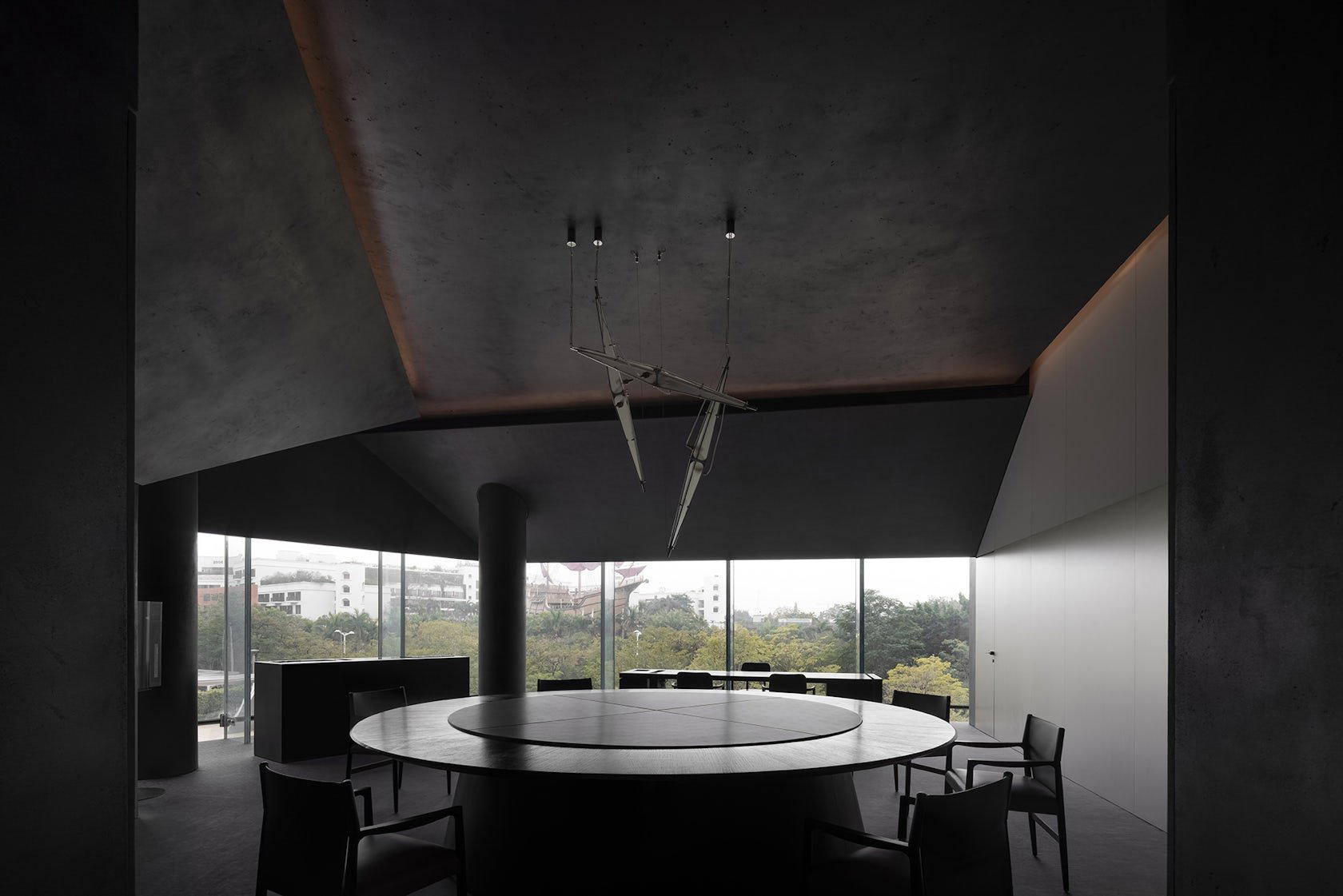
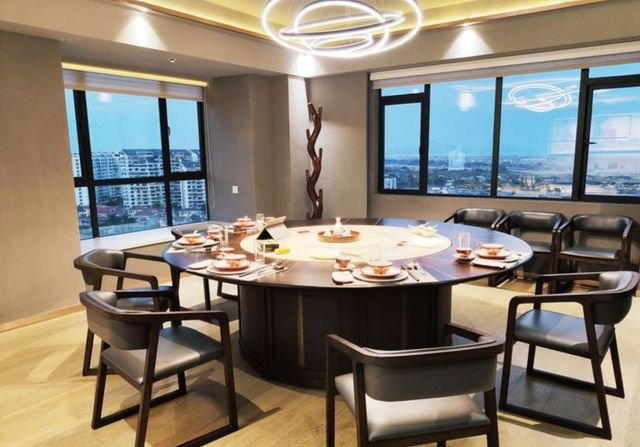
Large, imposing establishment with heavy, old furnishings; spacious main hall with numerous private dining rooms of varying sizes; described as having a somewhat dated, traditional aesthetic with occasional musty odors reported in private rooms.