Jeong


Michelin Plate
Our verdict
A compact, ultra-modern Korean restaurant on West Chicago Avenue, Jeong applies classical technique to Korean flavors with results that have earned consecutive Opinionated About Dining rankings and a Michelin Plate. The kitchen operates Wednesday, Thursday, and Saturday evenings only, with a format that rewards those who plan ahead. For serious diners tracking Chicago's fine-dining edge, it belongs in the same conversation as Kasama and Ever.

Pearl is the En Primeur Club membership app, where members save venues, book tables and use the concierge.
The menu
What to order
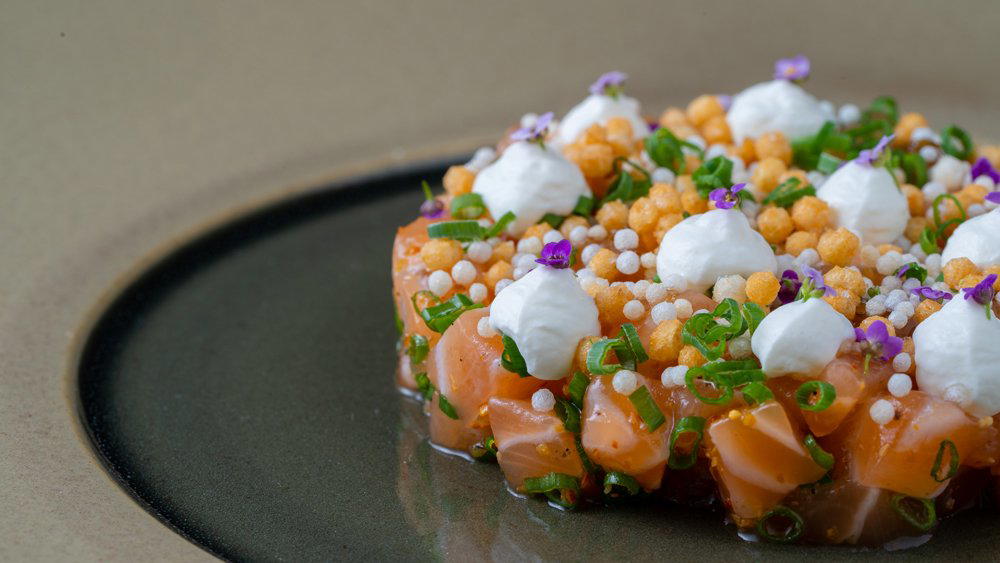
- Salmon tartare with doenjang yuzu gastrique
- Seared scallop with clementine beurre blanc
- Duck breast with soy glaze
- Wagyu with kimchi truffle emulsion
- Rice cakes with chili sauce
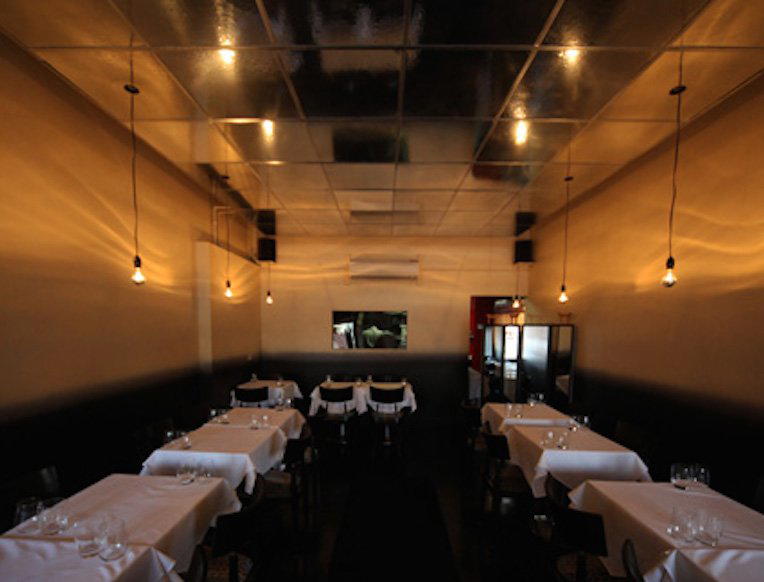
West Chicago Avenue does not announce itself as a fine-dining corridor. The stretch near Racine runs past auto repair shops and corner grocery stores before a narrow, dark-fronted room signals a shift in register. Jeong's interior reads spare and considered: clean lines, restrained lighting, and a quietness that places the emphasis firmly on what arrives at the table. It is the kind of room that feels designed to eliminate distraction rather than create atmosphere, and that choice communicates something deliberate about priorities.
Korean Fine Dining in Chicago's Competitive Upper Tier
Chicago's top-tier restaurant scene operates in a bracket where the competitive comparisons matter. Alinea, Smyth, and Oriole anchor the Michelin three-star tier. Below that, a dense cluster of single-star and Michelin Plate restaurants works across cuisines and formats. Kasama has claimed the flagship position for Filipino fine dining; Ever operates in the modernist American lane. Jeong holds a distinct position as the city's most-cited fine-dining Korean address, building a record through three consecutive Opinionated About Dining recognitions, including a ranking of #154 in North America in 2024 and #169 in 2025, alongside a Michelin Plate. That trajectory, OAD Highly Recommended in 2023, then ranked in both subsequent years, reflects a kitchen that has found its footing and pressed forward.
The comparison that carries most weight is Atomix in New York City, which occupies the flagship position for Korean tasting-menu dining in the United States. Jeong operates at a smaller scale and without Atomix's international recognition infrastructure, but the editorial framing is similar: Korean technique and flavor logic applied through a fine-dining lens, with the result assessed on its own culinary terms rather than as fusion or novelty. That framing is now common enough across American cities that it has established its own competitive tier.
The Banchan Logic at Jeong
Traditional Korean dining is structured around accompaniment. The main dish arrives surrounded by a spread of banchan, fermented, pickled, braised, dressed, each prepared with its own technique and intended to be eaten in combination with others and with rice. The philosophy is not sequential but simultaneous: variety, contrast, and the interplay of flavors across the table at once. That logic shapes how a kitchen thinks about balance, and it leaves a mark on how a chef trained in that tradition approaches even a non-banchan plate.
At Jeong, the banchan framework does not disappear inside a Western tasting-menu format; it informs it. The kitchen, led by chef Dave Park, applies a preparation depth to each component that reflects the idea that nothing on the plate is incidental. The doenjang yuzu gastrique that OAD's reviewers cited atop a salmon tartare, a fermented soybean paste with the brightness of yuzu worked into an acidic reduction, represents exactly that kind of thinking: a Korean fermentation tradition translated into a French sauce form, neither one overriding the other. Crème fraîche quenelles and crunchy rice crackers on the same plate extend the textural and temperature layering that banchan tradition makes natural. The kitchen is applying a cumulative, multi-component logic to individual dishes rather than to the table as a whole.
The same intelligence appears in the OAD-cited preparation of kimchi and braised and fried octopus in a sweet and sour peach sauce. Kimchi's lacto-fermented complexity is a flavor anchor; peach provides sweetness and acidity; the octopus arrives in two textures from braising and frying. That is three distinct preparations working in one bowl, and the instinct behind it belongs to the banchan tradition of building contrast and completeness at the same time.
Where Jeong Sits in the Broader American Korean Fine Dining Scene
Korean fine dining has developed unevenly across American cities. New York has the deepest bench, with Atomix leading and several other addresses operating in adjacent tiers. Los Angeles has a large Korean-American community that supports both traditional and contemporary formats. Chicago's version is thinner, which makes Jeong's sustained OAD presence more significant as a signal: the city has a Korean fine-dining address that registers nationally, not just locally.
The broader trajectory for this category mirrors what happened to Japanese fine dining in the United States over the past two decades. What began as a niche position has expanded into a recognized tier with its own reference points, price expectations, and critical vocabulary. Le Bernardin in New York City, Lazy Bear in San Francisco, The French Laundry in Napa, Providence in Los Angeles, and Single Thread Farm in Healdsburg each represent a cuisine tradition fully absorbed into American fine dining's top tier. Korean fine dining in the US is earlier in that process, and addresses like Jeong are part of the infrastructure that makes the category legible to serious diners. For reference, 8 1/2 Otto e Mezzo Bombana in Hong Kong shows what a non-native cuisine can achieve when technique and cultural translation are both taken seriously over time.
The $$$$-tier price range at Jeong places it inside Chicago's premium dining bracket alongside addresses like Kasama. At that price point, the expectation is a structured, multi-course format with considered sourcing and a kitchen operating at full creative capacity. Emeril's in New Orleans helped establish the template for chef-driven premium dining in American cities outside New York; Jeong's position on West Chicago Avenue follows a similar logic of planting a serious kitchen in a neighborhood that does not historically signal fine dining.
Format and Practical Considerations
Jeong operates Wednesday, Thursday, and Saturday evenings only, from 5 to 9:30 pm. The Monday, Tuesday, and Friday closure is not unusual for kitchens at this scale, where controlling service volume is part of maintaining consistency. The address is 1460 W Chicago Ave, Chicago, IL 60642, in the West Town neighborhood.
For a fuller picture of Chicago's dining scene at this tier, see our full Chicago restaurants guide. For planning a wider visit, our Chicago hotels guide, bars guide, wineries guide, and experiences guide cover the rest of the city's premium tier.
Know Before You Go
- Address: 1460 W Chicago Ave, Chicago, IL 60642
- Hours: Wednesday, Thursday, Saturday 5:00–9:30 pm. Closed Monday, Tuesday, Friday.
- Price range: $$$$
- Chef: Dave Park
- Awards: Opinionated About Dining Leading Restaurants in North America #169 (2025); #154 (2024); Michelin Plate (2024); OAD Highly Recommended (2023)
- Neighbourhood: West Town, Chicago
Frequently asked questions
What's Jeong's location?
Jeong is located at 1460 W Chicago Ave, Chicago, IL 60642, Chicago.
Comparable Spots, Quickly
A quick peer reference to anchor this venue in its category.
| Venue | Cuisine | Price | Awards | Notes |
|---|---|---|---|---|
| JeongThis venue (the venue you are viewing) | Modern Korean Tasting Menu | $50–100 | Michelin Plate | Not listed |
| Alinea | Avant-Garde Molecular Gastronomy | $300–500 | 2 Michelin Stars · World's 50 Best #37 | Progressive American, Creative |
| Smyth | Modern American Tasting Menu | $200–300 | 3 Michelin Stars · World's 50 Best #1 | Progressive American, Contemporary |
| Kasama | Modern Filipino | $30–50 | 2 Michelin Stars · World's 50 Best #31 | Filipino |
| Next Restaurant | Avant-Garde Themed Tasting Menus | Not listed | 1 Michelin Star · We're Smart World 2 Radishes | American Cuisine |
| Boka | Modern American Seasonal Fine Dining | $150–200 | 1 Michelin Star · La Liste Top Restaurants | New American, Contemporary |
Recognition history
Dated appearances from independent guides and award organizations, with the underlying list record or original source where available.
Michelin Plate
Michelin
Opinionated About Dining Top Restaurants in North America Recommended
Opinionated About Dining
Full recognition history (6 entries)
Opinionated About Dining Top Restaurants in North America Ranked #169
Opinionated About Dining
Michelin Plate
Michelin
Opinionated About Dining Top Restaurants in North America Ranked #154
Opinionated About Dining
Opinionated About Dining Top Restaurants in North America Highly Recommended
Opinionated About Dining
Continue exploring
More in Chicago
Restaurants in Chicago
All restaurants in Chicago →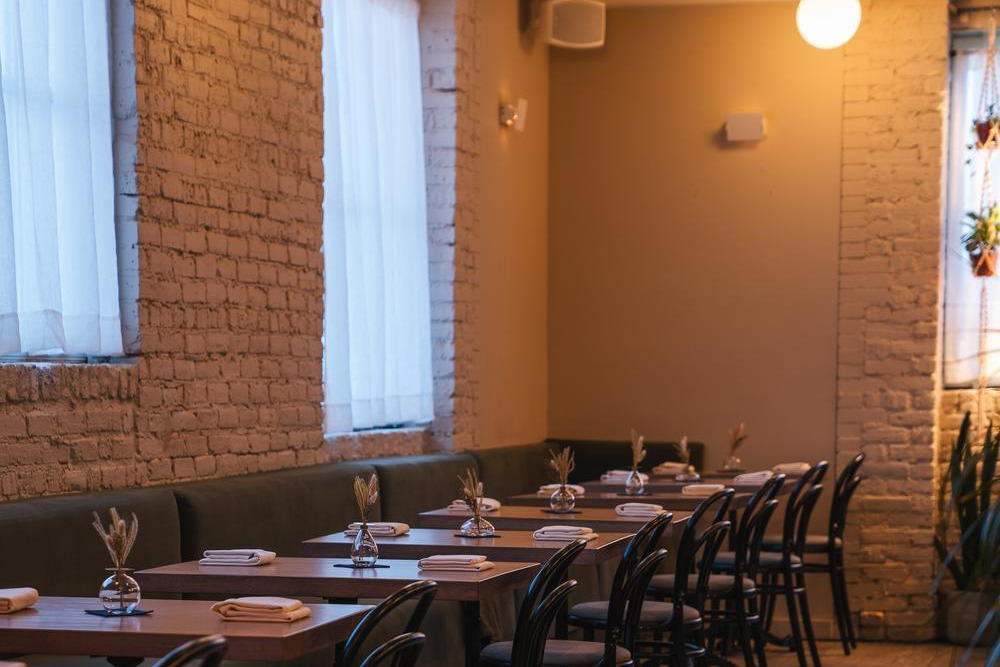
Bars in Chicago
All bars in Chicago →

Details
- Elegant
- Intimate
- Modern
- Sophisticated
- Date Night
- Special Occasion
- Celebration
- Open Kitchen
- Design Destination
- Standalone
- Craft Cocktails
- Sake Program
- Extensive Wine List
- Farm To Table
- Tasting Menu
- A La Carte
- Craft Cocktails
- Sake
- Wine Pairings
- Pescatarian Friendly
- Allergy Accommodating
- Vegetarian Friendly
Current opening hours
- Monday
- Closed
- Tuesday
- Closed
- Wednesday
- 5–9:30 PM
- Thursday
- 5–9:30 PM
- Friday
- 5–9:30 PM
- Saturday
- 5–9:30 PM
- Sunday
- Closed
Hours can change for holidays and private events. Hours as of .
Serene and contemporary with subdued gray palette and wood accents; intimate and welcoming atmosphere with tables close together; described as elegant yet unpretentious with warm, family-like service.