Jean Sulpice





Holding two Michelin stars at the Auberge du Père Bise on the shores of Lake Annecy, Jean Sulpice operates a single set menu built around the lake's fish, alpine herbs, and wild plants. The lakeside terrace and contemporary dining room together create a setting that earns the cooking's precision. Wine Director Maéva Rougeoreille oversees a 30,000-bottle cellar priced at the higher end of the regional scale.
Pearl is the En Primeur Club membership app — saves, bookings, and concierge access live there. Same editors, same standards.
- Address
- 303 Rte du Port, 74290 Talloires-Montmin, France
- Phone
- +33 4 50 60 72 01
- Website
- perebise.com
- Directions
- Get directions
 Saves & bookings on Pearl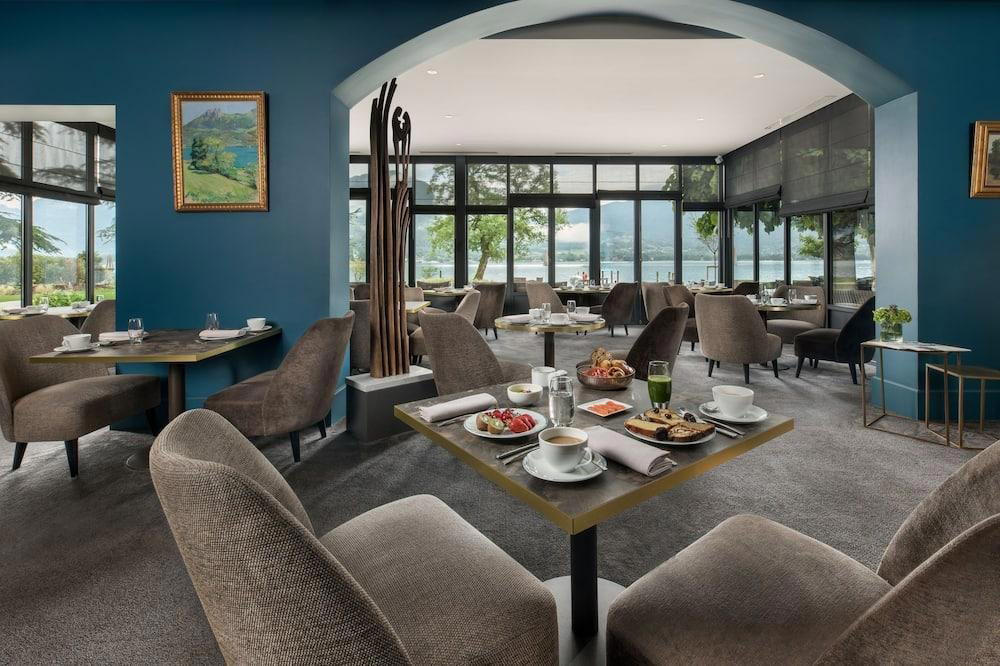
Lake, Mountain, and the Logic of a Single Menu
There is a particular discipline required of a kitchen that commits to one set menu and no alternatives. No à la carte safety net, no crowd-pleasing concessions, just a single sequence that must justify every course by the standards of the landscape it draws from. At the Auberge du Père Bise in Talloires-Montmin, on the southeastern shore of Lake Annecy, that discipline sits at the centre of Jean Sulpice's two-Michelin-star program. The lake is not backdrop here; it is ingredient list, seasonal calendar, and creative constraint all at once.
Lake Annecy is one of the cleanest freshwater lakes in Europe, and its fish, féra, omble chevalier, perch, carry that clarity into the kitchen. Alpine cooking at this elevation and ambition tends to resolve itself into one of two directions: the richness of Savoie cheesemaking tradition, or the lighter, more mineral register that cold, clean water and high-altitude herbs suggest. Sulpice works firmly in the second register. The menu's profile is deliberately light and health-conscious, shaped by wild herbs, flowers, and plants gathered from the surrounding terrain. That sourcing philosophy places the restaurant in a broader conversation about French regional gastronomy, alongside addresses such as Bras in Laguiole, where the kitchen's relationship with the natural environment defines the creative vocabulary as much as classical technique does.
What the Setting Does to the Experience
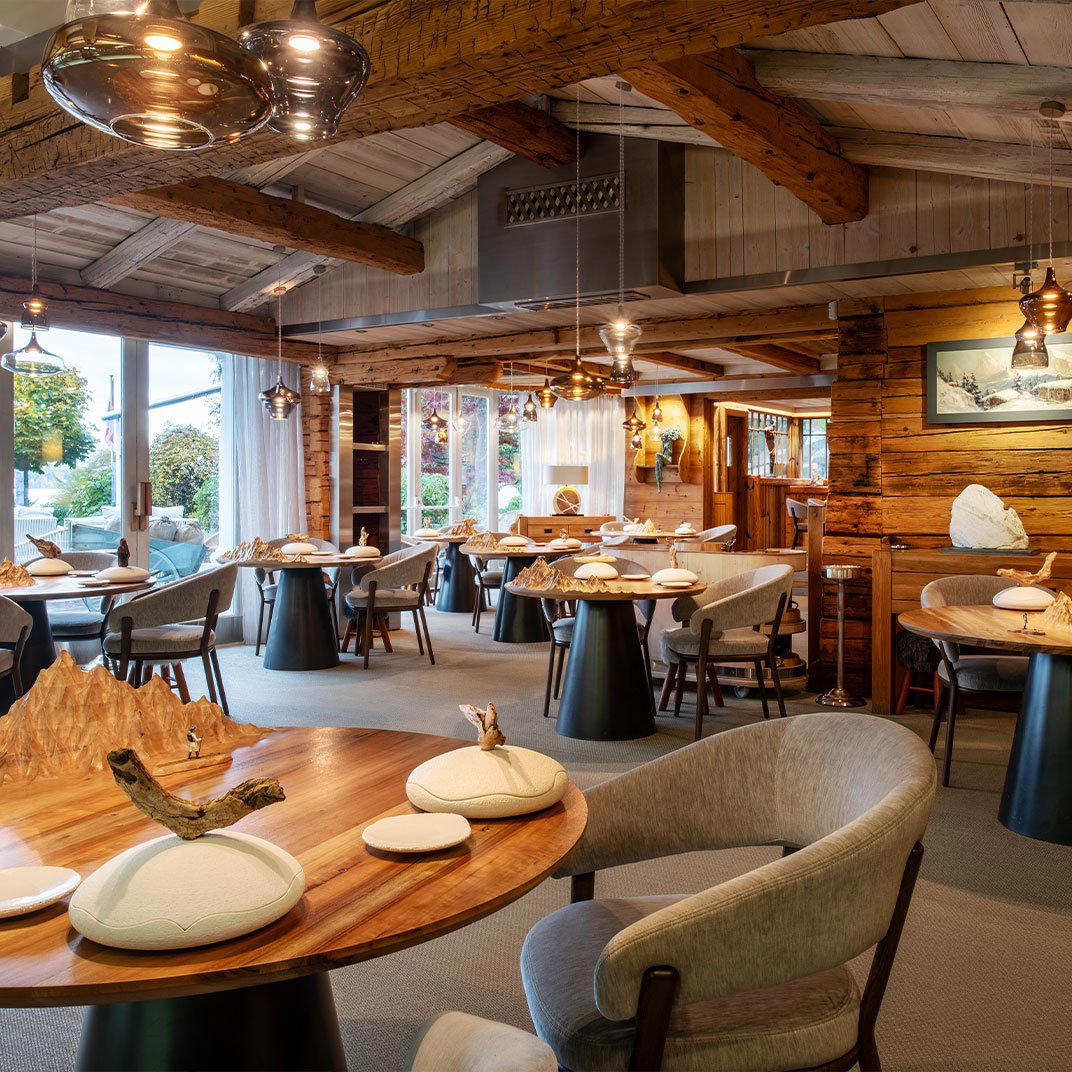
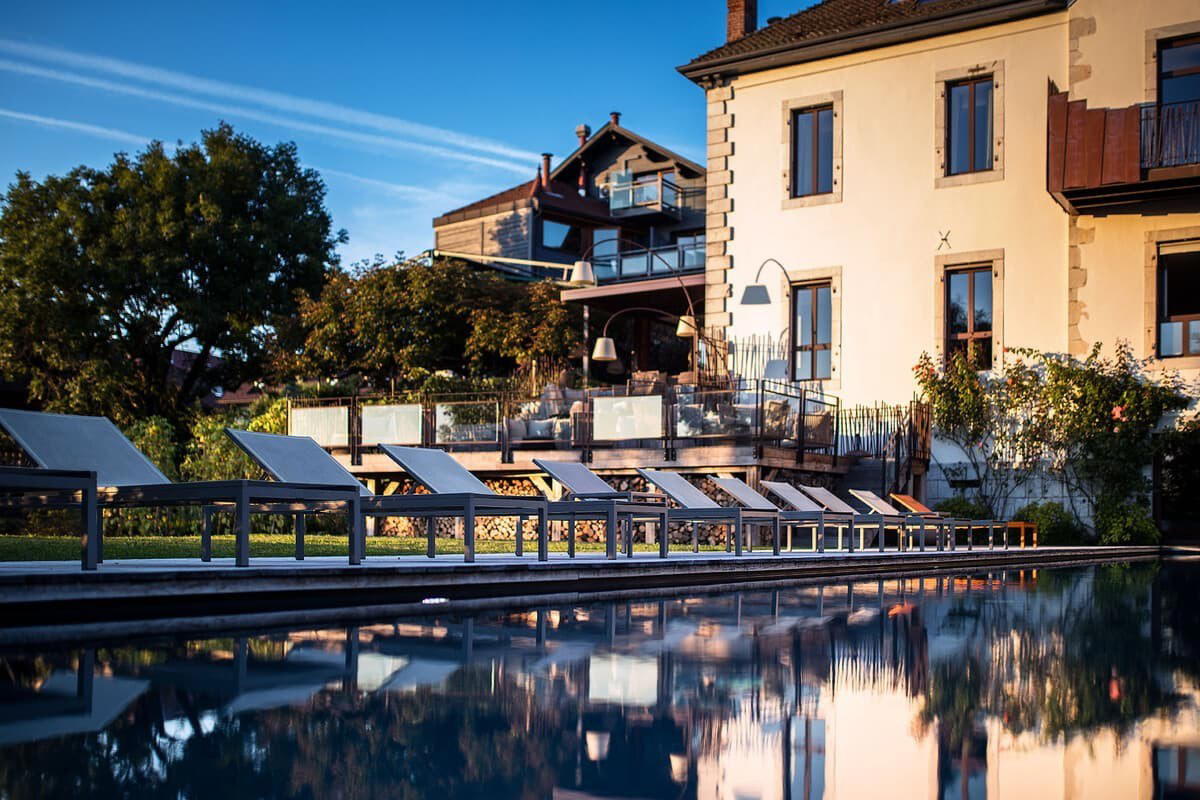
Approaching from the Route du Port, the property's position becomes clear before the dining room does: the lake fills the sightline, and the terrace extends toward the water with a directness that feels almost architectural in intent. Inside, the contemporary dining space has been designed to hold that view rather than compete with it, a deliberate restraint that concentrates attention on both the landscape and the plate. Michelin's assessment notes the lakeside terrace's view of the crystal-clear waters as bordering on hypnotic, which is a rare moment of unguarded language from an organisation not given to it.
The physical setting matters because it shapes what the menu is allowed to do. When the provenance of ingredients is visible through the dining room window, the relationship between sourcing and cooking becomes legible to the guest in a way that no amount of menu annotation can replicate. Restaurants at this level of alpine specificity, Flocons de Sel in Megève operates in a comparable register, use terrain as a framing device that elevates the sourcing narrative from information to experience.
Ingredients as Editorial Argument
The creative program at Jean Sulpice reads as an argument for restraint and precision rather than accumulation. Wild herbs, flowers, and plants are not garnishes here; they carry the contrast and colour that a more conventionally structured menu might derive from sauce work or rich emulsions. This is a technically demanding position. Getting flavour intensity from plant matter that lacks the fat content of butter-led alpine cuisine requires both sourcing discipline and kitchen craft.
Fish from the lake anchors the savoury progression. Féra and omble chevalier from Lake Annecy have long held a place in Savoyard cooking, but the treatment here moves away from the classical lake-fish preparations, meunière, gratin, toward a lighter, more architecturally considered approach. The ceramic tableware noted in Michelin's commentary is not incidental detail: the choice of vessel at this level of cooking is part of the sourcing statement, locating the food within a material world that shares the same values as the ingredients themselves.
For guests with vegetable-forward preferences, the kitchen asks that this be communicated at the time of reservation. That request opens a parallel creative track: Jean Sulpice's response to a vegetable brief is described as going well beyond simple substitution, treating the constraint as an opportunity. This flexibility within a fixed-format menu is worth noting because it reflects how seriously the kitchen takes sourcing integrity across dietary frameworks, not an afterthought, but a considered extension of the same ingredient philosophy.
The Wine Program
Wine Director Maéva Rougeoreille oversees a cellar of 30,000 bottles across 4,500 selections, with a program weighted toward French producers and priced firmly in the upper range, many bottles at €100 and above. At this scale, the list functions less as a companion document to the menu and more as a secondary collection in its own right. Corkage is offered at €100 for guests bringing their own bottles, which signals a cellar confident enough in its own depth not to discourage the practice.
The Savoie and Rhône valleys are logical anchors for a list of this geography, and the French focus gives the pairing program strong regional coherence. Comparing to the wine-forward positioning of addresses like Alléno Paris au Pavillon Ledoyen or Mirazur in Menton, both operating at comparable gastronomic ambition, the Jean Sulpice cellar is substantial rather than exhaustive, its strength lying in depth within French appellations rather than global breadth.
Front of House and the Management Standard
At two-Michelin-star level, service is not a soft consideration. It is one of the three criteria, alongside food and setting, that determines whether the overall experience justifies its price point. The front-of-house team at the restaurant, led by Coline Humbert, draws direct praise in Michelin's citation for setting an elegant and cheerful tone. That combination is harder to achieve than it sounds: formal service tends toward solemnity, and informal service at this price tier often reads as underprepared. The balance Humbert sets, professionally managed, never stiff, is what allows a meal of this ambition to feel welcoming rather than performative.
The staff's management is described in the venue's own record as exemplary, with language that emphasises guests feeling genuinely welcomed rather than processed. In a region with strong competition across the top tier, including the Auberge du Père Bise itself as a historic address, and comparable regional addresses such as Troisgros in Ouches, Paul Bocuse in Collonges-au-Mont-d'Or, and Auberge de l'Ill in Illhaeusern, the service standard at the restaurant is noted as a competitive strength rather than a baseline.
Talloires-Montmin's Place in French Gastronomic Geography
Talloires-Montmin sits at an intersection that matters for serious restaurant travel. It is within reach of Annecy, Geneva, and Lyon, three cities with strong dining cultures, yet operates at a remove that demands intentionality. You come here for the lake and the specific register of alpine cooking it inspires; there is no passing foot traffic driving covers. That isolation has historically sustained a cluster of serious addresses: L'Auberge de Montmin, Le 1903, and Les Terrasses at Le Cottage Bise each occupy different price points and formats within the same geographic pocket, making the area function as a legitimate gastronomic destination rather than a one-address detour.
The restaurant holds the top tier within that local set, with the two-star rating distinguishing it clearly from the €€€ addresses nearby. For travellers planning a visit, the question is whether the single-menu format aligns with their dining rhythm. If it does, the combination of sourcing, setting, and service places it among the more coherent high-altitude French restaurants, comparable in creative ambition and alpine logic to JAN in Munich or Enrico Bartolini in Milan in the broader creative European dining circuit.
Planning Your Visit
The restaurant is located at 303 Route du Port, Talloires-Montmin, accessible by car from Annecy in under thirty minutes. Lunch and dinner are both served, and the single set menu format means the kitchen can be contacted at the time of booking to flag vegetable-preference requirements, worth doing in advance rather than on arrival, as the kitchen's response to that brief is a considered one.
Pricing, Compared
Comparable venues nearby, for context on price, style, and recognition.
| Venue | Cuisine | Price | Awards | Notes |
|---|---|---|---|---|
| Jean SulpiceThis venue — the venue you are viewing | Creative | $$$$ | Michelin 2 Star | Not listed |
| L'Auberge de Montmin | Not listed | $$$$ | Michelin 2 Star | Col de la Forclaz, Seasonal French Fine Dining |
| Auberge du Père Bise | Not listed | $$$$ | Not listed | Talloires-Montmin, Alpine Gastronomic Fine Dining |
| Les Terrasses - Le Cottage Bise | Not listed | $$$$ | Michelin Plate | Talloires-Montmin, Modern French Gastronomic |
| Le 1903 | Not listed | $$$$ | Michelin Plate | Talloires-Montmin, French Regional Bistro |
| Le Sarkara | Not listed | $$$$ | Michelin 2 Star | Courchevel (Commune Non Irisée), Modern French Vegetal Gastronomic |
Recognition history
Dated appearances from independent guides and award organizations, with the underlying list record or original source where available.
Michelin 2 Stars
Michelin
Relais Chateaux Award
Relais Chateaux
Wine Spectator Best of Award of Excellence
Wine Spectator
Michelin 2 Stars
Michelin
We're Smart World 3 Radishes
We're Smart World
Wine Spectator Best of Award of Excellence
Wine Spectator
World's Best Wine Lists Awards WBWL 2-Star
World's Best Wine Lists Awards
Michelin 2 Stars
Michelin
Continue exploring
More in Talloires-Montmin
More from Chef Jean Sulpice
Browse all →
Restaurants in Talloires-Montmin
Browse all →
Bars in Talloires-Montmin
Browse all →
Hotels in Talloires-Montmin
Browse all →

At a Glance
- Elegant
- Sophisticated
- Scenic
- Intimate
- Special Occasion
- Date Night
- Celebration
- Waterfront
- Terrace
- Panoramic View
- Hotel Restaurant
- Extensive Wine List
- Sommelier Led
- Local Sourcing
- Sustainable Seafood
- Waterfront
- Mountain
Current opening hours
- Monday
- 12–1 PM, 7:30–8:30 PM
- Tuesday
- Closed
- Wednesday
- Closed
- Thursday
- 12–1 PM, 7:30–8:30 PM
- Friday
- 12–1 PM, 7:30–8:30 PM
- Saturday
- 12–1 PM, 7:30–8:30 PM
- Sunday
- 12–1 PM, 7:30–8:30 PM
Hours can change for holidays and private events. Last verified .
Refined and serene atmosphere with large bay windows offering hypnotic panoramic views of the lake and mountains, enhanced by a terrace in summer; elegant decor with natural touches creating a calm, privileged setting.