
Michelin Guide Plate · Michelin Plate
Our verdict
A nine-seat omakase counter in Raffles Arcade, Ishizawa is one of Singapore's most considered Japanese dining rooms. Chef Takahiro Ishizawa serves four set menus at dinner, built around fish flown in from Japan four times weekly and Akita rice dressed in a house blend of vinegars. Reservations require advance planning, and the format rewards those marking a significant occasion.

Pearl is the En Primeur Club membership app, where members save venues, book tables and use the concierge.

When the Setting Is the Occasion
There is a particular geometry to Singapore's leading omakase counters that sets them apart from the city-state's broader fine dining scene. Where the European-influenced rooms at Odette or Zén place the guest inside an orchestrated dining room, a nine-seat counter collapses that distance entirely. Chef and diner share the same narrow corridor of attention. At Ishizawa, housed in Raffles Arcade at 328 North Bridge Road, the physical intimacy of the format does much of the work before the first course arrives. The room is small by design, and that scarcity is the first signal that the evening belongs to a different register of occasion dining.
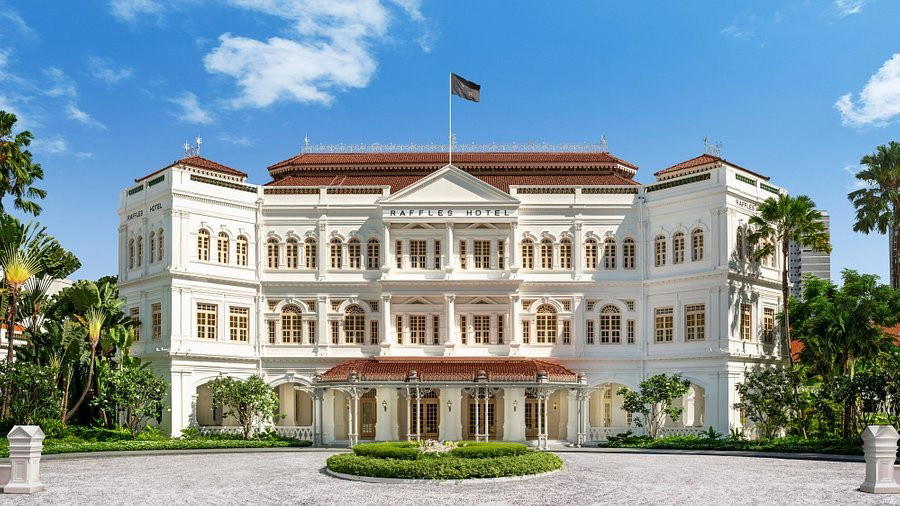
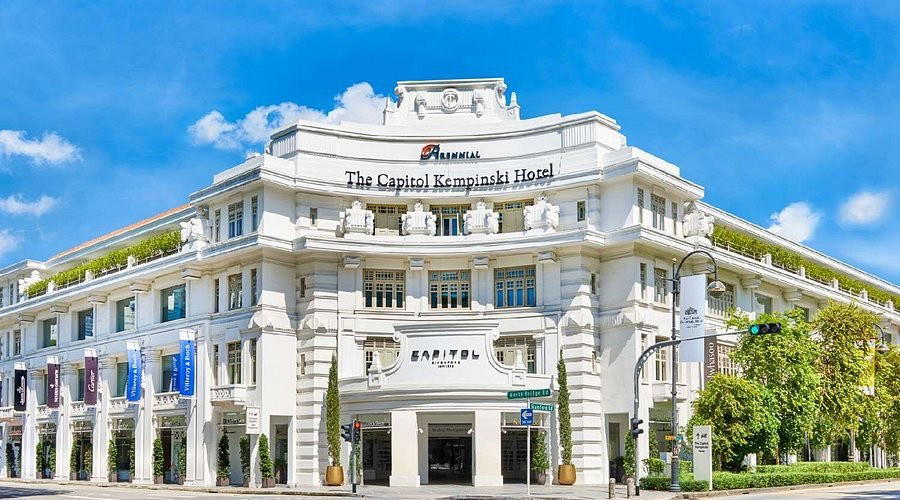
Raffles Arcade sits within the orbit of one of Singapore's most historically weighted addresses. Arriving along North Bridge Road, the colonial architecture frames expectations accordingly. This is not the anonymous tower-lobby setting of many CBD fine dining rooms. The location carries a quiet institutional gravity that suits a counter built around ceremony and precision rather than spectacle.
The Counter Format and What It Demands
Singapore's premium Japanese dining tier has expanded considerably over the past decade, moving from a handful of high-end sushi bars to a layered market where omakase counters occupy multiple price points and philosophical positions. At the tighter end of that range, nine-seat formats like Ishizawa operate on the same logic as the celebrated counters in Tokyo's Ginza district: the chef's attention is undivided, the sequencing is fixed, and the guest's role is receptive rather than directive. That structure makes these rooms better suited to occasions where the meal itself is the event rather than a backdrop to conversation.
Chef Takahiro Ishizawa brings training from established sushi-ya into a format that he has shaped into something distinct from those earlier references. The decision to break from previous recipes and build a new approach is visible in the sourcing architecture: fish arrives from Japan four times a week, a logistics commitment that anchors the menu's freshness claims in something concrete rather than aspirational. At a nine-seat counter where each course receives individual attention, the provenance chain from Japanese waters to Singapore plate needs to hold at a frequency that weekly or twice-weekly deliveries cannot sustain.
Rice, Vinegar, and the Invisible Architecture of Omakase
Among the quiet differentiators in high-level shari preparation, vinegar blending rarely surfaces in conversation outside the profession, yet it shapes the experience of every piece of nigiri more directly than any single fish selection. Ishizawa's use of Akita rice dressed in a house blend of vinegars places the kitchen firmly in the tradition that treats shari as a construction problem as much as a flavour one. Akita Komachi, grown in the cold, clear water conditions of Akita Prefecture, carries a natural sweetness and firm grain that holds form under the warmth required for proper nigiri temperature. The choice signals an investment in ingredient quality that extends below the obvious showpiece items to the structural components most guests absorb without consciously evaluating.
Four set menus at dinner means the kitchen is running parallel preparations across formats, likely varying in course count, fish selection, or depth. This multi-menu architecture at a nine-seat counter is logistically demanding; it suggests a kitchen confident enough in its sequencing to hold different tracks simultaneously rather than simplifying to a single path.
Occasion Dining at This Level: What It Means in Singapore's Context
Singapore has developed one of the densest concentrations of occasion-calibre restaurants in Asia, and the competitive set for a milestone meal now runs from three-Michelin-starred European rooms to tightly curated counters where the experience hinges on proximity and craft. Jaan by Kirk Westaway and Les Amis anchor the European side of that choice. Meta occupies an innovative middle register. Ishizawa sits apart from all of them by format: the intimacy of nine seats, the fixed-menu structure, and the counter's requirement that the guest bring full attention to the experience rather than distributing it across a conventional dining room.
For a significant anniversary, a milestone birthday, or a professional occasion where the meal needs to carry its own weight, the counter format offers something the larger rooms do not: the sense of being addressed directly rather than seated within a crowd. At globally recognised high-end counters, whether in Singapore, Tokyo, or at celebrated international addresses like Le Bernardin in New York or Alinea in Chicago, the defining quality of the experience is this compression of space and attention. Ishizawa operates within that logic at the scale Singapore's premium Japanese market supports.
There is also a practical dimension to occasion dining at this level that bears stating plainly. Reservations at nine-seat counters in Singapore's leading Japanese tier are not spontaneous decisions. The combination of limited capacity, word-of-mouth reputation, and the concentration of demand around weekends and public holidays means that planning horizons measured in weeks rather than days are standard. For comparably sized premium counters in Hong Kong and tightly controlled fine dining rooms in Paris, advance booking is simply the operating condition of the format. Ishizawa is no different in that respect. For specific availability, the venue should be contacted directly, as booking windows and availability shift.
Planning an Evening at Ishizawa
Ishizawa is located at Raffles Arcade, #01-11, 328 North Bridge Road, Singapore. The nine-seat format, fixed set menus at dinner, and the sourcing frequency of four Japan deliveries weekly position this as an evening built around considered planning rather than casual drop-in dining. Specific pricing across the four set menus, hours of operation, and current booking channels are best confirmed directly with the venue, as counter restaurants of this type frequently adjust their arrangements. For those building a broader trip around Singapore's fine dining circuit, our full Singapore restaurants guide maps the major options across formats and price points, alongside our Singapore hotels guide, bars guide, experiences guide, and wineries guide.
The common thread across these rooms is that the occasion is engineered into the format itself, not added by the guest. Emeril's in New Orleans represents the other end of the spectrum, where occasion dining scales to a larger room. Ishizawa is deliberately not that.
Frequently asked questions
What's Ishizawa known for in terms of accolades?
Ishizawa has received recognition including: This exclusive nine-seater in a prestigious hotel is helmed by experienced chef Takahiro Ishizawa. Informed by stints in some celebrated sushi-ya, he breaks away from his previous recipes to explore a new approach that truly reflects his vi….
Where do I go for Ishizawa?
Ishizawa is located at Raffles Arcade, #01-11, 328 North Bridge Road, Singapore.
What should I order at Ishizawa?
Ishizawa operates on fixed set menus at dinner only, so individual ordering is not part of the format. Chef Takahiro Ishizawa sets the sequence across four menu options, each built around Akita rice and the freshest fish flown in from Japan four times a week. Your role is to choose which menu tier suits the occasion, then follow where the counter leads.
How far ahead should I plan for Ishizawa?
The nine-seat counter format makes availability tight by design, and reservations are noted as a requirement. For a specific date or milestone occasion at Raffles Arcade, booking several weeks in advance is a reasonable minimum. For weekends or peak dining periods in Singapore, further lead time reduces risk considerably.
What's the signature at Ishizawa?
The defining characteristic is the shari: Akita-grown rice dressed in a proprietary blend of vinegars rather than a single seasoning, a preparation that Chef Ishizawa developed as a departure from his earlier training. Fish is sourced directly from Japan on four separate weekly shipments, which keeps the counter's ingredient cycle short. The combination positions Ishizawa in the tier of Singapore omakase counters where rice preparation carries as much weight as the neta selection above it.
Can Ishizawa adjust for dietary needs?
The counter seats only nine guests and operates on a fixed omakase format, which gives the kitchen limited flexibility mid-service. Any dietary restrictions or allergies should be communicated at the time of reservation, before the menu is set. Given the sourcing logistics involved, fish arriving from Japan four times weekly on a planned schedule, last-minute adjustments to the core sequence are unlikely to be straightforward.
What makes Ishizawa different from other Japanese omakase counters in Singapore?
Ishizawa's nine-seat format at Raffles Arcade is built around a culinary position Chef Takahiro Ishizawa has deliberately constructed: breaking from prior recipes to pursue a personal approach, most visible in the vinegar-blended Akita rice that underpins each of the four dinner set menus. While Singapore's premium Japanese dining tier now includes multiple high-end counters, the combination of that shari philosophy, direct Japan-sourced fish on a four-times-weekly schedule, and a seat count that keeps service close to a private dining register marks a clear point of difference.
Cuisine and Awards Snapshot
Comparable venues nearby, for context on price, style, and recognition.
| Venue | Cuisine | Price | Awards | Notes |
|---|---|---|---|---|
| IshizawaThis venue (the venue you are viewing) | Edomae Sushi Omakase | $300–500 | Michelin Guide Plate · Michelin Plate | Not listed |
| Ichigo Ichie | Japanese Kappo-Kaiseki | $200–300 | Michelin Guide Plate · Michelin Plate | BOULEVARD |
| Sushi Sato | Traditional Japanese Omakase | $300–500 | Michelin Guide Plate · Michelin Plate | RIDOUT |
| Sushi Yuki | Edomae-style Omakase | $200–300 | Michelin Plate | SELEGIE |
| Iru Den | Modern Taiwanese Fine Dining with Japanese Techniques | $150–200 | Michelin Guide Plate · Michelin Plate | GOODWOOD PARK |
| Yong Fu | Authentic Ningbo Chinese | Not listed | Michelin Guide 1 Star · Michelin Plate | MARINA CENTRE |
Recognition history
Dated appearances from independent guides and award organizations, with the underlying list record or original source where available.
Michelin Plate
Michelin · 2026 Michelin Plate
Michelin Guide Plate
Michelin Guide
Continue exploring
More in Singapore
Restaurants in Singapore
All restaurants in Singapore →
Bars in Singapore
All bars in Singapore →
Details
- Intimate
- Elegant
- Sophisticated
- Date Night
- Special Occasion
- Chefs Counter
- Hotel Restaurant
- Sake Program
- Omakase
- Counter Dining
Current opening hours
- Monday
- 12–3 PM, 6–10:30 PM
- Tuesday
- 12–3 PM, 6–10:30 PM
- Wednesday
- 12–3 PM, 6–10:30 PM
- Thursday
- 12–3 PM, 6–10:30 PM
- Friday
- 12–3 PM, 6–10:30 PM
- Saturday
- 12–3 PM, 6–10:30 PM
- Sunday
- Closed
Hours can change for holidays and private events. Hours as of .
Serene and intimate setting within the prestigious Raffles Hotel, featuring a premium sushi counter with meticulous service and beautifully presented dishes.