Our verdict
Isabelle's occupies a Georgian address on Anne Street South, in the pocket of Dublin's city centre where the design quarter meets the older commercial grid. The restaurant sits in a part of Dublin where serious independent dining has taken root alongside established institutions, making it a useful reference point for how the city's mid-to-upper dining tier is evolving beyond its traditional anchors.

Pearl is the En Primeur Club membership app — saves, bookings, and concierge access live there. Same editors, same standards.
- Address
- 13-14, Anne St S, Dublin, D02 HP70, Ireland
- Phone
- +35316833670
- Hours
- Mon–Wed 12–9 PMThu–Fri 12–10 PMSat 10 AM–10 PMSun 10 AM–9 PM
- Website
- isabelles.ie
- Directions
- Get directions
- Booking
- Book on OpenTable
The menu
What to order
- Smoked Brisket Pizza
- N’duja Meatballs
- Flat Iron Steak Tagliatelle
Anne Street South and the Shape of Dublin's Independent Dining Scene
Dublin's most interesting dining shift over the past decade has not happened at the Michelin podium but in the streets connecting it. The stretch around Anne Street South, running south from Grafton Street toward St Stephen's Green, has accumulated a density of independent restaurants that operate at a remove from both tourist-facing brasseries and the city's established fine-dining institutions. Isabelle's, at 13-14 Anne Street South, sits inside that pattern. The address places it within easy reach of Glovers Alley and the broader cluster of rooms that have redefined what a serious Dublin dinner looks like in the 2020s.
The neighbourhood here is denser and more mixed than the canal-side addresses to the south, which tend to draw a local, repeat-visit crowd almost by geography alone. Anne Street South draws on foot traffic from Grafton Street while remaining one removed from it, which means the room tends to fill with a combination of city-centre workers, pre-theatre diners, and visitors who have done enough research to end up off the main drag. That mix shapes the atmosphere in ways that matter: it is not a tourist room, but it is not a neighbourhood local either. It occupies a middle register that Dublin does well when it tries.
The Room and How It Sits in the Street
Georgian Dublin presents a particular set of constraints and advantages for restaurant operators. Ground-floor commercial units in these terraces tend to run narrow and deep, with high ceilings that work against acoustic intimacy but allow for a certain formality of atmosphere without requiring the room to try too hard. Isabelle's takes that inherited architecture as its operating context. The address at numbers 13-14 suggests a joined pair of units, which would give more width than the typical single-frontage conversion and enough floor area to build a proper dining room rather than a corridor with tables.
What this part of Dublin offers, that more southerly suburbs cannot replicate, is proximity. The walk from the Westbury Hotel or the best of Grafton Street is under five minutes. The National Concert Hall and the Gaiety Theatre are within reasonable distance, which puts the room in the orbit of pre- and post-performance dining even if that is not its primary positioning. For visitors based in the city centre, it is the kind of address that requires no planning beyond the booking itself.
Where Isabelle's Sits in the Dublin Dining Order
Dublin's restaurant tier has stratified more clearly in recent years. At the leading, Patrick Guilbaud continues to operate as the city's most decorated room, while Chapter One by Mickael Viljanen represents the city's most closely watched contemporary tasting menu format. Below that, a cluster of restaurants including Bastible and D'Olier Street operate with serious kitchens but without the full tasting-menu formality. Isabelle's occupies a position in this city-centre band, where the dining proposition tends to involve considered cooking without the prix-fixe-only constraint that marks the top tier.
This is the tier where Dublin is most actively competitive with other European cities of similar size. The comparison relevant here is not with Cork's destination rooms like dede in Baltimore or Terre in Castlemartyr, which operate in a different geographic and social register, nor with the Galway model represented by Aniar. The city-centre Dublin dining proposition is urban and transactional in a way that suits a particular kind of diner: organised, time-aware, and interested in quality without ceremony.
Ireland's wider restaurant network provides useful context for how independently operated rooms at this address level tend to develop. Rooms like Campagne in Kilkenny, Bastion in Kinsale, or Liath in Blackrock have each built a reputation through consistent kitchen output and a tight format, rather than through scale or setting. The same discipline tends to apply to the better independent rooms in Dublin's inner city. The restaurants that hold at this level across multiple years are the ones that have defined a clear offer and repeated it reliably. For a venue operating on Anne Street South, the competitive pressure comes not from destination dining but from the depth of choice within a ten-minute walk.
The Broader Pattern: City-Centre Independents and How to Read Them
Across European cities of Dublin's scale, the independent mid-tier restaurant is under sustained pressure from two directions: rising operational costs and the increasing visibility of the top tier, which pulls aspirational diners upward. The rooms that survive in this bracket tend to have either a distinctive kitchen identity that gives them a reason to exist beyond convenience, or a format that is genuinely useful, offering flexibility on timing, group size, or menu structure that the tasting-menu rooms cannot.
The Anne Street South address carries one structural advantage: it is not competing for the visitor who has flown in specifically for a Michelin experience, but it is well-placed to catch the visitor who wants one serious meal among several. That is a meaningful share of the Dublin dining market, particularly given the volume of short-break city visitors passing through. For those planning a broader Irish trip that extends beyond the capital, it is worth cross-referencing with options like Chestnut in Ballydehob, Homestead Cottage in Doolin, House in Ardmore, or Lady Helen in Thomastown, which represent the rural end of Ireland's serious independent dining offer. For an international point of comparison on what a fully developed city-centre independent dining scene looks like at the top of its range, Le Bernardin in New York City and Atomix represent the depth of programming that comes with a larger dining market and a more developed reservations culture.
Planning a Visit
Isabelle's is located at 13-14 Anne Street South, Dublin 2. The address is a short walk from the St Stephen's Green Luas stop and within the main city-centre core, making it accessible without a taxi from most central hotels. As with most independent rooms operating in Dublin's mid-to-upper tier, reservations on Thursday through Saturday evenings are worth securing in advance rather than relying on walk-in availability. For a broader survey of where Isabelle's sits in the full Dublin dining picture, the EP Club Dublin restaurants guide covers the city's current offer across price points and formats.
Frequently asked questions
What do regulars order at Isabelle's?
What the Anne Street South address and its position in Dublin's mid-to-upper independent dining tier suggest is a kitchen focused on considered cooking rather than high-volume output. For current menu specifics, contacting the venue directly or checking their current listings is the most reliable approach. The broader context of Dublin cuisine, as seen across rooms like Bastible and Glovers Alley, suggests that Irish produce-led cooking is the dominant register at this level.
Do I need a reservation for Isabelle's?
For a city-centre Dublin room operating in the mid-to-upper independent tier, weekend evenings fill quickly, particularly Thursday through Saturday. If your visit falls on those nights, securing a table in advance is the practical approach rather than relying on availability at the door. Dublin's dining scene at this level has become more reservation-forward as the serious independent rooms have grown in profile, a pattern consistent with how Chapter One and comparable rooms operate.
What is Isabelle's leading at?
Isabelle's sits in the part of Dublin's dining order where kitchen identity and consistency matter more than format novelty. The Anne Street South location places it in a competitive immediate neighbourhood, which means the rooms that hold their position in this area tend to do so through reliable execution rather than trend-chasing. For the cuisine specifics and any awards recognition, checking current listings and the venue directly will give the most accurate read.
Is Isabelle's allergy-friendly?
Irish food safety and allergen regulations require all restaurants operating in Ireland to provide allergen information on request, which applies to Isabelle's as it does to every room in the country. For specific dietary requirements, particularly those involving multiple or complex allergies, contacting the venue ahead of your booking is the standard approach across Dublin's independent dining sector. Direct communication before arrival gives the kitchen the leading opportunity to accommodate specific needs.
Is Isabelle's a good option for a pre-theatre dinner in Dublin city centre?
The Anne Street South address places Isabelle's within the orbit of several of Dublin's main performance venues, including the Gaiety Theatre and the National Concert Hall, both of which are walkable from the restaurant. Pre-theatre dining in Dublin's city centre has become a more considered part of the dining week as the performance calendar has grown, and rooms at this location tend to attract that traffic alongside a broader dinner-only crowd. If your evening is time-structured around a performance, confirming the kitchen's flexibility on timing and course pace when booking is the practical step.
Budget and Context
Comparable venues nearby, for context on price, style, and recognition.
| Venue | Cuisine | Price | Awards | Notes |
|---|---|---|---|---|
| Isabelle'sThis venue — the venue you are viewing | Contemporary Irish | $50–100 | Not listed | Not listed |
| The Sidecar | Modern Irish Gastropub | $20–30 | Pinnacle Guide 1 Pin | Royal Exchange B, Modern Irish Gastropub |
| MV Cill Airne | Irish Steakhouse on a Historic Boat | $30–50 | Not listed | North Dock B, Irish Steakhouse on a Historic Boat |
| Seasons Restaurant | Contemporary Irish | $50–100 | Not listed | Pembroke East E, Contemporary Irish |
| Guinness Open Gate Brewery | Modern Irish Gastropub with Beer Pairings | $20–30 | Not listed | Ushers B, Modern Irish Gastropub with Beer Pairings |
| Bartley's at The Grafton | Modern Irish Gastropub | $20–30 | Not listed | Royal Exchange B, Modern Irish Gastropub |
Continue exploring
More in Dublin
Restaurants in Dublin
Browse all →
Bars in Dublin
Browse all →
Hotels in Dublin
Browse all →
Wineries in Dublin
Browse all →
Details
- Elegant
- Cozy
- Modern
- Lively
- Date Night
- Group Dining
- Brunch
- Celebration
- Open Kitchen
- Terrace
- Craft Cocktails
- Local Sourcing
- A La Carte
- Small Plates
- Craft Cocktails
- Vegetarian Friendly
- Gluten Free Options
Current opening hours
- Monday
- 12–9 PM
- Tuesday
- 12–9 PM
- Wednesday
- 12–9 PM
- Thursday
- 12–10 PM
- Friday
- 12–10 PM
- Saturday
- 10 AM–10 PM
- Sunday
- 10 AM–9 PM
Hours can change for holidays and private events. Last verified .
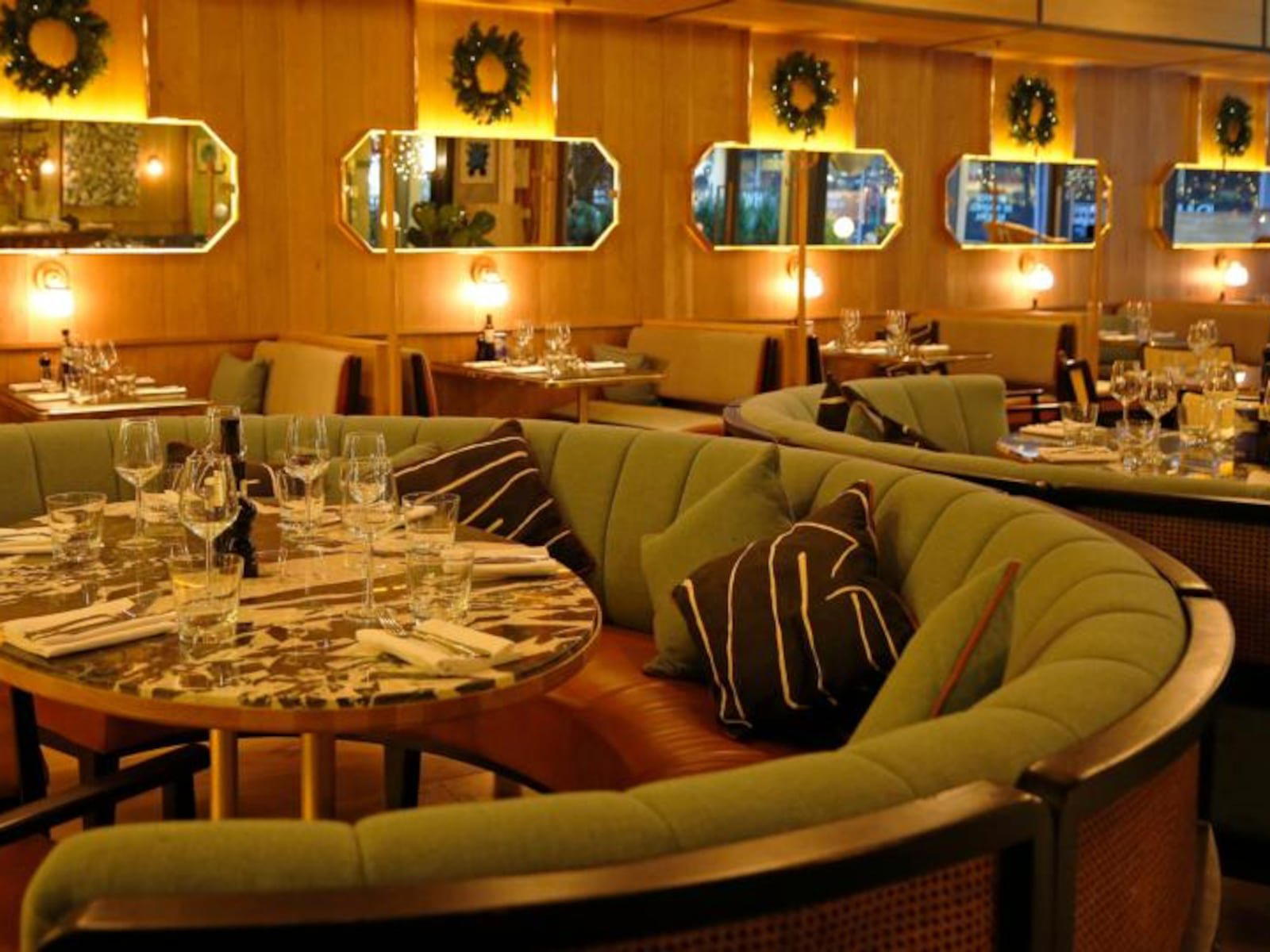
Bright and stylish interior with a warm, welcoming atmosphere, lively energy from the open kitchen, and cozy heated terrace.