


1 Michelin Star · Star Wine List · The Best Chef One Knife
Our verdict
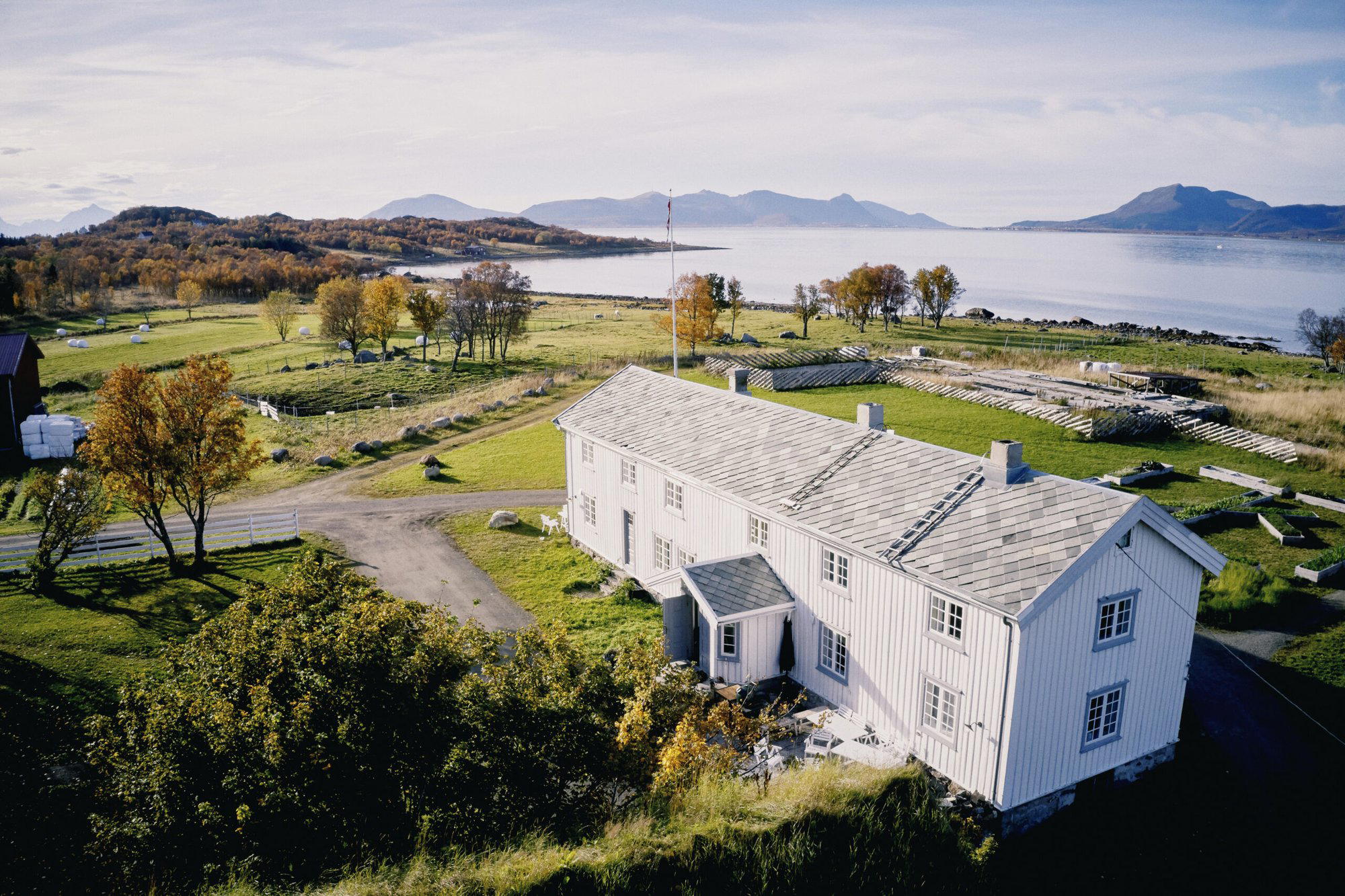
Kvitnes Gård sits in one of Norway's most remote coastal settings, just behind the Lofoten islands, where Chef Halvar Ellingsen has built a serious fine dining destination surrounded by towering mountains and Arctic water. It occupies a rare position in Norwegian gastronomy: a place where the extreme geography is not a backdrop but an active ingredient in the cooking and the experience.

Pearl is the En Primeur Club membership app, where members save venues, book tables and use the concierge.
Where the Mountains Meet the Table
There is a small category of fine dining experiences defined not by their city address or Michelin cluster but by the sheer improbability of where they exist. Kvitnes Gård belongs to that category. Positioned on the Norwegian coast just behind the Lofoten islands, in a stretch of landscape where mountains descend sharply into dark Arctic water, the farm-restaurant operates in conditions that most serious kitchens would consider logistically impossible. The road in from the nearest population centre traces a coastline of rock and open sky. Arriving, you are aware before you reach the door that the setting is doing something significant, not as decoration, but as context for everything that follows.
This is not the Norway of Oslo's design-forward restaurant blocks or Bergen's compact dining scene. It sits in a different register entirely, and that distinction matters when placing Kvitnes Gård against the wider arc of Norwegian fine dining. For more on what the broader Norwegian scene looks like, see our full Kvitnes restaurants guide, as well as hotels, bars, wineries, and experiences in the region.
Halvar Ellingsen and the Arc of Remote Nordic Cooking
Norway's current generation of serious chefs has largely trained within an international circuit before returning to home terrain. That pattern produced Maaemo in Oslo and RE-NAA in Stavanger, both operating at three Michelin stars and both carrying the hallmarks of chefs who absorbed global technical rigour before applying it to Nordic materials. Chef Halvar Ellingsen at Kvitnes Gård sits within that broader generational movement, but the context in which he applies his cooking separates the project from anything operating in an urban fine dining cluster.
The editorial question with remote destination restaurants is always whether the location functions as novelty or as genuine culinary argument. At Kvitnes Gård, the setting appears to be the latter. The extreme geography of northern Norway, where seasonal light shifts from perpetual summer sun to deep winter darkness, shapes what ingredients are available, when they are at their peak, and how the table should be set in relation to them. Chefs operating in this latitude, from Iris in Rosendal to Huset Restaurant in Longyearbyen, are not choosing difficulty for its own sake. They are working with a larder that urban restaurants cannot replicate, and the cooking at the table reflects that specific northern materiality.
The Remote Fine Dining Argument
Norway has quietly developed a strand of destination fine dining that operates outside the conventional urban logic. Under in Lindesnes sited its kitchen underwater on the southern coastline. Conservatory in Norangsfjorden works within the fjord system's particular rhythms. Boen Gård in Tveit and Storfjord Hotel Restaurant in Glomset both place serious cooking inside historic estate frameworks. What connects these projects is not a shared aesthetic but a shared premise: that geography can be a primary driver of culinary identity rather than an amenity to be photographed and then ignored.
Kvitnes Gård fits that lineage directly. The farm structure situates it in a tradition of Norwegian agricultural estates repurposed for hospitality, a model that carries weight in the country's cultural imagination. The produce question becomes literal at a working farm: the land and the water immediately surrounding the building determine the menu in ways that a centrally-located restaurant sourcing from multiple regions cannot replicate. This is the core editorial argument for why remote Norwegian fine dining deserves its own analytical frame, separate from the Michelin-dense comparison set that clusters in Oslo and Stavanger.
That said, the Norwegian Michelin map is expanding geographically. FAGN in Trondheim holds one star while operating outside the capital, and Gaptrast in Bergen adds further weight to the regional spread. The infrastructure of award-recognition is slowly following the chefs who moved into remote territory first.
Scale, Format, and What to Expect at the Table
Remote destination restaurants in this tier typically operate at small scale by design. The logistics of supply in northern Norway, combined with the format discipline required at a farm property, tend to produce tasting-style menus built around what is available rather than à la carte breadth. The cooking at Kvitnes Gård sits in that framework, with Ellingsen's approach shaped by the direct relationship between kitchen and the surrounding environment.
The experience is not comparable to arriving at an Oslo restaurant for a two-hour meal and returning to a hotel in the same postcode. Kvitnes is a destination in the full sense: the journey is part of the proposition, the setting remains with you through the meal, and the decision to eat there implies a broader engagement with place. Visitors planning around this restaurant will want to factor travel time seriously, as the address at Møysalveien 2659 in the village of Kvitnes places it at a meaningful distance from major transport hubs. Booking ahead is not optional at properties of this format and scale; at remote Norwegian farm restaurants, tables are finite and the seasons during which the kitchen operates may be specific.
For travellers who have experienced the operational discipline of places like Le Bernardin in New York City or the precision format of Atomix, the comparison with Kvitnes Gård is instructive primarily as contrast. What those kitchens achieve through technical resource and institutional depth, Ellingsen's project pursues through geographic specificity and seasonal constraint. The analogy is closer, if anything, to destination-restaurant culture in the American South, where places like Emeril's in New Orleans built culinary identity around a specific regional larder and cultural context rather than a generic fine dining template.
Planning a Visit
Kvitnes Gård is not the kind of place you arrive at by accident. The address, the geography, and the format all point toward a visit that requires deliberate planning. Travel to the Lofoten region typically routes through Bodø or Harstad/Narvik airports, with onward connections by road along the coastal routes that define this part of northern Norway. The light conditions vary dramatically by season: summer brings extended Arctic daylight that transforms the visual character of the surrounding mountains and water, while winter offers the possibility of the northern lights against a range of snow and dark sea. Either context adds a layer to the meal that no urban restaurant can provide by definition.
Guests travelling with children should weigh the tasting-menu format and the travel involved against what the experience demands from attention and patience at the table, though Norwegian farm-dining culture is generally less rigid on formality than its Michelin-urban equivalents.
What Kvitnes Gård represents in the Norwegian fine dining picture is a serious kitchen deliberately operating at the edge of what the country's geography allows. That choice, and the cooking that follows from it, place it in a conversation that urban restaurants cannot join on equal terms.
Frequently asked questions
Can I bring kids to Kvitnes Gård?
Kvitnes Gård operates as a remote destination restaurant in northern Norway, behind the Lofoten islands, where the format and logistics are geared toward guests making a deliberate journey. That context, multi-course dining in an isolated setting, suits older children comfortable with extended table times more than young ones. check the venue's official channels before booking to confirm suitability for your group.
Is Kvitnes Gård formal or casual?
The setting is remote northern Norway, not a metropolitan fine-dining room, and the geography shapes the register. Chef Halvar Ellingsen operates in a tradition of serious Nordic destination cooking where the surroundings, towering mountains, fjord proximity, carry as much weight as the table. Smart but relaxed dress fits the format; the dining itself is considered, but the isolation tends to dissolve any stiffness.
Has Kvitnes Gård won any awards?
Kvitnes Gård has received recognition including: Kvitnes is a unique place in Norway (and the world) as its remote location is not associated with fine dining. It sits just behind the famous Lofoten islands, and is surrounded by towering mountains a...; Chef: Halvar Ellingsen document.add….
What should I order at Kvitnes Gård?
Kvitnes Gård is a destination restaurant structured around its setting behind the Lofoten islands, so the menu follows the logic of place and season under chef Halvar Ellingsen rather than an à la carte selection. Guests should expect a fixed or tasting format driven by what northern Norwegian terrain and waters supply at the time of the visit, the point is to eat what Ellingsen has built around that geography.
Comparable Spots, Quickly
| Venue | Cuisine | Price | Awards | Notes |
|---|---|---|---|---|
| Kvitnes GårdThis venue (the venue you are viewing) | Nordic Farm-to-Table Fine Dining | Not listed | 1 Michelin Star · Star Wine List | Not listed |
| Maaemo | New Nordic Fine Dining | $300–500 | 3 Michelin Stars · World's 50 Best #47 | New Nordic, Modern Cuisine |
| RE-NAA | Modern Nordic Coastal Tasting Menu | $500+ | 3 Michelin Stars · La Liste Top Restaurants | New Nordic, Creative |
| Kontrast | Modern Nordic Fine Dining | $200–300 | 2 Michelin Stars · La Liste Top Restaurants | New Nordic, Scandinavian |
| FAGN | Modern Nordic Fine Dining | $200–300 | 1 Michelin Star · Star Wine List | Nordic, Modern Cuisine |
| Iris | Creative, Greek & Turkish | Not listed | Michelin 1 Star | Not listed |
Recognition history
Dated appearances from independent guides and award organizations, with the underlying list record or original source where available.
Michelin 1 Star
Michelin
Star Wine List
Star Wine List
The Best Chef One Knife
The Best Chef
Continue exploring
More in Kvitnes
Restaurants in Kvitnes
All restaurants in Kvitnes →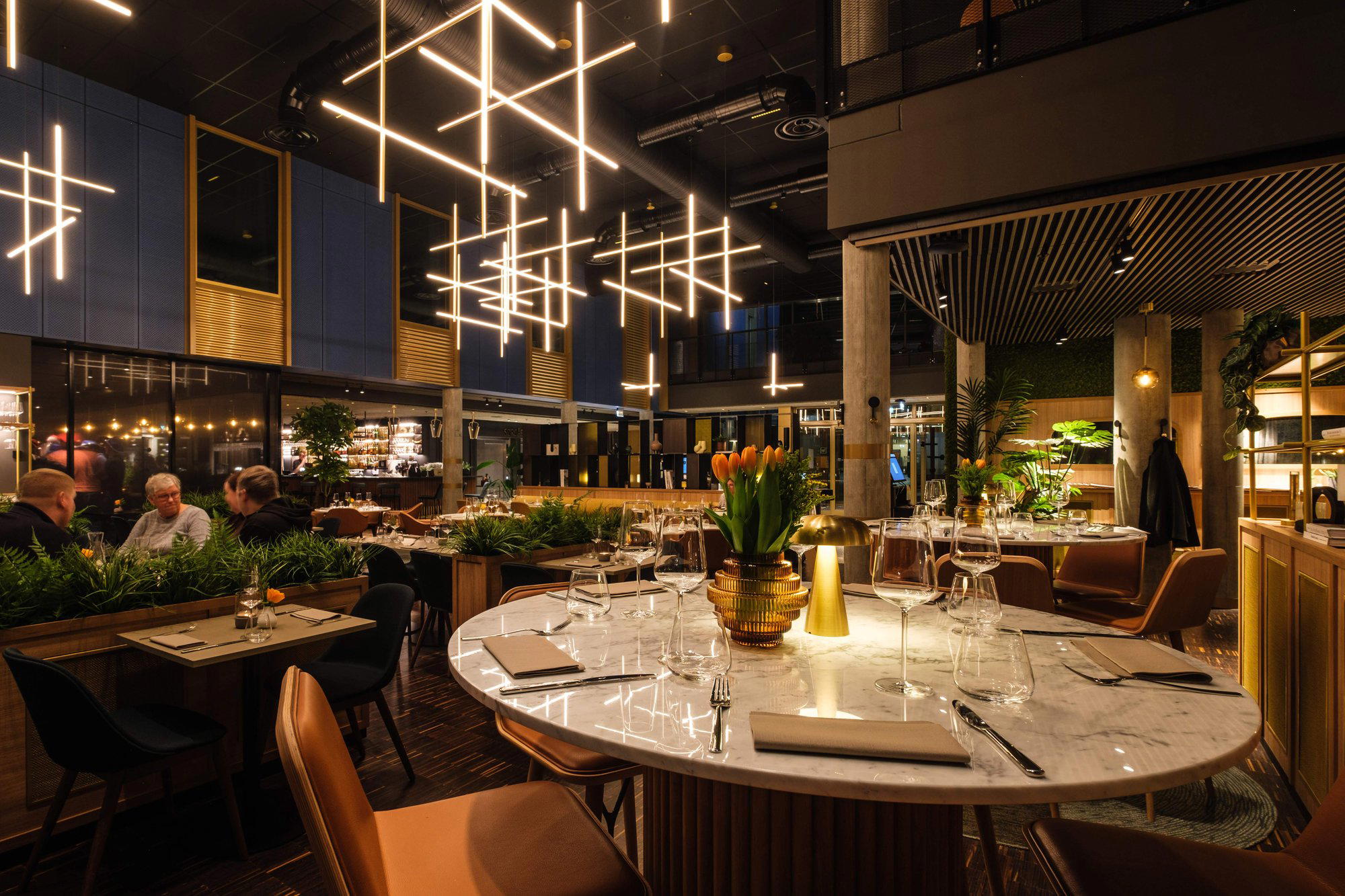
Details
- Rustic
- Cozy
- Scenic
- Intimate
- Elegant
- Special Occasion
- Date Night
- Celebration
- Historic Building
- Standalone
- Open Kitchen
- Extensive Wine List
- Sommelier Led
- Farm To Table
- Local Sourcing
- Waterfront
- Mountain
- Tasting Menu
- Allergy Accommodating
Charming historic farmhouse atmosphere with authentic 1800s decor, cozy rooms, scenic coastal views, and a welcoming, nature-integrated setting praised for its intimate and memorable dining experience.