
International Village puts Pakistani curry into Aichi’s suburban dining conversation rather than treating it as a side category. Its Tabelog Asian cuisine and ethnic cuisine EAST 100 selections in 2022, 2023, and 2024 give the room a clear critical marker, while the family-friendly format keeps it closer to everyday regional eating than destination formality.
Pearl is the En Primeur Club membership app — saves, bookings, and concierge access live there. Same editors, same standards.
- Address
- 2 Chome-72-1 Inari, Yatomi, Aichi 498-0052, Japan
- Phone
- +81 90-6096-7784
- Website
- instagram.com
 Saves & bookings on Pearl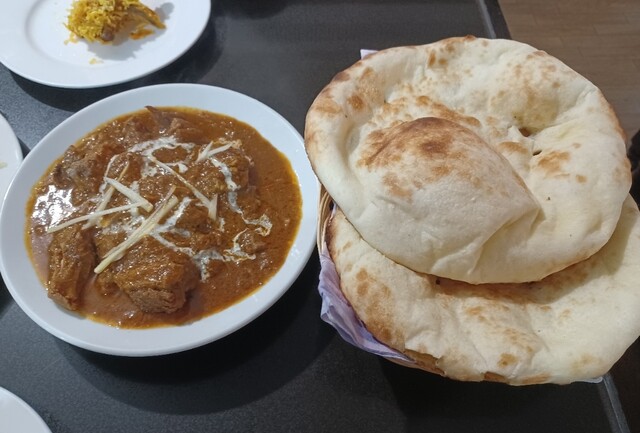
The approach is part of the story: Inari sits in the flat industrial-suburban edge of Yatomi, where destination dining rarely looks like central Nagoya polish. A container-style, house-restaurant setting changes the frame before the first order. This is not the theatre of a tasting counter; it is the kind of room where curry, rice, bread, take-out orders, children’s chairs, and multilingual menus make a stronger argument than linen and ceremony.
That matters because Pakistani cooking in Japan often lives between two expectations. One audience treats it as casual fuel, another scans it through the same ranking culture that has shaped sushi, ramen, French, and curry lists. International Village sits at that intersection. Its selection for Tabelog’s Asian cuisine and ethnic cuisine EAST 100 in 2022, 2023, and 2024 places a Pakistani and curry specialist inside a critical category that is broader than neighborhood convenience and narrower than luxury dining.
Pakistani curry in Aichi, read through supply, spice, and daily use
Ingredient sourcing is the quiet question behind this kind of cooking. In Japan, South Asian restaurants outside major station districts often depend on a hybrid pantry: imported spices and pulses for the core grammar, local vegetables, rice, dairy, meat supply, and service habits for the daily operating reality. That tension is not a compromise; it is how regional immigrant food becomes legible in a Japanese suburb without becoming generic.
The stronger Pakistani curry rooms in Japan tend to be judged less by decoration than by whether the food keeps its structure under local conditions. Spice has to read as layering, not blunt heat. Sauces need enough body to carry bread and rice without flattening into sweetness. Meat cookery, legume texture, and the rhythm of rice service matter because they reveal whether the kitchen is cooking from a tradition or simply borrowing a category label. International Village’s repeated Tabelog 100 presence suggests that diners are responding to that deeper register, not just novelty.
Aichi adds another layer. The prefecture’s dining culture is often discussed through Nagoya-meshi, miso depth, tebasaki, kishimen, and coffee-shop pragmatism, but its port, manufacturing, and logistics economy also gives the region a serious appetite for working-day food outside the Tokyo media loop. Pakistani curry in Yatomi belongs to that wider pattern: a practical cuisine, built for repeat eating, with enough technical specificity to attract rating-list attention.
A room that rejects ceremony but not seriousness
The format signals how to read the meal. Fifty seats, table seating, raised seating, child chairs, non-smoking policy, take-out, and an English multilingual menu make the restaurant easier to use than many small regional specialists. That does not make it less serious. In Japanese dining, some of the strongest category kitchens sit in rooms that look function-first: ramen shops under rail tracks, soba houses off arterial roads, curry shops in shopping streets, and ethnic restaurants near commuter corridors.
International Village belongs closer to that school than to hotel dining. The useful comparison is not a formal kaiseki house or a sushi counter such as Edo Machi Sugimoto, where the spend and structure move into a different social category. It is also not competing with regional European comfort rooms such as Pont-l'Eveque or with higher-ticket Japanese hospitality like Kaki Yasu Ryoutei honten. The point here is category precision: Pakistani curry at a price and format that support regular eating, with enough recognition to justify a detour for travelers already tracing Aichi’s food map.
The family-friendly designation is not incidental. South Asian cooking often performs well for mixed groups because ordering can scale across rice, bread, curries, and sides without forcing everyone into the same pace. For travelers, that flexibility has value. It lets the table behave like a table rather than a reservation slot.
How to place it in an Inari food day
Inari is not a dense restaurant district, so this meal makes sense as a planned stop rather than a casual stumble. The address places it in Yatomi’s Inari area, and the public-transport route involves the Kintetsu line to Kanie, a Tobishima public bus connection, and a walk from the Zenkoji Temple stop.
For a broader sweep of the area, start with Our full inari restaurants guide, then map the rest of the trip through Our full inari hotels guide, Our full inari bars guide, Our full inari wineries guide, and Our full inari experiences guide. Travelers comparing how Japan’s casual categories shift by city can also look at [Curry Senmon Ten] Maruyama Kyoju. in Sapporo, (Shoku) Vietnam in Kawasaki, [ki:] in Kyoto.cafe in Osaka.know in Kumamoto. 鮪と炭火焼き うお炭 秋葉原店 in Tokyo, -Grilled beef Sukiyaki- KAMAKURA TANUKIAN 鎌倉 たぬき庵 in Kamakura, #肉といえば松田 奈良本店 in Kashihara, 1/3 HAMBURGER FACTORY in Kanazawa, 1000 in Yokohama, 1000mヒュッテ 1000m Hut in Kutchan, Jōdo Saké Bar in Los Angeles, and Onigiri Time in Pasadena.
The editorial read is clear: this is a category-driven stop for diners who care how immigrant cuisines settle into Japanese regional life. The award history supplies the trust signal, the format keeps the experience grounded, and the pantry logic gives the cooking its interest. In Aichi, that combination carries more weight than polish.
Quick Comparison
Comparable venues by cuisine and price in the same metro.
| Venue | Cuisine | Price | Notes |
|---|---|---|---|
| International VillageThis venue — the venue you are viewing | Pakistani & Middle Eastern (Halal) | $ | Not listed |
| Le Supreme Jeiāru nagoya takashimaya ten | Artisanal bakery & bread shop | $ | Nakamura |
| TETRA CONTA | Artisanal Japanese bakery & baked sweets | $ | Higashi |
| Tsukiji | Traditional Japanese Kissaten / Coffee Shop | $ | Nakagyō |
| JouEt BoIte | Bakery / Bread Shop | $ | Takatsuki |
| Bebe | Japanese patisserie & cake shop | $ | Not listed |
Recognition history
Dated appearances from independent guides and award organizations, with the underlying list record or original source where available.
Tabelog 100 #37 · No. 37
Tabelog · Tabelog 100 - Asian cuisine / Ethnic cuisine - EAST - 2024
Continue exploring
More in inari
Restaurants in inari
Browse all →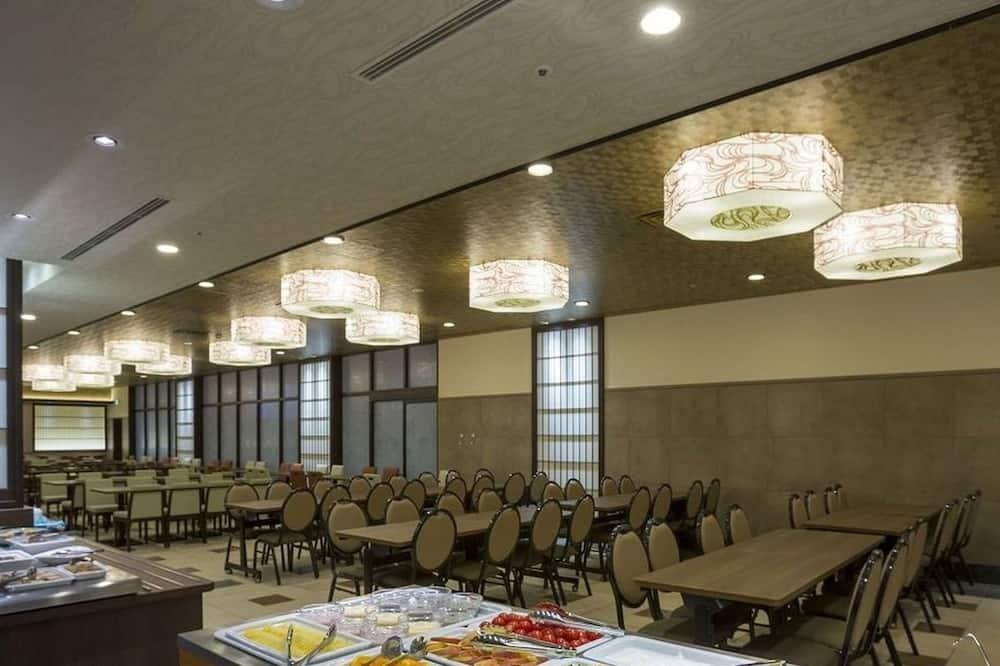


At a Glance
Current opening hours
- Monday
- 11 AM–9:30 PM
- Tuesday
- 11 AM–9:30 PM
- Wednesday
- 11 AM–9:30 PM
- Thursday
- 11 AM–9:30 PM
- Friday
- 11 AM–9:30 PM
- Saturday
- 11 AM–9:30 PM
- Sunday
- 11 AM–9:30 PM
Hours can change for holidays and private events. Last verified .