
On Via dei Banchi Vecchi, directly opposite the two-Michelin-star Il Pagliaccio, Il Goccetto has operated as one of Rome's most serious family-run wine bars for decades. The format is old-school enoteca: bottles stacked floor to ceiling, a short card of cicchetti and cold plates, and a list that rewards patience and knowledge in equal measure. This is where Romans drink well without ceremony.
Pearl is the En Primeur Club membership app — saves, bookings, and concierge access live there. Same editors, same standards.
- Address
- Via dei Banchi Vecchi, 14, 00186 Roma RM, Italy
- Phone
- +39 06 9944 8583
- Website
- instagram.com
- Directions
- Get directions
 Saves & bookings on Pearl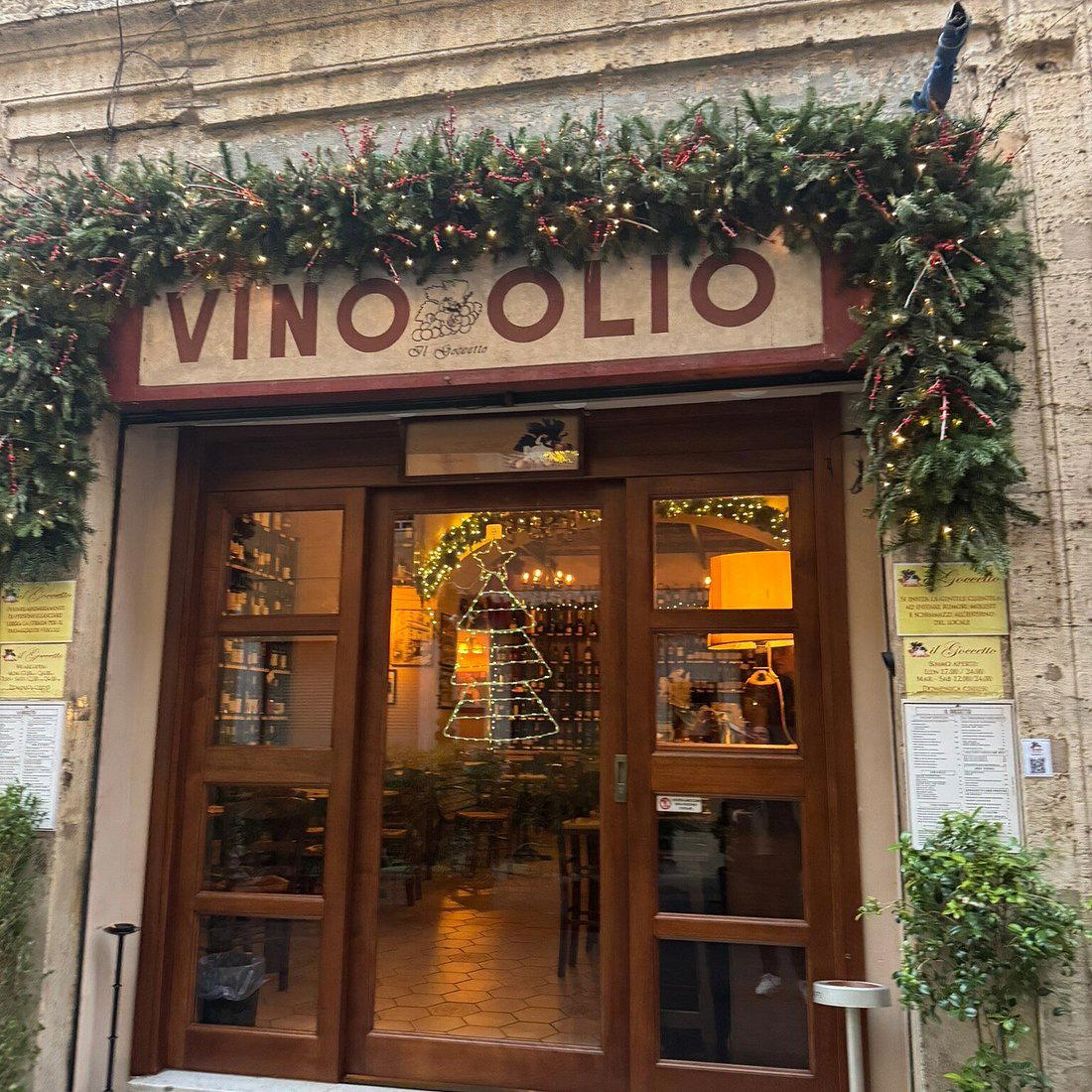
The Street That Tells You Everything
Via dei Banchi Vecchi is not a thoroughfare you arrive at by accident. The narrow lane cuts through the old Florentine banking quarter of central Rome, a few minutes' walk from Campo de' Fiori, lined with the kind of unremarkable facades that hide considerable depth. The address matters here: Il Goccetto sits directly opposite Il Pagliaccio, the two-Michelin-star restaurant that represents one pole of Rome's serious dining scene. That proximity is not coincidence, it is a useful editorial frame. On one side of the street, you have the formal, technique-driven end of Italian contemporary cooking. On the other, you have what many Romans would argue is the more honest expression of how the city actually drinks and eats: a family-run wine bar that has seen, by credible estimate, millions of bottles opened within its walls.
The old-city enoteca is a Roman institution that has come under pressure over the past two decades. Rising rents in the historic centre, shifting tourist expectations, and the arrival of wine-bar formats borrowed from Milanese or Florentine templates have thinned the ranks of genuinely traditional operators. Il Goccetto belongs to the generation that predates those pressures and has survived them, a fact that, in itself, carries editorial weight.
What the Format Reveals
The enoteca model, when done without compromise, organizes itself around the bottle rather than the plate. Food exists to extend the drinking, not to anchor the experience in the way a restaurant kitchen does. At Il Goccetto, that priority is visible the moment you step inside: bottles cover nearly every available surface, stacked in the manner of a serious private cellar rather than a retail display arranged for aesthetic effect. The physical environment communicates the editorial argument before a single word is spoken, this is a place structured around wine selection depth, and everything else follows from that.
Food card at a serious Roman enoteca runs deliberately short. Cured meats, aged cheeses, bruschette, and a handful of composed cold plates constitute the offer. This is not an edited menu in the modern sense, it is a structural discipline inherited from the pre-restaurant tradition of the Italian bottega, where the proprietor's job was to select and present wine, and accompaniments were there to complement rather than compete. The brevity of the food at the restaurant should be read as architectural confidence, not limitation. Visitors who arrive expecting the menu range of, say, Enoteca La Torre or the tasting-menu ambition of Acquolina are reading the wrong category entirely.
Italy's enoteca tradition, at its most serious, places the wine list in the role that a chef's menu occupies in a fine-dining room. The selection at the restaurant reflects decades of accumulated buying relationships and cellar discipline, the kind of depth that takes years to build and cannot be replicated by a newer operator with capital but without time. Comparable depth in Italy's wine-bar tier appears at places like Achilli al Parlamento, which occupies a similar position in Rome's wine-focused drinking culture. Outside Rome, the enoteca tradition has been reimagined at different price and formality points: Enoteca Pinchiorri in Florence represents the formal, white-tablecloth end of what happens when a wine collection becomes the spine of a full restaurant proposition.
Rome's Wine Bar Tier: Where Il Goccetto Sits
Rome's premium dining options have consolidated around a handful of addresses. La Pergola holds three Michelin stars and operates at the extreme formal end. Il Pagliaccio, directly across the street from the restaurant, represents two-star contemporary Italian cooking. These are restaurants with full brigade kitchens, elaborate tasting menus, and wine lists that function as financial documents as much as drinking guides. The restaurant operates in a different register entirely, the neighbourhood wine bar that serious collectors and knowledgeable tourists treat as a first stop rather than a destination.
This is the tier where the selection of producer and vintage does the editorial work that chef technique does in a Michelin-starred room. The family-run structure matters here in a specific way: buying decisions at a place like Il Goccetto tend to reflect personal relationships with producers rather than procurement at scale, which means the list carries the character of whoever has been doing the selecting. Italy's wine geography, from Barolo and Barbaresco in Piedmont to Brunello in Tuscany to the indigenous varieties of southern Italy and the islands, gives a serious enoteca enormous range to work with, and the depth of what ends up on the shelves at Via dei Banchi Vecchi reflects accumulated choices over many years. For context on Italy's broader fine-dining scale, Osteria Francescana in Modena, Le Calandre in Rubano, and Dal Pescatore in Runate represent the restaurant tier that sits several steps above in formality, useful reference points for what the enoteca format deliberately is not.
Approaching a Visit
The old-city enoteca operates on rhythms that reward local knowledge. Afternoon hours, before the dinner service rush, tend to offer relaxed access to the bar and one attentive conversation about the list. Via dei Banchi Vecchi itself is walkable from Campo de' Fiori and from the Ponte Sisto end of Trastevere, making the restaurant a logical stop within a longer afternoon spent in the centro storico.
The format suits solo drinkers, couples, and small groups of four or fewer with more ease than large parties. The physical space of a traditional Roman enoteca is not configured for group dining, it is configured for standing at the bar or occupying a small table while working through a bottle, which is exactly the point. Visitors accustomed to the pacing and formality of destinations like Enrico Bartolini in Milan, Atelier Moessmer Norbert Niederkofler in Brunico, or international fine-dining rooms like Le Bernardin in New York or Emeril's in New Orleans should adjust expectations accordingly: the value proposition here is in the bottle selection and the setting, not in service theatre or kitchen ambition.
Accolades, Compared
Comparable venues nearby, for context on price, style, and recognition.
| Venue | Cuisine | Price | Notes |
|---|---|---|---|
| Il GoccettoThis venue — the venue you are viewing | Roman Wine Bar Small Plates | $$ | Not listed |
| Extremis | Modern Innovative Pizza | $$ | Pietralata |
| I Casali del Pino | Traditional Roman Farm-to-Table | $$ | La Giustiniana |
| Er Faciolaro | Classic Roman Trattoria | $$ | Colonna |
| Taverna Volpetti | Traditional Roman Trattoria | $$ | Testaccio |
| Ristorante da Mario | Modern Roman Trattoria | $$ | Sallustiano |
Recognition history
Dated appearances from independent guides and award organizations, with the underlying list record or original source where available.
Star Wine List
Star Wine List
Continue exploring
More in Rome
Restaurants in Rome
Browse all →
Bars in Rome
Browse all →
Hotels in Rome
Browse all →

At a Glance
- Cozy
- Intimate
- Rustic
- Classic
- Date Night
- Casual Hangout
- Solo
- Wine Cellar
- Historic Building
- Extensive Wine List
- Local Sourcing
Current opening hours
- Monday
- Closed
- Tuesday
- 12 PM–12 AM
- Wednesday
- 12 PM–12 AM
- Thursday
- 12 PM–12 AM
- Friday
- 12 PM–12 AM
- Saturday
- 12 PM–12 AM
- Sunday
- Closed
Hours can change for holidays and private events. Last verified .
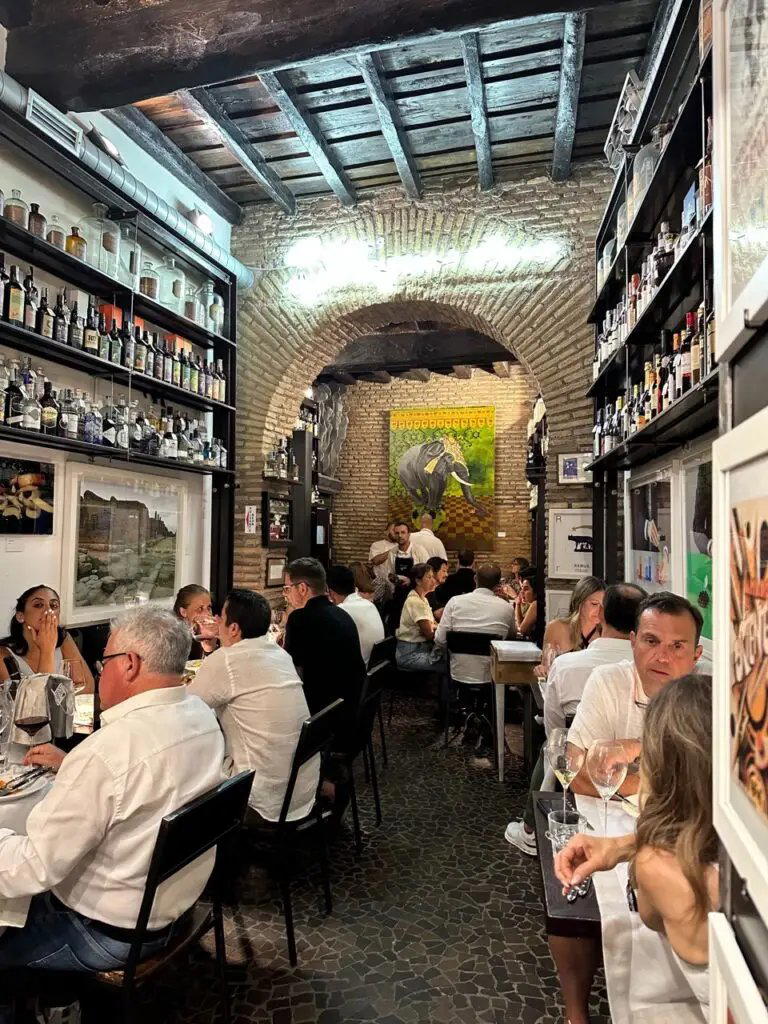
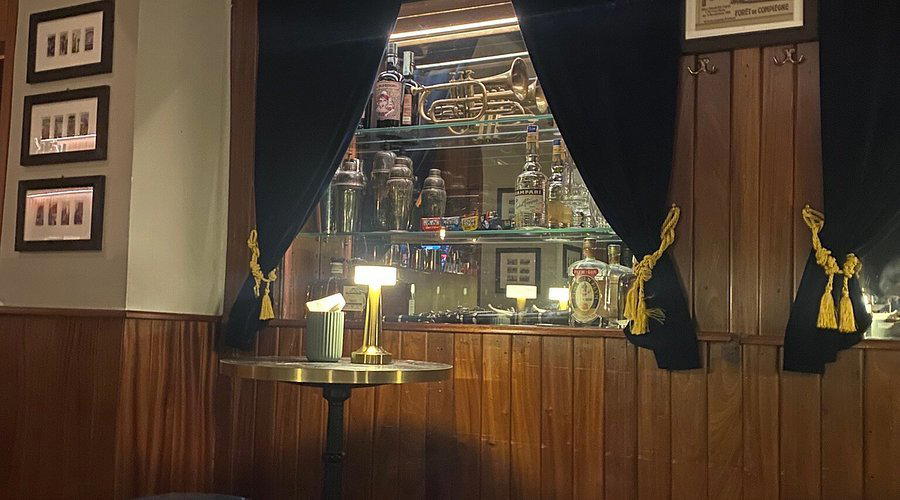
Cozy and rustic with vintage decor, wooden ceilings, warm lighting, and a welcoming neighborhood atmosphere.