
Udonya Goemon belongs to Takamatsu’s late-night udon culture, where a short menu of wheat noodles, curry udon and oden carries the room rather than ceremony. Its 2024 selection for Tabelog 100 Udon Kagawa places it within the prefecture’s serious noodle conversation, but the appeal is more specific: a compact, counter-friendly format that reads as after-hours sustenance, not daytime pilgrimage dining.
Pearl is the En Primeur Club membership app — saves, bookings, and concierge access live there. Same editors, same standards.
- Address
- 香川県高松市古馬場町13-15 AIビル 1F
- Phone
- +81878212711
- Website
- tabelog.com
 Saves & bookings on Pearl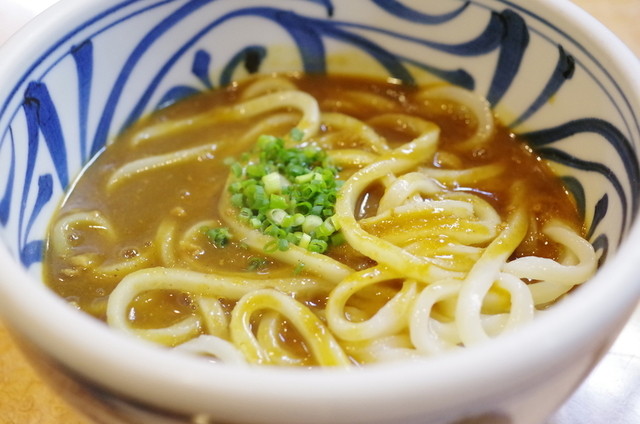
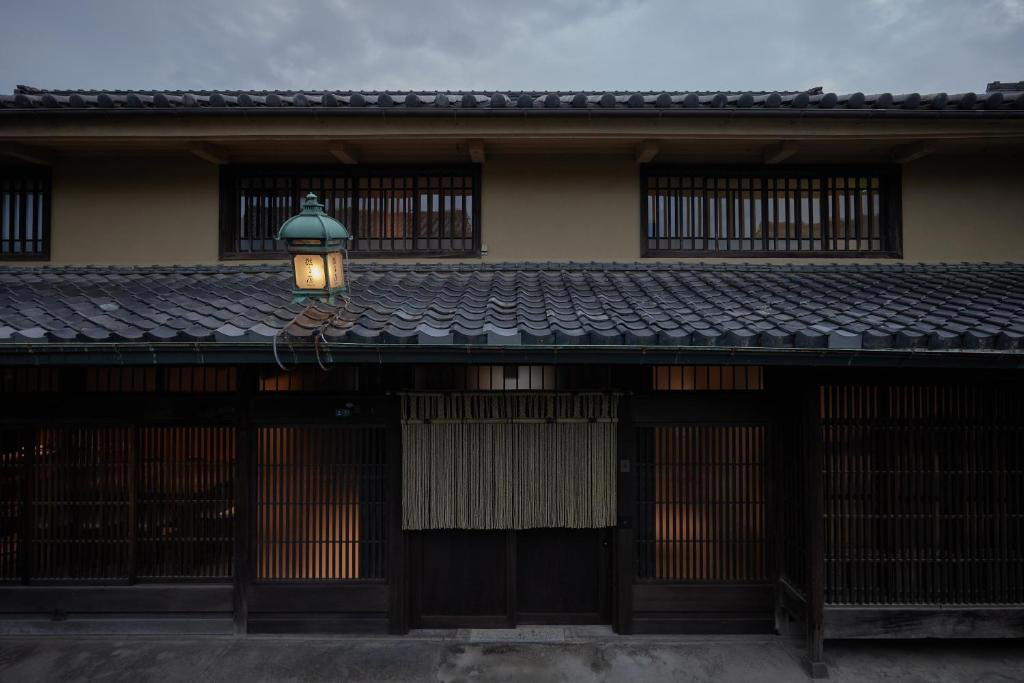
Furubabacho changes after dark. Kagawa’s daytime udon trail often means early starts, self-service counters and bowls eaten before the city has warmed up; here the mood is narrower, later and more adult. Udonya Goemon sits in nocturnal Takamatsu, where noodles share the table with oden, sake and shochu, and the meal feels less like a checklist stop than a final, steadying chapter to the night.
That distinction matters in Sanuki udon country. Kagawa’s noodle culture is not one format but many habits: commuter bowls, family lunchrooms, self-serve tempura counters, station-adjacent shops and after-hours rooms where starch must carry conversation as well as hunger. Serious travellers should not read udon here only through famous daytime names such as Chikusei Honten, Azuma, Furukawa Udon or Furusato Udon. Those addresses explain the prefecture’s daytime grammar; this one shows how the same noodle culture adapts when the city moves indoors.
Late-night Sanuki udon, structured around more than the bowl
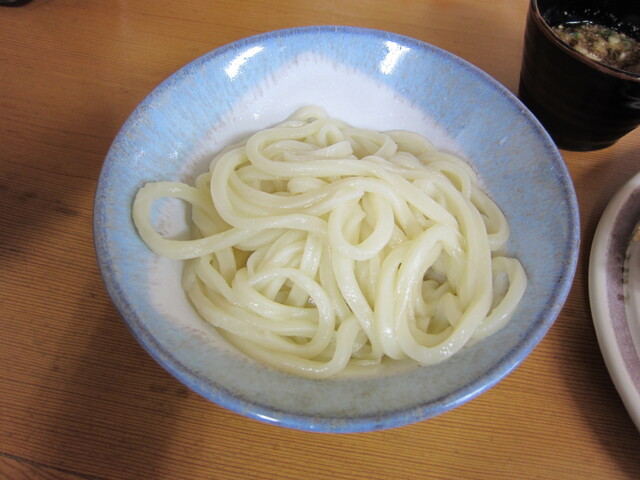
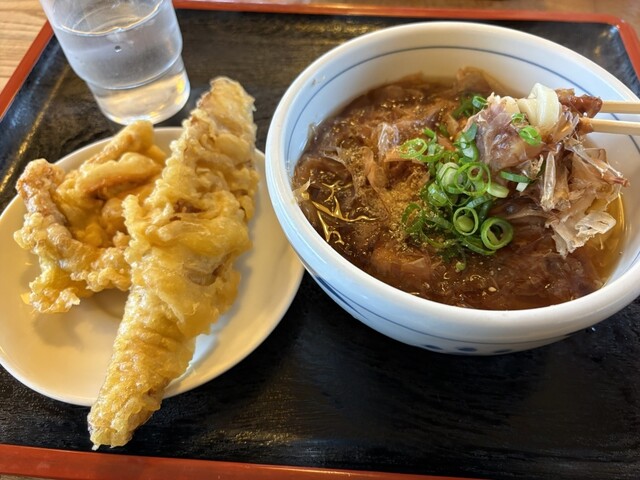
The menu architecture is the useful lens. Udon, curry udon and oden form a compact triangle: plain wheat-noodle discipline, a richer curry variation and simmered side dishes that turn a quick bowl into a small drinking meal. It does not ask for long dégustation attention, but for decisions in another order: whether the bowl is the main event, whether curry is the point, and whether oden extends the table before or beside the noodles.
In Takamatsu, that menu says plenty about local priorities. Sanuki udon is often judged by noodle texture, broth clarity, pace and value, but after-hours shops add another test: whether the format can handle solo diners, friends moving between bars, and guests who want substance without the cost or duration of a formal restaurant. Udonya Goemon’s selection for Tabelog 100 Udon Kagawa 2024 gives it external recognition in a crowded prefectural field, yet the stronger signal is how narrowly the offering stays within the udon ecosystem rather than expanding into a general izakaya script.
Curry udon is not incidental. In a prefecture associated with stripped-back bowls, it works as pressure release: heavier, sauced and better suited to late meals than a purely austere expression. Oden does the opposite, adding modular depth without pushing the restaurant into full izakaya breadth. Together they define a room built for repeat decisions, not a single set-piece order.
Where it fits in Takamatsu's eating map
Takamatsu rewards category switching. A traveller can move from udon to okonomiyaki at Fumiya Okonomiyaki Honten, then compare the city’s casual end with gyoza, chicken, sushi or Italian formats. Within the local frame, Teuchi Udon Tsurumaru occupies a lower-price udon lane, Gyoza Ya sits in a similar casual band, while Jidori Labo and Osteria enne operate in a higher dinner bracket. The spread clarifies the decision: this is not where Takamatsu performs luxury; it is where the city treats noodle craft as everyday infrastructure with enough recognition to merit attention.
The award signal should be read carefully. Tabelog 100 Udon Kagawa is category-specific recognition, not a universal fine-dining badge. It places the restaurant among notable udon addresses in the prefecture, a more relevant benchmark than Michelin-style comparison for this meal. For travellers building a food itinerary, the value is contrast: a recognised late-night udon address adds a different register beside daytime specialists and higher-spend dinners.
The broader Takamatsu guide should follow this rhythm, not a single meal. Use Our full Takamatsu restaurants guide to map noodle shops against izakaya, sushi and regional casual dining; pair it with Our full Takamatsu hotels guide if staying close to the centre matters after a late bowl. For drinking context, Our full Takamatsu bars guide is the natural companion, while Our full Takamatsu experiences guide places the meal around the port city’s cultural pacing. Our full Takamatsu wineries guide is less central to udon planning, but useful for readers treating the city as a broader regional base.
A practical choice for serious casual dining
Appeal is practical without being generic. Counter seating and a compact footprint suit solo dining, and the format works for friends wanting a focused meal rather than a drawn-out restaurant evening. Take-out adds flexibility, but the stronger editorial case is understanding the place as part of Takamatsu’s after-dark pattern: few categories, quick decisions and enough side-order structure to absorb a drink.
Planning constraints matter. Reservations are unavailable, payment is cash-only across cards, electronic money and QR systems, and parking is not offered. Smoking is allowed, a deciding factor for some travellers rather than a footnote. These details do not diminish the culinary argument; they define the room. This is local casual dining with rules inherited from older Japanese restaurant habits, not an internationalised hospitality product.
For readers comparing across Japan, the lesson is useful. Casual specialisation can shape a destination as much as luxury dining when the category is culturally dense. A sukiyaki-focused stop such as -Grilled beef Sukiyaki- KAMAKURA TANUKIAN 鎌倉 たぬき庵 in Kamakura, a seafood-and-charcoal address like. 鮪と炭火焼き うお炭 秋葉原店 in Tokyo, or a tightly defined rice format such as Onigiri Time in Pasadena make the same point in different registers: the menu’s boundaries tell the diner how to use the place.
Udonya Goemon is strongest on those terms. Do not expect a chef-led narrative, tasting-menu arc or broad regional survey. Expect a late-night noodle room built from udon, curry udon and oden, backed by a 2024 Tabelog category selection and set in a city where wheat noodles are civic habit as much as cuisine. For adjacent reading beyond Takamatsu, EP Club’s wider restaurant map includes compact specialists and casual formats such as.cafe in Osaka.know in Kumamoto, (Shoku) Vietnam in Kawasaki, [Curry Senmon Ten] Maruyama Kyoju. in Sapporo and Jōdo Saké Bar in Los Angeles, but the Takamatsu lesson is sharper: in Kagawa, even the casual bowl carries a serious local grammar.
Peers You’d Cross-Shop
Comparable venues by cuisine and price in the same metro.
| Venue | Cuisine | Price | Notes |
|---|---|---|---|
| Udonya Goemon | Late-night Sanuki udon & black curry udon | $ | Takamatsu |
| Sanuki Udon Ueharaya Honten | Traditional Sanuki udon | $ | Takamatsu |
| Udon Shokunin Sanuki Men no Suke | Traditional Sanuki udon and tempura | $ | Takamatsu |
| Sanuki Tsukemen Sangawa | Sanuki udon & tsukemen izakaya | $ | Takamatsu |
| Honkaku Teuchi Udon Menmusubi | Traditional Sanuki Udon | $ | Takamatsu |
| Teuchi Udon Hariya | Traditional Sanuki Udon Counter | $ | Takamatsu |
Recognition history
Dated appearances from independent guides and award organizations, with the underlying list record or original source where available.
Tabelog 100 #56 · No. 56
Tabelog · Tabelog 100 - Udon - KAGAWA - 2024
Continue exploring
More in Takamatsu
Restaurants in Takamatsu
Browse all →

At a Glance
- Lively
- Cozy
- Solo
- Casual Hangout
- After Work
- Late Night
- Group Dining
- Standalone
- Chefs Counter
- Sake Program
- Beer Program