Huntress

Huntress occupies a grounded spot on Fifth Avenue in San Diego's Gaslamp Quarter, where the city's late-night dining energy runs thickest. The address places it squarely inside a neighborhood that rewards those who look past the obvious. For context on how it fits San Diego's broader dining picture, see our full restaurant coverage.
Pearl is the En Primeur Club membership app — saves, bookings, and concierge access live there. Same editors, same standards.
- Address
- 376 Fifth Ave, San Diego, CA 92101
- Phone
- +16193294868
- Website
- huntresssteak.com
- Directions
- Get directions
 Saves & bookings on Pearl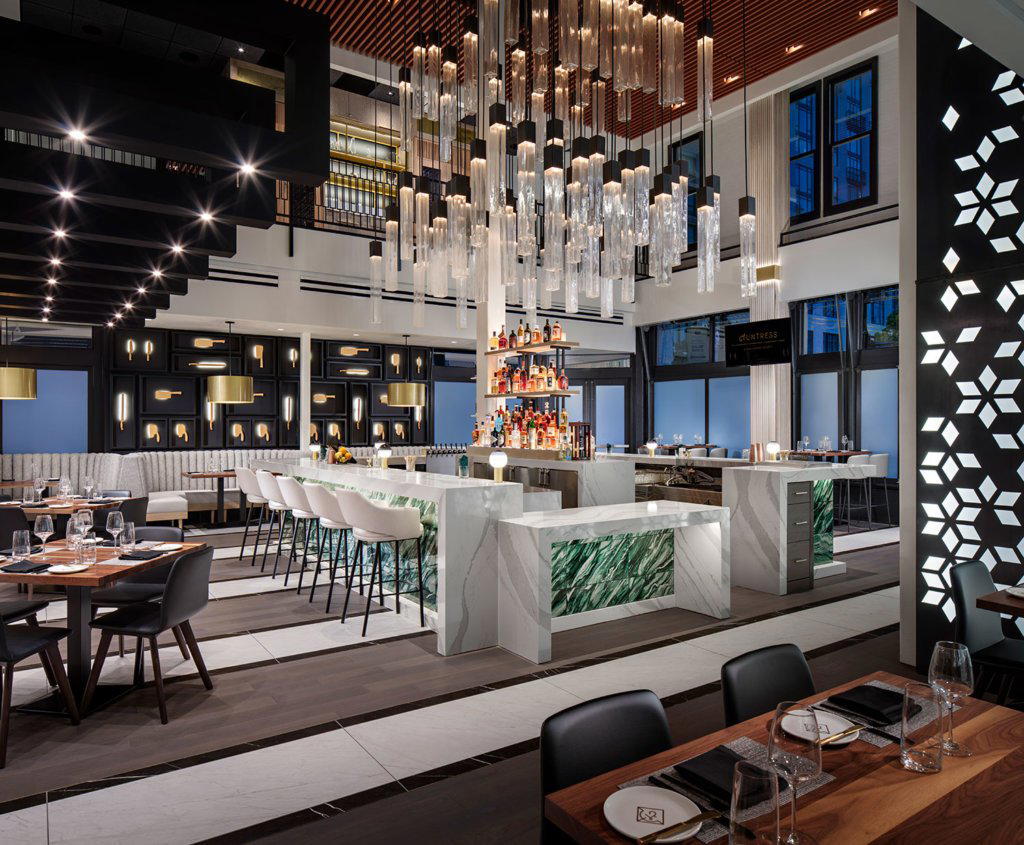
Fifth Avenue After Dark
The Gaslamp Quarter operates on its own rhythm. By early evening, Fifth Avenue fills with the particular energy that defines downtown San Diego's dining corridor: foot traffic that moves between gastropubs and concept restaurants, the sound of outdoor patios warming up, and the low light that most operators here seem to agree is the right register for the neighborhood. Huntress, at 376 Fifth Ave, sits inside that current rather than apart from it. The address is one of the more commercially active stretches in downtown San Diego, which means the physical experience of approaching and entering the space carries the ambient texture of a neighborhood that is working hard on multiple fronts at once.
That context matters more than it might seem. The Gaslamp Quarter has spent two decades cycling between tourist-facing formats and locally anchored ones, and the gap between those two modes is visible at street level. Venues that lean toward the tourist economy tend to resolve that tension through volume and spectacle. The ones that earn a more deliberate audience tend to do it through specificity, whether in the kitchen, the room, or both. Where Huntress lands on that axis shapes everything about how to read an evening there.
San Diego's Dining Tier and Where This Address Fits
San Diego's fine-dining tier has sharpened considerably over the past several years. Addison, the city's French Contemporary standard-bearer, operates at the price and format ceiling, representing what the region can achieve at full stretch. Soichi has built a national reputation in the Japanese category at the leading price tier. Below those reference points, a mid-to-upper tier of restaurants including 1450 El Prado and 94th Aero Squadron handles the broader range of what San Diego diners expect from a serious evening out. The 94th Aero Squadron San Diego location also operates within this tier, demonstrating how the city's dining options spread across distinct neighborhood and format contexts.
The broader American fine-dining conversation provides useful coordinates. Nationally, venues like Le Bernardin in New York City, Alinea in Chicago, and The French Laundry in Napa define what formality and tasting-menu depth look like at the extreme end. Experiential formats like Lazy Bear in San Francisco and farm-rooted concepts like Single Thread Farm in Healdsburg and Blue Hill at Stone Barns in Tarrytown have staked out their own positions within that national tier. San Diego's scene doesn't yet match those cities in density, but it has developed enough depth that placing a venue correctly within the local hierarchy is a meaningful exercise, not an academic one.
Internationally, the reference set expands further. 8 1/2 Otto e Mezzo Bombana in Hong Kong represents what Italian fine dining looks like at its most ambitious outside Europe. Atomix in New York City has redefined what Korean fine dining means in an American context. These comparisons are not about equivalence but about the frame: serious dining in any city is now evaluated against a global comparable set, and San Diego is not exempt from that standard.
The Sensory Register of the Room
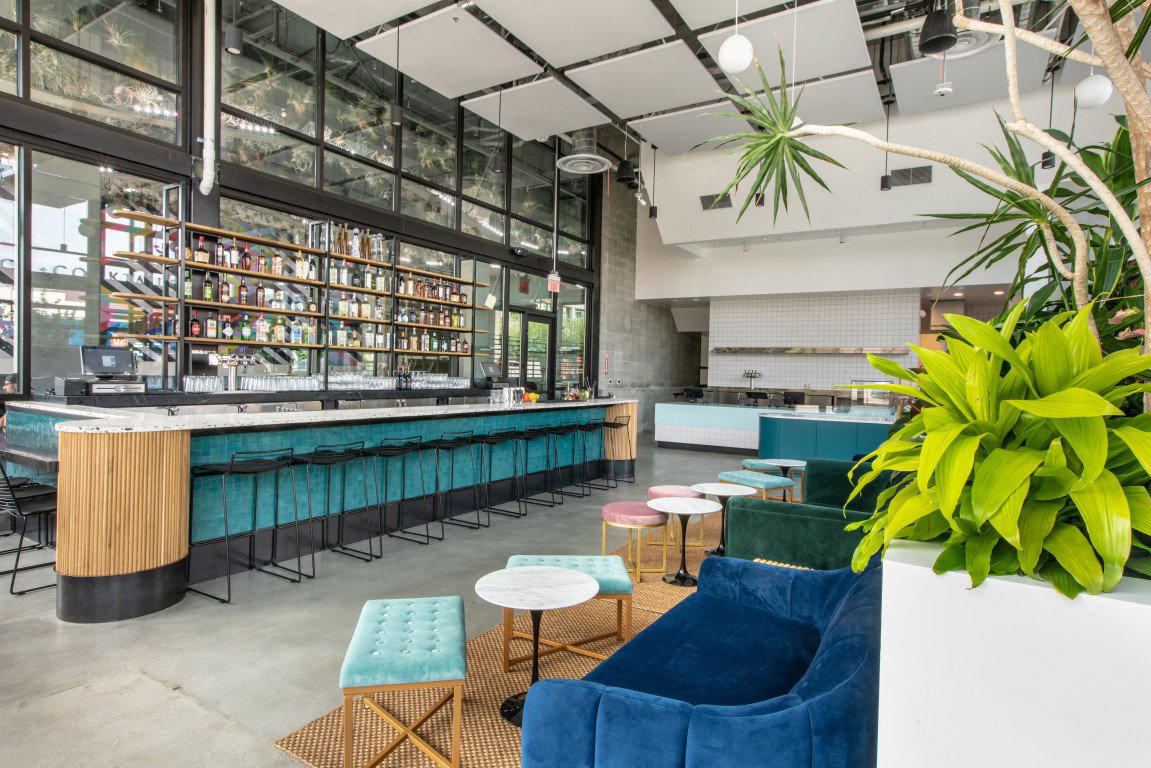
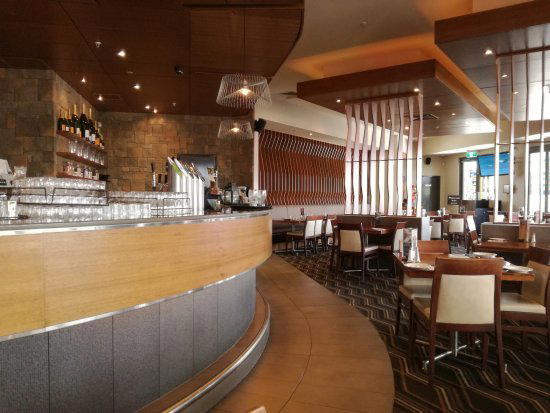
Dining on Fifth Avenue in the Gaslamp carries a specific set of sensory conditions that any operator in the corridor must account for. The street is loud. Weekend evenings in particular generate a level of ambient noise that bleeds through facades. The visual environment outside is high-contrast and commercially dense. What this means for a restaurant interior is that the transition from street to room is among the more consequential design decisions an operator makes. A room that absorbs rather than amplifies that exterior energy, through material choices, ceiling height, lighting calibration, and acoustic treatment, signals a clear intention about the kind of evening on offer. A room that simply opens onto the street energy, without filtering it, signals something else entirely.
Huntress is a Modern Steakhouse in San Diego's Gaslamp Quarter at 376 Fifth Ave, with an average price point of about $75 per person. That kind of positioning, when it works in a downtown dining corridor, tends to come from consistency across sensory cues rather than from any single feature. The question worth asking about any venue in this category is whether the room, the menu format, and the service mode are communicating the same thing, or whether they are pulling in different directions. Restaurants that read clearly tend to hold their audience; those with mixed signals tend to draw one-time visitors but struggle to build regulars.
American Dining Traditions and the Carnivore Format
The broader American dining tradition that informs venues with a hunting or carnivore identity has deep roots. From the classic steakhouses of New Orleans, represented in a different register by Emeril's in New Orleans, to the ingredient-forward American cooking at Providence in Los Angeles, the vocabulary of American proteins and bold cooking has evolved considerably over the past two decades. Venues like Bacchanalia in Atlanta and The Inn at Little Washington in Washington demonstrate how regional American cooking at a high level tends to anchor itself in local sourcing and a clear point of view on ingredients. The hunt-and-gather framing, when it is more than decorative, usually shows up in sourcing decisions and in how proteins are handled: dry-aging programs, whole-animal approaches, and supplier relationships that are specific enough to be named.
Whether Huntress operates at that level of commitment to its apparent positioning is the central question for anyone considering the address seriously. The name and the Fifth Avenue location are the two clearest data points available. Everything else requires a visit to verify.
Planning a Visit
Huntress is located at 376 Fifth Ave in the Gaslamp Quarter, within walking distance of the downtown hotel corridor and the Convention Center. The neighborhood is accessible by trolley (Gaslamp Quarter station on the Blue Line) and by rideshare, which most visitors use given downtown parking conditions on weekend evenings. Fifth Avenue sees heavy foot traffic from Thursday through Saturday, which means both that walk-ins may be possible on quieter nights and that advance planning is advisable for weekends. Hours are Mon through Thu from 6 to 10 PM, Fri and Sat from 5 PM to 12 AM, and Sun from 5 to 10 PM; reservations are recommended.
Frequently Asked Questions
- What should I eat at Huntress?
- Huntress focuses on modern steakhouse cooking, so meat-forward plates are the right place to start. What the name and positioning suggest is a protein-forward menu, likely with an emphasis on bold preparation rather than delicate technique. The safest approach is to check the venue's current menu directly before visiting, as Gaslamp Quarter restaurants frequently update their offerings seasonally.
- How hard is it to get a table at Huntress?
- Reservations are recommended, especially for Friday and Saturday evenings. The Gaslamp Quarter operates at high volume on weekends, particularly during convention season and summer months when downtown San Diego sees its heaviest visitor traffic. For context, San Diego's most reservation-intensive venues, such as Soichi at the summit of the Japanese tier, can require weeks of advance planning.
- Is Huntress a good choice for a special occasion dinner in San Diego's Gaslamp Quarter?
- The Gaslamp Quarter hosts a range of options for occasion dining, from the full-tasting-menu formats that define the city's upper tier to more casual but curated experiences that suit a group that wants atmosphere without strict formality. Huntress's positioning on Fifth Avenue places it in a competitive stretch where several venues compete for the same occasion-dining audience. With its smart casual dress code and recommended reservations, Huntress fits well for a polished dinner in the Gaslamp Quarter. San Diego's broader dining scene, covered in San Diego's broader dining scene offers additional context on how the Gaslamp compares to other neighborhoods for special-occasion meals.
Accolades, Compared
Comparable venues nearby, for context on price, style, and recognition.
| Venue | Cuisine | Price | Notes |
|---|---|---|---|
| HuntressThis venue — the venue you are viewing | Modern Steakhouse | $$$ | Not listed |
| Bacari | Venetian-inspired Mediterranean small plates | $$$ | North Park |
| The Smoking Goat | California-French Bistro | $$$ | North Park |
| A L’Ouest | Modern French Brasserie | $$$ | North Park |
| Humphreys SoCal Dining & Music | Modern California Seafood | $$$ | Peninsula |
| Bleu Bohème | Traditional French Bistro | $$$ | Mid-City:Kensington-Talmadge |
Recognition history
Dated appearances from independent guides and award organizations, with the underlying list record or original source where available.
Wine Spectator Award of Excellence
Wine Spectator
Continue exploring
More in San Diego
Restaurants in San Diego
Browse all →
Bars in San Diego
Browse all →
At a Glance
- Lively
- Modern
- Energetic
- Trendy
- Sophisticated
- Date Night
- Business Dinner
- Celebration
- Special Occasion
- Live Music
- Open Kitchen
- Private Dining
- Extensive Wine List
- Craft Cocktails
- Local Sourcing
Current opening hours
- Monday
- 6–10 PM
- Tuesday
- 6–10 PM
- Wednesday
- 6–10 PM
- Thursday
- 6–10 PM
- Friday
- 5 PM–12 AM
- Saturday
- 5 PM–12 AM
- Sunday
- 5–10 PM
Hours can change for holidays and private events. Last verified .
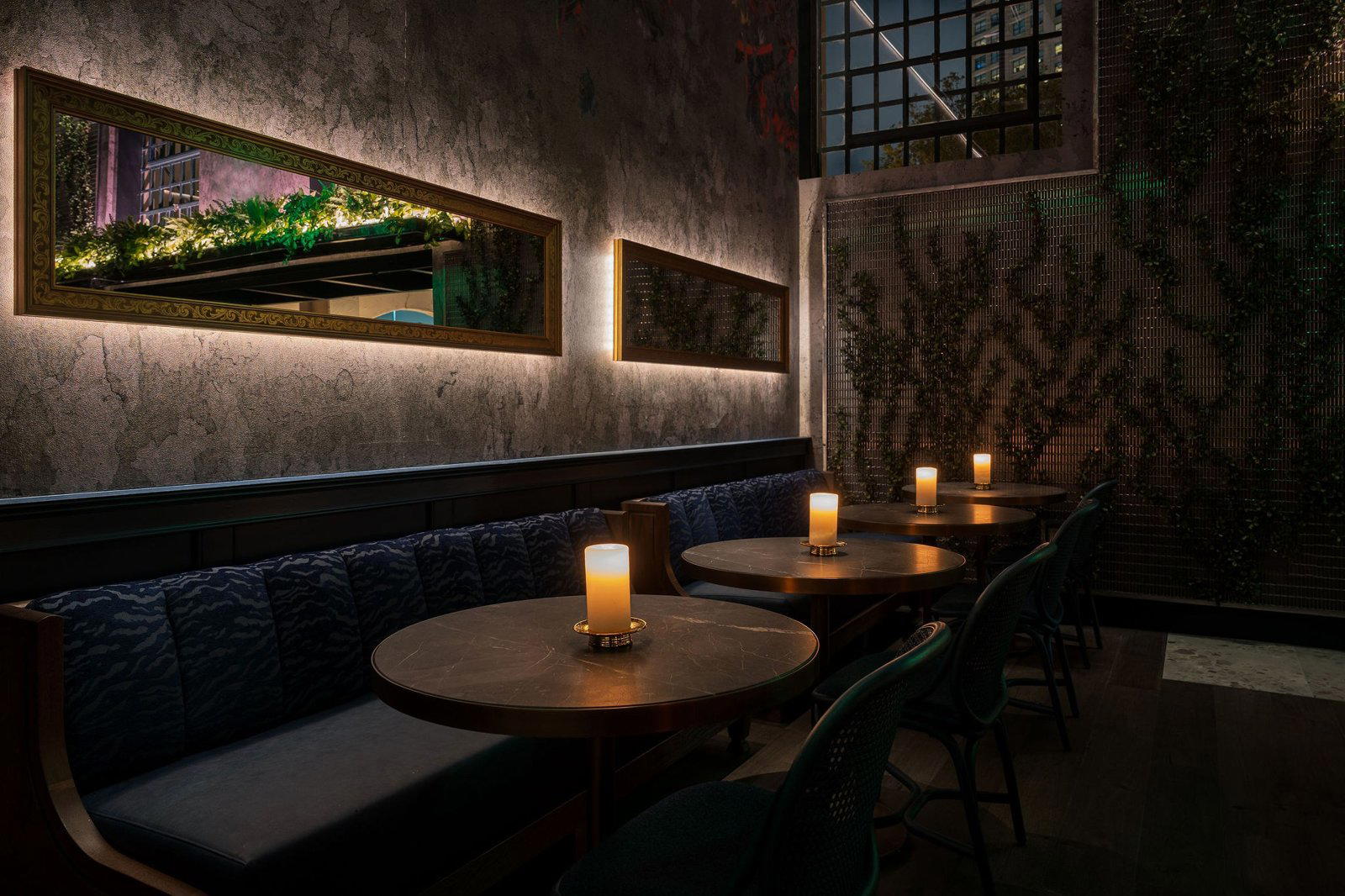
Contemporary lively atmosphere with moody lighting, historic brick, wood beams, music, and up-tempo energy.