Himalayan Restaurant
On Pine Knot Avenue in Big Bear Lake, Himalayan Restaurant brings the cooking traditions of Nepal and the broader Himalayan region to a mountain resort town more accustomed to burgers and brew-pub fare. The kitchen works a culinary territory that remains genuinely sparse across Southern California's mountain communities, making it a practical and culturally specific stop for visitors seeking something beyond the expected.
Pearl is the En Primeur Club membership app — saves, bookings, and concierge access live there. Same editors, same standards.
- Address
- 672 Pine Knot Ave, Big Bear Lake, CA 92315
- Phone
- +19098783068
- Website
- himalayanbigbear.com
- Directions
- Get directions
 Saves & bookings on Pearl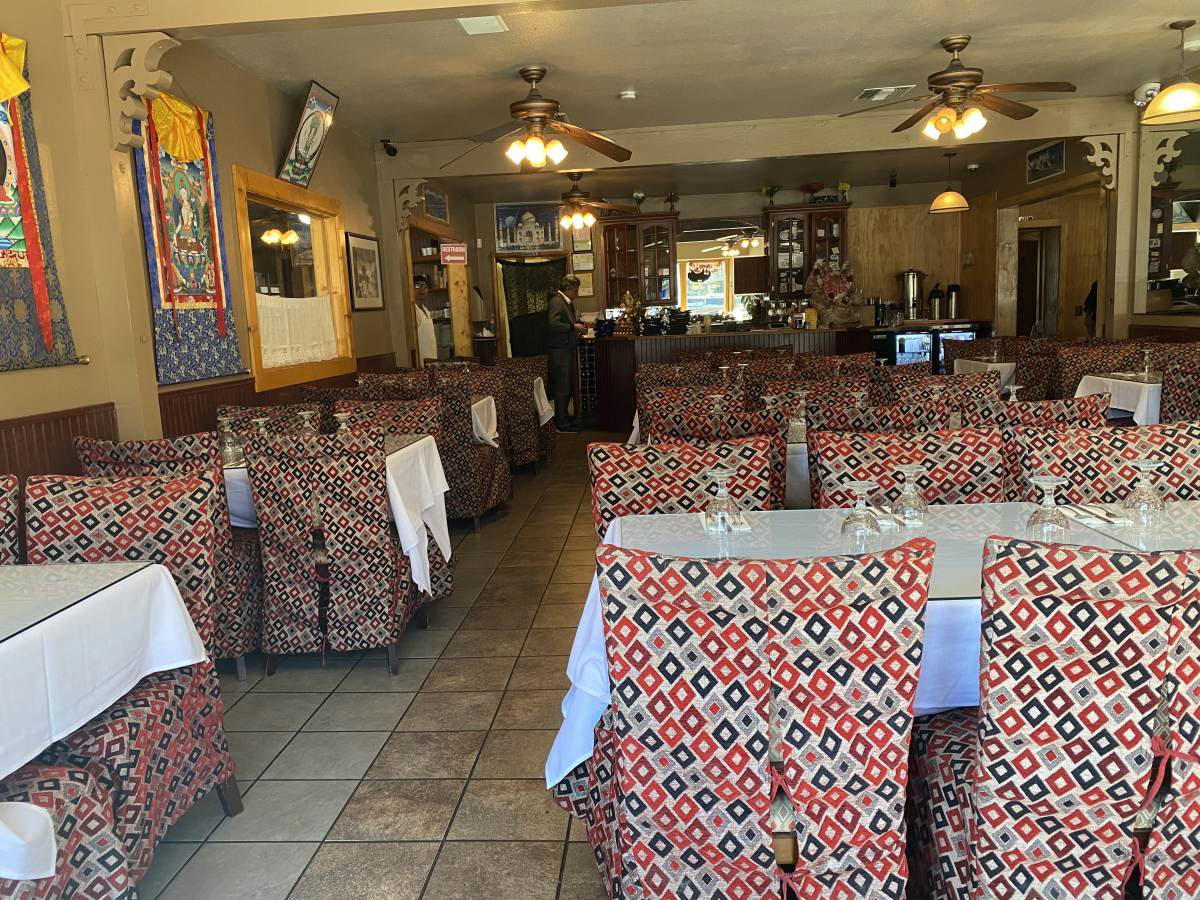
Mountain Town, Distant Mountains
Big Bear Lake sits at roughly 6,750 feet in the San Bernardino Mountains, a resort community built around skiing, lake recreation, and the kind of casual dining that follows both. The dining scene along Pine Knot Avenue runs heavily toward American comfort food, pizza, and lake-town staples. Against that backdrop, Himalayan Restaurant occupies a specific and narrow niche: the cooking of Nepal and the Himalayan region, a tradition that rarely appears anywhere in the mountain communities of Southern California, let alone at this altitude.
What Himalayan Cooking Actually Means
The cuisine of Nepal and the surrounding Himalayan region is shaped by geography as much as culture. High-altitude farming, trade routes connecting South Asia with Tibet and China, and a diversity of ethnic groups have produced a kitchen that sits at an intersection: the spice-forward complexity of the Indian subcontinent, the dumpling and noodle traditions of Tibetan cooking, and the fermented, hearty preparations suited to mountain living. Dal bhat, the lentil soup and rice combination that forms the daily backbone of Nepali eating, is a study in understated depth. Momos, the steamed or fried dumplings found across the Himalayan belt, carry direct lineage to Tibetan and Chinese dumpling traditions while acquiring their own distinct spicing. These are not dishes invented for export; they are the working food of a specific geography, adapted over centuries.
This culinary tradition remains genuinely underrepresented in the American West outside of cities with established Nepali and Tibetan diaspora communities, such as parts of the San Francisco Bay Area or New York. That scarcity gives a restaurant like Himalayan in Big Bear Lake a different kind of relevance than it might have in a metropolitan setting. Here, it fills a gap that the local dining environment does not otherwise address.
The Pine Knot Avenue Address
The restaurant sits at 672 Pine Knot Ave, the main commercial spine of Big Bear Lake village. Pine Knot is a walkable strip, and the address places Himalayan within the cluster of restaurants that draw foot traffic from visitors staying in the village or arriving from the lake. That positioning matters in a resort town where dining decisions are often made on the walk back from an afternoon outdoors rather than via advance reservation. Neighboring options on and around Pine Knot include Big Bear Lake Brewing Company for locally brewed beer and pub fare, and Maggio's Pizza for direct Italian-American. Himalayan sits apart from both in category, price expectation, and culinary reference point.
Scale and Register
Himalayan cooking, at the restaurant level in the United States, typically operates in a mid-register format: table service, a menu organized around shared dishes and rice or bread accompaniments, and a price point that sits well below the tasting-menu tier occupied by restaurants like The French Laundry in Napa, Le Bernardin in New York City, or Alinea in Chicago. It is a different category entirely from the progressive American formats at Lazy Bear in San Francisco or the farm-driven tasting menus of Single Thread Farm in Healdsburg. Himalayan cuisine in a casual restaurant context is communal, approachable, and built around dishes that reward sharing. The cultural logic of the food favors the table rather than the individual plate.
This places Himalayan Restaurant in a comparable set defined not by fine dining credentials but by culinary specificity and regional authenticity. The comparison set that matters here is other restaurants working underrepresented Asian culinary traditions in non-metropolitan contexts, not the Michelin-chasing programs at Providence in Los Angeles, Addison in San Diego, or Blue Hill at Stone Barns in Tarrytown. The ambition here is different in kind, not just in degree.
Cultural Specificity as the Point
Across American dining, the restaurants working non-Western culinary traditions at the highest level have forced a rethinking of what regional authenticity means. Atomix in New York City has built a case for Korean fine dining that operates on its own cultural terms. Causa in Washington, D.C. does the same for Peruvian. Brutø in Denver and Bacchanalia in Atlanta anchor regional American cooking in serious technique. The Inn at Little Washington and Emeril's in New Orleans represent an earlier generation of American culinary institution-building. 8 1/2 Otto e Mezzo Bombana in Hong Kong shows how European culinary tradition transplants into Asian cities. None of these are direct comparisons to a Himalayan restaurant in a California ski town, but they share an underlying question: what does it mean to serve a specific culinary tradition with integrity in a place where that tradition is not the default?
In Big Bear Lake, where the default is firmly American, a kitchen working Himalayan recipes engages that question at a more modest scale but in a context where the gap is wider.
Planning a Visit
The restaurant is located at 672 Pine Knot Ave, within walking distance of the main village cluster. The restaurant is walk-in friendly, with hours of 11 AM to 9 PM Monday through Friday and Sunday, and 11 AM to 10 PM on Saturday. Big Bear Lake's high season runs from December through March for winter sports and June through August for lake activity, and restaurant demand across the village corridor compresses accordingly during those periods. Visitors planning around the shoulder months of April-May or September-October will find a quieter version of the same street.
Cost and Credentials
Comparable venues nearby, for context on price, style, and recognition.
| Venue | Cuisine | Price | Notes |
|---|---|---|---|
| Himalayan RestaurantThis venue — the venue you are viewing | Not listed | $$ | Not listed |
| Big Bear Lake Brewing Company | Not listed | $$ | Big Bear Village, Craft Beer & Polished Pub Fare |
| Maggio's Pizza | Not listed | $$ | Interlaken Center, Traditional Italian Pizza |
| Badmaash | Downtown LA, Modern Indian Gastropub | $$ | Not listed |
| Nirvana | Not listed | $$ | Arcadia, Authentic North Indian Punjabi Cuisine |
| Addi's Tandoor | Not listed | $$ | Redondo Beach, Authentic Goan Tandoori Indian |
Continue exploring
More in Big Bear Lake
Restaurants in Big Bear Lake
Browse all →
Bars in Big Bear Lake
Browse all →

At a Glance
- Cozy
- Relaxed
- Rustic
- Family
- Casual Hangout
- Local Sourcing
Current opening hours
- Monday
- 11 AM–9 PM
- Tuesday
- 11 AM–9 PM
- Wednesday
- 11 AM–9 PM
- Thursday
- 11 AM–9 PM
- Friday
- 11 AM–9 PM
- Saturday
- 11 AM–10 PM
- Sunday
- 11 AM–9 PM
Hours can change for holidays and private events. Last verified .
Homey and relaxed setting with pleasant, relaxing atmosphere welcoming ski parkas and snow boots.