Harry Morgan
Harry Morgan on St John's Wood High Street is one of London's most enduring Jewish deli-style institutions, trading in salt beef sandwiches and comfort-driven dishes that have anchored the neighbourhood for decades. The address sits a short walk from Lord's Cricket Ground, drawing a local crowd that returns on habit rather than occasion. Its longevity in a demanding city says more than any award could.
- Address
- 29-31 St John's Wood High St, London NW8 7NH, United Kingdom
- Phone
- +44 20 7722 1869
- Website
- harryms.co.uk
- Directions
- Get directions
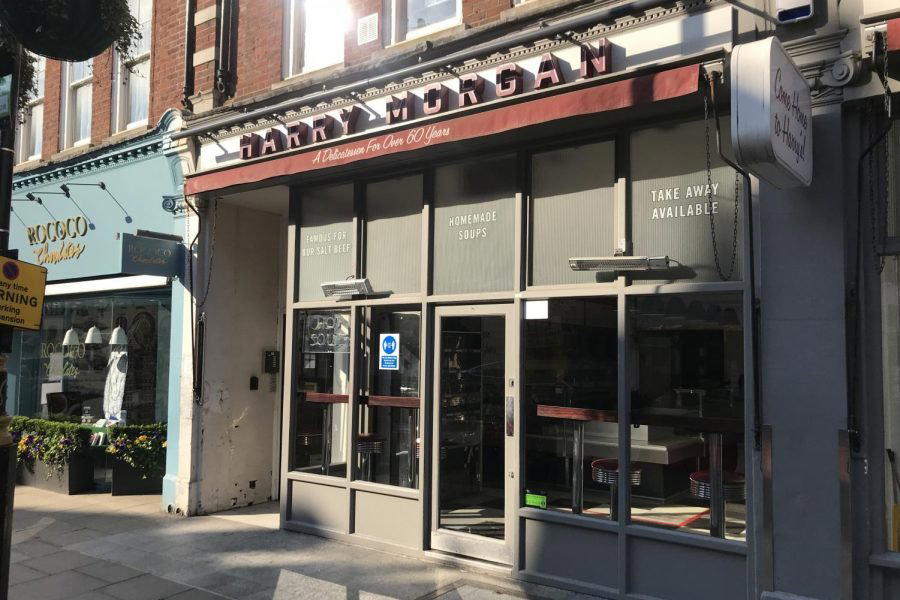
St John's Wood's Salt Beef Anchor
St John's Wood High Street operates at a different register from most of London's restaurant corridors. The boutique independents, the wine bars, the low-key continental cafes, the street has always maintained a residential coherence that keeps it from feeling like a destination strip. Against that backdrop, Harry Morgan at 29 to 31 St John's Wood High Street has become part of how the neighbourhood understands itself. This is not a place that needs to signal its relevance. Its relevance is structural.
The deli tradition Harry Morgan represents sits within a specific strand of London's food history: the Jewish deli counter, imported from Central European practice and recalibrated over generations for British tastes and British ingredients. Where French and Italian techniques have largely dominated the conversation at London's formal end, see Restaurant Gordon Ramsay, Sketch, The Lecture Room and Library, or CORE by Clare Smyth, the deli tradition has always worked from a different set of assumptions: preservation over refinement, community over occasion, repetition over novelty. Salt beef, in that framework, is not a heritage gesture. It is the point.
The Intersection of Method and Material
The editorial angle on Harry Morgan is not nostalgia, it is technique. Salt beef is a curing method with deep roots in Ashkenazi Jewish cooking, developed partly out of necessity in environments where refrigeration was unreliable and meat needed to last. The brisket is submerged in a brine of salt, sugar, and spices, typically including coriander, black pepper, bay, and allspice, and held for several days before being slow-cooked until it yields under almost no pressure. The result is a cut that has been transformed not by heat alone but by time and chemistry, its connective tissue broken down, its flavour concentrated and shifted toward something that reads as both savoury and faintly sweet.
What makes the London version of this tradition interesting, in the context of local ingredients meeting imported method, is that British beef, particularly from breeds raised on pasture in the UK, carries different fat distribution and flavour profiles from the grain-finished American beef that dominates the New York deli conversation. The method is the same; the material produces a different result. This is the dynamic that distinguishes places like Harry Morgan from their transatlantic counterparts, and it is the same dynamic, at a different price point and formality level, that underpins much of what restaurants like Dinner by Heston Blumenthal do with historical British recipes, the technique is borrowed or recovered, but the produce is fundamentally local.
That intersection of imported method and indigenous product is not distinctive to the high end. It runs through British food at every level, from the country house dining rooms of Waterside Inn in Bray and Gidleigh Park in Chagford, both working classical European frameworks against British seasonal produce, to the more radical interpretations at L'Enclume in Cartmel and Moor Hall in Aughton, where the produce itself becomes the conceptual driver. The restaurant sits at the informal end of that spectrum, but it belongs to the same broader conversation.
What the Neighbourhood Tells You
St John's Wood has a historically significant Jewish community, which is part of why a deli of this type took root here and held. The area's proximity to Regent's Park, its detached Victorian houses, and its international population, including a long-standing Israeli and American expat presence, created an audience for this kind of food that did not need to be educated or converted. The restaurant did not have to build a market. It served one that already existed and kept returning.
That consistent local patronage is what separates a genuine neighbourhood institution from a place that performs the idea of one. London has many restaurants that use reclaimed wood and vintage signage to suggest heritage they do not possess. Longevity on a residential high street, where the customer base is repeat rather than tourist, is harder to fake. The regulars at a place like this are not drawn by a PR campaign. They are drawn by a sandwich they have been eating for years.
For comparative context on where London's more formal dining sits, The Ledbury and operations outside London such as Midsummer House in Cambridge, Opheem in Birmingham, or Ynyshir Hall in Machynlleth represent the ambitious, awarded tier of British dining. The restaurant is not competing in that category, nor is it trying to. The competitive set here is a different one: places where the food functions as reliable ritual rather than considered event. Internationally, that puts it in the same conversation as delis in New York, where Le Bernardin and Lazy Bear in San Francisco represent the antithetical pole, tasting-menu formality, multi-hour commitments, and menus that change with the season. The deli is the other thing entirely: fixed, repeatable, resistant to trend.
Planning a Visit
The restaurant is on St John's Wood High Street, reachable in under five minutes on foot from St John's Wood Underground station on the Jubilee line. The address puts it close to Lord's Cricket Ground, and on match days the surrounding streets are considerably busier than usual, worth factoring into timing. The venue is suited to walk-ins for a solo lunch or casual visit with a small group. For broader London planning across the full range of price points and formats, the full London restaurants guide covers the city's dining from neighbourhood institutions through to the awarded formal tier. Those looking at other praised British destinations beyond London might also consider Restaurant Andrew Fairlie in Auchterarder or hide and fox in Saltwood as part of a wider itinerary. And for those specifically interested in how informal cooking at Hand and Flowers in Marlow can sit alongside a Michelin star, that site is worth reading as another example of how the British food scene holds formal and casual in productive tension.
Awards and Standing
Comparable venues nearby, for context on price, style, and recognition.
| Venue | Cuisine | Price | Notes |
|---|---|---|---|
| Harry MorganThis venue — the venue you are viewing | New York-style Jewish Deli | $$ | Not listed |
| Chick 'n' Sours | Asian-Inspired Fried Chicken | $$ | St Giles |
| Loop | American Bar | $$ | Leyton |
| Black Bear Burger | Modern American Burgers | $$ | Clerkenwell |
| Heard | Modern Smash Burgers | $$ | Borough |
| Gourmet Burger Club - Covent Garden | Premium Gourmet Burgers | $$ | Covent Garden |
Continue exploring
More in London
Restaurants in London
Browse all →
Bars in London
Browse all →
Hotels in London
Browse all →




At a Glance
- Classic
- Cozy
- Casual Hangout
- Family
- Historic Building
American diner-style with casual, comforting atmosphere.