HanKki
Our verdict
Durant Avenue at Dusk: What Korean Street Food Looks Like in Berkeley The stretch of Durant Avenue near the UC Berkeley campus operates on a different clock than the rest of the city. By late afternoon, the sidewalks fill with students moving...

Pearl is the En Primeur Club membership app — saves, bookings, and concierge access live there. Same editors, same standards.
- Address
- 2433 Durant Ave F, Berkeley, CA 94704
- Phone
- (510) 647-9566
- Hours
- Mon–Fri 11 AM–8:30 PMSat–Sun 11:30 AM–8 PM
- Website
- hankkirestaurant.com
- Directions
- Get directions
The menu
What to order
- Spicy Rice Cake (Dduk Bokki)
- Bulgogi Stew
- Kimchi Soup with Pork
Durant Avenue at Dusk: What Korean Street Food Looks Like in Berkeley
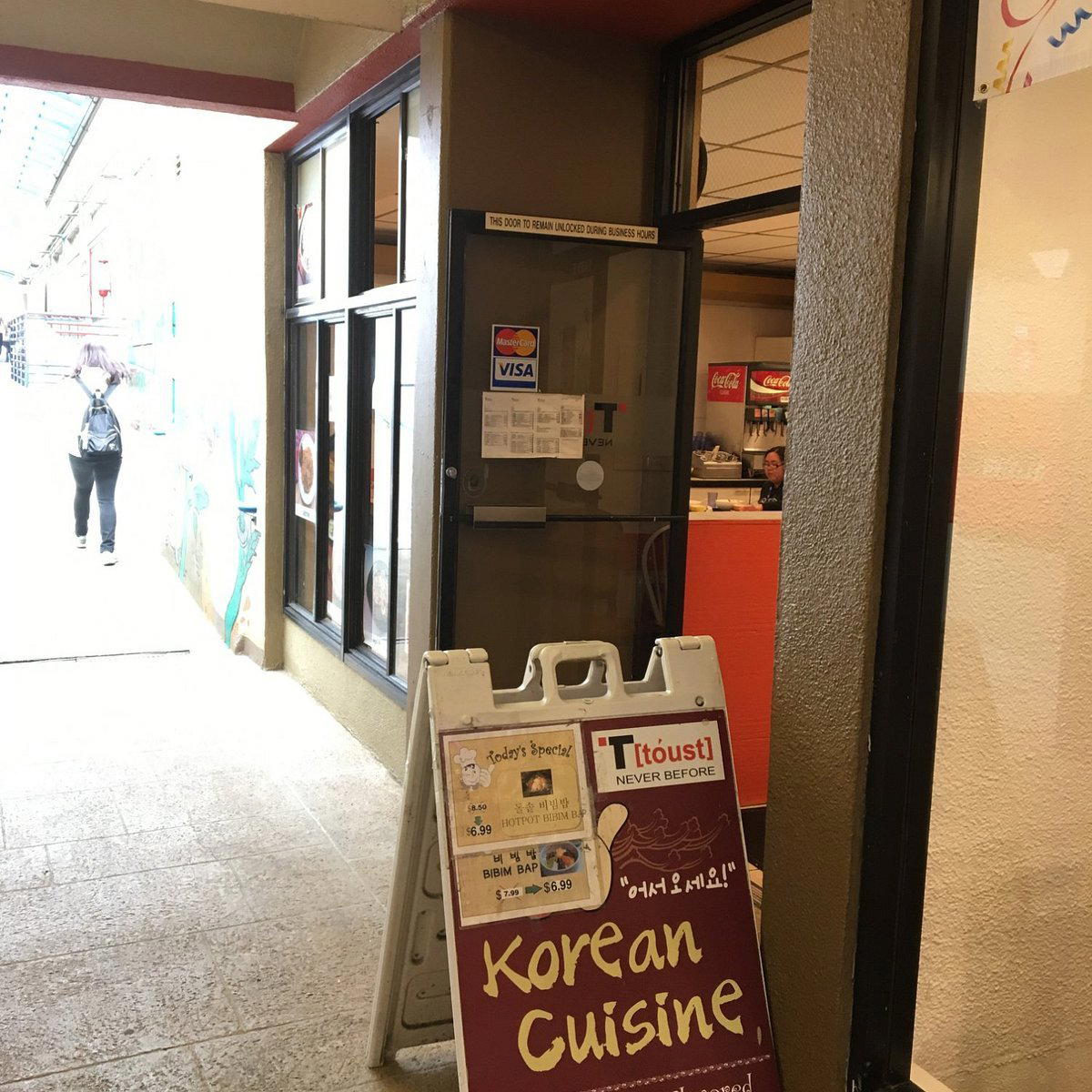
The stretch of Durant Avenue near the UC Berkeley campus operates on a different clock than the rest of the city. By late afternoon, the sidewalks fill with students moving between libraries and apartments, and the food options along the strip reflect both the neighborhood's appetite and its budget. HanKki, at 2433 Durant Ave F, sits within this corridor and positions itself at the intersection where Korean culinary traditions meet the Bay Area's well-documented preference for ingredient-first cooking.
Berkeley's restaurant scene has spent decades building a reputation around local sourcing and technique-led cooking, from the foundational influence of Chez Panisse on Shattuck to the fermentation focus of operations like Cultured Pickle Shop. Korean cuisine has historically sat slightly apart from that conversation in Northern California, more associated with Los Angeles's Koreatown density or the suburban corridors of the South Bay. What shifts that equation is when Korean technique is applied to California-grown produce with the same rigor the Bay Area demands of its European-lineage kitchens.
The Korean Kitchen and the California Pantry
Korean cooking is built on fermentation, layered seasoning, and a precision around heat and timing that Western audiences often underestimate. Gochugaru, doenjang, and ganjang are not background flavors but structural elements, the way a stock base functions in classical French cooking. When those techniques meet the produce density of Northern California, particularly the year-round availability of Brassica vegetables, alliums, stone fruits, and heritage grains that define the region, the results tend to read differently than either tradition in isolation.
This is the broader pattern in which HanKki operates. Across American cities, a generation of Korean-American kitchens has moved away from the Korean-Chinese-Japanese fusion that dominated the 2000s and toward something more direct: Korean method, local ingredient, less translation for a non-Korean audience. In New York, Atomix in New York City represents the high-tasting-menu expression of that shift. Berkeley's version tends toward the casual and accessible, which reflects both the neighborhood's economics and its cultural preferences.
The Durant Avenue location places HanKki within walking distance of the UC Berkeley campus, which shapes both the clientele and the format. Student-heavy corridors in university cities tend to reward places that execute a specific thing well at a price point that sustains repeat visits. The question for a Korean kitchen in that context is whether the food holds its integrity under those constraints, or whether cost pressures force substitutions that flatten the flavor profile. Berkeley's supply chain, with proximity to the Ferry Plaza farmers markets, the Oakland produce district, and the broader network of Bay Area specialty suppliers, makes that integrity easier to maintain than in most American cities.
Korean Technique in a Bay Area Frame
The intersection of imported culinary method and regional ingredients is not unique to Korean food in Berkeley. Agrodolce works within Italian-American tradition using California produce rhythms. Ajanta has built a long record of applying regional Indian techniques to locally available seasonal vegetables. AKEMI sits within the Japanese-California tradition that has become one of the defining culinary formats of the Bay Area. Each of these represents a version of the same underlying editorial question: what happens when a non-Western culinary grammar is applied with full seriousness to the ingredients of one of the world's most developed local food systems?
Answer, when it works, is food that is neither purely ethnic nor purely Californian. The technique is the anchor. The ingredients shift with the season and the supplier. The result is a kitchen that is in genuine dialogue with its place rather than simply transplanted from somewhere else. This is the model that has sustained places like Single Thread Farm in Healdsburg at the fine-dining tier, and at the casual end it is what separates kitchens with culinary seriousness from those operating on nostalgia or novelty alone.
For comparison, consider what the format looks like at higher price points nationally. Blue Hill at Stone Barns in Tarrytown and The French Laundry in Napa have each built their identities around a specific articulation of place-driven cooking at the high end. The accessible-format version of that argument is harder to execute, because the price constraints are real and the margin for error in sourcing is smaller. Berkeley has a density of kitchens trying to work in that register, and the food community here is literate enough to notice when a kitchen is doing it honestly.
The Neighborhood Context and How to Plan a Visit
Durant Avenue is not Berkeley's most prominent dining corridor. Telegraph Avenue runs parallel and carries more foot traffic; Shattuck to the north has the higher-profile restaurant density including 900 Grayson and the broader Gourmet Ghetto cluster. Durant sits in the campus shadow, which keeps the atmosphere lower-key and the customer base more local. This is not a destination strip in the way that Fourth Street or the Elmwood district function, which means the kitchens here tend to compete on food rather than location or design spectacle.
For a fuller picture of how HanKki fits within Berkeley's dining options, the EP Club Berkeley restaurants guide maps the city's key corridors and cuisine types with comparative context. If you are building a multi-day itinerary around the East Bay, Angeline's Louisiana Kitchen covers the Southern comfort register on Shattuck, and 900 Grayson handles the weekend brunch tier.
At the national level, Korean-American fine dining has produced some of the most critically recognized work of the past decade, with Atomix earning two Michelin stars for its omakase approach to Korean technique. The casual end of the same tradition has been slower to receive equivalent critical attention, but the culinary seriousness is present in the better kitchens. Providence in Los Angeles and Le Bernardin in New York City represent the technical benchmark for ingredient-driven cooking in their respective categories; the standard they set for sourcing and technique discipline informs what the leading casual kitchens aspire to, even at a fraction of the price point.
HanKki's address at 2433 Durant Ave F places it in a suite-style commercial space rather than a standalone storefront, which is common along this section of Durant. Specific hours, pricing, and booking requirements are best confirmed directly with the venue before visiting, as these details are not publicly listed through EP Club's database at this time. The Durant and Telegraph corridor is served by multiple AC Transit lines, and the Downtown Berkeley BART station is approximately a fifteen-minute walk north along Telegraph.
Frequently asked questions
How do I find HanKki?
HanKki is located at 2433 Durant Ave F, Berkeley, CA 94704, Berkeley.
Is HanKki a good option for a quick lunch near UC Berkeley campus?
HanKki sits at 2433 Durant Ave F, roughly a block from the south edge of the UC Berkeley campus, which makes it one of the more convenient Korean options for a between-class or post-lecture meal. The Korean street food format is built for speed and portability rather than long table service. Durant Avenue sees its highest foot traffic during the midday and late-afternoon windows, so the kitchen is accustomed to volume during those hours.
What dish is HanKki famous for?
HanKki's menu centers on Korean street food formats, the kind built around bold fermented sauces, seasoned proteins, and precision heat. The Durant Avenue location draws a consistent crowd from the UC Berkeley campus, which points to dishes that are fast, affordable, and repeatable rather than any single showpiece plate.
Do I need a reservation for HanKki?
Korean street food counters on the campus fringe rarely run a reservation system, and HanKki's Durant Avenue address fits that walk-in model. The heaviest foot traffic lands in the late afternoon and early evening when classes end, so arriving before 5:30 p.m. or after the dinner rush tends to mean shorter waits. No booking infrastructure is listed for this location.
What's the signature at HanKki?
The signature at a Korean street food spot in Berkeley's campus corridor is almost always defined by layered seasoning over sheer complexity: gochujang-based sauces, fermented bases, and controlled char are the craft markers of this category. The consistency that draws repeat visits from a student-dense neighborhood is itself a signal of what the kitchen does reliably.
Do they accommodate allergies at HanKki?
Korean cooking relies heavily on fermented condiments, soy-based sauces, and sesame, which means common allergens are woven into most base preparations.
Is HanKki overpriced or worth every penny?
Korean street food on a UC Berkeley block is priced for a campus economy, which generally means portions and value align more closely than at destination dining rooms. The consistent foot traffic from students and neighborhood regulars suggests the perceived value holds.
Reputation First
Comparable venues nearby, for context on price, style, and recognition.
| Venue | Cuisine | Price | Awards | Notes |
|---|---|---|---|---|
| HanKkiThis venue — the venue you are viewing | Korean Comfort Food | $10–20 | Not listed | Not listed |
| Bear's Ramen House | Korean Ramen & Noodles | $10–20 | Not listed | Telegraph Avenue |
| State Flour Pizza Company | New York-Style Pizza | $20–30 | Not listed | College Avenue |
| 900 Grayson | American Comfort Cafe | $20–30 | Diners, Drive-Ins and Dives Featured Restaurant | Southwest Berkeley |
| Heyday | Dining | Not listed | Not listed | Berkeley |
| Jupiter | Wood-Fired Pizza & Craft Beer Brewpub | $20–30 | Not listed | Downtown |