
Tabelog 100 #57
Our verdict
Hakodate Shio Ramen Shinano belongs to the city’s salt-ramen tradition rather than the luxury dining circuit, with recognition on the Tabelog 100 Ramen Hokkaido 2025 list giving it a clear quality signal. The appeal is cultural as much as culinary: a compact ramen house near the station, built around Hakodate’s clean shio style and the fast, practical rhythm of local noodle shops.

Pearl is the En Primeur Club membership app — saves, bookings, and concierge access live there. Same editors, same standards.
- Address
- 20-10 Wakamatsucho, Hakodate, Hokkaido 040-0063, Japan
- Phone
- +81 138-22-5552
- Hours
- Mon–Sat 11:30 AM–1:45 PM, 5–10:15 PMSun Closed
- Directions
- Get directions
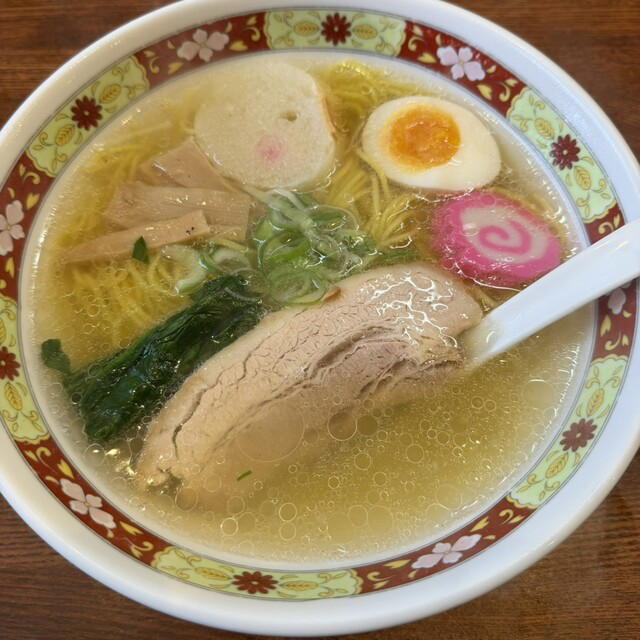
The approach to Hakodate ramen is usually modest: an unfussy room, steam, and the quick turnover of people who know exactly what they came for. Hakodate Shio Ramen Shinano fits that grammar. This is not the long-form theatre of a tasting menu or the larger meal economy that many travellers associate with Hakodate. It belongs to the city’s clearer noodle language, where shio ramen carries a local significance that gives a simple bowl more context than its price might suggest.
Hakodate’s ramen identity is tied to salt broth, a style that tends to read lighter than many richer Hokkaido associations. That matters in a city where travellers often arrive expecting more elaborate local meals, then discover that a plain-looking bowl of noodles can explain the place with less ceremony. The shop’s selection for Tabelog 100 Ramen Hokkaido 2025 places it inside a competitive regional category, but the stronger editorial point is its role in the city’s daily food culture: quick, low-friction, and rooted in a local ramen vocabulary rather than destination-restaurant theatre.
Hakodate's shio ramen culture in a compact room
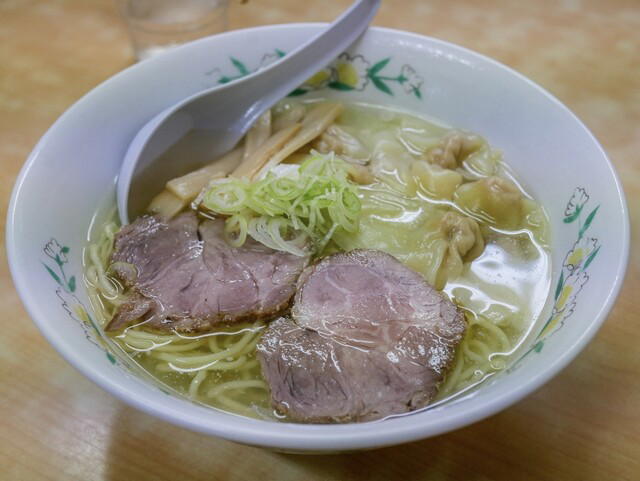
Regional ramen in Japan is often discussed through big-city shorthand: Sapporo miso, Hakata tonkotsu, Kitakata shoyu. Hakodate’s contribution is quieter. Shio ramen here is generally valued for clarity rather than density, and the format rewards restraint: broth, noodles, seasoning, and pace need to align without turning the bowl into a showcase. A compact ramen room reinforces that category. It is not designed for lingering; it is designed for concentration, turnover, and the particular intimacy of watching a kitchen repeat a narrow set of movements through service.
That compactness also changes the reader’s decision. In Hakodate, a meal can swing from the casual noodle tier to dining rooms with much higher spend. Compared with Hakodate Fusaya Daimon ten, Uni Senmon Ten Yoichiya Hakodate asaichi ten, or the slower dining register represented by Colz, this ramen address sits in a different part of the city’s food economy. It is closer in spirit to everyday local eating than to occasion dining, even with award recognition attached.
The 2025 Tabelog 100 Ramen Hokkaido selection is the trust signal to take seriously here. Ramen awards in Japan can be noisy, but regional shortlists matter because they separate consistent local operators from shops that ride a single viral bowl. The same recognition also prevents a false reading of the venue as merely convenient. Ease matters, but convenience is not the argument; the argument is that Hakodate’s signature ramen style has a credible representative in a room small enough to keep the experience direct.
Where it fits in a Hakodate food itinerary
Hakodate is a compact eating city with several overlapping identities. Seafood pushes one part of the city’s dining image to the foreground. Everyday restaurants speak to Hakodate’s local rhythms and its range of outside influences. Contemporary dining adds another layer for travellers staying more than one night. Within that spread, ramen is the reset meal: faster, cheaper, and more culturally specific than a generic convenience stop.
For travellers mapping a day of eating, the useful comparison is not only ramen against ramen. Other Hakodate dining rooms show how the city’s everyday range stretches beyond noodles, while Colz points toward a slower dining register. Hakodate Fusaya Daimon ten, Uni Murakami, Uni Senmon Ten Yoichiya Hakodate asaichi ten, and Jiyoken also help frame the city’s broader dining spectrum. The point is sequencing: shio ramen works well when the rest of the trip is heavy with richer Hokkaido cooking or more elaborate meals.
The venue’s Tabelog 100 Ramen Hokkaido 2025 recognition gives it a different kind of authority from a new-wave ramen shop built around scarcity. It has the profile of a local ramen address that has earned regional attention without changing category. The format is casual, the price band is listed at - JPY 999 - JPY 999, and the sensible expectation is a quick ramen rhythm rather than a planned fine-dining appointment. That practical character is part of the appeal rather than a limitation.
The city around the bowl
Ramen is only one lane of Hakodate, and travellers who treat the city as a single seafood stop miss its range. Pairing meals with movement through the city matters; the lodging overview is in Our full Hakodate hotels guide. After dinner, the city’s drinking culture is better understood through Our full Hakodate bars guide, while Our full Hakodate wineries guide and Our full Hakodate experiences guide help frame the wider Hokkaido context.
Readers comparing across Japan should avoid treating every casual address as interchangeable. A ramen house in Hakodate carries different cultural information from other everyday dining rooms in other Japanese cities, just as Hakodate’s broader restaurant scene differs from dining elsewhere in Hokkaido and beyond. Even outside Japan, the same principle applies: Japanese food culture shifts when it leaves its regional setting, and a bowl tied closely to Hakodate should be read through that local lens.
The direct answer is simple: the standout thing about Hakodate Shio Ramen Shinano is its credible expression of Hakodate’s shio ramen tradition, supported by Tabelog 100 Ramen Hokkaido 2025 recognition and a focused casual format. It is not the city’s grandest meal, and it is not trying to be. Its value is sharper than that: a compact, award-noted ramen stop that explains why salt ramen remains central to Hakodate’s dining identity.
Frequently asked questions
What are the opening hours for Hakodate Shio Ramen Shinano?
Specific opening hours for Hakodate Shio Ramen Shinano are not provided here.
Is Hakodate Shio Ramen Shinano expensive?
Pricing at Hakodate Shio Ramen Shinano is listed as - JPY 999 - JPY 999, with both dinner and lunch budgeted at - JPY 999.
What part of town is Hakodate Shio Ramen Shinano in?
Hakodate.
What's the standout thing about Hakodate Shio Ramen Shinano?
The clearest signal is the Tabelog 100 Ramen Hokkaido 2025 selection, which places Hakodate Shio Ramen Shinano in a regional ramen field. Its casual format keeps the experience focused, and the Hakodate setting makes it a direct expression of the city’s shio ramen identity.
Cost Snapshot
Nearby venues at a similar price tier for orientation.
| Venue | Cuisine | Price | Awards | Notes |
|---|---|---|---|---|
| Hakodate Shio Ramen ShinanoThis venue — the venue you are viewing | Hakodate Salt Ramen | $1–10 | Tabelog 100 #57 | Not listed |
| Jiyoken | Traditional Hakodate shio ramen | $1–10 | Tabelog 100 #32 | Matsukaze-cho / Daimon area, Traditional Hakodate shio ramen |
| Ajisai Honten | Hakodate shio ramen | $10–20 | Tabelog 100 #11 | Goryokaku, Hakodate shio ramen |
| Uni Senmon Ten Yoichiya Hakodate asaichi ten | Hokkaido uni and seafood donburi | $50–100 | Tabelog 100 #66 | Hakodate Asaichi (Morning Market) / near Hakodate Station, Hokkaido uni and seafood donburi |
| Shunsai Shungyo Tajima | Seasonal Japanese Izakaya with Omakase | $30–50 | Tabelog 100 #26 | Tomiokacho, Seasonal Japanese Izakaya with Omakase |
| Kira | Creative Japanese Kaiseki | $20–30 | Not listed | Sumiyoshi-cho, Creative Japanese Kaiseki |
Recognition history
Dated appearances from independent guides and award organizations, with the underlying list record or original source where available.
Tabelog 100 #57 · No. 57
Tabelog · Tabelog 100 - Ramen - HOKKAIDO - 2025
Details
- Classic
- Cozy
- Solo
- Casual Hangout
- Family
- Group Dining
- Standalone
- Beer Program
- Street Scene
- Counter Dining
- A La Carte
- Beer
Current opening hours
- Monday
- 11:30 AM–1:45 PM, 5–10:15 PM
- Tuesday
- 11:30 AM–1:45 PM, 5–10:15 PM
- Wednesday
- 11:30 AM–1:45 PM, 5–10:15 PM
- Thursday
- 11:30 AM–1:45 PM, 5–10:15 PM
- Friday
- 11:30 AM–1:45 PM, 5–10:15 PM
- Saturday
- 11:30 AM–1:45 PM, 5–10:15 PM
- Sunday
- Closed
Hours can change for holidays and private events. Last verified .
Unassuming, cozy, and traditional, with a simple ramen-shop atmosphere focused on quick, satisfying bowls rather than a polished dining room.