Guttenberghaus
Our verdict
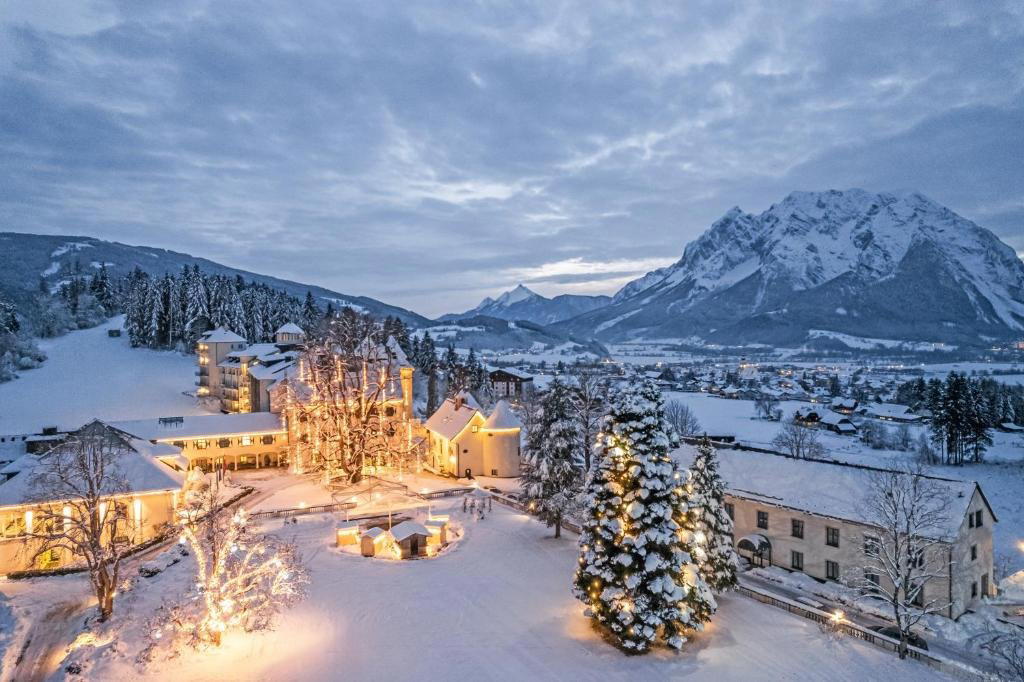
Guttenberghaus serves Traditional Austrian Alpine Hut Cuisine in a historic building with panoramic mountain views, suited to quiet lunch or dinner plans.

Pearl is the En Primeur Club membership app, where members save venues, book tables and use the concierge.
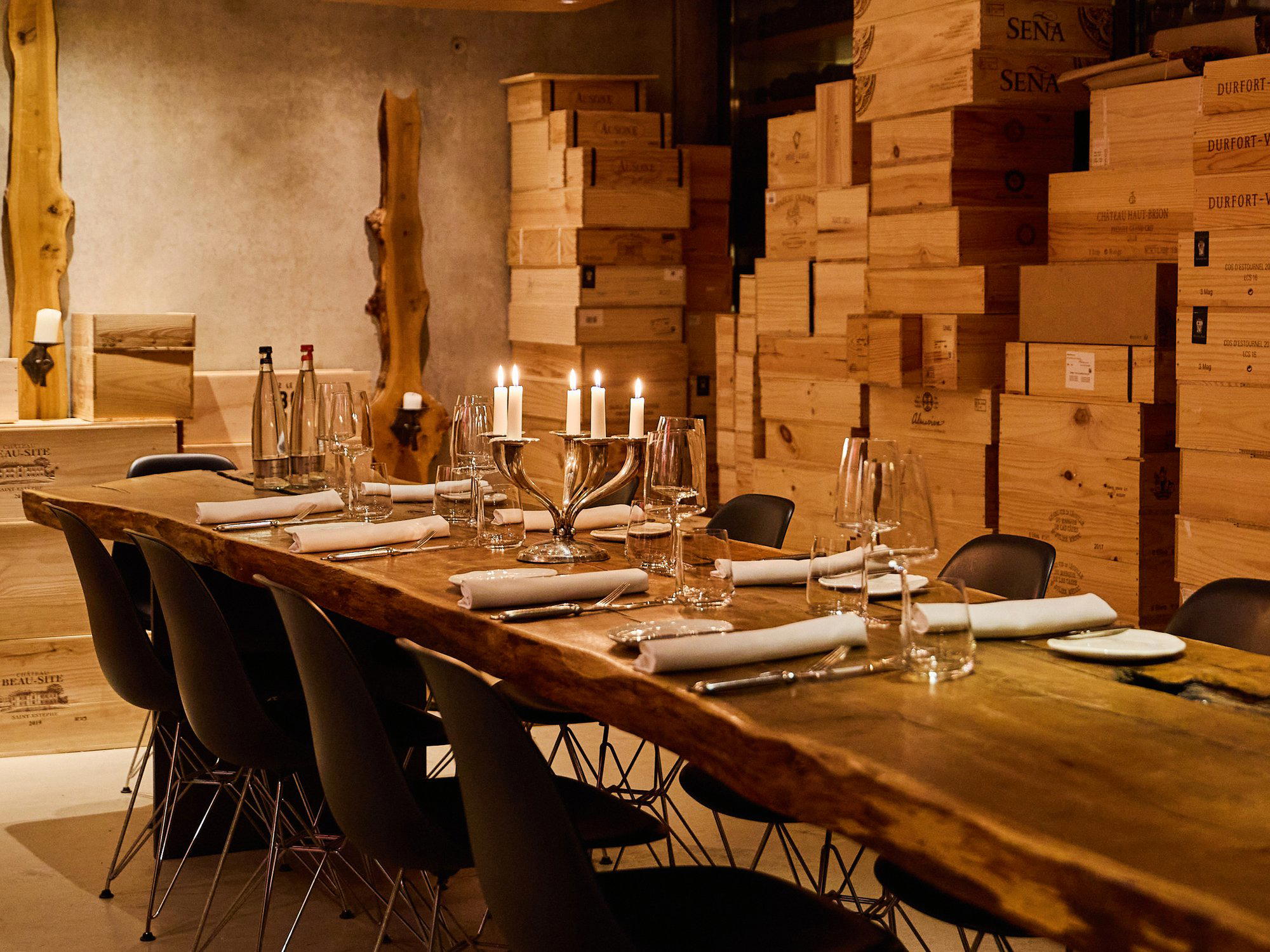
Where the Dachstein Sets the Mood
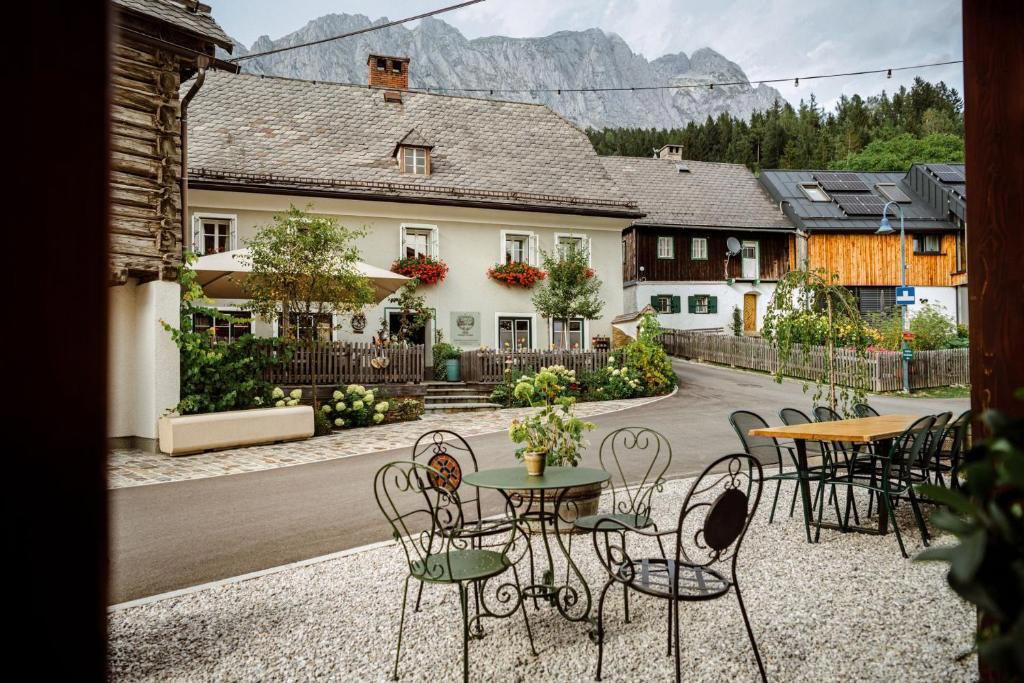
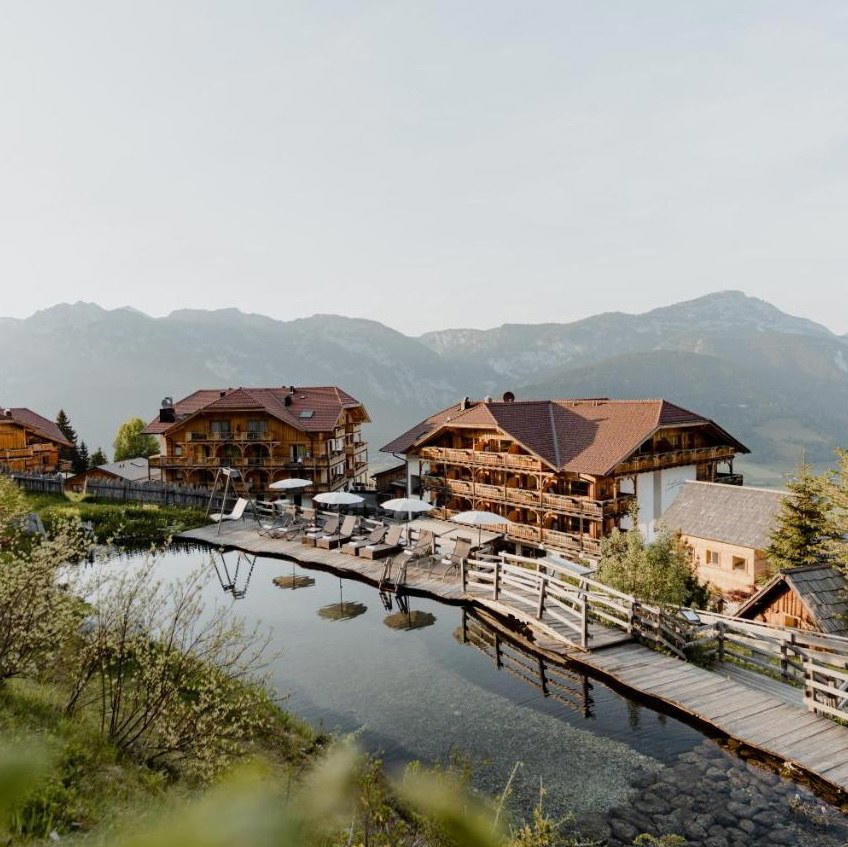
Arriving in Ramsau am Dachstein in winter, you encounter a particular quality of alpine stillness: snow-muffled roads, the dark outline of spruce forests, and the Dachstein massif holding its position above everything else. The village sits at around 1,100 metres, high enough that the air carries a different weight, and the buildings along the valley road feel anchored to the landscape rather than planted on it. Guttenberghaus, addressed at Ramsau 107, occupies that same character of place: a structure that reads as part of the valley's fabric rather than an interruption of it.
The sensory experience of eating in the Austrian alpine interior is shaped as much by the setting as by what arrives on the plate. Timber construction holds warmth differently from stone; light through small windows changes through the day. These are the conditions under which Styrian and Salzburg alpine cooking developed, and they remain the conditions in which it is leading understood. Guttenberghaus sits within that tradition and within a village where several other addresses, including Brandalm and Ennstalerhof, occupy broadly similar positioning: locally grounded, seasonally oriented, and oriented toward guests who are here for the mountains rather than for a restaurant destination in isolation.
The Austrian Alpine Kitchen in Context
To understand what a place like Guttenberghaus represents, it helps to understand how Austrian alpine dining stratifies. At the leading, you have destination restaurants with serious critical recognition: addresses such as Döllerer in Golling an der Salzach or Obauer in Werfen, which attract guests who plan itineraries around the table rather than the trail. Below that tier, but not beneath consideration, sits a broad category of Gasthäuser and alpine inns that do something arguably harder: they feed people who have spent serious energy in the mountains, they do it at a pace that suits the rhythm of the day, and they draw on produce that is genuinely local rather than performatively so.
In Ramsau, that middle tier includes Gasthof Hunerkogel and Knoll Lift-Stüberl, alongside Lärchbodenalm for on-mountain eating. These addresses are not in competition with Steirereck im Stadtpark in Vienna or Ikarus in Salzburg. They belong to a different category of value: the category where the price of a meal is set partly by the altitude at which you eat it and partly by the absence of a comparable alternative for thirty kilometres in any direction. Guttenberghaus occupies that same space.
Atmosphere and the Logic of Alpine Rooms
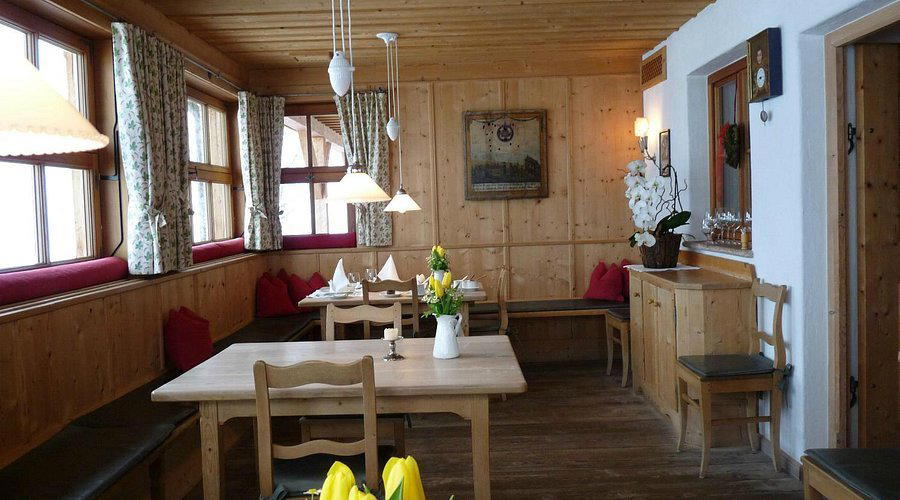
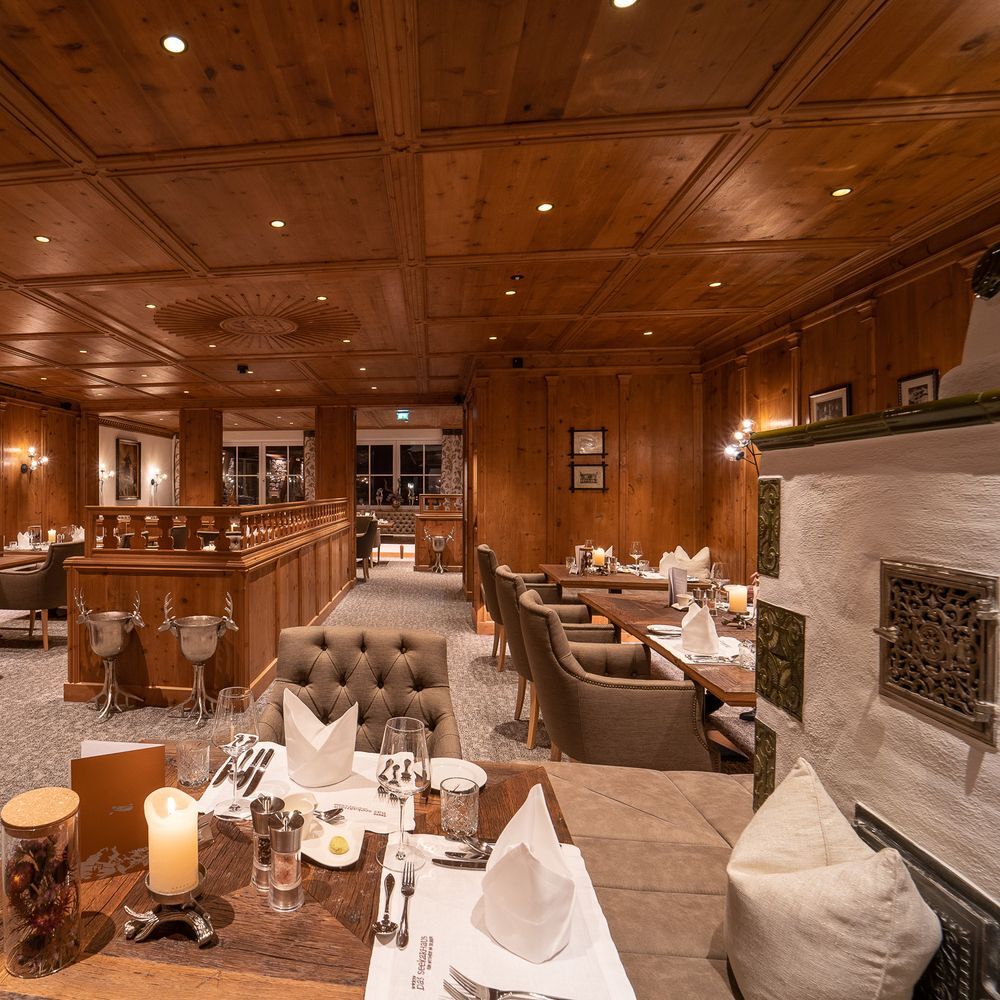
The sensory logic of an alpine Gasthaus follows a consistent grammar. Rooms tend toward low ceilings and close proportions, which trap warmth efficiently and create an acoustic intimacy that larger, more designed spaces lack. The smell of a wood-burning or tiled stove (Kachelofen), when present, is one of the more reliable atmospheric signals that you are in a place built for function as well as hospitality. These details are not decorative choices; they are the material record of how mountain communities ate and gathered.
That atmosphere is seasonal in a specific sense. Winter delivers the combination of cold outside and warmth inside that the architecture was designed to maximise. The contrast between a morning on the Dachstein slopes and an afternoon at a table with a bowl of Tafelspitz or a plate of Kasnocken is one of the genuinely satisfying structural experiences of alpine travel. Summer in Ramsau operates differently: longer light, open windows, and the meadow character of the Ramsau plateau replace the compressed, fire-and-timber mood. Both are legitimate ways to encounter a place like this, but they are different experiences, and the winter version tends to reward the atmospheric frame more fully.
Austrian alpine cooking at this level draws on produce with a particular provenance logic: dairy from cattle that spend summers on high pasture, game from local hunting, freshwater fish from nearby rivers and lakes. The cooking that emerges from these inputs is not elaborate. It does not need to be. The restraint is the point. At the high end of Austrian fine dining, chefs at places such as Kräuterreich by Vitus Winkler in Sankt Veit im Pongau or Landhaus Bacher in Mautern an der Donau work with similar raw materials but apply more technique and curation. At the village Gasthaus level, the skill lies in sourcing well and not overcomplicating what arrives at the table.
How Ramsau Fits Into a Wider Austrian Mountain Circuit
Ramsau am Dachstein sits within a broader geography of Austrian alpine dining that rewards planning. To the west, Gourmetrestaurant Tannenhof in Sankt Anton am Arlberg and Griggeler Stuba in Lech represent the premium end of Arlberg dining. To the north, Restaurant 141 by Joachim Jaud in Mieming operates in a different register. Ois in Neufelden charts its own course in Upper Austria. These are reference points for understanding where Ramsau sits: it is not positioned as a culinary destination in the way that Lech or Golling might be, but it offers a quality of place and a consistency of alpine character that has its own logic.
For guests planning around skiing and hiking rather than around restaurant reservations, the Dachstein region delivers on atmosphere and access. The ski area runs from late autumn through spring, and the plateau trails in summer attract walkers who want the high altitude without the technical demands of the rock faces above. Eating in Ramsau across those seasons is, in both cases, about finding a table that feels proportionate to the day you have spent outside. See our full Ramsau Am Dachstein restaurants guide for a complete picture of what the village offers across categories and seasons.
It is worth placing Guttenberghaus in comparison with peer venues such as Brandalm and Ennstalerhof when making a choice. Each address has its own position within the village: some skew toward hikers and summer visitors, others toward the ski crowd.
Planning Your Visit
Ramsau am Dachstein is accessible from Schladming, roughly twelve kilometres to the north, which connects to the Austrian rail network and offers road access from Salzburg in approximately ninety minutes. The village road itself runs through the plateau, and Guttenberghaus at number 107 sits along that main route. Visiting in the ski season, particularly January through March, places you in the highest-demand period for accommodation and tables across the village, so advance planning is advisable even for less formal addresses. Summer weekends in July and August draw hikers and cyclists and carry their own booking pressure. For comparison at the global fine dining end of the spectrum, addresses such as Le Bernardin in New York City or Atomix in New York City operate at the opposite end of the planning and formality spectrum, but the principle of matching your reservation timing to demand patterns applies at every level.
Frequently asked questions
Does Guttenberghaus work for a family meal?
Alpine Gasthäuser in Ramsau am Dachstein are built around communal, unhurried dining, and Guttenberghaus at Ramsau 107 sits squarely within that tradition. The village setting and format of the address suggest seating arrangements that accommodate groups across generations without the friction you encounter at tasting-menu counters. Arrive with a plan for the walk or ski before, and the meal becomes a natural endpoint to a shared day in the mountains.
What's the vibe at Guttenberghaus?
Ramsau am Dachstein's dining scene runs toward the grounded and unfussy: timber rooms, views toward the Dachstein massif, and a pace set by guests coming in from the trails or slopes rather than any ambition to perform. Guttenberghaus, at address Ramsau 107 within the village, fits this register. Expect the warmth-retaining logic of low-ceilinged alpine rooms rather than the open-plan exposure of a contemporary mountain resort.
Is Guttenberghaus a good base for exploring the wider Dachstein region's dining scene?
Ramsau am Dachstein sits roughly twelve kilometres from Schladming, which connects to the Austrian rail network and anchors a broader alpine dining circuit that extends toward the Salzkammergut to the north and Carinthia further south. Guttenberghaus at Ramsau 107 places you within the village itself, making it a practical starting point for a multi-day itinerary that combines the Dachstein glacier area with regional Gasthaus dining across the Enns Valley. The concentration of trail access and road links through Schladming makes Ramsau a workable hub for the wider Styrian mountain corridor.
What's the best thing to order at Guttenberghaus?
In a Ramsau am Dachstein Gasthaus context, dishes built around local beef and regional cheeses are typically the most grounded in what the area actually produces. Ask what is running that day rather than defaulting to a printed standard.
What part of town is Guttenberghaus in?
Guttenberghaus is located at Ramsau 107, 8972 Ramsau am Dachstein, Austria, Ramsau Am Dachstein.
Can I walk in to Guttenberghaus?
During quieter shoulder periods between the ski season and the summer hiking window, walk-ins at village-level addresses in Ramsau am Dachstein are generally possible. At peak times, January to March for skiing, July and August for hiking, demand in the village concentrates and tables fill faster. Calling ahead is the practical approach when visiting during either season, particularly for groups of more than two or three.
Similar Picks
| Venue | Cuisine | Price |
|---|---|---|
| GuttenberghausThis venue (the venue you are viewing) | Traditional Austrian Alpine Hut Cuisine | Not listed |
| Waldschenke Ramsau | Traditional Austrian | $20–30 |
| Lärchbodenalm | Traditional Austrian Alpine | Not listed |
| Ennstalerhof | Modern Austrian Fine Dining | $50–100 |
| Gasthof Hunerkogel | Traditional Austrian | Not listed |
| Waldcafé Lifstüberl | Traditional Austrian Alpine | $20–30 |
Continue exploring
More in Ramsau Am Dachstein
Restaurants in Ramsau Am Dachstein
All restaurants in Ramsau Am Dachstein →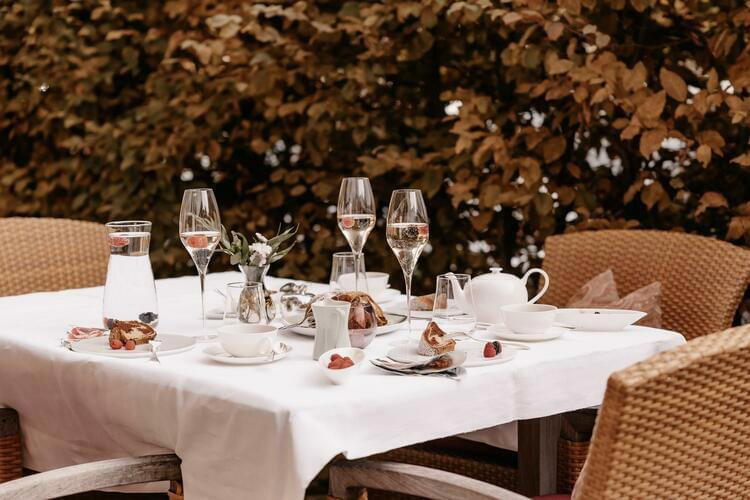
Bars in Ramsau Am Dachstein
Browse all →
Details
- Rustic
- Cozy
- Scenic
- Casual Hangout
- Historic Building
- Panoramic View
- Local Sourcing
- Mountain
- A La Carte
Rustic and cozy mountain hut atmosphere with warm welcoming interior ideal for rejuvenation amid alpine scenery.