In the rural quiet of Kramerhof, near the Baltic coast of Mecklenburg-Vorpommern, Minimanufaktur Parow occupies a modest address on Dorfstraße that belies the considered approach within. The name signals intent: small-scale, deliberate, made by hand. For visitors crossing into this corner of northeastern Germany, it sits outside the urban fine-dining circuit and invites a different kind of attention.
Pearl is the En Primeur Club membership app — saves, bookings, and concierge access live there. Same editors, same standards.
- Address
- Dorfstraße 22, 18445 Kramerhof, Germany
- Phone
- +4938313559646
- Website
- mmf-parow.de
- Directions
- Get directions
 Saves & bookings on Pearl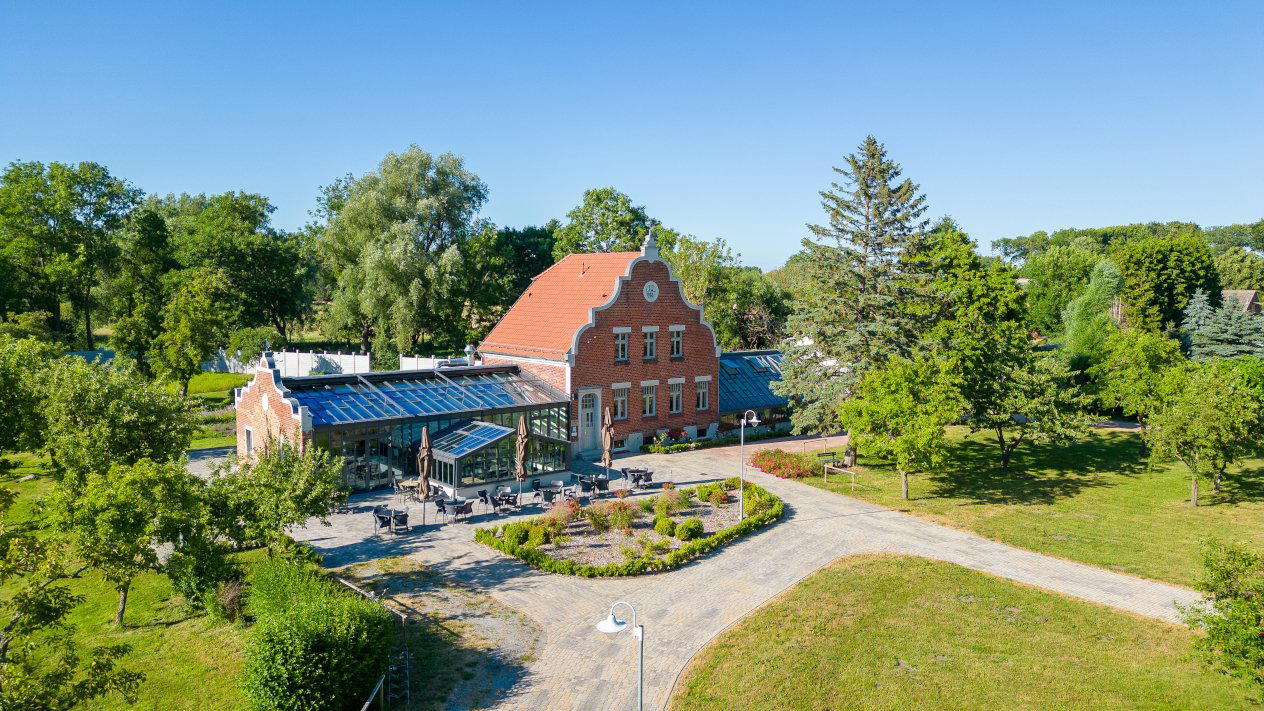
What Small-Scale Production Looks Like in Germany's Rural Northeast
Germany's fine-dining attention tends to pool in the same coordinates: Wolfsburg's Aqua, Munich's JAN, Hamburg's Restaurant Haerlin. The restaurants that draw the most critical ink operate in cities with infrastructure to match: wine programs, PR teams, reservation platforms, waiting lists measured in months. What happens in the spaces between those cities — in a village of a few hundred people on the Stralsund peninsula — tends to attract a different kind of project. Minimanufaktur Parow, at Dorfstraße 22 in Kramerhof, sits firmly in that second category.
The name itself is a statement of method. Minimanufaktur is a German compound that doesn't translate neatly but carries clear meaning: small manufacture, hands-on production, limited output by design. In a regional food culture that has increasingly split between large-scale industrial supply and a smaller counter-movement of artisan producers, the name positions this place before a single dish arrives. Whether that refers to the kitchen's production methods, a surrounding food-craft operation, or both, the word choice reflects a deliberate decision to operate at reduced scale.
Mecklenburg-Vorpommern and the Ingredient Story
The region surrounding Kramerhof provides a specific kind of larder. Mecklenburg-Vorpommern is one of Germany's least densely populated states, with a coastline that runs from Lübeck Bay east toward Usedom, agricultural land that was largely collectivized under East German policy and has since fragmented into a mix of large operations and smaller specialty producers, and fishing traditions centered on the Baltic ports of Stralsund, Rostock, and Greifswald. The Bodden waterways, the shallow lagoons behind the Rügen and Hiddensee islands, produce eel, pike-perch, and Baltic herring that appear in regional cooking with a frequency that reflects proximity rather than trend.
This geography matters to any kitchen operating in the area. Procurement here doesn't follow the same logic as in Hamburg or Berlin, where wholesale markets aggregate supply from across Europe. A kitchen in Kramerhof works within tighter local options, which can either constrain the menu or become its organizing principle. Small producers in the surrounding Vorpommern countryside, grain growers, dairy operations, market gardeners, supply the kind of ingredient that rarely crosses into export channels, which gives kitchens in this region access to produce that city restaurants, for all their resources, cannot easily source. For context on how ingredient-led ambition plays out at the other end of Germany's culinary spectrum, the three-starred Schwarzwaldstube in Baiersbronn and Waldhotel Sonnora in Dreis each built reputations on regional sourcing discipline long before provenance became a marketing term.
The Village Address and What It Signals
Approaching Dorfstraße in Kramerhof means arriving through a landscape that has none of the urban visual cues that usually precede a dining destination. The village sits just south of Stralsund, a Hanseatic city whose brick-Gothic architecture and island access via the Rügen causeway draw more visitors than the surrounding mainland villages. Kramerhof itself is quieter, the kind of address that requires either local knowledge or deliberate research to locate. That quality of remove tends to self-select the audience: guests who arrive here have generally made a decision rather than stumbling in from a hotel lobby or a busy pedestrian zone.
That self-selection carries practical implications. Rural destinations in Germany's northeast often operate on seasonal schedules aligned to the tourist flow toward the Baltic coast and Rügen, which peaks between June and August and drops sharply in the colder months. Visitors planning a trip to the area should confirm hours and availability directly, as information for Minimanufaktur Parow is not currently centralized on major booking platforms. Stralsund, approximately five kilometers north, offers accommodation across a wider range of hotel categories and serves as a practical base for exploring the broader Vorpommern area, including this address. For those comparing this excursion against Germany's more decorated restaurant destinations, the contrast is useful: Vendôme in Bergisch Gladbach and Victor's Fine Dining by Christian Bau in Perl represent Germany's most awarded tier, while a place like Minimanufaktur Parow operates in a different register entirely, closer in spirit to the artisan-format category than to the tasting-menu circuit.
How Small-Format Production Fits Into Germany's Broader Food Movement
Germany has seen a genuine expansion in small-format food production over the past decade. Micro-dairies, single-estate grain operations, small-batch charcuterie producers, and specialist fermenters have appeared across the country, often in rural areas where land access is easier and the economics of small-scale production are less hostile. This movement connects to a broader European pattern in which provenance and process have become the organising principles of serious food operations, regardless of whether they serve in a dining room or sell across a counter.
In that context, the word Minimanufaktur positions Parow within a food-craft tradition that extends well beyond kitchen cooking. The format may involve production for retail, for direct sale, for hospitality, or for some combination. Creative kitchen formats in Germany, like CODA Dessert Dining in Berlin and ES:SENZ in Grassau, have each found ways to build an identity around a specific production philosophy rather than a conventional full-service model.
For further reference points across Germany's more experimental dining formats, ATAMA by Martin Stopp in Sankt Ingbert, AUGUST in Augsburg, and AURA by Alexander Herrmann and Tobias Bätz in Wirsberg each show how regional German kitchens are developing distinct identities outside the major urban centers. And for the highest expression of technique-led precision in a global context, Le Bernardin in New York City and Atomix in New York City offer useful contrast with what becomes possible at sustained critical scale. Schanz in Piesport and Bagatelle in Trier represent the Rhineland equivalent of thoughtful regional cooking at a more established stage. ammolite - The Lighthouse Restaurant in Rust provides another reference for how distinctive venue positioning in a non-urban German setting can build its own authority. See also our full Kramerhof restaurants guide for more on the dining options surrounding this area.
Planning Your Visit
Kramerhof sits within easy driving distance of Stralsund, which connects to the wider German rail network via direct services from Berlin (approximately two and a half hours) and Rostock. Given the rural location and the limited public information currently available about Minimanufaktur Parow's hours, format, and booking method, a direct approach, via the address at Dorfstraße 22 or through local inquiry in Stralsund, is the most reliable route to confirming what is available on a given day. The Baltic coast's seasonal rhythm means that a visit planned between late spring and early autumn is more likely to align with active operations, though this should be verified rather than assumed.
How Minimanufaktur Parow Kramerhof compares with similar nearby venues.
| Venue | Cuisine | Price |
|---|---|---|
| Gutshaus Kubbelkow | International | €€€ |
Continue exploring
More in Kramerhof
Restaurants in Kramerhof
Browse all →
Hotels in Kramerhof
Browse all →
At a Glance
- Rustic
- Elegant
- Cozy
- Date Night
- Special Occasion
- Historic Building
- Extensive Wine List
- Local Sourcing
Current opening hours
- Monday
- Closed
- Tuesday
- Closed
- Wednesday
- 5–8 PM
- Thursday
- 5–8 PM
- Friday
- 5–8 PM
- Saturday
- 5–8 PM
- Sunday
- Closed
Hours can change for holidays and private events. Last verified .
Elegant yet rustic atmosphere in a historic Gutsanlage with charming rural charm.
Know Before You Go
- Getting there
- Dorfstraße 22, 18445 Kramerhof, Germany