
Grunstube Bergblick holds consecutive Michelin Plates for 2024 and 2025, placing it among the few formally recognised modern cuisine addresses in Austria's Zugspitz Arena. At the €€€€ tier, it pitches itself alongside alpine fine-dining peers in Tyrol and beyond, where regional sourcing and mountain-calibrated cooking carry more weight than urban restaurant conventions.
Pearl is the En Primeur Club membership app — saves, bookings, and concierge access live there. Same editors, same standards.
- Address
- Am Lumberg 20, 6673 Grän, Austria
- Phone
- +43 5675 63960
- Website
- hotelbergblick.at
- Directions
- Get directions
 Saves & bookings on Pearl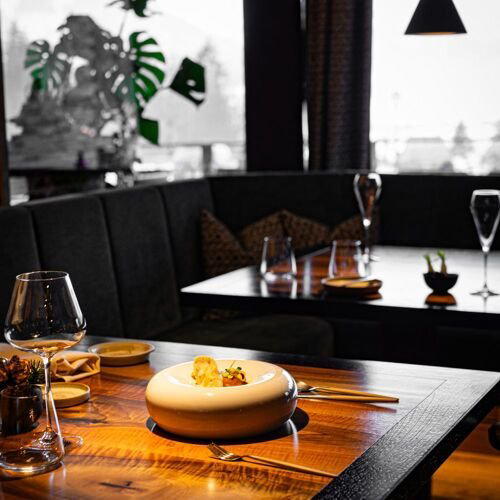
Where Alpine Terrain Shapes the Plate
Grän sits in the Tannheimer Tal, a high valley in Austria's Tyrol that borders Bavaria to the north and the Allgäu Alps to the west. The valley floor sits at roughly 1,100 metres, and the surrounding peaks push well above 2,000 metres. At that altitude, the growing season is compressed, the pasture is short, and the produce that does arrive has a concentration that lower-altitude equivalents rarely match. Restaurants at this elevation either ignore that context entirely and import everything, or they build their identity around what the terrain actually provides. Grunstube Bergblick, at Am Lumberg 20, takes the latter approach under a modern cuisine framework that has earned it Michelin Plate recognition in both 2024 and 2025.
The Michelin Plate designation signals that inspectors found cooking of a consistently solid standard: technically competent, conceptually coherent, worth your attention. It is a meaningful floor-level signal in a national guide that includes three-star addresses such as Steirereck im Stadtpark in Vienna and two-star kitchens such as Döllerer in Golling an der Salzach and Ikarus in Salzburg.
The Logic of High-Alpine Sourcing
Modern cuisine at altitude is not the same discipline as modern cuisine in a city. In Vienna or Salzburg, a kitchen can call on a wide daily supply network, import Japanese techniques applied to global produce, and change menus at pace. In the Tannheimer Tal, the supply chain is shorter and more seasonal by necessity. Almabtrieb cattle return from high summer pastures in autumn. Dairy from mountain farms has a fat content and flavour profile that reflects specific grass rather than standardised feed. Alpine herbs, foraged mushrooms, and wild berries have short and weather-dependent windows that a serious kitchen must plan around, not substitute away from.
That constraint, for kitchens that commit to it, becomes an asset. The modern cuisine designation at Grunstube Bergblick suggests a kitchen that applies contemporary technique to this particular larder rather than overlaying a generic European fine-dining template. The distinction matters when you are travelling to Tyrol specifically for the food: you want cooking that could not have been produced identically somewhere else. Austrian alpine cooking with a modern frame has a clear reference point in what kitchens like Kräuterreich by Vitus Winkler in Sankt Veit im Pongau or Obauer in Werfen have done with regional ingredients over sustained careers. Grunstube Bergblick operates in that tradition even if it occupies a different rung of Michelin recognition.
The Dining Room and the View
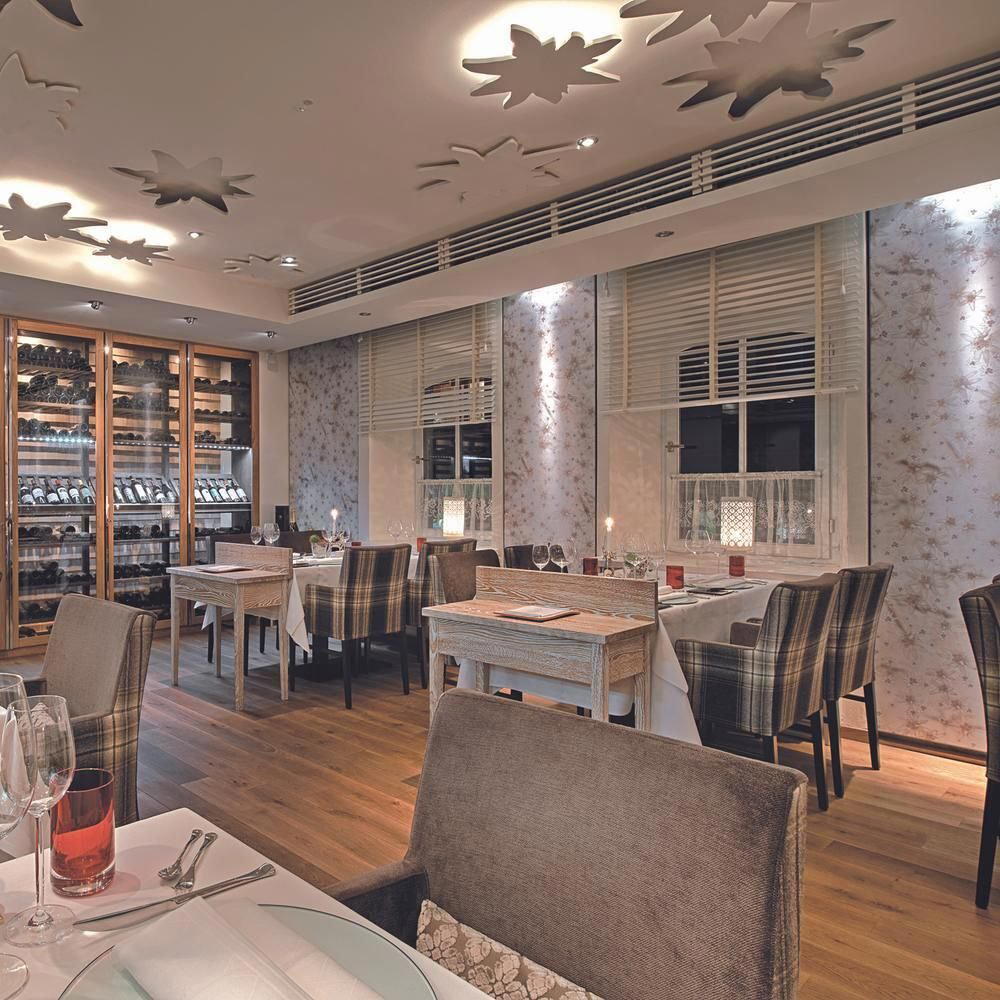
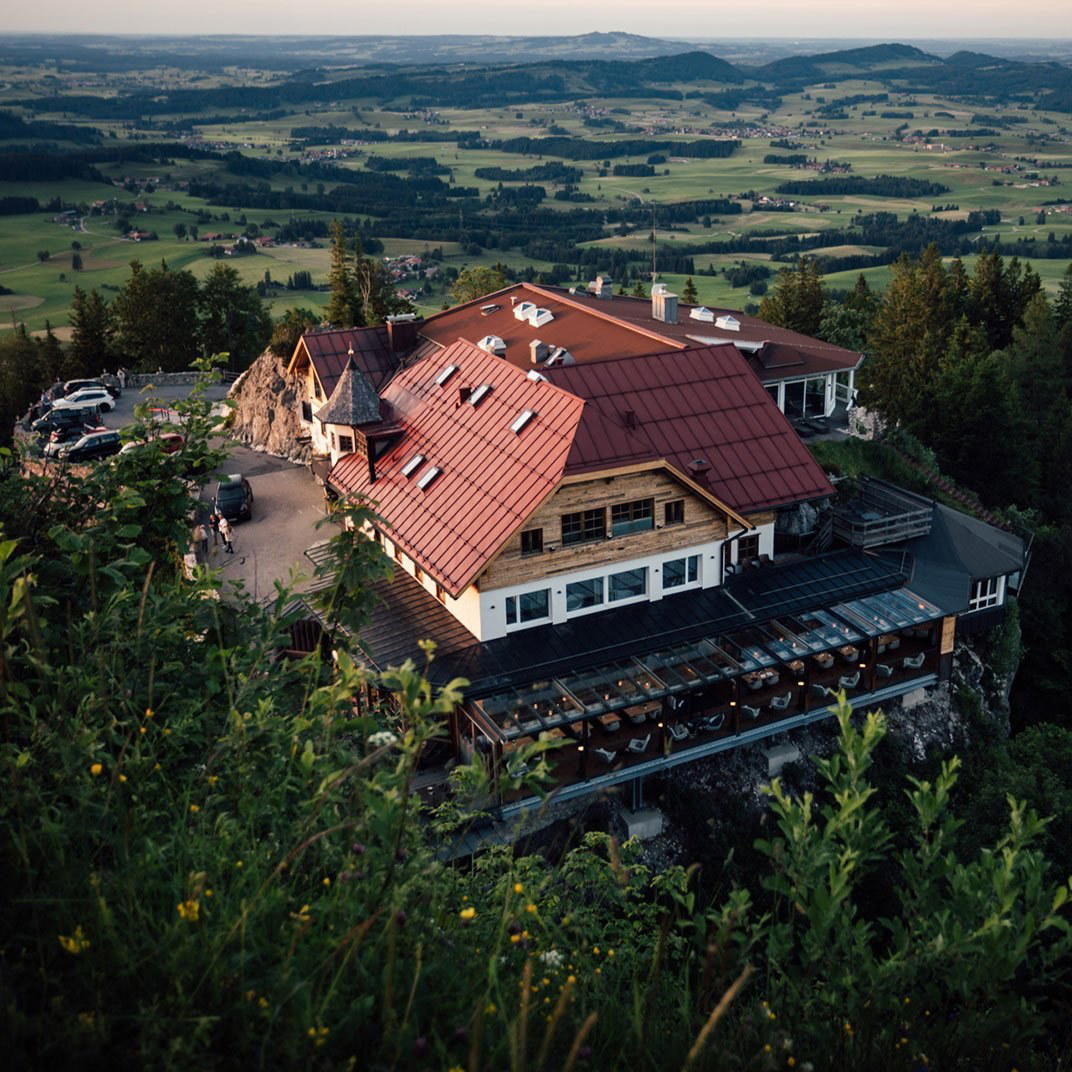
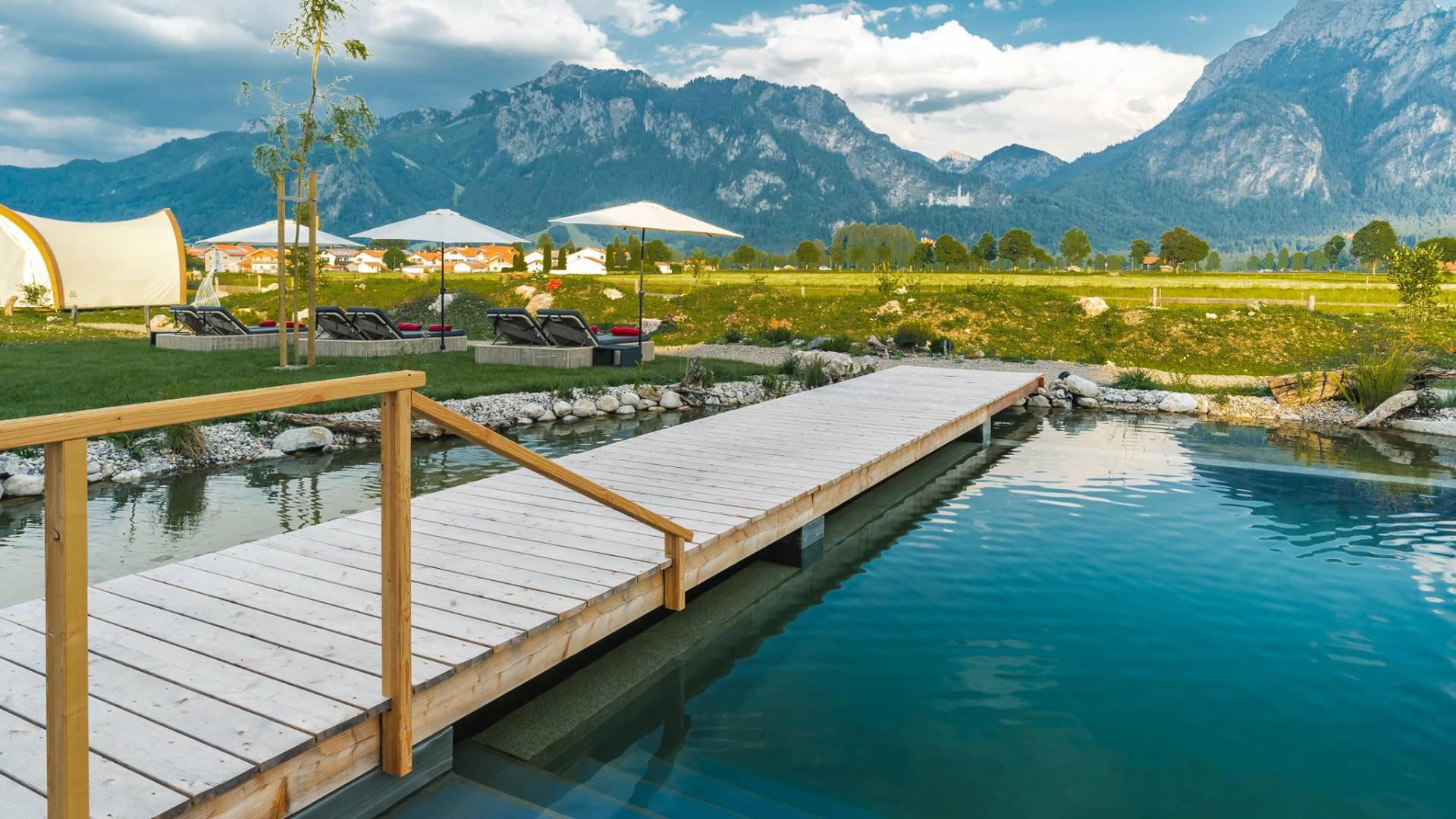
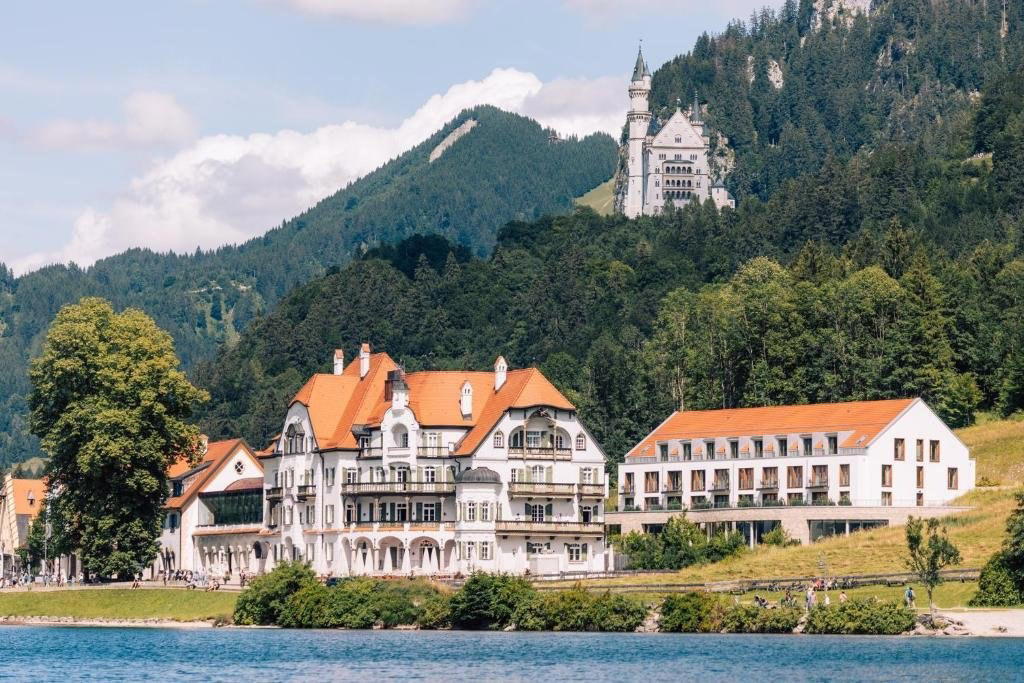
The name says it plainly: Grünstube means green room, and Bergblick means mountain view. Alpine dining rooms in this part of Tyrol typically draw on the Stube tradition, the wood-panelled, low-ceilinged interior that retains warmth during long winters and creates an atmosphere of deliberate enclosure against the cold outside. A room designed for winter warmth becomes, when paired with a panoramic view of the Tannheimer mountains, something more considered: the exterior drama framed through glass while the interior creates the conditions for a focused meal.
The physical approach to Am Lumberg 20 puts you on a hillside road above the valley floor, which is itself the first visual argument for the restaurant's positioning. Fine-dining addresses in alpine resorts have long understood that the approach matters as much as the arrival. The contrast between effort, elevation, and then the table is part of the experience's structure, and it applies here whether you arrive in summer walking season or mid-winter ski season.
Where Bergblick Sits in the Tyrol Fine-Dining Map
€€€€ tier in Tyrol represents a specific kind of visitor commitment. You are not choosing between restaurants on a city street; you are allocating an evening during a trip built around the mountains, which raises the stakes and the expectations. Grunstube Bergblick holds its Michelin Plate in a region where the inspector's bar is applied consistently across similar venues, and the consecutive recognition across two years points to a kitchen that is not coasting on a single strong performance. For comparison, other formally recognised Austrian kitchens operating outside the major cities include Schwarzer Adler in Hall in Tirol, Ois in Neufelden, Restaurant 141 by Joachim Jaud in Mieming, and Landhaus Bacher in Mautern an der Donau, each of which illustrates how Austria's regional fine-dining circuit has depth well beyond Vienna.
For travellers comparing the alpine fine-dining tier internationally, the modern cuisine format also appears at very different scales elsewhere. Addresses like Frantzén in Stockholm or FZN by Björn Frantzén in Dubai show what the same broad category designation covers at the top of the international market. Bergblick occupies a more modest and geographically specific position, which is precisely its value proposition for guests already in the Tannheimer Tal.
Planning Your Visit
Grän is a small village in the Zugspitz Arena ski and hiking region, roughly 20 kilometres from Reutte and accessible by car from Innsbruck in under two hours. The valley sees heavy seasonal traffic in winter (ski season runs from December through March) and again in summer (hiking and cycling peak from June through September). Reservations at the €€€€ tier in a small alpine village are sensible to make in advance, particularly during these peak windows, as capacity in village-scale fine dining is constrained by the physical footprint of the room. For a broader picture of where Bergblick sits in the local offer, see our full Grän restaurants guide, and for accommodation and other planning, consult our Grän hotels guide, bars guide, wineries guide, and experiences guide.
At-a-Glance Comparison
| Venue | Cuisine | Price | Awards |
|---|---|---|---|
| Grunstube BergblickThis venue — the venue you are viewing | Modern Cuisine | €€€€ | Michelin Plate (2025); Michelin Plate (2024) |
| Steirereck im Stadtpark | Creative | €€€€ | Michelin 3 Star |
| Döllerer | Contemporary Austrian, Innovative | €€€€ | Michelin 2 Star |
| Ikarus | Modern European, Creative | €€€€ | Michelin 2 Star |
| Mraz & Sohn | Modern Austrian, Creative | €€€€ | Michelin 2 Star |
| Obauer | Classic Cuisine | €€€€ | Michelin 2 Star |
Recognition history
Dated appearances from independent guides and award organizations, with the underlying list record or original source where available.
Michelin Plate
Michelin
Michelin Plate
Michelin
Continue exploring
More in Grän
Restaurants in Grän
Browse all →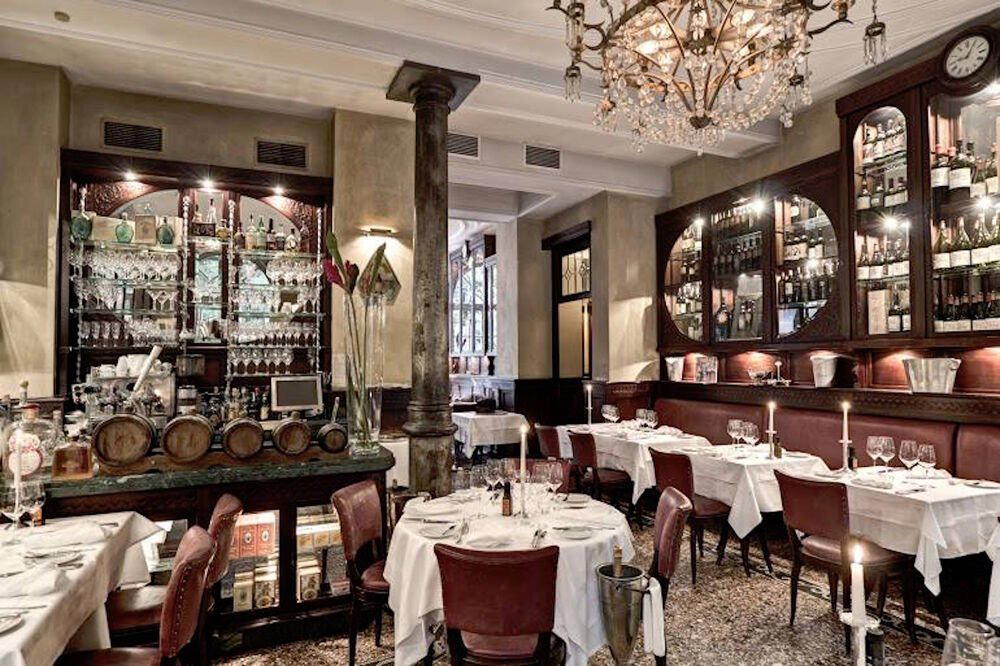
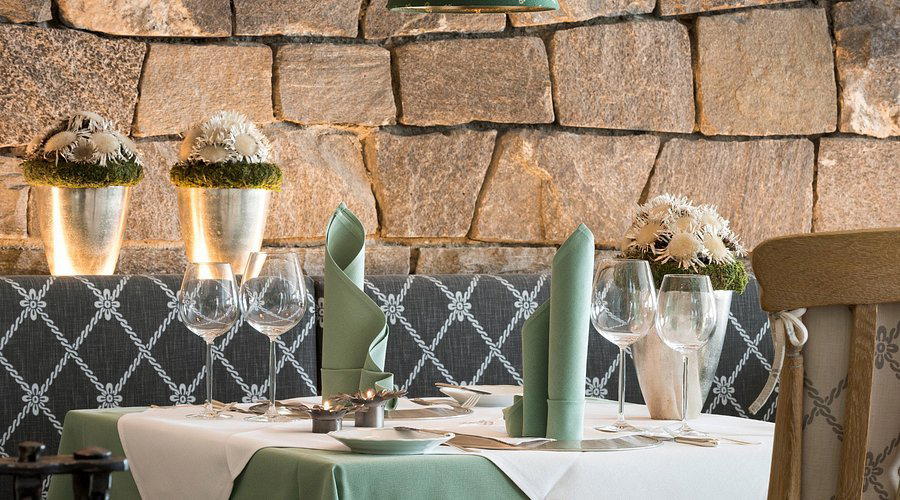
Bars in Grän
Browse all →

Hotels in Grän
Browse all →

At a Glance
- Cozy
- Rustic
- Elegant
- Scenic
- Special Occasion
- Date Night
- Panoramic View
- Hotel Restaurant
- Extensive Wine List
- Local Sourcing
- Mountain
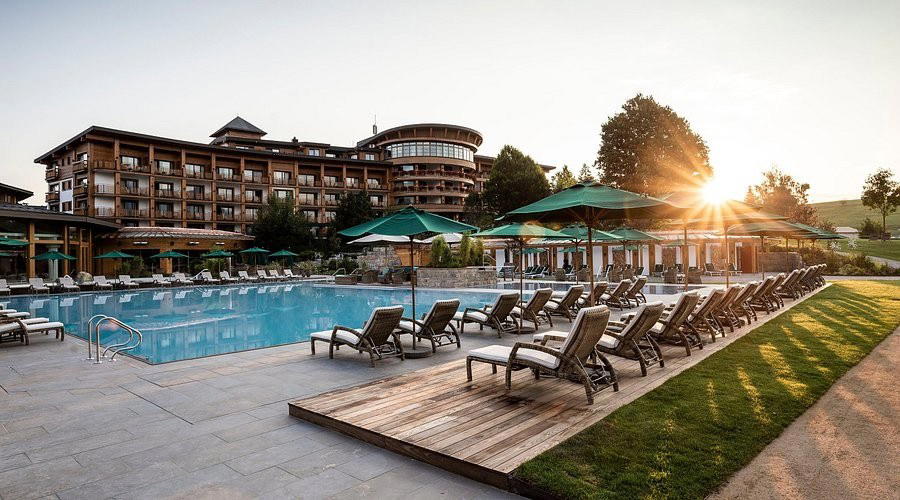
Cozy and elegant atmosphere with natural wood elements, attentive service, and dramatic mountain vistas.